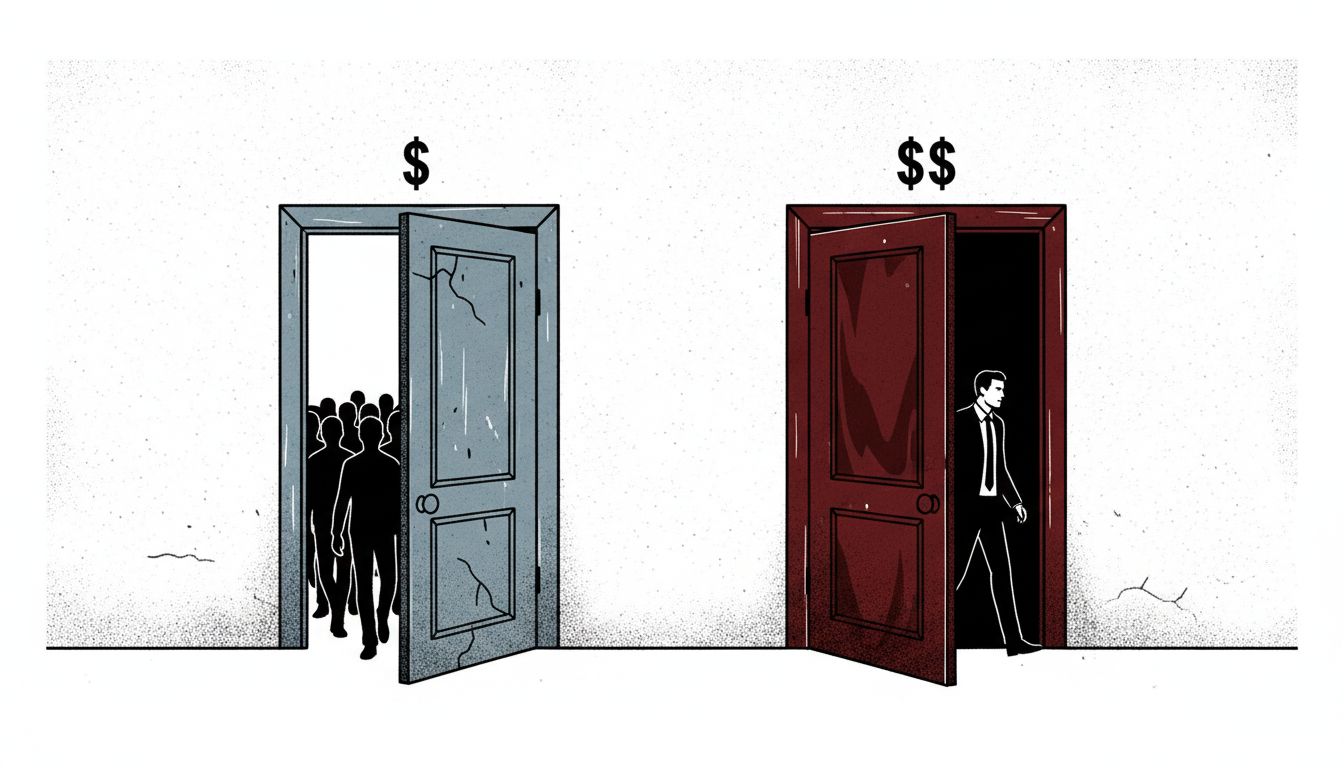
In 2004, 37signals (later renamed Basecamp) was a four-person web design shop in Chicago that had built a project management tool for its own internal use. They had no venture funding, no war chest, no enterprise sales team. They had a tool that worked and a credit card bill they needed to stay on top of.
Around the same time, a wave of VC-backed project management startups were assembling larger teams, hiring sales reps, and building feature sets designed to impress in investor demos. These companies had everything 37signals didn’t. They also had something 37signals would come to see as a liability: money that needed to be spent.
The Setup
When Jason Fried and David Heinemeier Hansson launched Basecamp publicly in 2004, they priced it at $19 a month and made the deliberate decision to stay bootstrapped. This wasn’t heroic ideology at first. They simply didn’t have an alternative. The constraints of running on your own revenue meant that every feature had to justify itself, every hire had to pay for itself, and every decision had to be made by people who actually used the product.
The well-funded competitors in their space were operating on a different logic. When you’ve raised a large round, the internal pressure shifts. Investors want to see growth metrics that justify the valuation. That pressure cascades down into product decisions: build more features to close enterprise deals, hire a sales team to hit revenue targets, market aggressively to show user acquisition. The product becomes a vehicle for the funding narrative rather than a solution to a user problem.
37signals built the opposite. They published their thinking, sold direct, kept the team small by design, and said no to features constantly. The product stayed simple because complexity cost real money they’d have to earn back.
What Actually Happened
Basecamp didn’t just survive that era. It absorbed it. Many of the better-funded competitors either pivoted, got acquired for parts, or shut down. Basecamp, without a single outside investor, became one of the most profitable software companies per employee in the industry. By Fried’s own account (documented across multiple interviews and in their book Rework), the company reached profitability almost immediately and has stayed there.
The pattern here isn’t unique to Basecamp. Mailchimp ran for over fifteen years without outside funding, building deliberately in a market where competitors were burning capital on acquisition costs. When Intuit acquired Mailchimp in 2021, the price was roughly $12 billion. The founders owned essentially all of it. Craigslist, notoriously under-featured, has outlasted dozens of well-funded classifieds competitors that tried to build what the market “actually needed.”
What’s going on in each of these cases isn’t just frugality. It’s something more structural.
Why the Money Hurts
Venture capital is a tool designed for a specific purpose: to fund rapid scaling in winner-take-all markets where speed of growth determines survival. For those markets, the logic is sound. But most markets aren’t like that. Most software markets have multiple viable players, customer segments with very different needs, and products where quality and fit matter more than who grew fastest.
In those markets, large funding rounds create a particular trap. The company is now obligated to grow at a rate that justifies the valuation. That obligation produces decisions that have nothing to do with building something good. Features get added to check enterprise procurement boxes. The product expands to cover adjacent use cases that the core team doesn’t actually understand. Headcount grows faster than institutional knowledge. The original insight that made the company interesting gets buried under the requirements of the growth narrative.
Jason Fried has been explicit about this dynamic for years. His argument, which I find persuasive, is that constraints force you to make the hardest and most valuable decision in product development: figuring out what to leave out. A well-funded company can defer that decision indefinitely. A bootstrapped company cannot.
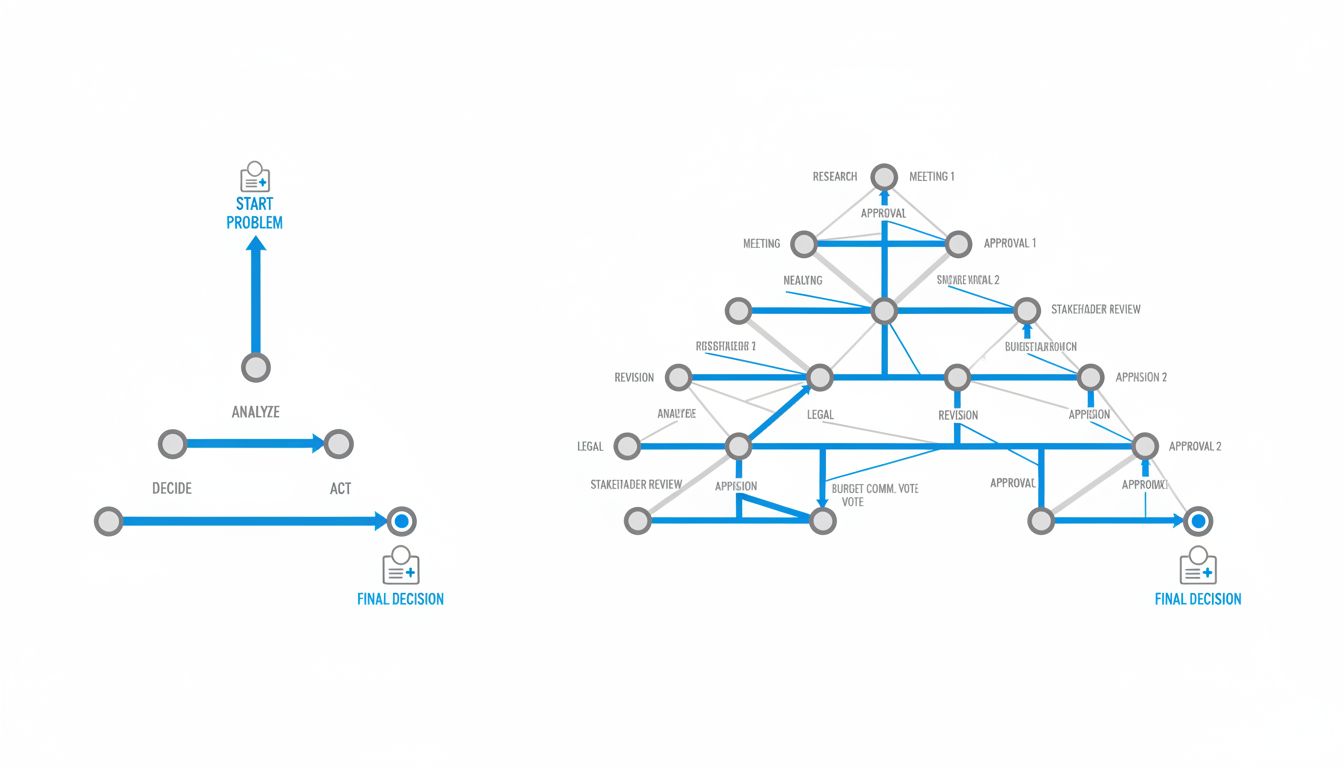
There’s a related effect on decision-making speed. A small team with a clear budget constraint can make product decisions in hours. A VC-backed company with investors, a board, a head of product, and an enterprise sales team with opinions makes those same decisions over weeks. By the time the funded competitor ships a response to a market signal, the scrappy competitor has already tested three versions of it.
What Basecamp Got Right That Others Missed
The Basecamp story isn’t really about being cheap. It’s about what constraint does to prioritization. When you can’t build everything, you build the thing that matters most to the customers most likely to pay you. That forced focus is a competitive advantage that money can actually destroy.
Basecamp also made an early decision that turned out to be crucial: they defined their customer narrowly and unapologetically. They were building for small teams, not enterprises. When enterprise prospects asked for features like granular permissions, audit logs, and SSO integration, Basecamp said no, or charged extra for a separate tier. The well-funded competitors built all of it to capture the larger contract. In doing so, they made their product worse for the customer Basecamp actually cared about.
This connects to a broader principle that gets underweighted in startup thinking. The question isn’t just whether you can build a feature. It’s whether building it makes your product better for the people who already love it, or whether it makes your product marginally acceptable to a new segment who will always want more. Funded companies default toward the second option because the second option produces larger apparent market size. Constrained companies are forced toward the first because they can’t afford to be mediocre for anyone.
The accelerator and venture capital pattern-matching machine rewards the companies that look like previous winners, which usually means: large addressable market, aggressive growth projections, team that can raise the next round. It systematically underweights the companies that have found a specific group of people who love the product and are willing to pay for it forever. Basecamp was the second kind of company. That’s why it didn’t fit the funding model, and why it survived.
The Lesson
The argument here is not that you should always avoid outside funding. There are markets where speed genuinely matters, where distribution costs are so high that you need capital to build momentum, where the first mover really does capture a durable position. In those markets, the funding logic holds.
But there’s a version of startup strategy that treats raising money as validation and building sustainably as a failure of ambition. That version has caused a lot of companies to optimize for the wrong thing at the wrong time, and a lot of investors to mistake activity for progress.
The Basecamp story, told plainly, is this: a company that had no choice but to build something people would pay for immediately built something people paid for for two decades. The competitors who had more options made worse choices with them. The constraint wasn’t the obstacle. In a meaningful sense, the constraint was the product.