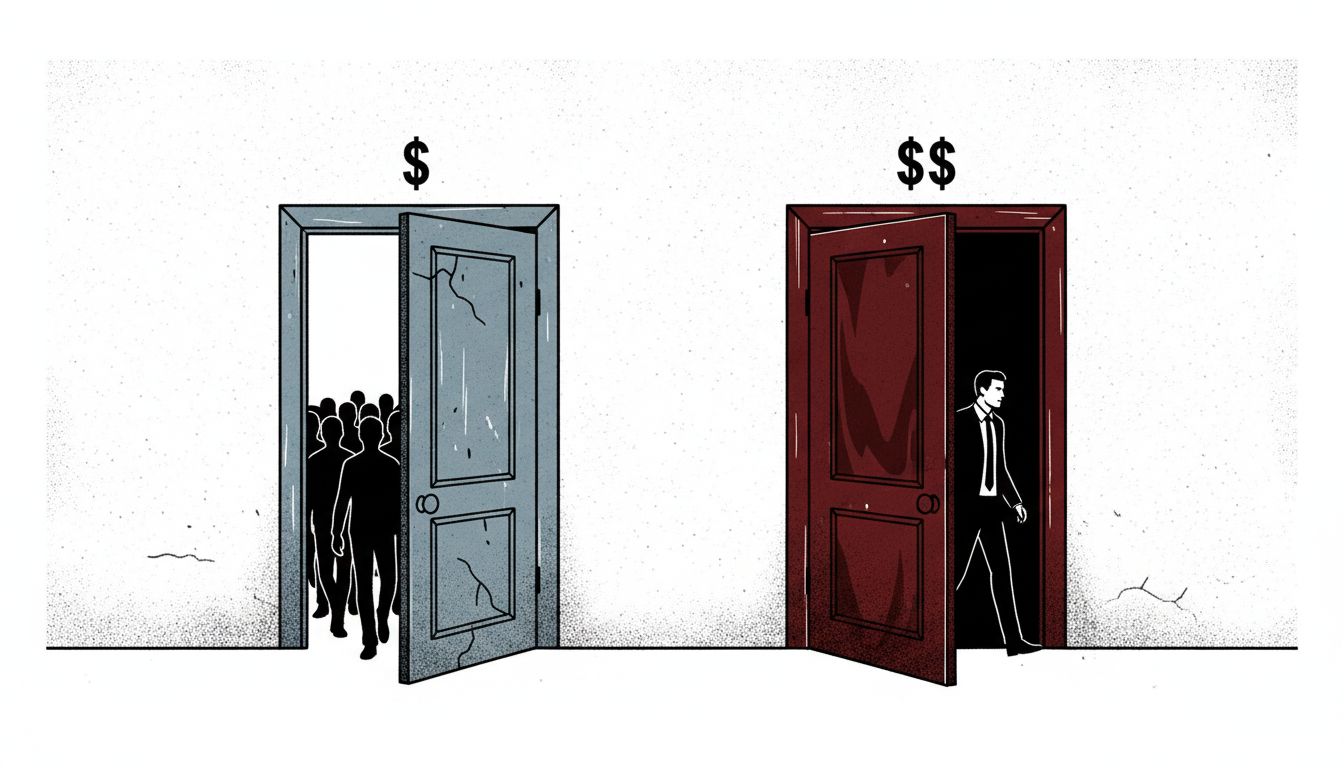
In 2004, 37signals had four employees and a product nobody asked them to build. Basecamp started as an internal tool the team made for themselves because existing project management software was, in Jason Fried’s words, ‘a disaster.’ They shipped it publicly almost as an afterthought. Within a year, it had more paying customers than many of the venture-backed project management tools that had raised millions and hired sales teams to chase enterprise contracts.
The well-funded competitors are worth naming because most people have forgotten them. Basecamp outlasted Huddle, which raised over $40 million before being quietly acquired. It outlasted Central Desktop, which raised significant Series A and B rounds. It outlasted a dozen others that had more money, more headcount, and more board meetings about their go-to-market strategy.
37signals never raised outside funding. They are still independent. Basecamp, now a product of the company rebranded as 37signals, still runs profitably on a team that would fit in a single conference room at Salesforce.
The conventional explanation is that Fried and David Heinemeier Hansson are contrarians who got lucky. That’s the comfortable version because it implies no lessons apply to anyone else. The real explanation is more mechanical and more transferable.
The actual mechanism is about decision-making, not frugality
When you have limited runway, every product decision carries real consequence. You cannot build a feature to satisfy one loud customer and call it a roadmap. You cannot hire a director of something to postpone a hard organizational question. You cannot raise another round to delay figuring out whether anyone actually wants what you’re making.
Well-capitalized competitors in the project management space spent their money in predictable ways. They added features to compete with enterprise players. They hired sales teams before the product justified them. They built integrations to appear on more comparison charts. Each of these decisions felt rational in isolation. Together, they produced software that tried to serve everyone and served nobody particularly well.
Basecamp’s constraint forced a different kind of clarity. The team had to decide what the product actually was. Not what it could become with another round of funding. Not what the enterprise tier might look like someday. What it was, right now, for the people paying for it today.
This is the decision that money lets you avoid making. Well-funded companies defer it constantly, which is why so many of them ship products that feel like they were designed by a committee trying to please investors rather than users.
Headcount is where it really breaks down
This is the less-discussed part of the Basecamp story. Funding doesn’t just buy features and marketing. It buys people. And people, past a certain threshold, primarily generate coordination overhead.
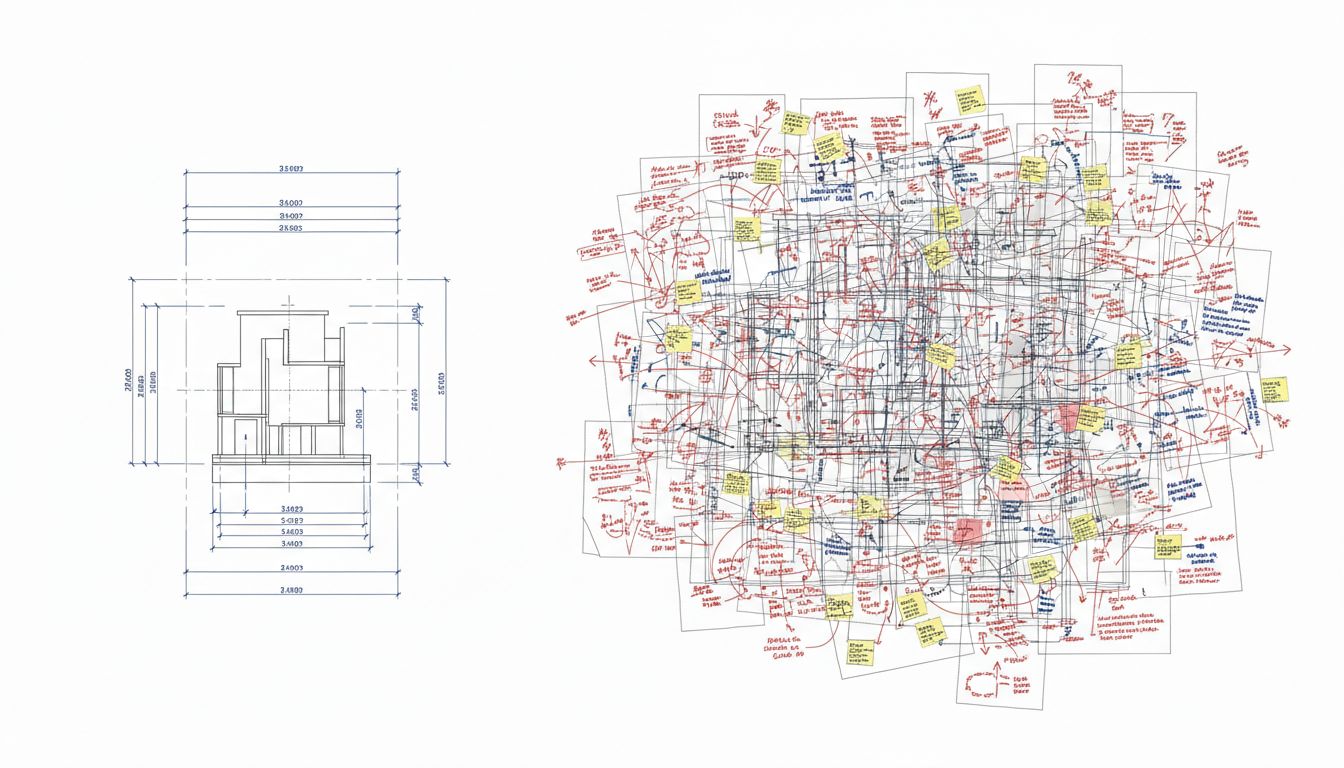
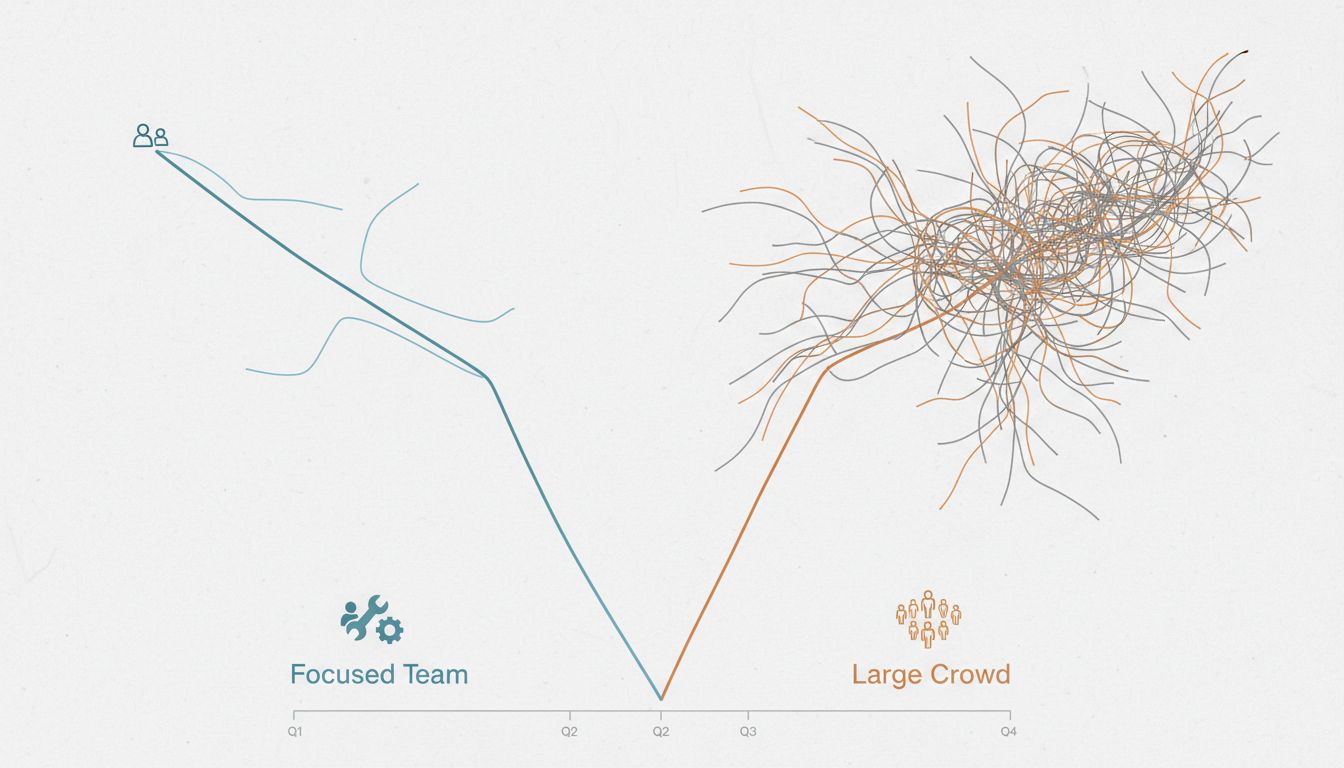
A team of eight people can hold a shared mental model of a product in their heads simultaneously. Everyone knows what the product does, what it doesn’t do, why certain decisions were made, and where the bodies are buried in the codebase. When something breaks, the person who built it is usually still there.
A team of eighty cannot do this. They need documentation, process, synchronization rituals, and managers to manage the managers. The product becomes a negotiation between departments. Engineering wants to refactor. Sales wants a new integration. Marketing needs a case study feature. Customer success is drowning and wants automated workflows. The CEO just came back from a conference with ideas.
Basecamp was solving the problem of small team coordination while operating as a small team. That’s an enormous epistemic advantage that money actively destroys.
The well-funded competitors were building project management software for companies their own size, whether they realized it or not.
What the funding actually went to
Look at what Huddle and its peers spent their money on and the pattern is consistent. Enterprise sales infrastructure. Compliance certifications to unlock certain customer segments. Marketing to compete in a space that Google and Microsoft were about to enter anyway. Conference presence. Account managers.
None of these are inherently stupid investments. The problem is that they change what you are. A company that spends to acquire enterprise customers has to build enterprise product to retain them. Enterprise product means a different roadmap, a different support organization, a different pricing model, a different sales cycle. The original product, the one that was actually good, gets deprioritized in favor of features that close deals.
Basecamp explicitly refused this path. They’ve written about it at length, and the strategy attracted genuine criticism because it looks like leaving money on the table. It is leaving money on the table. The question is whether that money comes with a product-destroying mandate attached, and for most VC-backed startups in competitive markets, it does.
As Fried and Hansson documented in Rework, the constraints didn’t feel like strategy at the time. They felt like necessity. The strategic clarity came later, when they looked around and noticed their competitors were gone.
What this means if you are not Basecamp
The lesson here is not ‘don’t raise money.’ Some businesses require capital to exist. Infrastructure, hardware, regulated industries, anything with long sales cycles and real customer acquisition costs, these companies often need funding and there’s no version of the Basecamp story that applies to them.
The lesson is about what funding purchases. It purchases optionality, which sounds good, but optionality also means you can keep avoiding the question of what your product is for and who it is actually for. Every month you delay that answer is a month your product drifts toward serving the organizational pressure inside your own company rather than the problem outside it.
The startups that outperform better-funded competitors almost always share one trait: they made the core product decision early and stuck to it. Not because they were disciplined visionaries, but because they couldn’t afford not to. Their bank account made the decision for them.
Constraint is not a virtue. It is a forcing function. The companies that figure out how to apply it voluntarily, after they’ve raised money, are rare enough to be remarkable. Staying small on purpose is actively countercultural in an environment where growth is the default metric of success.
Basecamp did not win because it was scrappy. It won because it was forced to decide what it was before it had the resources to be everything to everyone. That decision, made under duress in 2004 by a four-person team with rent to pay, turned out to be the most durable competitive advantage in their market.