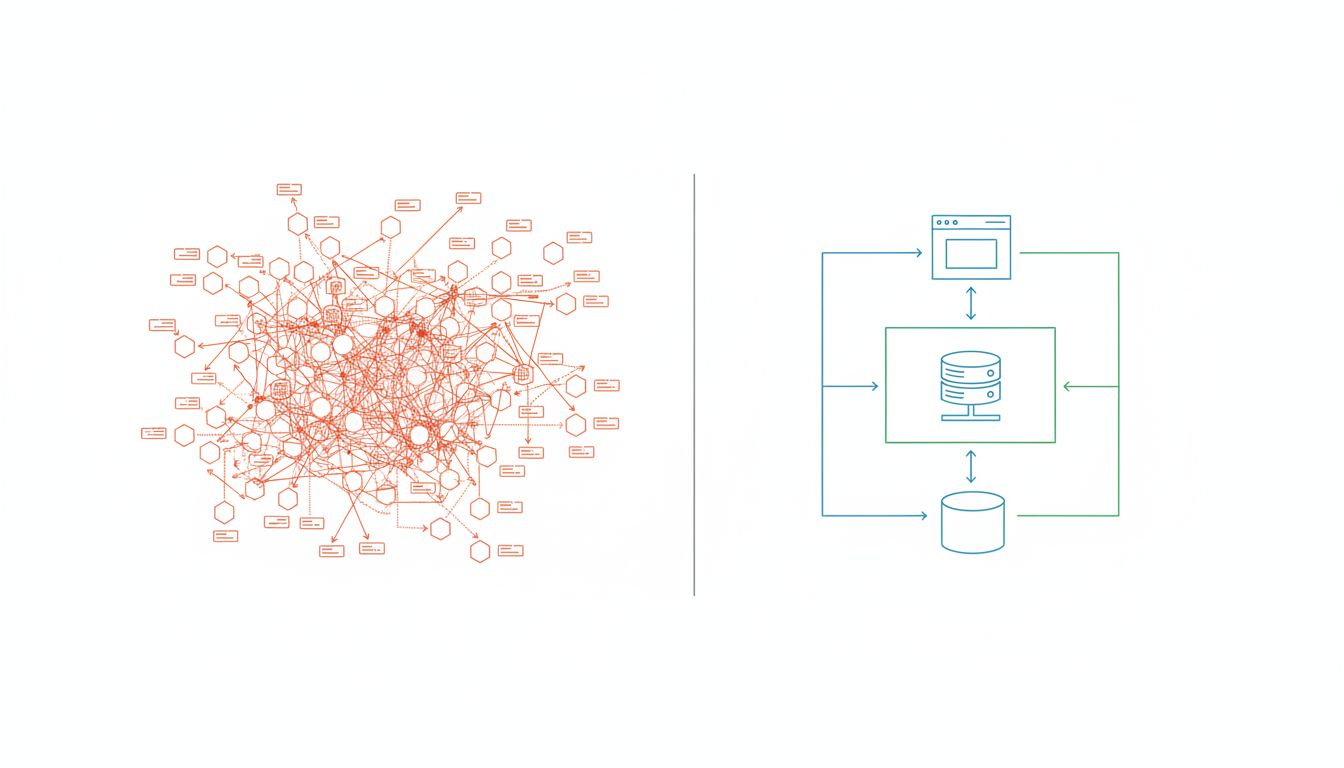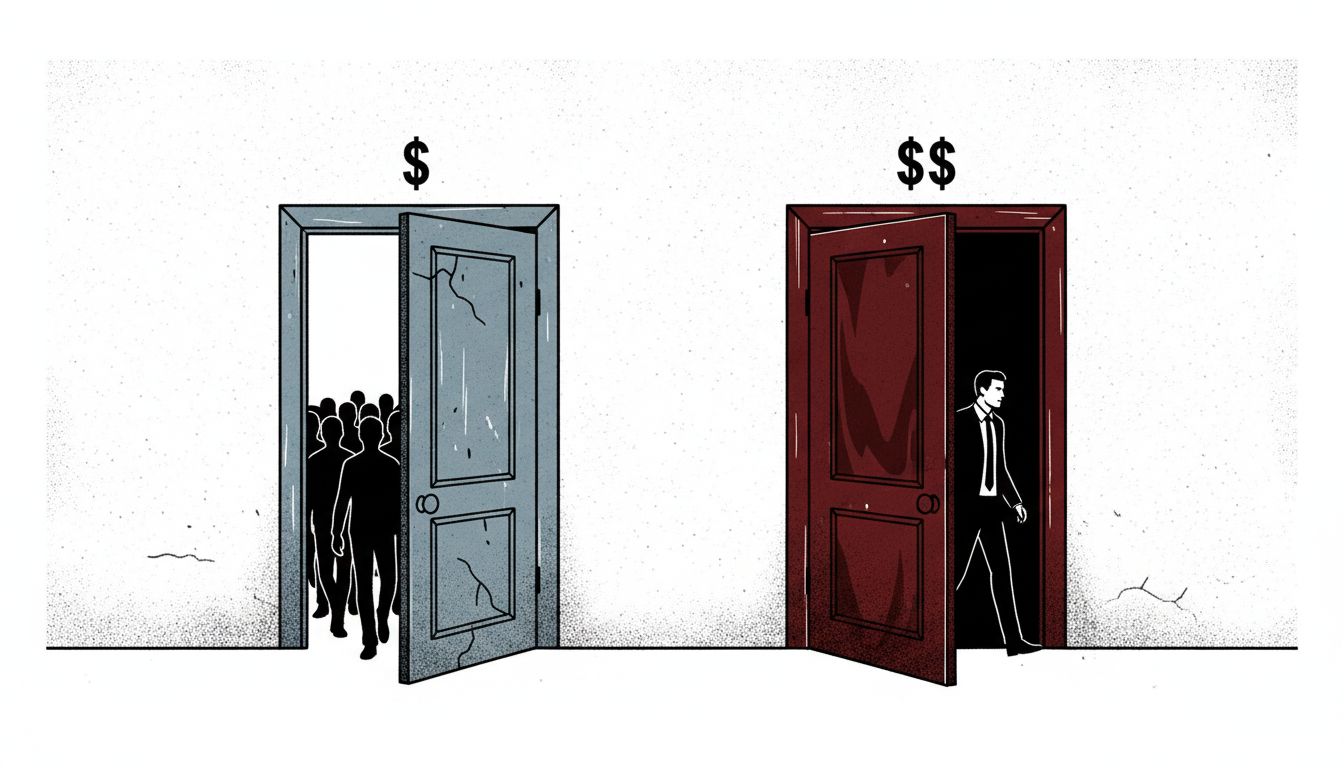
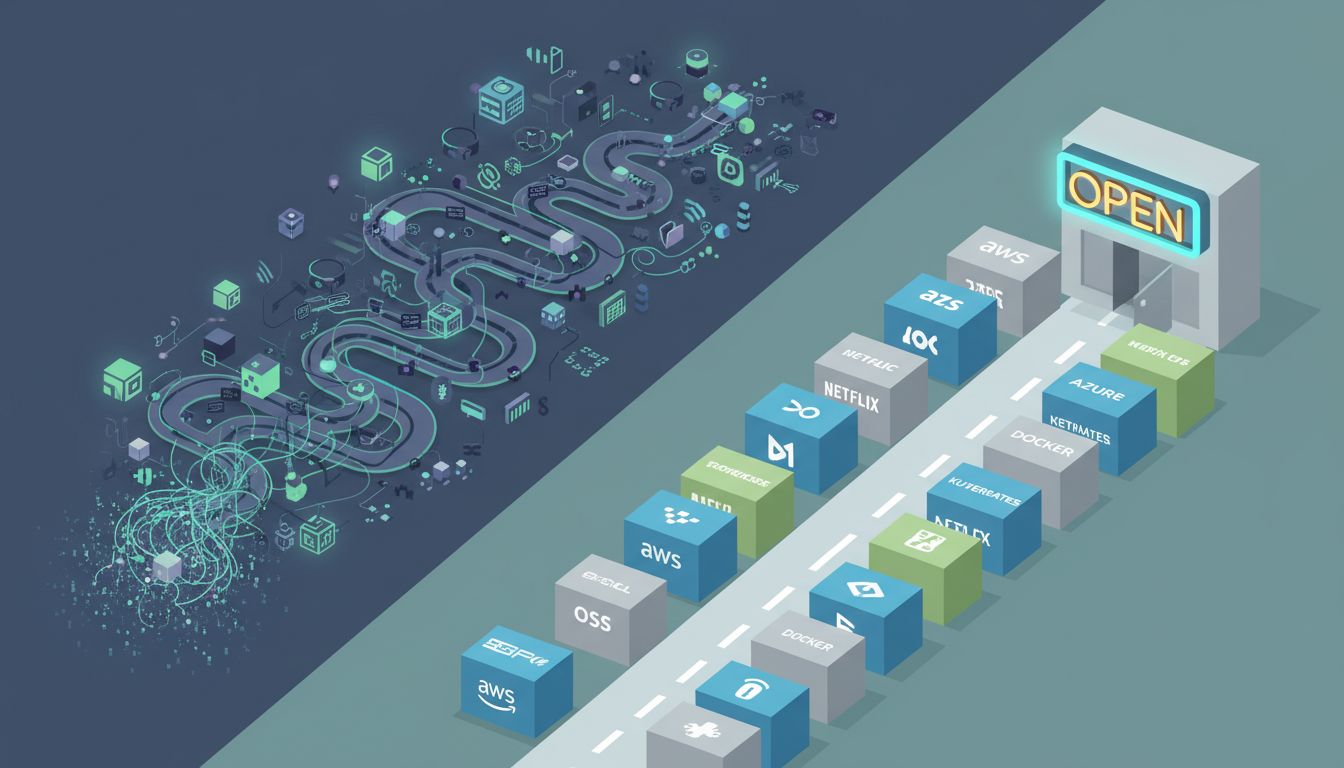
Picture two founding teams. The first spends three months evaluating the latest distributed systems architecture, argues about which cutting-edge framework to use, and builds something genuinely impressive from an engineering standpoint. The second team stands up a Postgres database, writes some boring Python, deploys to a boring cloud provider, and has paying customers before the first team finishes their README. Guess which startup is still alive two years later.
This isn’t a hypothetical. It plays out constantly in the startup world, and yet the mythology of technological innovation keeps pulling founders toward complexity they don’t need. The gap between what sounds impressive at a pitch meeting and what actually builds a company is wider than most people admit. And understanding that gap might be the most important strategic insight a founder can have. It connects directly to a pattern that explains why serial founders keep failing until they suddenly don’t, because the lesson usually has to be learned the hard way.
What “Boring” Actually Means
When engineers and founders talk about boring technology, they’re not talking about giving up or settling. They mean something specific: technology that is mature, well-understood, extensively documented, and surrounded by a large community of people who have already hit the same walls you’re about to hit.
Postgres. Rails. Django. Node. Linux. MySQL. These tools have been around long enough that their failure modes are known quantities. When something breaks at 2am, and something always breaks at 2am, you can find the answer on Stack Overflow in four minutes instead of filing an issue on a GitHub repo that the maintainer checks twice a year.
Boring technology also means your hiring pool is enormous. When you need to bring on a backend engineer quickly, the number of people who know Rails is orders of magnitude larger than the number who know whatever framework got a viral blog post six months ago.
The Hidden Cost of Novelty
Here’s what nobody tells you about building on new technology: you become a contributor whether you want to be or not. When you hit an edge case, and with new technology you hit edge cases constantly, you’re now doing unpaid open-source debugging work instead of building your product. Your engineering hours, which are the most expensive resource in your company, get consumed not by creating value for customers but by navigating problems that a mature ecosystem solved five years ago.
This connects to something worth understanding about how the broader software industry operates. Software updates keep breaking things that worked fine for reasons baked into how software development incentives work, and early-stage startups sitting on immature dependencies are especially exposed to this. When your stack is three layers of experimental tooling, a breaking change anywhere in that chain can derail a sprint.
The math compounds. A team of five engineers spending 20% of their time wrestling with tooling issues instead of shipping features isn’t losing one engineer. They’re losing the compounding velocity that would have come from a year of focused product development. Early-stage startups don’t have that slack. They’re not optimizing for technical elegance. They’re optimizing for survival.
Why Smart Engineers Resist This Advice
Good engineers are drawn to interesting problems. That’s actually a feature, not a bug, because that curiosity is what makes them good. But it creates a systematic bias toward technical complexity in startup environments where complexity is often the enemy.
There’s also a resume incentive that cuts against the company’s interests. Building on a new, exciting stack is professionally interesting for the engineer. It’s a talking point in future interviews. Maintaining a well-running Postgres database is not. This misalignment is real, and founders need to be clear-eyed about it when making technology choices.
It’s worth noting that the companies these engineers admire aren’t always doing what they think. Google, Meta, and Apple still run on programming languages from the 1970s because at scale, proven and understood beats novel every time. The difference is those companies have thousands of engineers and can afford to invest in infrastructure innovation. A twelve-person startup cannot.
When Innovation Actually Makes Sense
None of this means technology choices are irrelevant or that innovation is always the wrong call. The argument for boring technology is specifically scoped to the early stage, when you’re trying to find product-market fit before you run out of money.
There are moments when new technology is the right bet. If your core product differentiator requires a capability that only exists in a newer tool, that’s a genuine case for accepting the overhead. If you’re building in a space where the underlying technology is itself the innovation, you may not have the option to use mature alternatives.
The test is simple: is this technology choice serving the product, or is it serving the engineering team’s curiosity? Are you using this because it solves a real constraint, or because it’s interesting? Honest answers to those questions will tell you where you stand. This kind of clear-eyed thinking about what’s actually driving decisions is part of what separates companies that ship from companies that plan to ship. It’s also why the real reason 85% of AI startups die before their second birthday often has nothing to do with the AI itself, and everything to do with how the team allocated its attention.
The Unsexy Competitive Advantage
Here’s the thing about building on boring technology. It’s a genuine competitive advantage dressed up as a limitation. While your competitors are rebuilding their infrastructure, debugging their custom event-streaming layer, or waiting for a critical library to release a stable version, you are shipping features. You are talking to customers. You are learning.
Companies that win in the early stage usually win on speed of learning, not elegance of architecture. The team that can run ten experiments in the time it takes a competitor to run three will almost always find product-market fit first. Boring technology is what makes that iteration speed possible.
There’s a reason experienced founders, the ones who have been through it before, almost always reach for the boring stack on their second and third companies. The first time, you use new technology because you don’t know what it costs. The second time, you use boring technology because you do.
The unglamorous truth is that most of what makes a startup succeed has nothing to do with the technical sophistication of the underlying system. It has to do with whether the right people, building the right product, found the right customers before the bank account hit zero. Boring technology just keeps that process from getting unnecessarily complicated.