
In 2004, a San Francisco company called LiveDeal raised several million dollars, hired a proper team, built a slick interface, and set out to beat Craigslist at its own game. They had design. They had funding. They had a legitimate argument that Craigslist looked like it was built during the Clinton administration, which it basically was.
They lost. So did Oodle. So did Edgeio. So did a dozen others who looked at Craigslist’s spartan, almost insulting user interface and saw an opening.
Craigslist, meanwhile, kept doing almost nothing. No redesign. No mobile app push. No investor-mandated expansion into tangential verticals. Just the same ugly, functional, fast-loading pages that people had been using since 1995. As of the mid-2000s, the company had somewhere around 30 employees and was generating hundreds of millions in annual revenue. The competitors had bigger teams, better-looking products, and venture money. They are mostly gone.
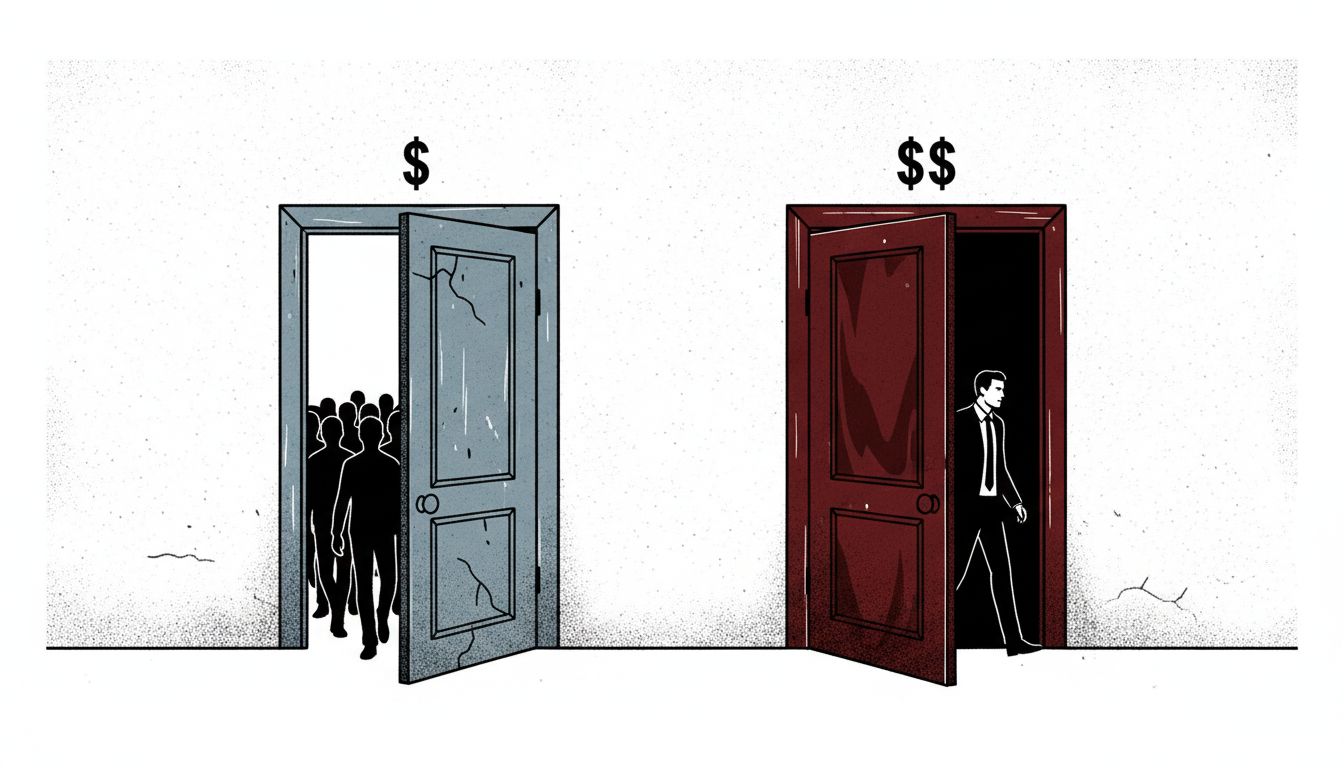
This is not a story about scrappiness. That framing flatters underfunded companies in a way that misses the actual mechanism. The real story is about what money does to decision-making.
The Setup
Craigslist was never trying to win the internet classifieds market in the way a funded startup would define winning. Craig Newmark started it as an email list in 1995. It became a website almost by accident. Jim Buckmaster, who became CEO in 2000, was openly skeptical of growth for its own sake. The company charged for job listings in a handful of cities and apartment listings in New York, and that was basically it. They did not pursue advertising revenue. They did not expand the product surface.
When competitors arrived with funding, they arrived with all the things funding demands: a growth story, a product roadmap, differentiation for differentiation’s sake. They had to justify the capital. That meant new features, new markets, new monetization experiments. Every dollar they raised came with implicit pressure to spend it on something that looked like progress.
Craigslist had none of that pressure. Which meant they could do something radical: nothing.
What Actually Happened
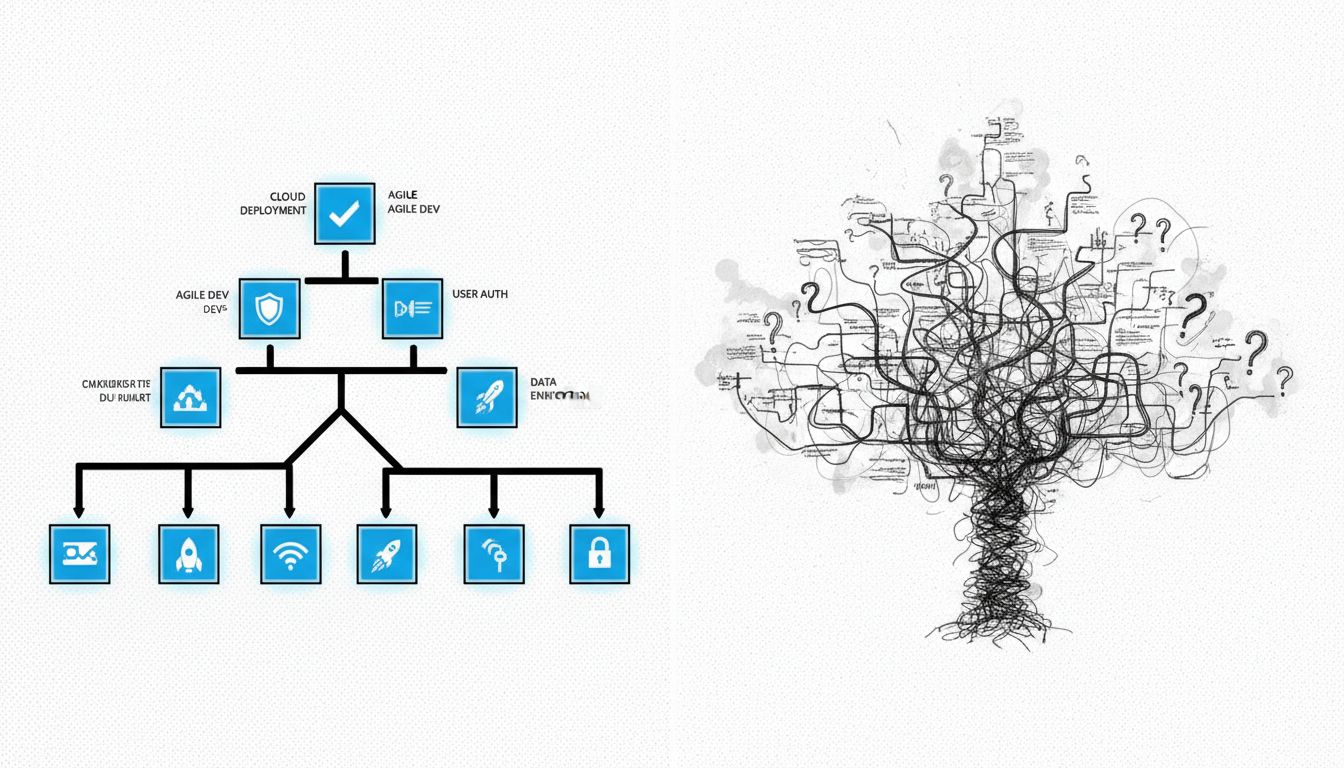
Here is the mechanism that most post-mortems on this kind of story get wrong. Well-capitalized competitors do not lose because they spend money badly. They lose because money changes what counts as a good decision.
When you have a $10 million Series A, a feature that might improve retention by 3% looks like a reasonable use of six engineers and two months. When you have 30 employees total and the company needs to stay alive, that same feature looks like a bet you cannot afford to make unless you are almost certain it matters. The constraint forces a clarity that abundance cannot manufacture.
Buckmaster gave an interview years ago where he described turning down a nine-figure acquisition offer from eBay (eBay did acquire a minority stake, but the full acquisition never happened). His reasoning was essentially that selling would change what the company was allowed to be. That is a founder thinking about optionality in reverse: not how to maximize future choices, but how to protect the ones that matter.
The funded competitors faced the opposite problem. They had to pick a direction and accelerate. So they added real estate search. They added job matching algorithms. They built recommendation engines. Each addition made the product more complex and the company harder to run, while Craigslist got faster at being exactly one thing.
This is the pattern you see repeated across underfunded winners. Basecamp has talked publicly for years about how the constraint of not raising institutional capital forced them to build only what users would actually pay for, which turned out to be a much shorter list than any VC-backed product roadmap would have generated.
Why It Matters
The startup world has a weird relationship with this dynamic. Everyone knows the stories. 37signals (now Basecamp), Mailchimp, Craigslist, GitHub in its early years. Companies that stayed small or grew slowly and ended up with stronger unit economics than competitors who raised ten times as much. And yet the dominant advice for founders is still to raise as much as you can as early as you can.
Part of this is selection bias. The companies that raised big and won are visible. The companies that raised big and burned out are categorized as execution failures, not capital failures. Nobody writes the post-mortem that says “we had too much money and it made us stupid.”
But there is also something real happening with what excess capital does to organizational psychology. When a team has runway, “let’s try it” becomes the default answer to product questions. When a team has three months of cash, “let’s try it” requires an actual argument. One of those environments produces more experiments. The other produces better ones.
This connects to something worth naming directly: well-funded startups often build for investors before they build for users. The features that make a good deck and the features that make a good product overlap less than anyone admits. When you have taken someone’s money, you are implicitly building the version of the company they funded, which is the version of the company that justified the raise. That is a significant constraint on product thinking that almost never appears in post-mortems.
What We Can Learn
The Craigslist story is not an argument against raising money. It is an argument against treating capital as a neutral resource.
Money is not neutral. It comes with expectations, with signaling obligations, with the implicit requirement that you move fast enough to justify the valuation. A founder who raises $20 million at a $100 million valuation has made a promise about the future size of the company. That promise starts shaping decisions the day the wire hits.
The underfunded companies that beat better-capitalized competitors are not winning because of grit or hustle. They are winning because their constraints forced them to answer a question that funded companies can defer almost indefinitely: what does this product actually need to be, for the specific people who would pay for it, right now.
Craigslist never had the money to build a better-looking product. So they never did. And their users, who wanted fast, free, functional, kept coming back for thirty years.
The competitors built exactly what their funding allowed them to build: more. And more, it turned out, was not what anyone was asking for.
If you are a founder reading this, the question worth sitting with is not how much you should raise. It is which decisions you are currently deferring because you have (or expect to have) the capital to defer them. Those deferred decisions are where the real competition happens, and the companies with less money have usually already been forced to answer them.