Amazon is giving up secrecy because the AI buildout is starting to run into local politics. Elsewhere, the people building AI tools keep finding that those tools make juicy targets, and the hardware under them keeps getting more expensive.
1. A $300M Nvidia chip case puts export controls to the test
The Register reports that a Californian is accused of shipping $300 million worth of Nvidia chips to China without US government approval. It’s an accusation, not a conviction, and the material we have is only the headline. We don’t have the charges, the route the hardware took, or what the defendant says.
Even so, the number is the point. Export controls are only as real as their enforcement, and a figure that size suggests the rules are being tested at scale, not at the margins. Whether this ends in a conviction or a collapse, other would-be shippers and the companies that sell the hardware will take notice. The details of how the alleged shipments moved are what will show where the gaps are.
2. ChatGPT’s Mac app trusted its own parts a bit too much
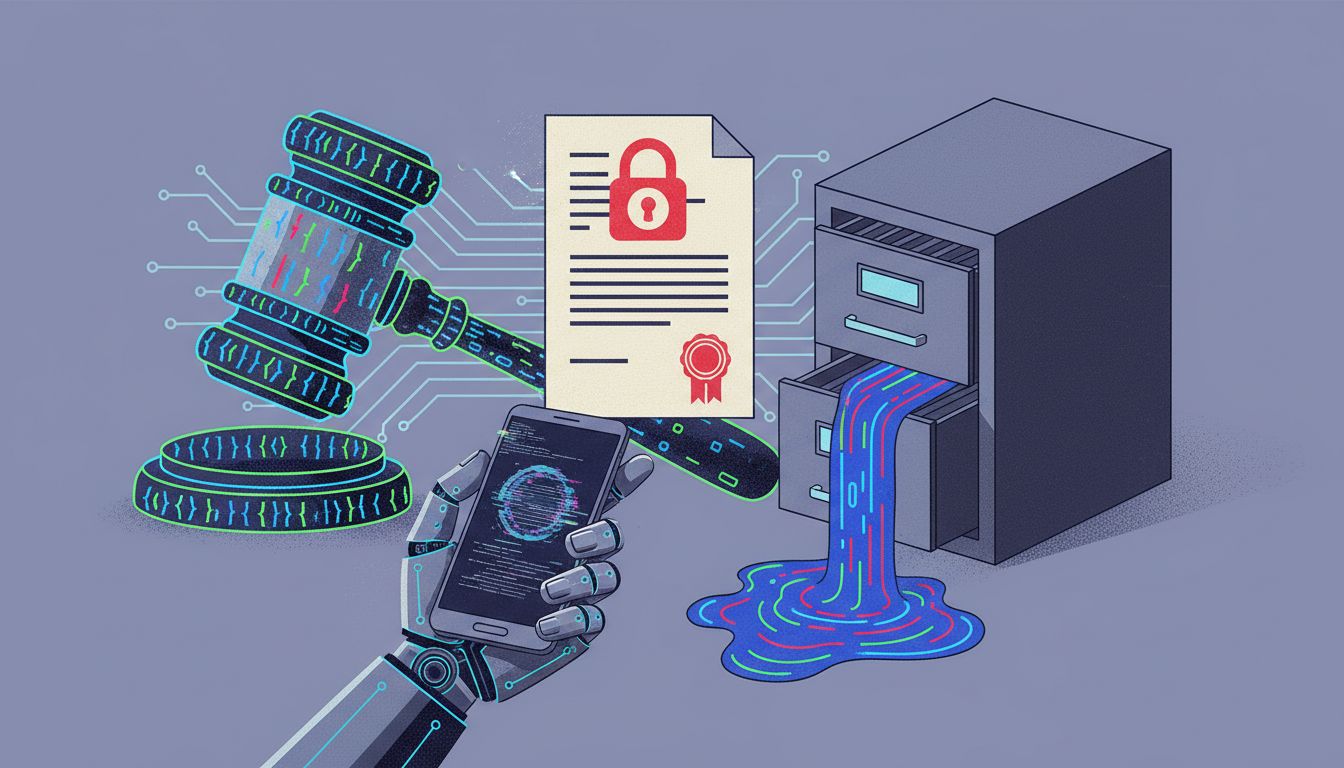
OpenAI’s macOS app checked signatures on both sides of a request, and then on the parent and grandparent processes too. That is more paranoia than most apps bother with. According to WIRED, researchers at the Objective-See Foundation beat it anyway. A trusted script interpreter would accept an untrusted script, so the malicious code spawned the interpreter three times, and the request passed every check.
Researcher Patrick Wardle called the bug “insanely trivial” to exploit, with a proof of concept of about a dozen lines. A successful attack could expose chat logs and let an attacker issue commands that look like they came from ChatGPT itself. OpenAI noted the fix in its change log on September 25.
The lesson isn’t that AI apps are uniquely fragile. They hold broad access by design, so one confused component hands over a lot. Wardle also reports a patched flaw in Meta’s Muse assistant and a new report to OpenAI about its Dots integration, which OpenAI is reviewing. His claim that security is “an afterthought” is his opinion, but the pattern in his findings backs it up.
3. Fortinet warns of a FortiMail zero-day already being exploited
The Register reports that Fortinet has sounded the alarm over a FortiMail zero-day that attackers are already exploiting. The material we have is only the headline, so we can’t say which versions are affected, how the attack works, or whether patches are available.
The practical advice is simple. If you run FortiMail, or a customer does, read Fortinet’s advisory today instead of waiting for your next patch cycle. A mail gateway sits in the path of everything an organization sends and receives, so a compromised one is a bad place to find out you’re behind.
4. Nvidia’s cheaper DGX Spark makes the memory-rich one pricier
Nvidia has a new entry price of $4,999 for the DGX Spark. The Register says it buys half the RAM and storage, and that the original 128 GB version has risen to $6,950, nearly 75% above its launch price. The Register ties both moves to the memory crunch.
So the headline price is lower, but the box you actually wanted costs a lot more. For anyone running local inference or fine-tuning, memory is the thing you’re buying, and the cheaper configuration just offers less of it. My read is that Nvidia is using the lower sticker to anchor expectations while memory-heavy buyers absorb the shortage. If your workload fits in the smaller box, you win. If it doesn’t, you now pay the premium.
5. Amazon ends data center NDAs, and admits the backlash is real
Amazon says it no longer uses nondisclosure agreements with county officials for data centers. CEO Matt Garman announced it in a blog post, along with $1 billion over five years for community college programs, workforce training and energy efficiency upgrades. The post also concedes the obvious: “over 100 data center moratoriums” are being considered, and Garman warns that enacting them could cost the US the AI race.
The timing is hard to ignore. Pennsylvania, Massachusetts and Delaware have cracked down on data center NDAs, and a federal bill called the No Secrets for Data Centers Act is pending. Rep. Jamie Raskin also wrote to Amazon, Google, Meta and Oracle this week. Amazon told the Wall Street Journal it had stopped using NDAs, and the other three did not respond to the Journal.
The catch is the contractor loophole. WIRED reports that a Texas official signed an NDA with a contractor, not Amazon, and that Amazon didn’t say whether its pledge covers contractors. If it doesn’t, the practical secrecy may survive. Garman also blames foreign misinformation for some of the backlash, while WIRED quotes experts who say there’s little evidence for that.