In 2016, Dylan Field launched Figma into a market that already had a dominant player. Sketch had become the default design tool for product teams, and it cost $99 per year. Figma came in at $144 per year for individual designers, and substantially more for teams on the collaborative tier. Every conventional startup playbook said this was wrong. You’re new, you’re unproven, you should be cheaper. Win on price, then expand.
Figma ignored that entirely. And the decision wasn’t accidental.
The Setup
Sketch had won the market by being good and being cheap. It replaced Adobe products that cost hundreds or thousands of dollars annually and ran exclusively on Mac. Sketch was clean, native, fast. Designers loved it. By the time Figma arrived, Sketch had hundreds of thousands of users and genuine community loyalty.
Figma’s technical bet was on the browser. A fully collaborative, web-based design tool. At the time, this felt like a liability. Browsers were slower than native apps. Designers who cared about craft were skeptical. The obvious move would have been to price below Sketch to get people to take the risk on an unproven approach.
Instead, Figma priced above Sketch and framed the product entirely around teams.

What Actually Happened
The first effect of higher pricing was customer selection. The designers who signed up for Figma early were not people looking for a bargain. They were people who had a specific problem that Sketch couldn’t solve: real-time collaboration across distributed teams. They were often at larger companies, with more designers, where the inability to work simultaneously in a single file was causing real friction and real cost.
These early customers had budget. They also had organizational influence. When a senior designer at a mid-size tech company adopted Figma, they didn’t adopt it for themselves. They advocated for it across their team. The per-seat model meant that adoption spread the revenue base. Sketch’s flat annual license had no such mechanic.
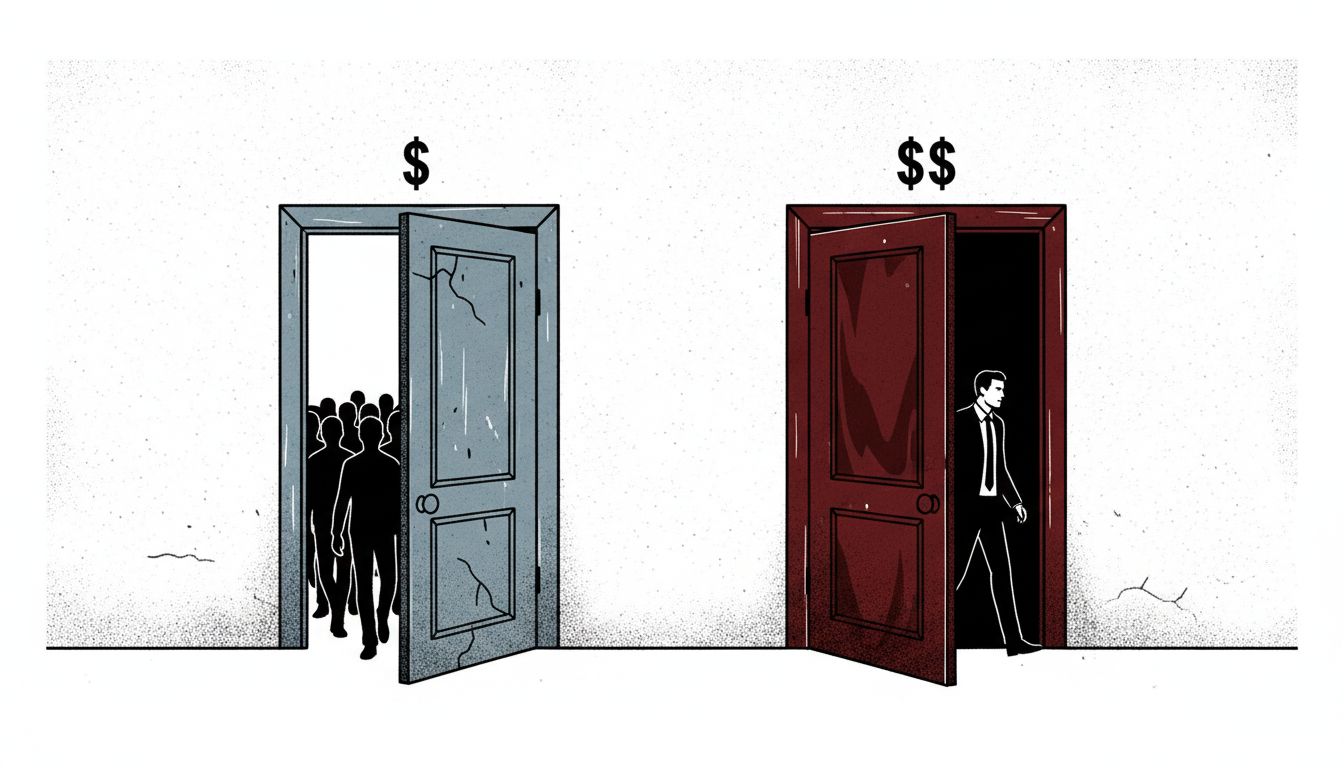
The second effect was what the pricing communicated to the market. A product that charges more is implicitly claiming to be worth more. This sounds obvious, but founders consistently underestimate how much their pricing functions as messaging. When Figma priced above Sketch, it told every design leader who saw it that this was not a scrappy challenger hoping to survive on volume. It was a product confident in its value proposition.
This matters more than people acknowledge. Enterprise buyers in particular use price as a proxy for stability and seriousness. A tool that costs almost nothing is a tool you’re afraid to build workflows around, because you suspect it won’t exist in two years. Figma’s pricing said: we expect to be here.
The third effect was margin. Figma was burning money on infrastructure. Browser-based collaborative editing at scale is genuinely expensive to run. A lower price point with the same cost structure would have created a business that was hard to sustain and nearly impossible to raise against. Higher pricing bought runway, reduced the pressure to grow through volume alone, and gave the team room to keep investing in the product.
Why This Is Usually the Right Call
The instinct to underprice comes from a real place. Founders are scared. They need customers to validate the idea. Charging less feels like reducing the barrier to getting that validation. And in consumer markets, with high volume and low support costs, it can be the right move.
In B2B software, it is almost always wrong. The startup that charges too little is usually dying faster than the one that charges too much because underpricing doesn’t just shrink revenue, it attracts the wrong customers. Price-sensitive customers are not your best customers. They churn fastest, complain most, and refer the least. They evaluate you on cost, so the moment a competitor offers something cheaper, they’re gone. They are expensive to acquire and expensive to retain.
Customers who pay more have already made a different calculation. They chose you on value, which means they’re stickier, more likely to expand, and more likely to become advocates. One well-chosen customer who pays full price teaches you more about your product than ten customers who signed up because you were the cheapest option.
Figma’s early adopters were not there because it was affordable. They were there because it solved something that nothing else solved. That clarity, enforced partly by pricing, kept the feedback loop honest.
What We Can Actually Learn From This
The Figma story is not a story about being expensive. It’s a story about pricing as strategy rather than pricing as survival.
Field and his team made a specific claim with their pricing: we are worth more than the incumbent because we solve a different and harder problem. Everything about how they built, marketed, and sold the product had to be consistent with that claim. If you charge more, your onboarding has to be better. Your support has to be more responsive. Your product has to keep delivering against the premise.
The companies that charge more and fail usually fail because the pricing was wishful thinking rather than a defensible position. They charged premium prices without a premium reason. Buyers figured that out quickly.
Figma had the reason. Real-time multiplayer collaboration in a design tool was technically difficult to build and genuinely valuable to teams. The pricing reflected that. By the time Adobe tried to respond, Figma had already embedded itself deeply enough into design workflows that it was nearly impossible to displace. Adobe eventually acquired Figma for $20 billion in 2022 before regulators blocked the deal. That valuation was built on a foundation that included a very deliberate decision made in 2016 about what number to put on a pricing page.
If you’re building a startup right now and your first instinct is to undercut everyone in your market, ask yourself what you’re actually communicating. Sometimes the answer is efficiency. More often, the answer is uncertainty about your own value. The market tends to share that uncertainty back with you.