
In 2015, Zenefits was the fastest-growing software company in history, at least according to the people running Zenefits. The HR software startup had gone from zero to $60 million in annual recurring revenue in about two years. Parker Conrad, the CEO, was raising money at a $4.5 billion valuation. Investors were treating it like the next Salesforce.
So they hired like Salesforce.
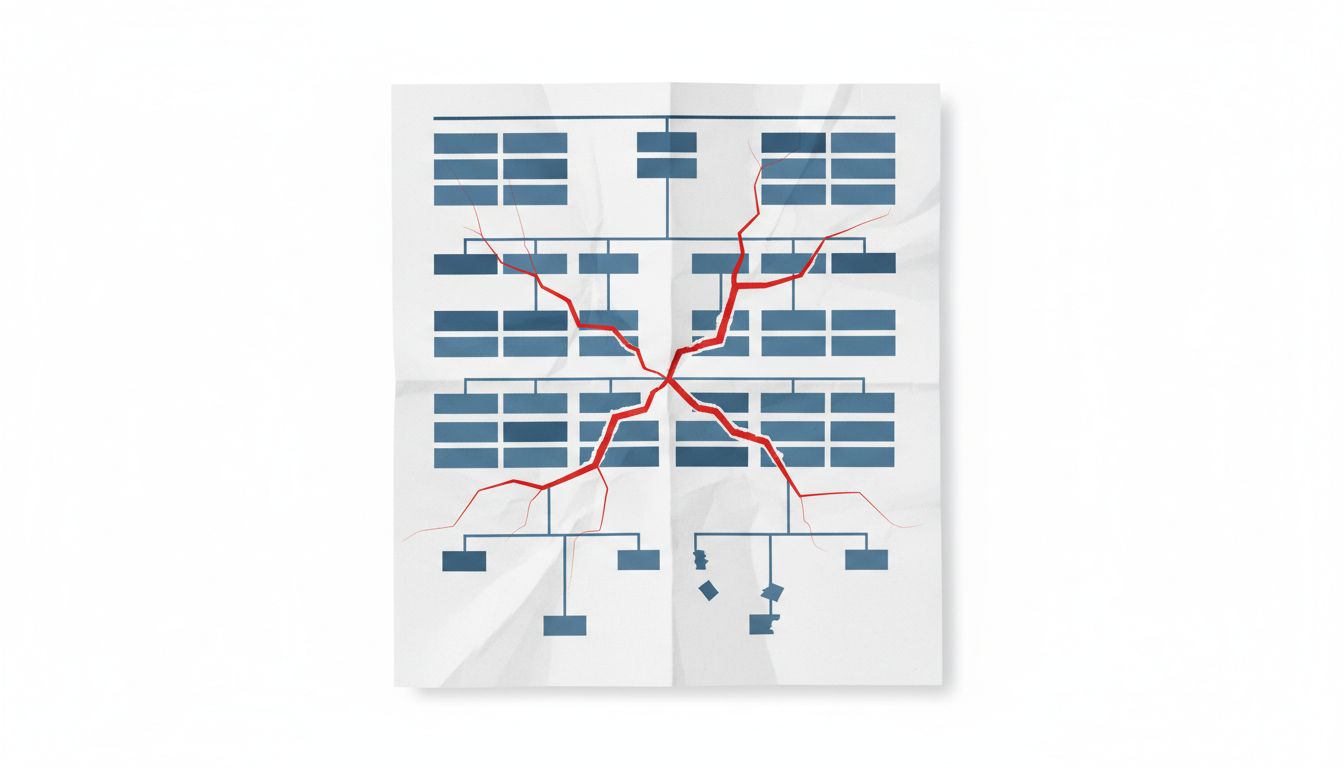
They brought in polished sales executives from enterprise software companies who knew how to manage 200-person teams. They built out legal and compliance functions sized for a public company. They added layers of management before those managers had anyone to manage. They recruited specialists for problems they didn’t have yet. The org chart expanded to match the vision, not the reality.
By early 2016, the whole thing was coming apart. Zenefits had been selling insurance without proper licensing in multiple states. Compliance had been ignored, not because no one cared, but because the people running the company were optimized for hypergrowth, not operational rigor. Conrad resigned. The company did a painful restructuring. Hundreds of employees lost their jobs.
The valuation eventually collapsed by more than half.
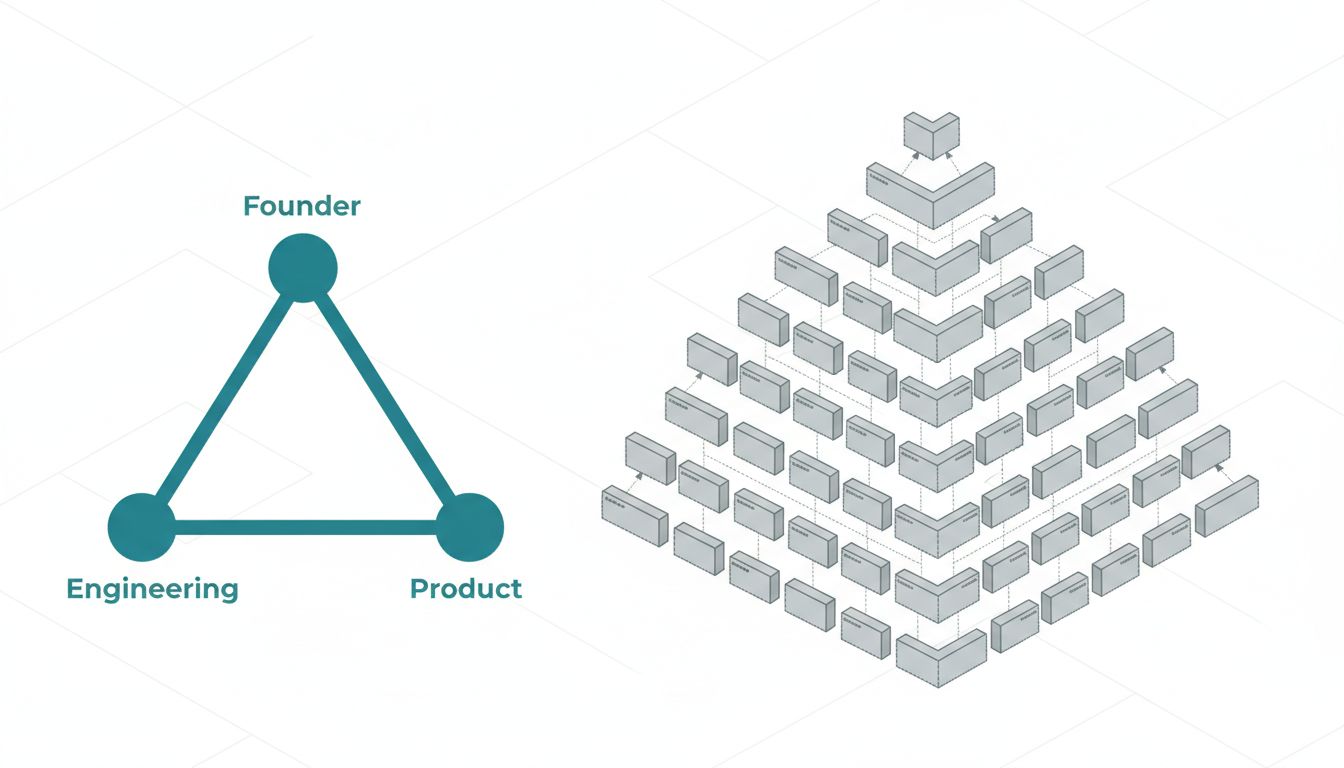
There are a lot of lessons people drew from Zenefits. Fraud risk, regulatory oversight, founder hubris. All legitimate. But the one that doesn’t get enough attention is simpler and more universal: they hired for a company that didn’t exist yet, and the mismatch killed them.
The fantasy org chart problem
Here’s how this plays out at nearly every funded startup. You close a Series A. Suddenly you have capital, and the pitch deck you used to raise that capital describes a company that is bigger, more structured, and more mature than the thing you actually run. Investors bought into that vision. Now you feel obligated to build toward it, fast.
So you hire to fill the org chart you drew in PowerPoint.
You bring in a VP of Marketing who has run teams of twenty people, because that’s what the deck says you’ll need in eighteen months. You hire a CFO because serious companies have CFOs, and you’re serious now. You add an enterprise sales lead before you’ve figured out whether your product can actually sell to enterprises.
Every one of those hires is optimized for the future company, not the present one. And the present one is what you actually have to run.
The people who thrive in a 15-person startup and the people who thrive in a 500-person company are not the same people. This is not a controversial claim, but founders keep acting like it isn’t true. The executive who was brilliant at Workday knows how to navigate internal politics, manage upward, and execute inside a machine someone else built. That person is genuinely talented. They’re also badly suited to a company where the machine doesn’t exist yet and their job is to figure out what the machine should even be.
What the mismatch actually costs you
The obvious cost is salary. Senior hires from mature companies are expensive, and early-stage startups are buying skills they won’t need for a year or more while the skills they need right now go unfilled.
The less obvious cost is culture and decision-making speed. Big-company executives bring big-company habits. They want process before process is warranted. They schedule meetings to align stakeholders when you should be moving faster than alignment requires. They hire people they’ve worked with before, from environments that were nothing like yours, and suddenly half your team has never had to figure something out from scratch.
And then there’s the morale problem. The scrappy engineers and early employees who actually built the thing watch senior people parachute in above them, often without a clear mandate, and start wondering whether their equity is worth the chaos. Some of them leave. The ones who stay start playing politics they learned from watching the new arrivals.
Zenefits is an extreme case because the regulatory failures were catastrophic. But the pattern is everywhere. You can see a quieter version of it at almost any startup that raised a big round and then missed its growth targets eighteen months later. The company they built was never quite the right shape for the moment they were in.
What actually works
The companies that navigate this well tend to do one thing differently: they hire for the next six months, not the next three years. That sounds obvious. It’s not how most founders think when they have fresh capital and a pitch deck that says 10x growth.
Hiring for six months means you’re asking a different question in every interview. Not “could this person run a 50-person department?” but “can this person figure out whether we need a 50-person department and what it should actually do?” Those are completely different skills.
It also means you’re honest with candidates about what the job actually is. One of the quieter dysfunctions at companies like Zenefits was that they recruited executives with false promises about headcount, budget, and organizational stability. The candidates heard “VP of Sales” and imagined a real VP of Sales job. What they got was a mess with a fancy title. Predictably, a lot of them left.
Stripe did something interesting in its early years. It was famously deliberate about hiring, often taking weeks or months longer than competitors to fill roles. The founders, Patrick and John Collison, were known for being involved in hiring decisions well past the point where most founders would have delegated that entirely. The result was slower headcount growth but much higher fit between the people they hired and the actual work that needed doing. Stripe scaled into its org chart instead of trying to grow into a premature one.
That’s not a strategy that works if you need to hire 200 people in six months. But if you need to hire 200 people in six months, you probably have a different set of problems that hiring faster won’t fix.
The harder question
Some of this is investors’ fault. The pressure to show momentum after a raise, to deploy capital visibly, to build the org chart that matches the deck, that pressure is real and it comes from the people writing the checks. Founders who push back on it are sometimes rewarded for the discipline and sometimes fired for the timidity, and it can be hard to tell which outcome you’re headed for while you’re in it.
But the founders who let that pressure drive their hiring decisions without questioning it are making a choice, too. Every hire is a bet on what the company needs to succeed in the near term. If you’re making those bets based on what your pitch deck says the company will look like in three years rather than what it actually needs to survive the next six months, you’re not being optimistic. You’re being sloppy.
The version of your company in the deck is supposed to inspire investors. It’s not supposed to be your hiring rubric.
Hire for what you are. You can always evolve. You can’t always recover.