
The Mythology of Founder-Led Sales
Here is a story I have watched play out more times than I can count. A founder closes the first ten customers through sheer force of personality, a few warm intros, and the kind of credibility that only comes from being the person who built the thing. Revenue is growing. Investors are nodding. And somewhere around customer fifteen or twenty, the founder starts thinking: we need to scale this.
So they hire a salesperson. Usually someone expensive, often with a brand-name resume. And within six months, that person has closed almost nothing, burned through a pile of runway, and left the company worse off than if they had never been hired.
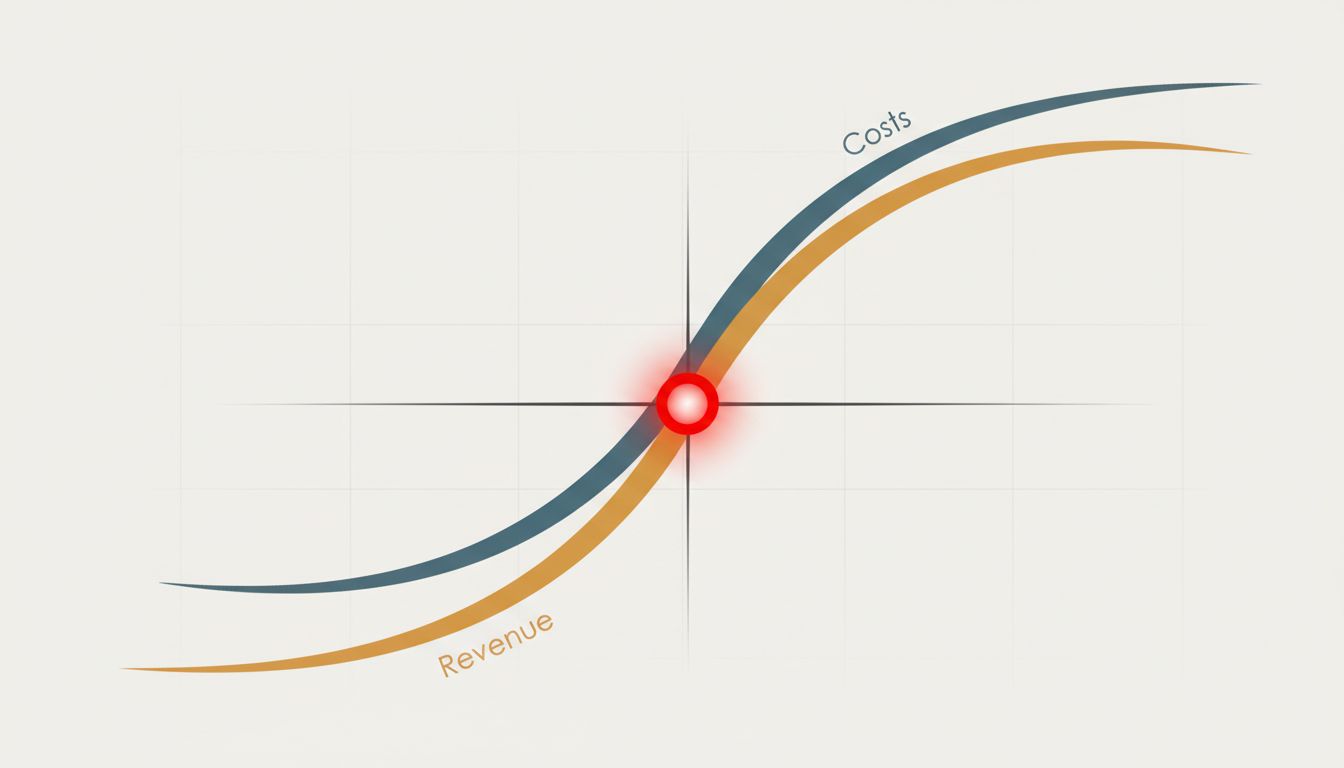
The conventional wisdom extracted from this experience is: hire sales too early and you get burned. Which is true. But the conclusion founders draw, which is to delay the hire as long as possible and keep doing it themselves, creates a different failure mode that gets far less attention. Hiring too late is not safe. It is just slower to kill you.
What “Too Early” Actually Means
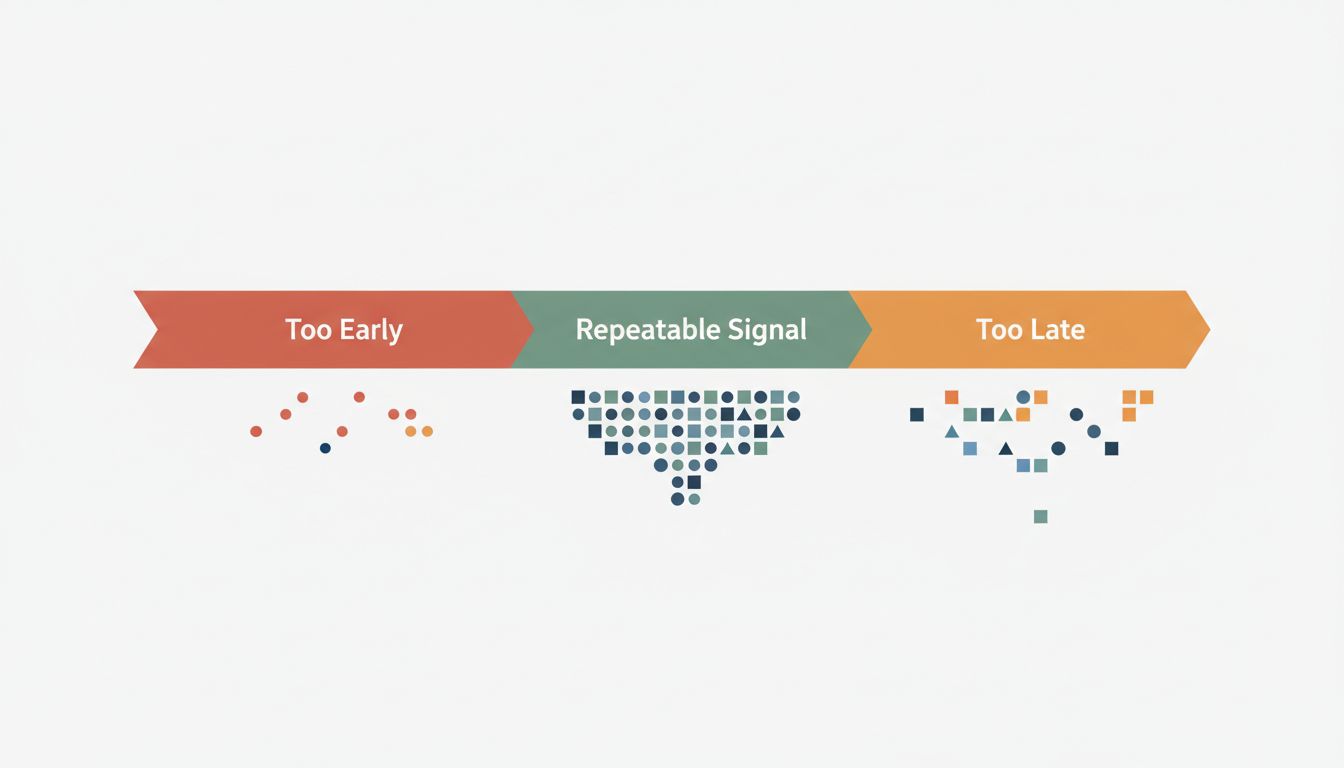
Before we can talk about timing, we need to be precise about what too early actually means. It does not mean “before you have revenue.” It does not mean “before Series A.” It means hiring a salesperson before you understand what you are selling, to whom, and why they buy.
The technical term for this is product-market fit, but that phrase has been so abused it has lost its weight. What I mean is something more specific: can you write down, in plain language, the three types of customer who will almost certainly buy from you, what triggers their decision to evaluate a new solution, and what objections they will raise that you know how to answer? If you cannot do that, a salesperson cannot help you. They need a repeatable motion to execute. Without one, you have hired someone expensive to run the same experiments you should be running yourself.
Hiring too early means giving a sales hire an impossible job. The damage is fast and visible.
What “Too Late” Actually Means, and Why It Is Harder to See
Hiring too late is quieter. The founder is still closing deals. Revenue is still growing, just not as fast as it could be. The company is not obviously broken, which is exactly what makes this mistake so dangerous.
Here is what too late looks like in practice. The founder is spending forty percent of their week on sales calls. They are the only person who knows how to handle the late-stage objection about security compliance. They have become the single point of failure in a function that needs to scale. Meanwhile, they are not spending that time on product, on recruiting, on strategy. Every hour in a sales cycle is an hour not spent on the things only the founder can do.
The compounding problem is that the longer a founder runs sales themselves, the more the company’s sales process lives entirely in their head. Institutional knowledge that should be documented, refined, and taught is instead locked in one person’s intuition. When you eventually do hire a salesperson, the handoff is brutal because there is nothing to hand off. You cannot transfer vibes. You cannot onboard someone onto founder instinct.
The company pays for this in two ways: slower growth during the delay, and a more expensive, slower-ramp first sales hire when the moment finally comes.
The Signal Founders Miss
Most founders are watching for the wrong signal. They wait until they feel overwhelmed, or until an investor tells them to hire sales, or until they close a round that makes the salary feel affordable. None of these are good timing signals.
The right signal is simpler and harder to act on: repeatability. Once you have closed enough deals that you can look back at the last five or eight and identify a pattern, you have something teachable. You know which kinds of companies buy, what the trigger event was that made them look for a solution, roughly how long the cycle takes, and which objections came up repeatedly. That pattern is the minimum viable sales playbook. It does not need to be written down yet, but it needs to exist in your head clearly enough that you could explain it to someone in an afternoon.
That is the moment to start the search, not to make the hire. Start looking before you are desperate. Founders who start looking when they are overwhelmed make worse hires under time pressure. The search itself takes longer than most founders expect, and the ramp time for even a great first sales hire is typically three to six months before they are fully self-sufficient.
If your first sales hire starts ramping in month fourteen and is not productive until month nineteen or twenty, and you waited until month twelve to start looking, you have lost almost half a year of compounding growth. That math is not theoretical. It shows up in your annual revenue numbers.
Why the First Sales Hire Is Different From Every Other Sales Hire
The skills required to be a great first sales hire at an early-stage company are almost completely different from the skills required to be a great enterprise sales rep at a scaled company. This is not obvious, and getting it wrong is extremely common.
A successful sales rep at a company with a mature product, established brand, strong marketing support, and a defined ICP is executing a process. They are running plays. They are good at managing pipeline, navigating procurement, and closing. These are real and valuable skills. They are nearly useless in the early stage.
Your first salesperson needs to be able to sell something that is not quite finished to a customer who has never heard of you using a process that does not fully exist yet. They need to give you signal about why deals are won and lost, not just win deals. They need to be comfortable with ambiguity, comfortable with reporting back what they are hearing in the field, and willing to do things that do not scale because nothing scales yet. This is a fundamentally different job, and it requires a fundamentally different person.
The candidates who are best at this tend to have done it before. They have been the first or second sales hire at an early-stage company. They have scars. They do not expect a full SDR team and a polished deck and a marketing engine behind them. As the article Hire for the Company You Have, Not the One You’re Pitching argues, you are not hiring for what the company will look like in three years. You are hiring for the company you have right now, which is probably still messy.
The Comp Structure Almost Everyone Gets Wrong
Founders who delay the first sales hire often do so partly on financial grounds. A good enterprise sales rep costs real money, and that cost feels unjustifiable when the founder is still closing deals themselves. So they wait until the budget feels comfortable. This is a false economy, but it is also a sign that they are thinking about comp wrong.
The first sales hire should have a meaningful variable component tied to results. Not because you want to pay them less, but because the right candidate for this role should want it. Someone who insists on a very high base with minimal variable is signaling that they do not believe they can close. That is useful information. The right person believes they can make significantly more than their base if the product is real and the market is there. They want to bet on themselves.
What this structure also does is align incentives in a useful way for an early-stage company. The marginal cost of software is zero. The marginal cost of selling it isn’t. A variable comp structure means you are paying more only when the company is taking in more. For a company still finding its footing, that alignment matters.
That said, do not set quotas in the first ninety days. Give the hire time to learn the product, learn the market, and shadow the founder on real calls. A new salesperson who is quota-pressured too early starts closing bad-fit deals just to hit numbers, and bad-fit customers create a downstream mess that takes months to clean up.
The Founder Transition That Actually Has to Happen
Hiring a salesperson is not the end of the founder’s involvement in sales. This surprises a lot of first-time founders who imagine that once they hire someone, they can stop selling. That is not how this works.
The founder needs to stay in the process long enough to transfer knowledge, validate that the new hire is getting the same signals from the market, and understand where the playbook needs refinement. A good first sales hire will surface things about why deals are lost that the founder has never had to articulate before, because the founder was closing on instinct. Paying attention to those conversations is genuinely valuable. Ignore them and you are blind to the weaknesses in your positioning.
The goal is a handoff, not an abdication. By month four or five, the salesperson should be running most calls independently while the founder stays close to the feedback loop. By month six or seven, the founder should be able to step back substantially and trust that the process is documented and executable without them. If that handoff has not happened by the end of the first year, you have either hired the wrong person or you have a founder who cannot let go, both of which are serious problems.
The companies that do this well end up with something genuinely valuable: a sales function that produces real market intelligence alongside revenue. You learn what customers actually care about, which shapes your early customer base in ways that compound over time. The companies that get it wrong, in either direction, spend years recovering.
What This Means
The timing question for your first sales hire is not a simple formula, but it is not a mystery either. Hire too early, before you have a repeatable pattern, and you waste money and time running disorganized experiments. Hire too late, and you cap your growth rate, burn out the founder, and make the eventual hire harder and more expensive.
The signal to act on is repeatability, not overwhelm and not investor pressure. When you can explain your sales motion clearly enough to teach it, start the search. Expect three to six months to close the right person and another three to six for them to ramp. That timeline means the decision needs to be made earlier than it feels necessary, which is uncomfortable. Do it anyway.
Hire someone who has done the first-sales-hire job before, not someone who has executed a mature sales motion at a scaled company. Build comp with meaningful variable tied to results. Stay involved through the transition. Extract the playbook from your own head and get it onto paper.
The fear of hiring sales too early is healthy. Do not let it become an excuse for never hiring them at all.