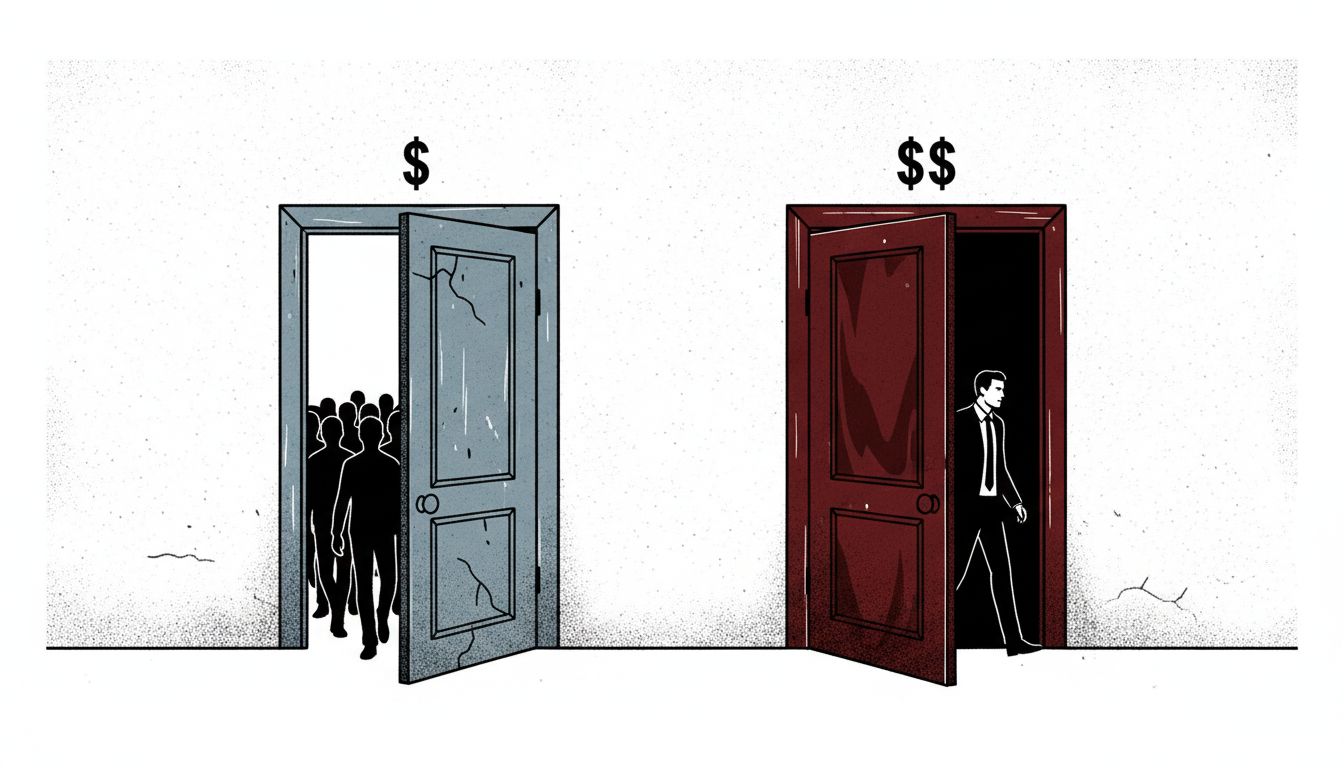

Picture a founder, nine months in, staring at a spreadsheet that tells a brutal story. The product works. Users like it. But the business model, the one they pitched to investors, the one baked into the deck, the one they’ve defended in a dozen coffee meetings, is quietly bleeding them dry. They have two choices: keep explaining why the numbers will eventually make sense, or admit that something fundamental has to change. The ones who choose wrong don’t make it. The ones who choose right usually go on to build something you’ve heard of.
This is the moment nobody talks about when they tell startup success stories. We celebrate the pivot in hindsight, package it as visionary flexibility, and move on. But there’s something more structural happening here, something that explains why the 18-month model change isn’t a bug in the startup process. It’s a feature. Venture capitalists already know this, by the way. When they’re evaluating your company, they’re not just betting on your current model. They’re betting on your ability to recognize when it’s wrong.
The Original Model Is a Hypothesis, Not a Plan
Here’s the uncomfortable truth that most accelerators dance around: your business model on day one is a guess. A structured, researched, hopefully-informed guess, but a guess. The market hasn’t told you anything yet. You’re operating on assumptions about who will pay, how much, and why.
The 18-month window isn’t arbitrary. It’s roughly how long it takes to exhaust your initial assumptions. You’ve talked to enough customers, processed enough rejection, and watched enough usage data to understand what you actually built versus what you thought you built. These are almost never the same thing.
Slack started as a gaming company called Glitch. The game failed, but the internal communication tool they built to coordinate their team turned out to be remarkable. YouTube launched as a video dating site. Instagram started as a location check-in app called Burbn before the founders stripped it down to just photos. In every case, the team paid attention to what was actually happening, not what they predicted.
Why the Smart Ones Don’t Fight It
The founders who pivot well share a specific psychological trait: they’re more attached to solving a problem than to their solution. This sounds obvious until you’re the one who has to stand up in front of your team and say the thing you’ve all been building isn’t the thing you should be building.
The ones who fail tend to confuse sunk cost with strategy. They’ve written the code, hired the people, built the brand. Changing now feels like admitting defeat. But experienced builders know that successful startups deliberately hire people who will tell them hard truths early, precisely because the temptation to rationalize a broken model is so powerful when you’re inside it.
There’s also a timing component that matters enormously. Pivoting too early means you haven’t collected enough signal. Pivoting too late means you’ve burned resources defending a thesis the market already rejected. The 18-month window is when most companies have enough real data to make a meaningful change without having exhausted their runway doing it.
What Actually Changes (and What Doesn’t)
It’s worth being precise here, because not all pivots are equal. Most successful model changes don’t abandon everything. The technology usually survives. The team usually survives. What changes is one or more of the following: who the customer is, how you charge them, or what problem you’re primarily solving.
Airbnb didn’t stop being a marketplace for spare spaces. They stopped being a conference-overflow solution and became a global travel platform. The infrastructure was the same. The customer insight changed completely.
This distinction matters for founders because the pivot doesn’t require blowing up everything you’ve built. It requires intellectual honesty about which assumptions were wrong. Startups that deliberately choose expensive solutions early on often build this flexibility into their architecture from day one, knowing that the ability to redirect quickly is worth more than the cost of the infrastructure that enables it.
The Investor Knows Before You Do
Here’s something founders rarely consider: your investors are often watching for the pivot before you’re ready to make it. Good early-stage investors have seen dozens of companies go through exactly this cycle. They recognize the pattern. They’re not alarmed when the model changes. They’re alarmed when it doesn’t, and the data is screaming that it should.
This is why the best tech leaders often succeed by knowing less than their teams think they do. The skill isn’t having all the answers. It’s creating the conditions where the right questions surface fast enough to act on them.
Some founders treat their investors as an audience to perform certainty for. The successful ones treat them as thinking partners who’ve seen this movie before. That relationship changes the entire dynamic of the 18-month conversation.
How to Use This Deliberately
If the business model change is this predictable, the logical move is to plan for it. Not to predict exactly what will change (you can’t), but to build in the mechanisms that let you detect the signal early and move on it without the whole company grinding to a halt.
Practically, this looks like a few things. First, strategic ignorance applied selectively: don’t optimize everything before you’ve validated the core assumptions. Second, keep your team small and flexible long enough to make a meaningful change without a political crisis. Third, define in advance what metrics would tell you the current model is wrong, and check them honestly.
The founders who handle this best treat the original business model not as the destination but as the first real experiment. They’re not attached to being right. They’re attached to figuring out what’s actually true.
That reframe doesn’t make the moment any less uncomfortable when it arrives. But it means you’re prepared for it, which is more than most of your competition will be.