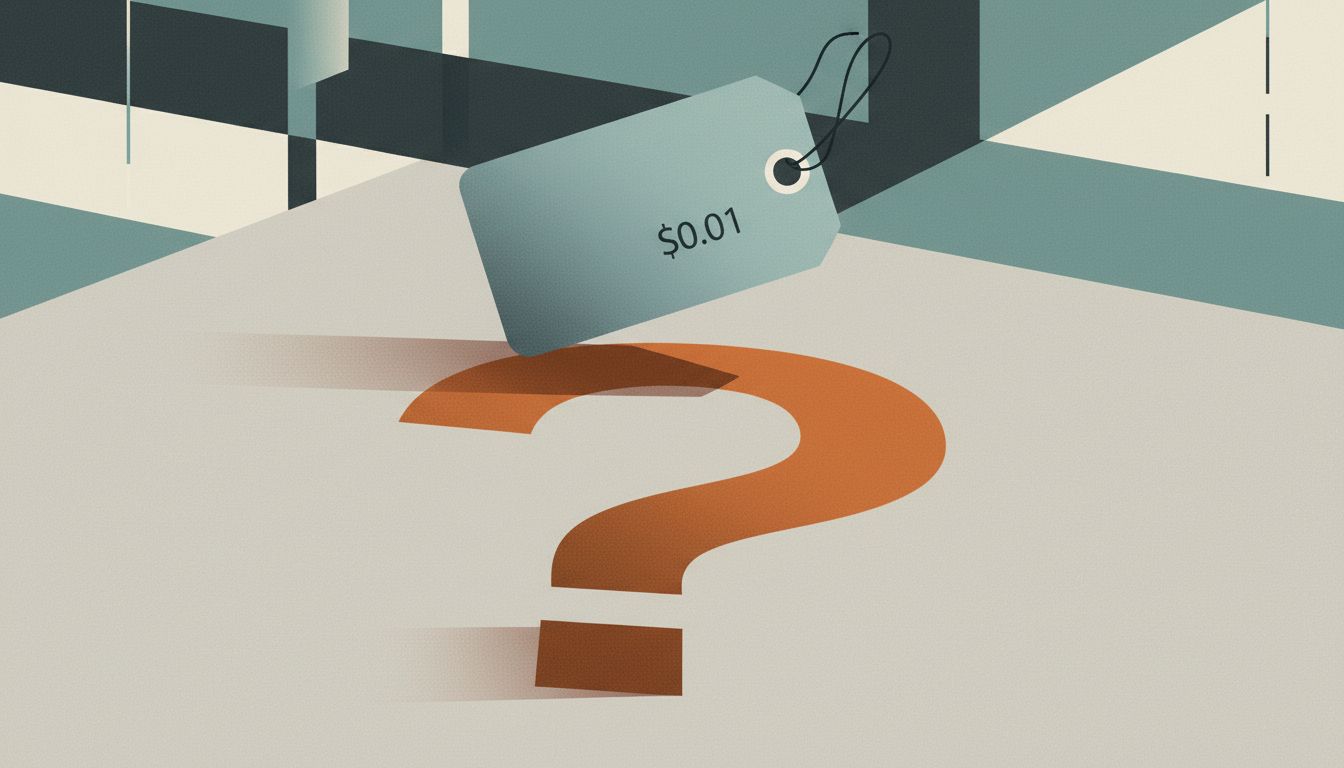
A friend of mine launched a B2B analytics tool a few years ago. Solid product, real customers already using a free beta, good retention numbers. He priced it at $9 per month because he was scared. Scared nobody would pay, scared the market was too crowded, scared he’d look greedy. Within weeks, he had a problem he didn’t expect: enterprise prospects kept asking what was wrong with it.
Nothing was wrong with it. The price was.
Price Is Information
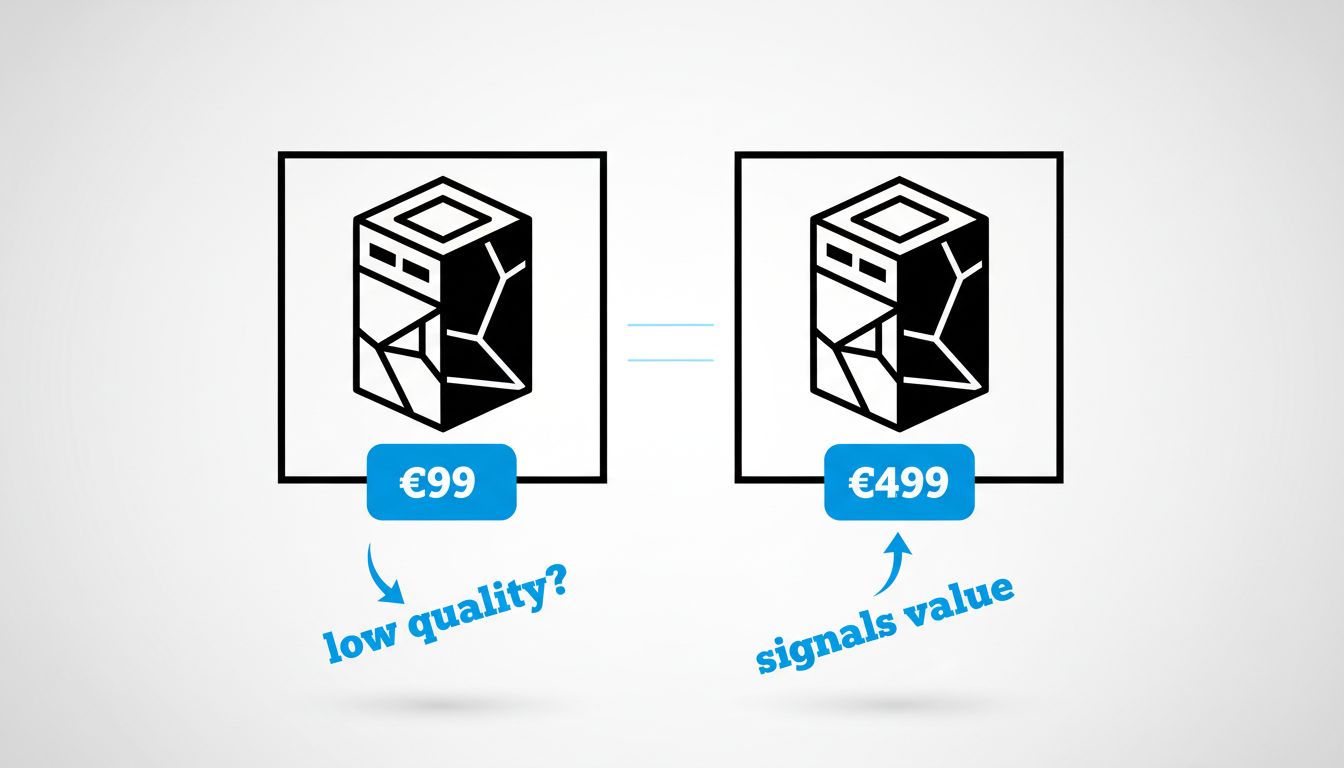
Buyers cannot inspect your product the way they’d inspect a used car. They can’t feel the build quality or run it through stress tests before committing. So they use every available signal to estimate quality, and price is one of the loudest signals they have. When a product is priced dramatically below category norms, buyers don’t think “great deal.” They think “what am I missing?”
This is especially punishing in B2B software, where the person signing the purchase order is spending company money and has career risk on the line. Nobody gets fired for buying Salesforce. People absolutely get fired for championing a $9/month tool that turns out to be a toy. A low price doesn’t reduce perceived risk for that buyer. It amplifies it.
Consumer markets have their own version of this. When Evian can charge a premium over store-brand water, and when the store-brand water sitting next to it sells worse even when the contents are nearly identical, you’re watching price psychology operate in the wild. The product hasn’t changed. The price signal has.
The Sales Process Gets Harder, Not Easier
There’s a persistent myth that lower prices reduce friction in sales. Sometimes they do, at the very bottom of the market, when you’re selling to someone spending their own money on an impulse purchase. For nearly everything else, the opposite tends to be true.
Enterprise procurement is the extreme case. Contracts below a certain dollar amount sometimes don’t even go through formal vendor review processes, which sounds like an advantage until you realize that also means they don’t get surfaced to the actual decision-maker. You’re stuck selling to someone who doesn’t have budget authority. Raise your price past the procurement threshold and suddenly the VP is in the room.
Mid-market is more nuanced, but the pattern holds. A $500/year tool gets evaluated by the person who’d expense it. A $5,000/year tool gets evaluated by a team who’ll actually integrate it into their workflow and, critically, advocate for it internally. Advocacy is how software spreads inside companies. If the price doesn’t signal that this is worth advocating for, you don’t get advocates.
You Can’t Discount Your Way Up
Founders often think of low pricing as a temporary state. Get customers in the door cheaply, prove value, raise prices later. This works less often than people imagine, and the failure mode is brutal.
Customers anchor hard on the price they first paid. When Basecamp has experimented with pricing over the years, they’ve been transparent about how difficult it is to move existing customers off legacy tiers, even when the new pricing is obviously more reflective of the value delivered. Netflix learned the same lesson across multiple painful price-increase cycles. These are large companies with strong brands and high switching costs. A startup with $9/month customers and no brand equity is in a much worse position.
There’s also a customer-quality problem. Low prices attract buyers who are optimizing for low prices. These customers have the highest support burden, the lowest tolerance for any friction, and the first to churn when a competitor undercuts you. You’ve built your early retention numbers on the least valuable cohort. When you try to raise prices to attract better customers, you discover you have very little leverage because those early customers never embedded the product deeply enough to create switching costs.
What Good Pricing Actually Looks Like
The goal isn’t to price high. The goal is to price honestly, which means pricing at a level that reflects the value you deliver and attracts the customers for whom that value is real.
The cleanest exercise is to figure out what problem you solve and what it costs your customer if they don’t solve it. Not in terms of software features, but in terms of actual business outcomes. If your tool saves a team of five people two hours per week, you can do that math. If your tool prevents a category of compliance failure, you can look at what those failures cost. Your price should be some reasonable fraction of the value you create. If you can’t articulate the value clearly enough to do that math, the pricing problem is actually a positioning problem.
Talking to lost deals is more useful than most founders expect. When someone evaluates your product and doesn’t buy, the reason is rarely “too expensive.” More often it’s that they couldn’t justify the purchase internally, which usually means the value wasn’t clear. That’s a different problem with a different solution. Lowering the price doesn’t fix a value communication failure. It just makes you cheaper and harder to sell.
The Floor Has Consequences
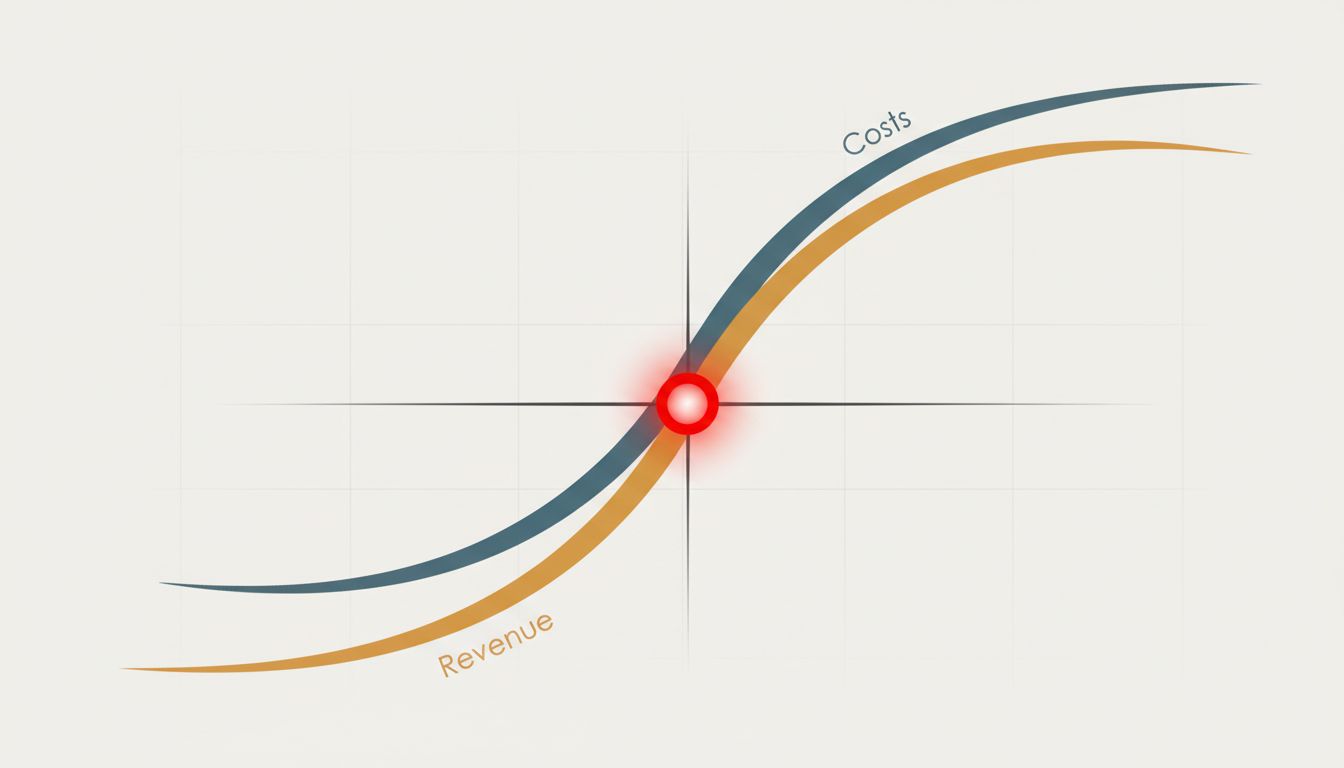
There’s a version of this mistake that plays out slowly and kills companies quietly. You price low, you acquire customers, your revenue looks okay on a per-customer basis but requires massive volume to matter, your CAC makes the unit economics ugly, and you spend years grinding at a price point that was always wrong. The product was good. The price told everyone it wasn’t.
If you’re building something that solves a real problem for a real customer with real money, price it like you believe that. The first time a prospect tells you you’re too expensive, resist the instinct to fold immediately. Ask them what they’re comparing you to. Ask them what it costs them to not solve this problem. The answer will tell you whether you have a pricing problem or a prospect problem, and those require completely different responses.