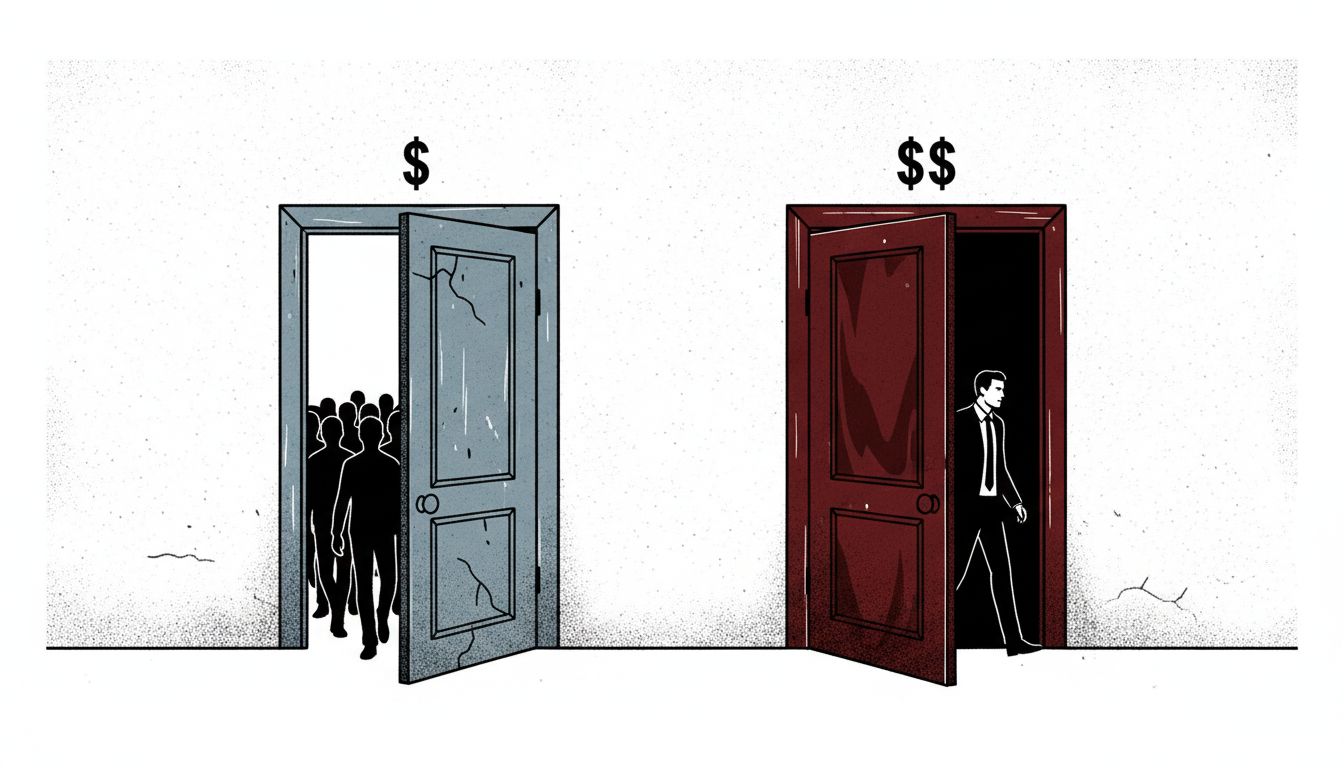
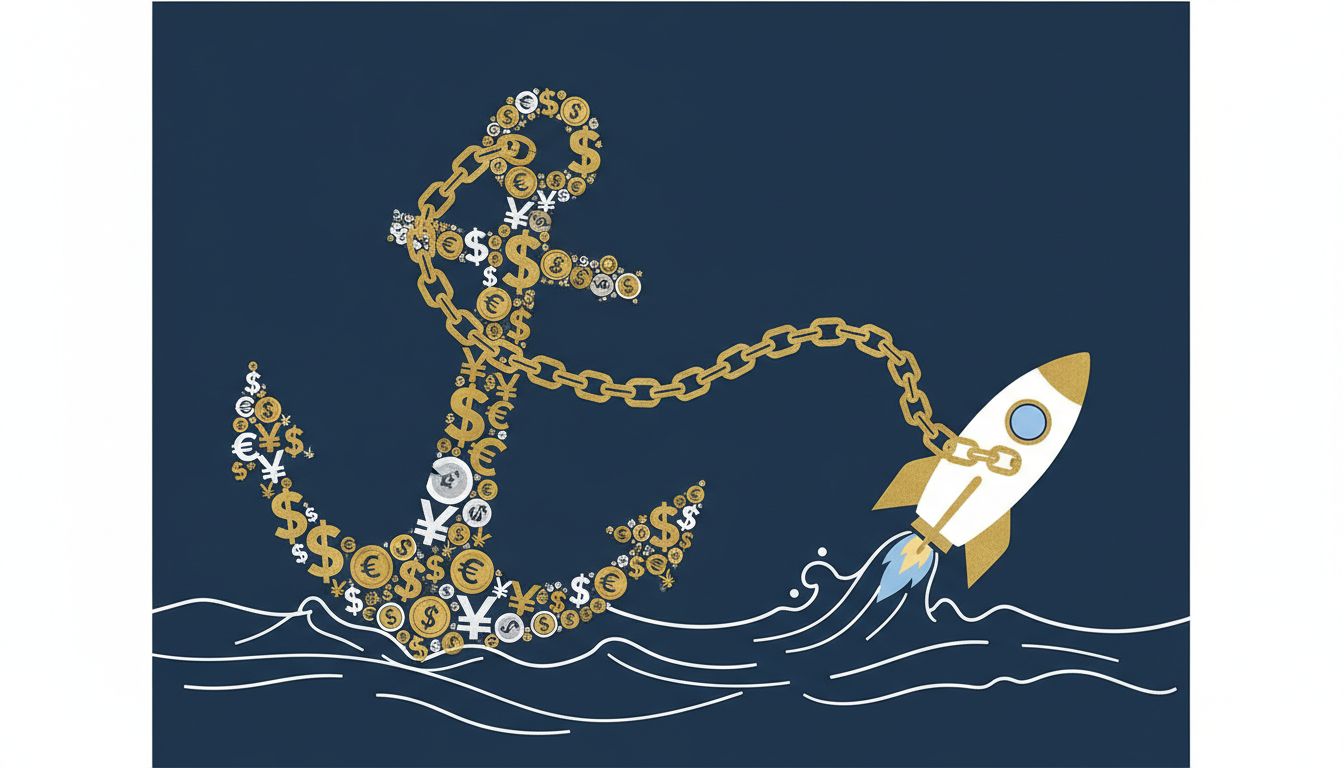
A few years ago, a friend of mine was running a B2B software company. Six months in, a large retail chain offered to pay for a custom version of his product. Real money, six figures, immediate. He took it. Eighteen months later, the company was dead. Not because revenue killed him directly, but because chasing that customer’s specific needs had pulled him so far from his original product vision that he’d built something nobody else wanted. The revenue hadn’t saved him. It had just made the dying slower and more expensive.
This is the trap that early revenue sets, and the founders who avoid it aren’t being romantic about their vision or irresponsible with their runway. They’re making a cold calculation that most early-stage advisors get exactly backwards.
Revenue Tells You What Customers Want Today, Not What They’ll Need Tomorrow
Early customers are not a random sample. They are, almost by definition, the people willing to tolerate an unfinished product, often because their situation is desperate enough or their budget is flexible enough that they’ll take whatever you’ve got. When you optimize for their willingness to pay, you optimize for their specific problems, their workflow, their organizational quirks.
This sounds like exactly what founders should be doing. It isn’t. The signal you need at the earliest stage isn’t what someone will pay for today. It’s whether you’re solving a problem that’s widespread and durable. Those are different questions, and the quickest way to stop asking the second one is to start being paid to answer the first.
The founders who say no to early revenue are buying themselves time to run the right experiments. They’re talking to fifty potential customers instead of building deeply for three paying ones. That deliberate delay is how you find the shape of a real market.
Early Revenue Creates Organizational Gravity You Cannot Fight
Once a customer is paying you, everything in your company bends toward keeping them. Your engineers fix their bugs first. Your roadmap reflects their requests. Your sales materials describe their use case. This is rational behavior. It’s also a slow-motion product death.
This dynamic is well understood among founders who’ve lived through it, but it’s consistently underweighted by those who haven’t. Revenue doesn’t just fund the company. It restructures the company around whoever is paying. If that customer happens to represent your ideal market, great. If they don’t, you have just handed organizational control to the wrong person without signing anything.
The startups that hold off on revenue long enough to find the right customer archetype before they start closing deals end up with a much cleaner product, because every decision they made before that point was made for strategic reasons, not because someone was threatening to churn.
Premature Revenue Poisons Your Fundraising Story
This one surprises people, but it’s real. If you have early revenue from customers who don’t look like your target market, you have a problem when you go to raise. Investors will ask about those customers. They’ll want to know why the product needs to change if people are already paying for it. You’ll spend half your pitch explaining away your own traction.
Worse, if that early revenue is lumpy or concentrated (one customer making up seventy percent of ARR, for example), sophisticated investors will discount it heavily or treat it as a liability. You would have been better off with clean usage metrics from unpaid users who actually represent your thesis.
The founders who say no early are often explicitly thinking about this. They’re keeping their story clean for the raise they know is coming, and they’re refusing to let a handful of early customers define what the product is before they’ve had a chance to define it themselves.
The Counterargument
The obvious objection here is that revenue is validation, and that building without it is how you end up with a beautiful product nobody wants. This is true, and the founders who hide behind “not ready for revenue” as an excuse to avoid the discomfort of selling are making a different mistake.
The distinction matters. Saying no to revenue is only a strategy when you’re actively building a different kind of signal instead. Talking to users constantly, running structured experiments, watching behavior, measuring whether people come back without being prompted. If you’re not doing that work, then declining revenue isn’t strategic patience. It’s just avoidance.
There are also categories where early revenue is genuinely validating regardless of customer fit. If you’re in a market where anyone paying you at all is surprising, early customers prove the category exists. The calculation looks different there.
And some founders genuinely can’t afford to say no. If you have six weeks of runway, the abstract strategic purity of avoiding bad revenue matters less than keeping the lights on. Why startups with less funding consistently beat the well-capitalized competition is a real phenomenon, but it assumes you survive long enough to execute the strategy.
The Bet Is About Who Gets to Define Your Product
Saying no to early revenue is not a philosophy. It’s a question of control. The founders who do it well are asking: who do I want making product decisions for the next two years? Themselves, or whoever happens to be willing to pay in month four?
Most founders give up that control without realizing it, because the money arrives looking like success. By the time they understand what they traded away, they’re eighteen months in and building for a customer they never wanted to build for.
The ones who say no are not being precious. They are protecting the thing that actually determines whether the company works: the right to figure out what the product should be before someone else’s urgency makes that decision for them.