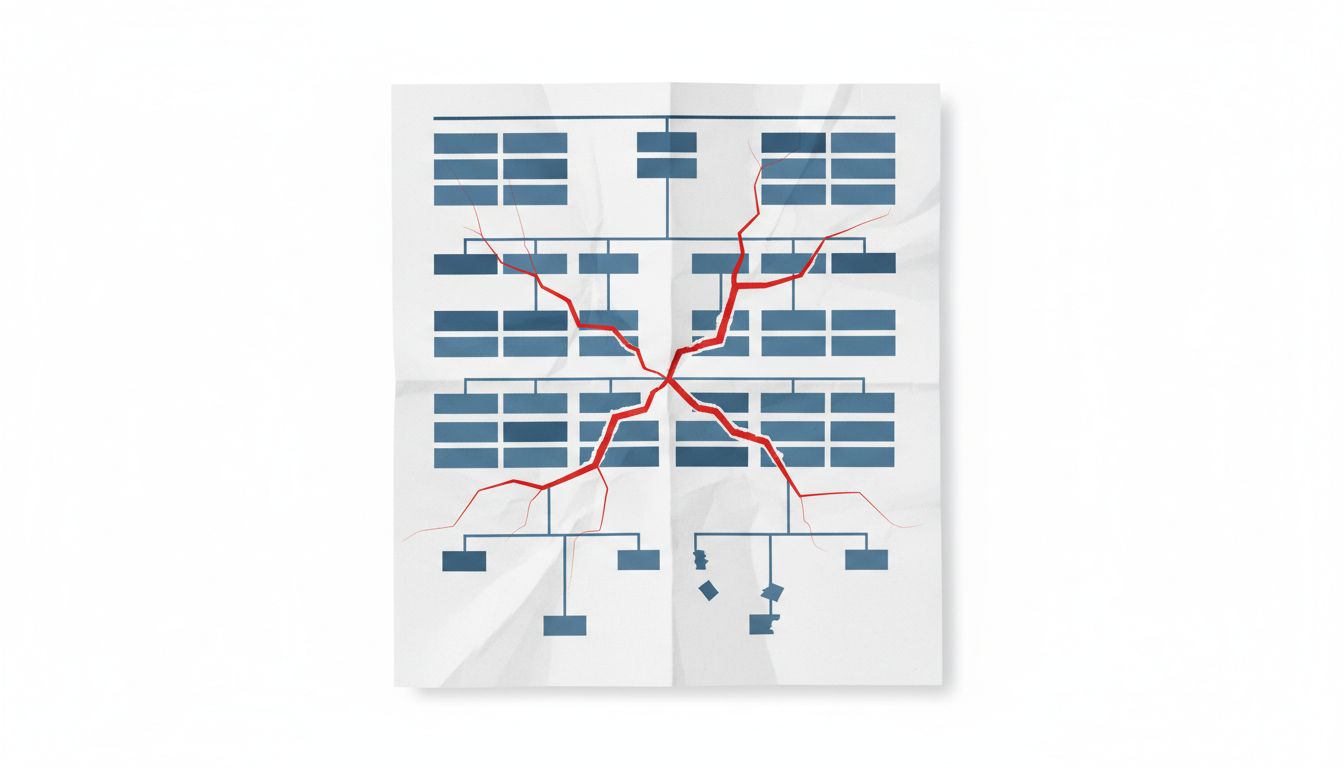

A friend of mine spent two years building a project management tool for creative agencies. He was obsessed with the fact that nothing exactly like it existed. He raised a seed round on the originality pitch, hired a team, and shipped. Then a larger competitor noticed the niche, built a nearly identical feature set in four months, and absorbed his entire user base within a year. He blamed the market. He blamed the competitor’s distribution. He blamed timing.
He never blamed his strategy, which was the actual problem. He had built a first-mover trap and climbed inside it voluntarily.
The gospel of startup culture says that being first is everything. Get there early, establish the moat, own the category. This is wrong often enough that repeating it uncritically is doing founders real harm. Second-mover advantage is not a consolation prize for companies that missed the window. It is a deliberate strategy that has produced some of the most durable businesses in technology, and founders who refuse to consider it are leaving a significant tool off the table.
The pioneer pays the education tax
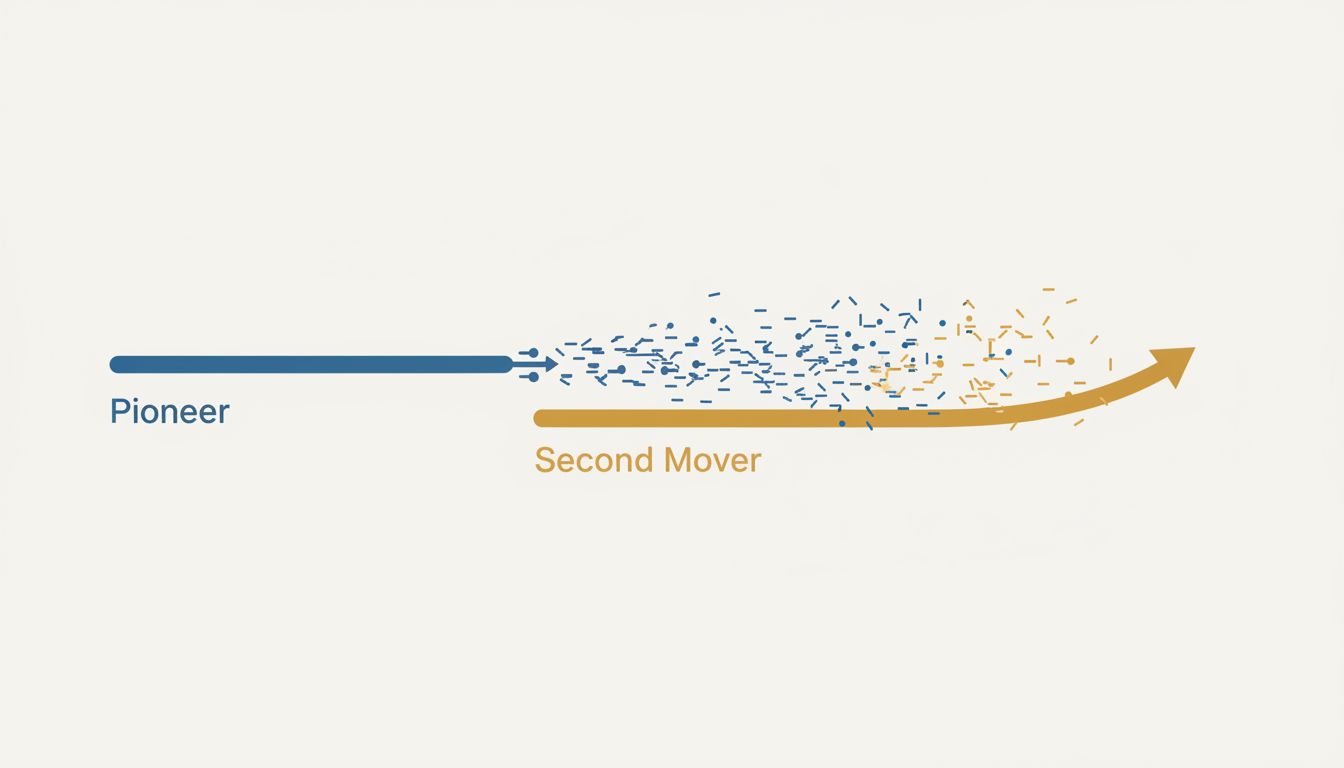
First movers spend enormous resources teaching the market that a problem is worth solving. They fund the think pieces, the conference talks, the sales cycles where the first thirty minutes are spent explaining why the category exists at all. Second movers inherit that education for free.
Salesforce did not invent CRM. Siebel Systems and others had been selling on-premise CRM for years before Marc Benioff started pitching SaaS delivery in 1999. What Salesforce inherited was a market that already believed in CRM software, already had budget lines for it, and was already frustrated with what it had. The education was done. Salesforce just showed up with a better distribution model.
Facebook did not invent social networking. MySpace and Friendster spent years normalizing the behavior. Google did not invent search. Android did not invent the smartphone operating system. In each case, the second (or third, or fourth) mover let the pioneer absorb the costs of market creation, then competed on execution.
Watching users actually use something is worth more than any spec document
Here is what first movers cannot buy: real behavioral data from real users interacting with an actual product in the real world. They have to guess, build, and discover their mistakes expensively.
A second mover can observe. You can watch what frustrates users of the incumbent product. You can read the negative reviews, the forum complaints, the feature requests that went unanswered for three years. You can talk to churned customers and ask them directly what they wished existed. This is not cheating. This is just being smart about where insight comes from.
Slack was not the first team messaging tool. HipChat had been around since 2010. But Stewart Butterfield’s team watched how people actually used persistent team chat and built something that addressed the friction points the pioneer had accumulated. The result was a product that felt like it understood users better, because in a real sense it did. It had four years of public evidence to learn from.
Distribution compounds faster than technology
Technological leads erode. A feature that takes twelve months to build gets replicated in four once the market validates it. What does not erode as quickly is distribution: the relationships, the brand trust, the integrations, the enterprise contracts with multi-year terms.
A second mover who enters a validated market early enough can invest immediately in distribution rather than splitting resources between market education and product development. This is a meaningful advantage. The pioneer is fighting a two-front war. The second mover only has one front.
This is part of why the math on pricing often surprises founders. A second mover with a clear distribution wedge can often charge more than the pioneer, not less, because buyers already understand the value of the category and are looking for a credible alternative rather than a discount.
The counterargument
The obvious objection is that network effects change the calculation. In markets where value is created by the network itself, the first mover builds a wall that compounds over time. This is real. LinkedIn’s value is partially a function of the fact that everyone is already on LinkedIn. Switching costs are high and cross-network value is low.
But most startups are not building network-effect businesses. They are building tools, services, and platforms where the product itself has to earn retention every month. In those markets, the network-effect objection is mostly rationalization. Founders reach for it because it sounds sophisticated and because admitting “we’re entering a validated market and trying to execute better” does not make for a compelling origin myth.
The other objection is that by the time a market is validated, it is too late. This is occasionally true and usually false. Markets take longer to consolidate than founders assume, and the window for a credible second mover is often measured in years, not months.
Being second is a strategy, not a failure
The mythology of the heroic first mover persists because it is a good story. Venture pitches are narrative documents and “we invented this category” is a better opening line than “we watched someone else invent this category and figured out how to do it better.” But the pitch is not the business.
The companies that win markets are usually the ones that entered them at the right time with a clear view of what the pioneer got wrong. That requires watching, learning, and being honest about what you actually know versus what you are assuming. It requires more intellectual humility than most founders are comfortable admitting they need.
Being first is a fine strategy when you genuinely have no choice. But treating it as inherently superior to being second is not a strategic position. It is a vanity position. And vanity is expensive.