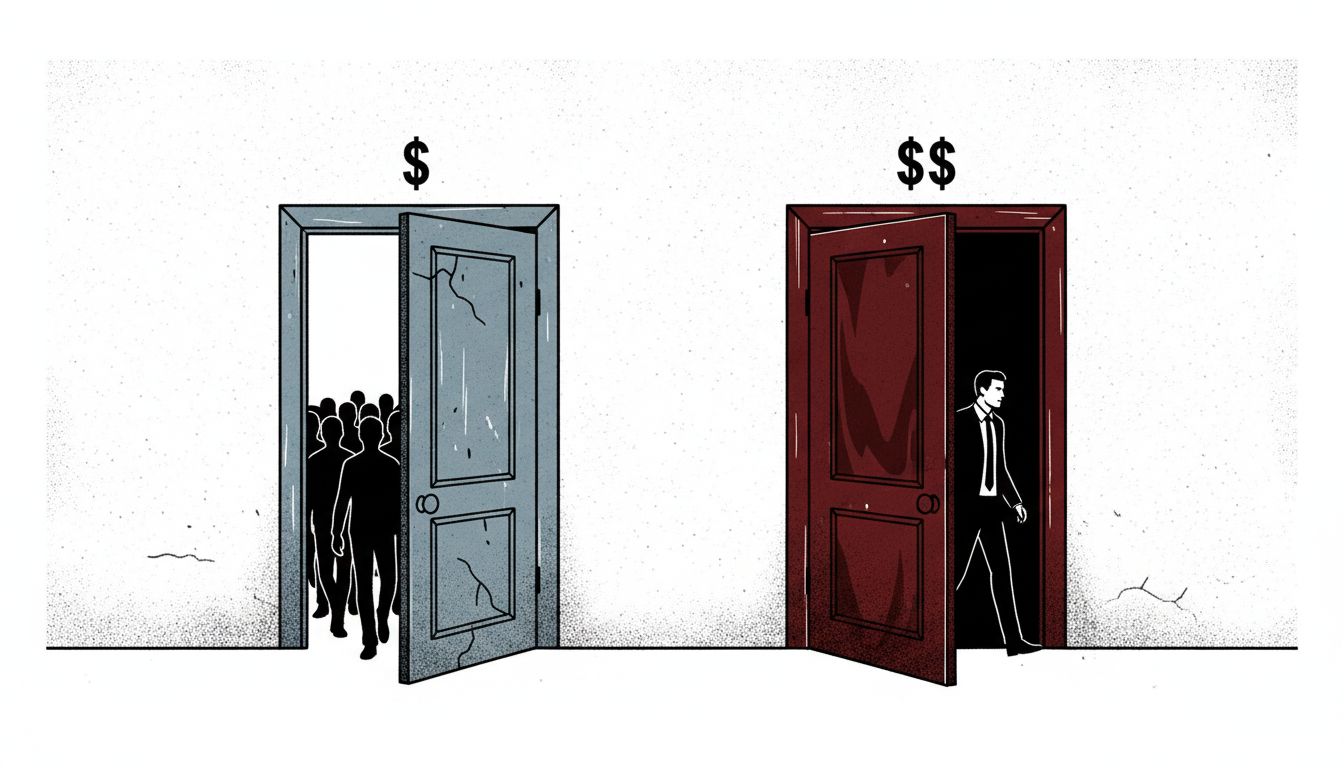

Marcus had just finished his pitch to a room of twelve people when one audience member raised her hand and, without any ceremony, said: ‘This is solving a problem that doesn’t exist for customers who can’t afford it.’ Her name was Priya. Six weeks later, Marcus hired her as his first employee. Eighteen months after that, she had reshaped the product so fundamentally that the original pitch deck was embarrassing to look at. The company is now profitable. Priya is the VP of Product.
This is not a feel-good coincidence. It’s a pattern, and founders who understand it are making a deliberate, strategic choice that cuts against almost everything the startup world tells you about team-building. Early-stage founders who win often do so by ignoring the conventional playbook entirely, and hiring your biggest critic is one of the clearest examples of that principle in action.
The Myth of the True Believer
Startup culture romanticizes belief. We love stories about the scrappy team of zealots who outworked everyone because they knew, in their bones, that they were right. And yes, conviction matters. You cannot build something hard without it.
But there’s a version of that story that kills companies quietly, and it goes like this: founder has idea, founder hires friends who love the idea, team spends eighteen months building the thing, the thing launches, nobody wants it.
The belief was never the problem. The absence of friction was.
When your first five employees agree with your core assumptions, you don’t test those assumptions. You just execute on them, faster and with more confidence, right off a cliff. The early stage of a startup is fundamentally a search for truth about your customer, your market, and your product. Hiring people who already agree with your answers makes you worse at that search, not better.
Why Critics Make Better Early Employees
Here’s what actually happens when you hire a genuine critic into an early-stage team.
First, they ask the questions customers will ask, before customers ask them. When your product has a confusing onboarding flow, your true-believer hire navigates through it on tribal knowledge. Your critic gets stuck, names the friction, and forces you to fix it before it costs you real users.
Second, they create an internal immune system. Every startup drifts toward magical thinking under pressure. When the metrics are bad, the instinct is to find a framing that makes them look less bad. A critic on the team resists that drift. They are the person in the room who says, out loud, that the numbers mean what they mean.
Third, and this one is underappreciated: critics are often right. Not about everything. But about something important. When Priya told Marcus he was solving a problem that didn’t exist, she was half-right. The problem existed. The customer segment he was targeting couldn’t articulate it clearly enough to pay for a solution. That distinction mattered enormously for pricing, for messaging, for which market to enter first. She saw it before he did because she wasn’t invested in his original assumptions.
This connects directly to a dynamic we’ve seen elsewhere in how good teams operate. The smartest startup founders deliberately choose co-founders who disagree with them for the same core reason: disagreement is a feature, not a bug, when the goal is finding out what’s true.
The Difference Between a Critic and a Cynic
This is where founders get tripped up. There’s a meaningful difference between someone who challenges your assumptions because they want the thing to work, and someone who challenges your assumptions because they fundamentally don’t believe anything can work.
A critic says: ‘Your pricing model has a hole in it, here’s what I think is causing it, here’s what I’d test.’ A cynic says: ‘Nobody is going to pay for this.’ One of those people is useful. The other is just expensive.
The filter for this is surprisingly simple: does their criticism come with curiosity? The best critics are genuinely interested in whether they’re wrong. They push back hard, but they update when presented with evidence. They’re not attached to being right; they’re attached to getting it right. That’s the person you want.
You’re also looking for what you might call domain-informed skepticism. The critic who’s most valuable is the one who knows enough about your space to identify the specific thing that’s likely to fail. A generalist who just expresses doubt is much less useful than a domain expert who can point at the exact mechanism of failure and explain why.
What This Looks Like in Practice
Founders who do this well tend to find their first critic-hires through adversarial conversations, not recruiting pipelines. The person who asked the hard question at the demo. The potential customer who passed but gave specific, pointed feedback. The advisor who told you your go-to-market strategy was backwards.
The conversation that follows is important. You go back to that person and you say something like: ‘You identified something real. I want to fix it. Do you want to help?’ What you’re testing in that conversation is whether their criticism was a one-time transaction or whether they have genuine ongoing interest in solving the problem.
One thing to watch: early critics, once hired, sometimes swing too far toward accommodation. They’ve been brought inside, they feel the team’s investment in the work, and they soften. The best founders actively protect against this by creating structures where honest dissent is expected and rewarded, not just tolerated. Some teams build this into retrospectives. Others create a standing role for someone to steelman the counterargument before any major decision. The mechanism matters less than the intention.
Early-stage startups win not by knowing more than incumbents but by strategically knowing less, and the internal critic is one of your best tools for maintaining that productive uncertainty. The moment you stop questioning your assumptions is usually the moment your competitors start catching up.
The Hiring Process Itself Is a Signal
There’s a useful side effect of this approach that most founders don’t talk about. When you hire your critics, you learn something important about your own ability to receive hard feedback. If you find yourself rationalizing why the person who challenged you most wouldn’t be a good fit, that’s worth sitting with.
Some founders discover they can absorb critical feedback and update quickly. Others discover they can’t, and that’s actually critical information about the kind of company they’re building. A team of believers around a founder who can’t update is not a feature. It’s a slow-motion problem.
The founders who hire their biggest critics are doing something that looks counterintuitive from the outside but is completely rational once you understand what early-stage companies actually need. They’re not looking for validation. They’re looking for truth. And they’ve figured out that the fastest path to truth runs directly through the person most likely to tell them they’re wrong.