In 2009, a small app called Mailbox launched with a waitlist so long that it showed you your position in a queue of hundreds of thousands. You watched a progress bar crawl. You refreshed. You told your friends because telling your friends moved you up the list. Dropbox acquired Mailbox for around $100 million before most people had ever used it. The product was fine. The manufactured scarcity was exceptional.
This is the playbook that a certain stripe of startup has been running ever since, and it deserves a clear-eyed look at what it actually is and why it actually works.
Obscurity Is Not an Accident
The instinct to read vague landing pages and invite-only launches as scrappy execution is understandable but wrong. When a startup launches with a cryptic tagline, a single-field email form, and no explanation of what the product does, that is usually a choice. Founders who have shipped products before know that nothing kills early momentum faster than explaining yourself too clearly to people who aren’t ready to care.
The logic runs like this: a product that anyone can understand immediately is a product that anyone can dismiss immediately. Deliberate obscurity forces a selection process. The people who investigate further, who sign up without knowing exactly what they’re signing up for, who join a Discord server to piece together what the company is building, those people are self-selecting into your earliest and most committed cohort. You didn’t find them. They found you, which means they feel ownership over the discovery.
Clubhouse ran this exact game in 2020. iOS-only, invite-only, no public archive of rooms. People were genuinely uncertain what it was for. That uncertainty drove curiosity. Invites circulated like contraband. At its peak, the app had tens of millions of users and a valuation north of four billion dollars. The product itself had real problems, which became obvious the moment the gates opened and the scarcity illusion collapsed. But the pre-launch strategy was close to perfect.

The Mechanics of Manufactured Exclusivity
There are a handful of concrete tactics that show up repeatedly in successful pre-launch obscurity campaigns, and they are worth naming plainly.
Waitlists with social referral mechanics are the most familiar. Robinhood’s pre-launch waitlist used position-sharing to turn users into recruiters. You could see your number. You could improve it. The number was largely meaningless, but it gave people something to act on and something to talk about. By launch, Robinhood had nearly a million people waiting.
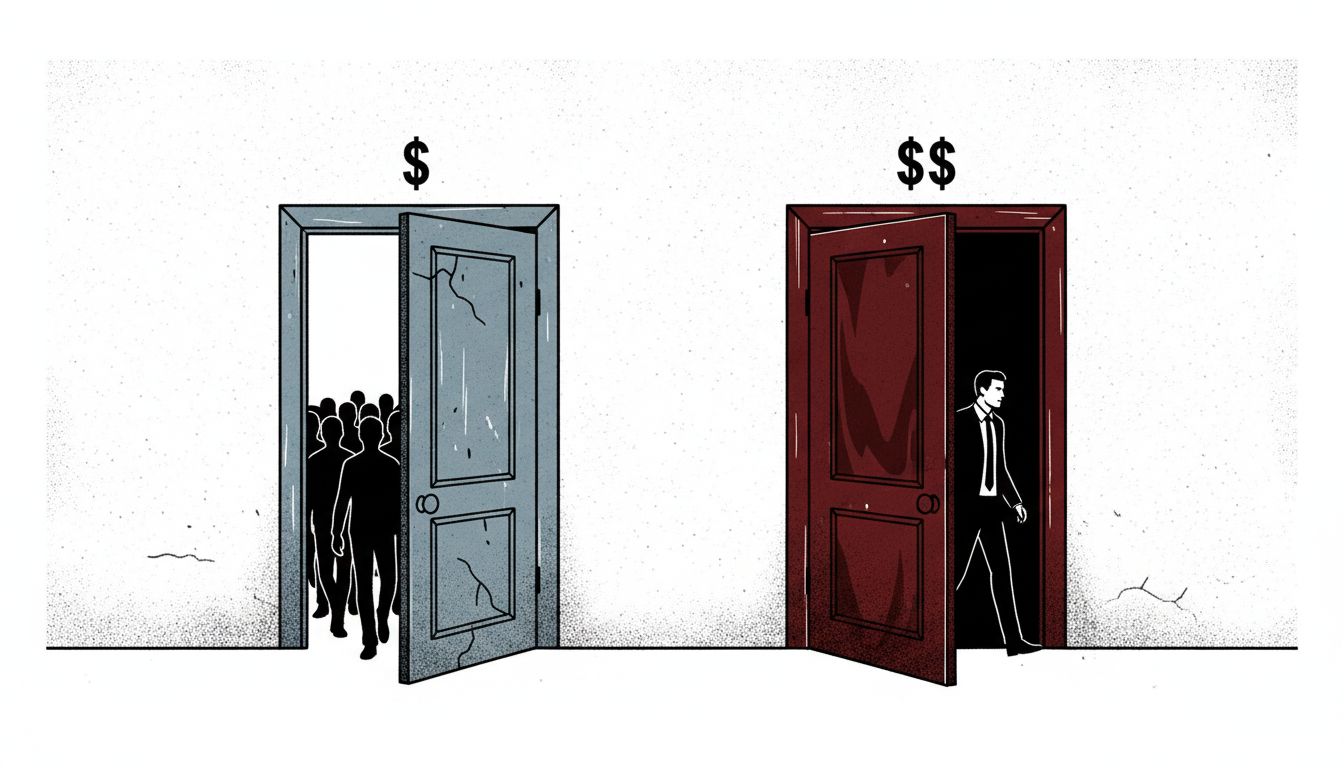
Invite-only access does something slightly different. It makes the existing users feel like insiders and makes outsiders feel like they’re missing something worth having. Gmail ran invite-only for years. Google Docs did the same thing early on. The invite isn’t just a growth mechanic, it’s a signal that the people already inside were chosen.
Cryptic branding and minimal explanation work because ambiguity creates conversation. When Figma was growing quietly among design teams before its public push, the product didn’t need a mystery campaign because the work itself was the secret weapon. But many startups with less obvious product advantages use vague positioning to generate the same effect artificially. If you have to ask what it does, you’re already engaged.
Beta communities, usually on Discord or Slack, serve a dual purpose. They give early users a place to bond with each other, which creates social investment independent of the product, and they give the founding team a dense signal stream about what’s actually working. The community becomes a feature before the product is finished.
Why This Works on Smart People Too
The uncomfortable truth is that the people most likely to dismiss manufactured exclusivity as a cynical trick are often the most susceptible to it. Sophisticated early adopters have a strong identity around being early. Being first to a category, being invited, being in a private Slack with forty other operators before anyone else knows the product exists, that has social currency in tech circles. The obscurity strategy targets that identity directly.
This is not a knock on early adopters. Understanding that you’re being played doesn’t make you immune to the play. Scarcity works on everyone because it worked on your ancestors. Humans have a deeply wired response to things that are hard to get, and a startup that limits access is exploiting the same cognitive machinery as a restaurant with a three-month waiting list.
The more sophisticated version of this strategy doesn’t just manufacture scarcity. It builds genuine community around a shared problem, which means the obscurity has something real underneath it. Superhuman did this well. The onboarding was famously friction-heavy, requiring a one-on-one call before you could use the product. That friction was positioning, it told you that this was not software for people who didn’t care about email. The people who went through it told other people because they’d invested enough to feel ownership. The product also happened to be genuinely fast, which helped.
When the Strategy Backfires
The Clubhouse arc is instructive. Obscurity builds pressure. When the pressure releases, you need a product that can hold the crowd that shows up. Clubhouse opened up, the novelty evaporated, and the core use case (synchronous audio conversations with strangers) turned out to have a narrower appeal than the waitlist numbers suggested. The cult following was real. The mainstream product was not.
This is the failure mode that founders systematically underestimate. Your invite-only early users are not representative of anyone except themselves. They’re early adopters, often in tech, often in cities, often with high tolerance for rough edges and genuine excitement about new categories. The rest of the market is not these people. A product that a thousand enthusiasts love in a closed beta can still completely fail to cross over.
The obscurity strategy also has a ceiling on how long you can run it. Ambiguity is a pre-launch asset and a post-launch liability. Once you need real revenue from real customers, mystery becomes friction. The startup that never fully explained itself runs into investors and enterprise buyers who need to understand what they’re buying. The community that formed around the idea starts to fracture when the product ships and reality doesn’t match the projection they’d built in their heads.
What Founders Should Actually Take From This
The lesson isn’t to copy the tactics. The lesson is to understand what the tactics are actually doing, which is building a committed early user base that feels invested before the product is finished. That investment is enormously useful because it generates real feedback, real evangelism, and real tolerance for imperfection during the period when your product most needs those things.
You don’t need a manufactured waitlist to do this. You need to find thirty people with the exact problem you’re solving and give them something that helps, even if it’s half-built. You need them to feel like collaborators rather than customers. The obscurity playbook is a shortcut to that feeling, and like most shortcuts, it works until it doesn’t.
The startups that come out of this period with durable businesses are usually the ones where the community formed around a genuine insight, not just around the feeling of being included. The invite code gets you in the door. The product has to do the rest.