A founder I know spent eighteen months acquiring users at $9 a month because she was terrified of losing them to a competitor at $12. By the time she raised her Series A, she had 4,000 customers who expected unlimited support, frequent feature releases, and a price that hadn’t moved since Obama was president. Her investors wanted her to raise prices. Her customers threatened to churn. She was stuck.
This is not a story about greed. It’s a story about what low prices actually buy you, and why the answer is almost never what founders think.
1. Your Price Is Your First Signal to the Market
Before a prospect reads a single line of your pitch deck, your price has already told them something. Price is positioning. A $49/month tool and a $490/month tool are not competing on the same dimension, even if the feature list is identical. One signals “utility,” the other signals “investment with expected returns.”
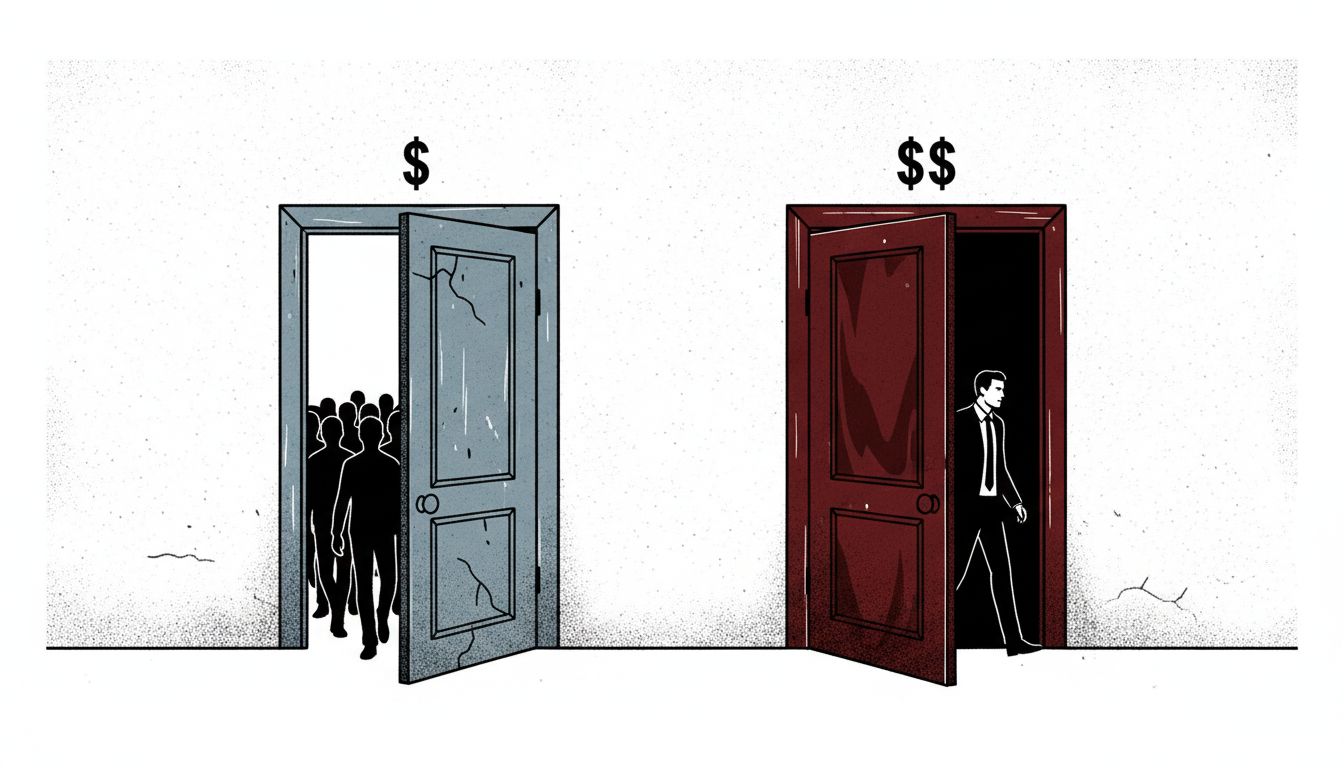
Founders who price low to reduce friction are usually right that friction goes down. What they don’t account for is that the buyers walking through that lower-friction door are fundamentally different buyers. They’re more price-sensitive, slower to expand, quicker to churn for a slightly cheaper alternative, and less likely to become the reference customers you actually need.
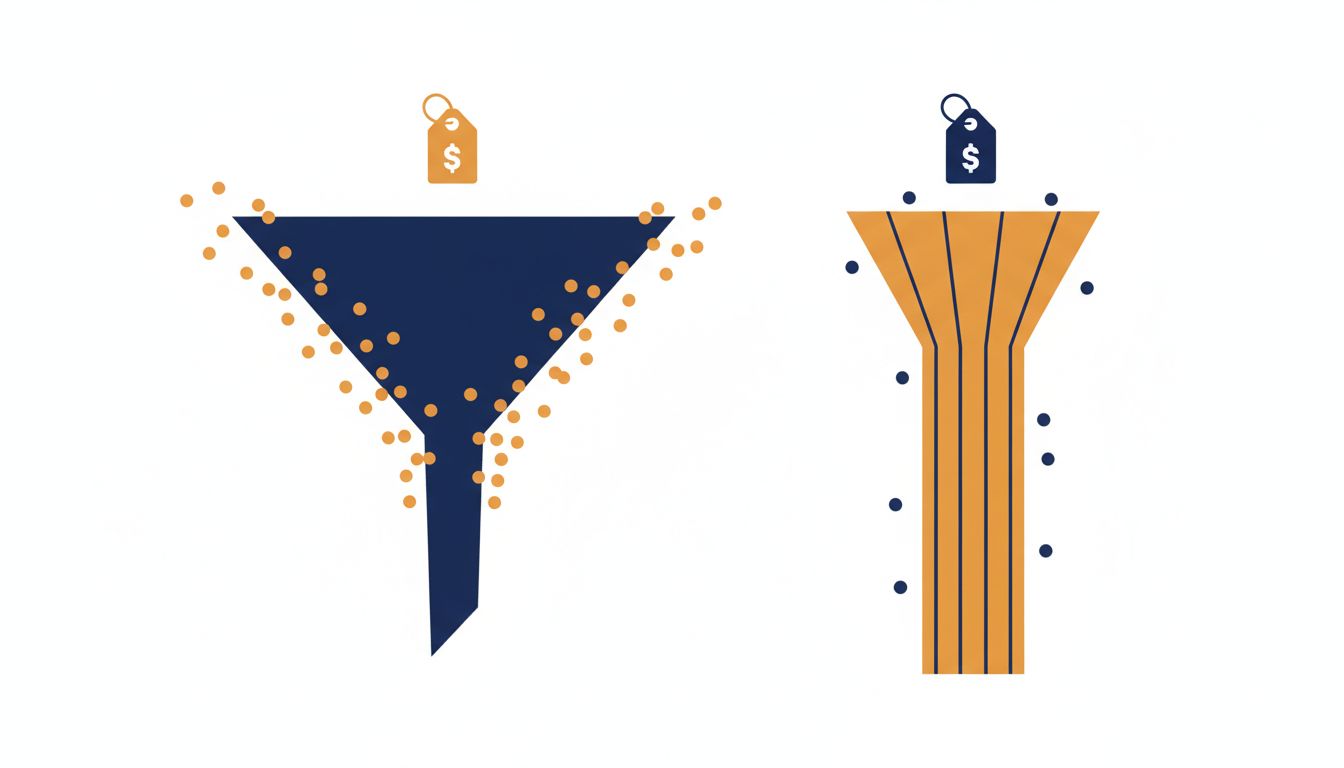
The buyers your business needs to build case studies, generate referrals, and anchor your reputation are almost always the ones who evaluated you at a higher price and decided you were worth it. As the piece on why your first hundred customers are the wrong ones to scale from puts it, the customers who show up first are often the ones least representative of the market you actually want.
2. Low Prices Don’t Reduce Churn. They Attract the Customers Most Likely to Churn.
The logic founders use to justify low prices usually goes: “If we’re cheap enough, customers won’t bother canceling.” That’s backwards. Customers who chose you because you were cheap will leave the moment something cheaper appears, or the moment they’re asked to pay for renewal and can’t immediately justify the cost.
High-paying customers behave differently. Not because they have more money (though that helps), but because the act of paying a significant amount triggers a psychological commitment. They integrate more deeply. They push their teams to actually use the product. They complain loudly when something breaks, which is early warning you’d otherwise never get. They’re invested.
Low-price customers often don’t complain. They just quietly stop showing up, and you find out three months later when you run a cohort analysis and wonder why half of Q2 never opened the app after week two.
3. Discounting Burns Your Ability to Ever Raise Prices
Once you’ve trained a market segment to expect a certain price, moving that price is one of the hardest things in business. It’s not just the mechanics of the conversation. It’s that customers who signed at $29/month have built their internal budget justifications, their usage patterns, their sense of what you’re worth, around that number.
Startups that price low and try to raise later don’t just face resistance. They face customers who feel deceived, even when the original pricing was clearly labeled as introductory. “We grandfathered our early users” is something you hear a lot. It usually means those users are now a permanent drag on unit economics, generating support costs proportional to paying customers while contributing a fraction of the revenue.
Price increases are possible (see what Basecamp, or more recently many SaaS incumbents, have done) but they require enormous trust and positioning equity to pull off. If you built the product on the promise of affordability, you don’t have that equity to spend.
4. The Math on Customer Acquisition Cost Doesn’t Work at Low Price Points
Early-stage founders often underestimate what it actually costs to acquire a customer. Add up the founder time, the marketing spend, the SDR salaries, the conference fees, the free trials that converted at 20%, and the cost per acquired customer is almost always higher than it looks on a spreadsheet.
If your average contract value is $600 a year, and your fully-loaded CAC is $400, you’re not building a scalable business. You’re running a very busy operation with thin margins that leaves almost nothing for product development, support, or the inevitable customer success hires you’ll need once you hit scale. Raise the price to $2,400 a year, and that same CAC structure produces a company worth building.
This isn’t theoretical. The reason venture-backed B2B SaaS companies chase enterprise deals isn’t prestige. It’s that the unit economics of a $50K annual contract are categorically better than twelve $4K contracts, even before you account for support load and churn rates. The second-cheapest pricing tier being the most profitable thing most SaaS companies sell is a related phenomenon: the market consistently reveals that buyers are willing to pay more than founders assume.
5. High Prices Force Product Discipline
This one surprises founders when they hear it. Charging more doesn’t just improve your revenue. It improves your product judgment.
When a customer is paying $2,000 a month, and they tell you the reporting module is broken, you fix it. When a customer is paying $29 a month and says the same thing, it’s easy to deprioritize. The result is that low-price products accumulate debt in exactly the areas that matter most to serious buyers, while high-price products develop genuine depth in the features that drive retention.
There’s also a forcing function on the sales process. When you’re charging real money, you have to get on calls. You have to understand your buyer’s actual workflow, their competing priorities, their definition of success. Founders who have done this consistently report that those conversations reshape the product roadmap in ways that no amount of low-touch feedback ever could.
6. Survival Requires Margin, and Margin Requires Courage
Most startups that die don’t die because they ran out of a good idea. They die because they ran out of money while waiting for the market to validate a price they were always too afraid to charge.
The pattern is consistent: underpriced product acquires a base of unprofitable customers, company raises a round to fund growth, growth reveals that the unit economics don’t close, company raises again at worse terms or shuts down. Every step of that sequence was initiated by a pricing decision made in month two when the founders were scared and wanted to feel like something was working.
Charging more from day one is not a guarantee of survival. Plenty of overpriced products fail for obvious reasons. But a startup with healthy margins buys itself time to get the product right, time to find the real customer, and time to make the inevitable mistakes without those mistakes being fatal. That time is worth more than the few dozen customers a discount would have bought you.