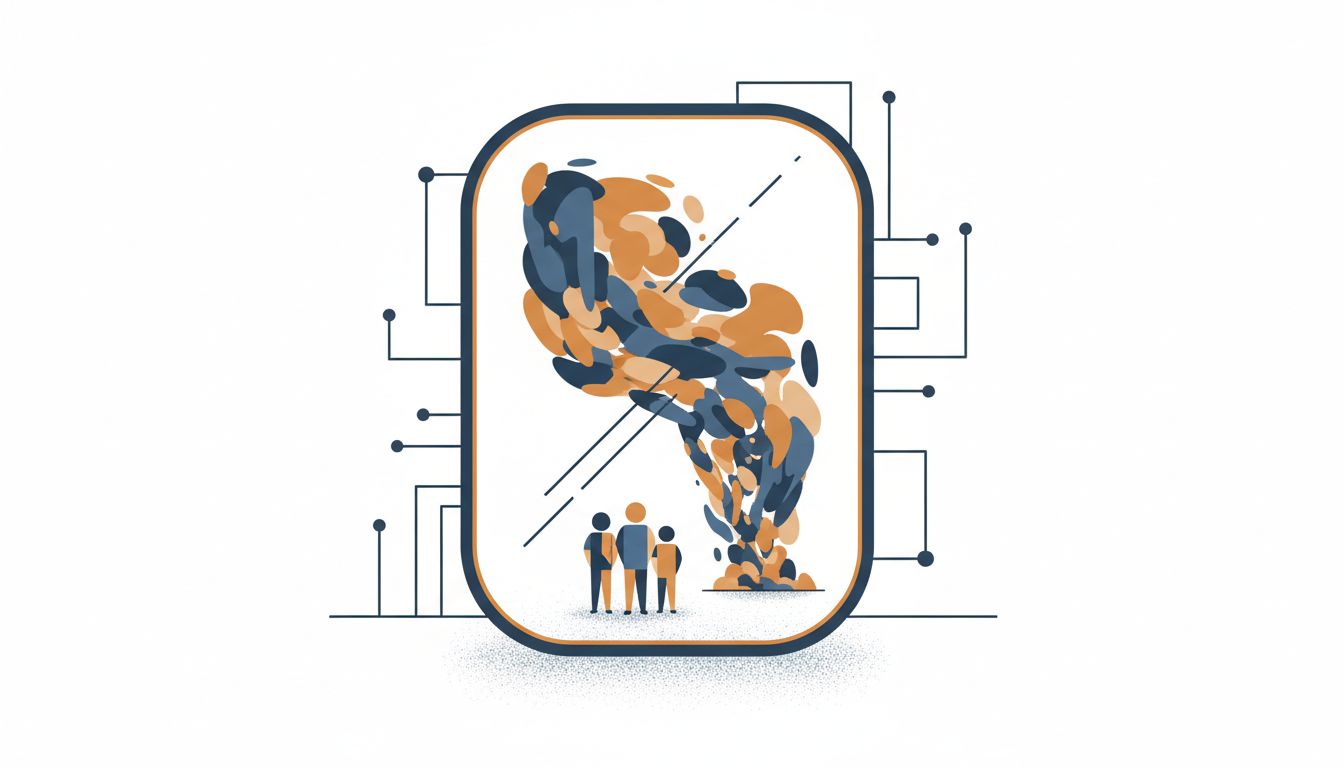
A founder I know spent three months building a competitive analysis spreadsheet. It had 47 columns. Color-coded tabs. A weighted scoring matrix he was genuinely proud of. He presented it to his co-founder like it was the Rosetta Stone. Then he spent another six weeks updating it. His competitor launched, grabbed early users, and iterated twice before this guy shipped anything. The spreadsheet was never wrong. It was just never useful.
This is analysis paralysis in its most recognizable form, and it kills more startups than bad products ever do. But here is the thing nobody talks about: the founders who avoid it are not just better at making decisions. They are better at not making certain decisions at all. They have developed what I call strategic ignorance, and it is one of the most underrated skills in the startup world. The best tech leaders succeed by knowing less than you think, and it is not an accident.
What Strategic Ignorance Actually Means
Strategic ignorance is not laziness. It is not skipping your homework or winging it on vibes. It is the deliberate, disciplined choice to stop gathering information on a specific question and commit to an answer, even when more data is theoretically available.
The distinction matters. Most founders fail because they treat every open question as equally worth answering. What pricing model should we use? What should we name the product? What features should ship in v1? What color should the button be? They research all of it with the same intensity, and then they wonder why they feel paralyzed.
Strategic ignorance means building a mental hierarchy of questions. Some questions genuinely require deep research because getting them wrong is catastrophic and hard to reverse. Most questions do not. Most questions require a reasonable answer, fast, so you can learn from reality instead of from spreadsheets.
This is why successful startups deliberately choose terrible first domain names. It sounds insane until you realize that the domain name question is not actually important at launch. What is important is whether anyone wants what you are building. Founders who understand strategic ignorance recognize that spending three weeks optimizing a domain name is spending three weeks not finding out if the product matters.
The Neuroscience Side Nobody Talks About
Here is something that surprised me when I started digging into it. Your brain is not actually at its best when you are consciously grinding through a decision. The prefrontal cortex is good at logic, but it is also the part of your brain that overthinks, second-guesses, and loops. The deeper insight-generating machinery in your brain tends to fire when conscious attention is elsewhere.
There is real neuroscience behind why your brain saves its best ideas for software installation wait times. The moments when you stop forcing a decision are often when the right answer surfaces. Strategic ignorance, in a strange way, is not just about skipping bad questions. It is also about creating the mental space for your brain to actually solve the good ones.
Founders who are perpetually in research mode never create that space. They are always feeding the conscious analysis machine and starving the intuition engine. The best founders I have watched operate with intense bursts of focused input followed by deliberate disengagement. They gather enough, then they stop and move.
How to Build the Skill
The practical mechanics of strategic ignorance come down to a few habits that are simple to describe and genuinely hard to develop.
Set a decision deadline before you start researching. Not after. Before. If you give yourself a week to answer a question, you will take a week regardless of when you hit sufficient information. Set the clock first, and your brain will optimize for extracting the signal faster.
Categorize questions by reversibility. A pricing decision that you can change in 48 hours is not the same as a technical architecture decision that will take 18 months to undo. One deserves 20 minutes of thought and a bias toward action. The other deserves real rigor. Most founders flip this, spending weeks on reversible calls and rushing the irreversible ones because they are scared of them.
Kill the completeness instinct. Research has a natural stopping point that most people never hit because they keep discovering adjacent questions. You learn about competitor pricing, which makes you wonder about their customer acquisition costs, which makes you want to understand their funding history. This is not research anymore. This is procrastination with good posture. Good enough information, acted on fast, beats perfect information acted on late. Every time.
Where This Gets Hard
The counterintuitive trap with strategic ignorance is that smart people fall into it more than anyone else. If you are good at analysis, analysis feels productive. It generates output. It produces artifacts. You can show your work. You feel like you are doing something.
This is especially dangerous in technical founder teams, where the instinct to fully understand a problem before touching it is baked in from years of engineering culture. Digital minimalists outperform power users because they stopped trying to master everything, and the same principle applies to startup decision-making. Mastery of the information landscape is not the goal. A good-enough answer that ships is.
There is also a team dynamic problem. In founding teams, the person with the most information often drives the decision, which means the person doing the most research has disproportionate influence. This sounds fine until you realize it creates an incentive to keep researching, because research equals power. Strategic ignorance has to become a shared value, not just a personal habit.
The Real Competitive Advantage
I want to be direct about what strategic ignorance is actually buying you. It is not just speed, though speed matters enormously in early markets. It is the accumulation of real-world feedback loops.
Every week you spend in analysis is a week your product is not in front of users. It is a week you are not learning what actually happens when real people interact with what you built. The founders who master strategic ignorance do not make better decisions in a vacuum. They make faster decisions and then upgrade those decisions with real data, which is a fundamentally better process than trying to model reality from a distance.
The 47-column spreadsheet guy eventually launched. His product was fine. But he had lost six months to a process that made him feel certain without making him correct, and in that window, the market had moved. Strategic ignorance would not have saved him from uncertainty. Nothing could. But it would have gotten him into the arena faster, where uncertainty can actually be resolved.
That is the whole point. You do not eliminate the unknown by studying it harder. You eliminate it by shipping.