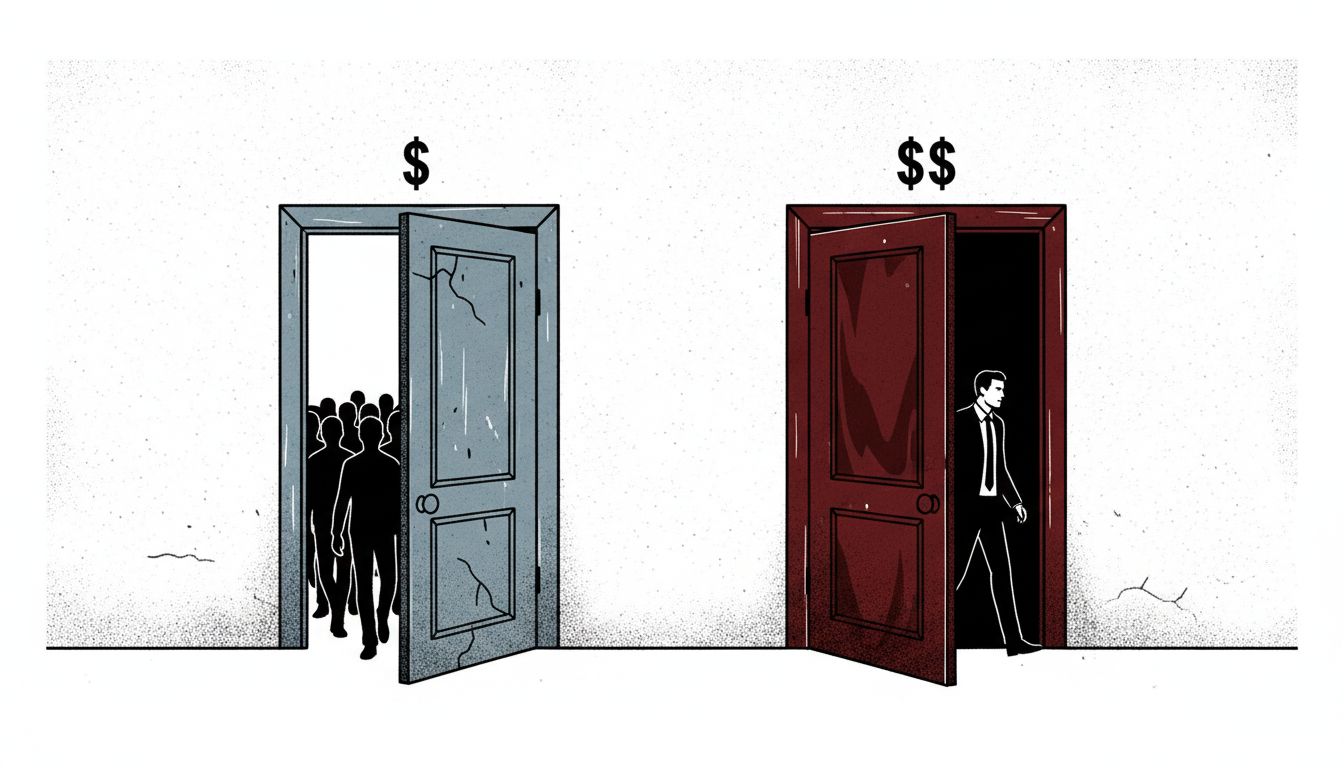

Picture this. You’re at a dinner party, someone mentions a startup they’re excited about, and you spend the next ten minutes trying to Google it because you cannot figure out how to spell it. Lyft. Fiverr. Tumblr. Flickr. Drizly. You eventually find it, you bookmark it, and somehow the friction of finding it made you remember it more than if it had been called something like “RideShare Pro.” That’s not a coincidence. It’s a strategy, and the founders behind these names understood something about human memory and market positioning that most naming consultants will never tell you.
This kind of counterintuitive thinking shows up everywhere in startup culture. Successful startups often win not by knowing more than incumbents but by strategically knowing less, and deliberately weird names are a perfect example of weaponized ignorance of conventional wisdom.
The Misspelling Is the Point
Here’s the thing about names like Tumblr or Fiverr. They’re not misspellings because the founders were bad at spelling. They’re misspellings because those exact strings of letters were available as domain names, trademarkable in virtually every jurisdiction, and crucially, they forced a small moment of cognitive effort from anyone who encountered them.
Cognitive science has a name for this: disfluency. When your brain has to work slightly harder to process something, it encodes it more deeply. Research out of Princeton has shown that information presented in harder-to-read fonts is actually remembered better than the same information in clean, easy fonts. The same principle applies to names. A name that makes you pause, even for half a second, gets stored more durably than one that slides right past you.
Dropr. Bebo. Xero. Kaggle. These names all share a quality: they don’t exist in your existing mental vocabulary, which means your brain has to create a new file folder just for them. That’s a branding win you cannot buy with a Super Bowl ad.
The Domain Problem Nobody Talks About
There’s a more practical reason behind this trend that founders are often more willing to admit in private than in press releases. The English language ran out of clean, available, short domain names sometime around 2005. By the time most of today’s successful startups were being named, grabbing “Ride.com” or “Store.com” or “Photo.com” would have cost anywhere from six to seven figures. That’s capital that could hire engineers, buy ads, or extend your runway by months.
So founders started playing linguistic games. Drop a vowel. Double a consonant. Swap a C for a K. Suddenly you have a name that’s unique, ownable, and costs twelve dollars a year instead of a hundred thousand. The constraint forced creativity, and the creativity turned out to have compounding brand value nobody expected.
This is also why so many startups from a certain era have names that sound vaguely like real words but aren’t quite. They were built inside a constraint, and the constraint produced something genuinely differentiated. It’s the same reason successful apps look simple because years of work were spent removing things. The final product doesn’t show you the constraints that shaped it.
Weird Names Create a Search Moat
Here’s the part that actually surprised me when I first thought it through. Impossible-to-spell names are, paradoxically, better for search than intuitive ones.
Think about it. If you name your company “Quick Books,” you’re competing with every variation of those two common words in every search index. But if you name it “Xero” (as the New Zealand accounting software company did), you own that search term almost entirely. Nobody is accidentally searching for Xero when they mean something else. The weirdness of the name creates a search moat.
This matters enormously in the paid acquisition world too. If your brand name is a common English phrase, your cost-per-click on branded search terms stays elevated because competitors can bid on those terms and confuse users. Weird names compress that window of ambiguity. Users who type “Lyft” into Google are almost certainly looking for Lyft.
The Pronunciation Test Is Not What You Think
Every naming consultant will tell you to apply “the pronunciation test,” meaning can you say the name out loud and have someone spell it correctly? Conventional wisdom says if they can’t, the name fails. I’d argue the opposite is true for certain categories of startup.
If someone hears “Spotify” and doesn’t immediately know how to spell it, they’ll try a few variations in a search bar. Spotify’s SEO is strong enough that all reasonable misspellings lead back to the right place. The search attempt is itself a form of engagement. The user has now actively sought out the brand, which is a qualitatively different experience than passively encountering it.
The brands that should worry about the pronunciation test are the ones competing in markets where trust and clarity are the primary purchase drivers, think healthcare, legal services, financial products. For those categories, a weird name creates friction at the wrong moment. But for consumer apps and B2B SaaS tools where discovery often happens through word-of-mouth anyway, the friction of a strange name is a feature, not a bug.
This tracks with something broader about how the best startup strategies look wrong from the outside. Startup founders are deliberately hiring their harshest critics as first employees because they understand that the most uncomfortable choices often produce the strongest results. Naming is no different.
What This Means If You’re Naming Something Right Now
If you’re sitting on a naming decision, here’s the practical framework hiding inside all of this.
First, check whether the name creates a unique search fingerprint. If you Google the name and the results page is muddy with unrelated content, start over. Second, apply the memory test rather than the spelling test. Tell someone the name verbally, wait a week, and ask if they remember it. A name that sticks imperfectly is still sticking. Third, do the trademark search early. The weird-spelling approach only works if you can actually own the name legally and protect it.
And honestly, be suspicious of names that feel too comfortable. The most forgettable startup names are the ones that made the most intuitive sense in the conference room. “CloudSync Pro.” “DataBridge.” “SmartFlow.” Nobody is searching for those names with any loyalty. Nobody is telling a friend about them at a dinner party.
The founders who picked Kaggle, Fiverr, and Lyft weren’t being quirky for its own sake. They were making a calculated bet that a name you have to think about is a name you’ll remember. Two decades of evidence suggests they were right.