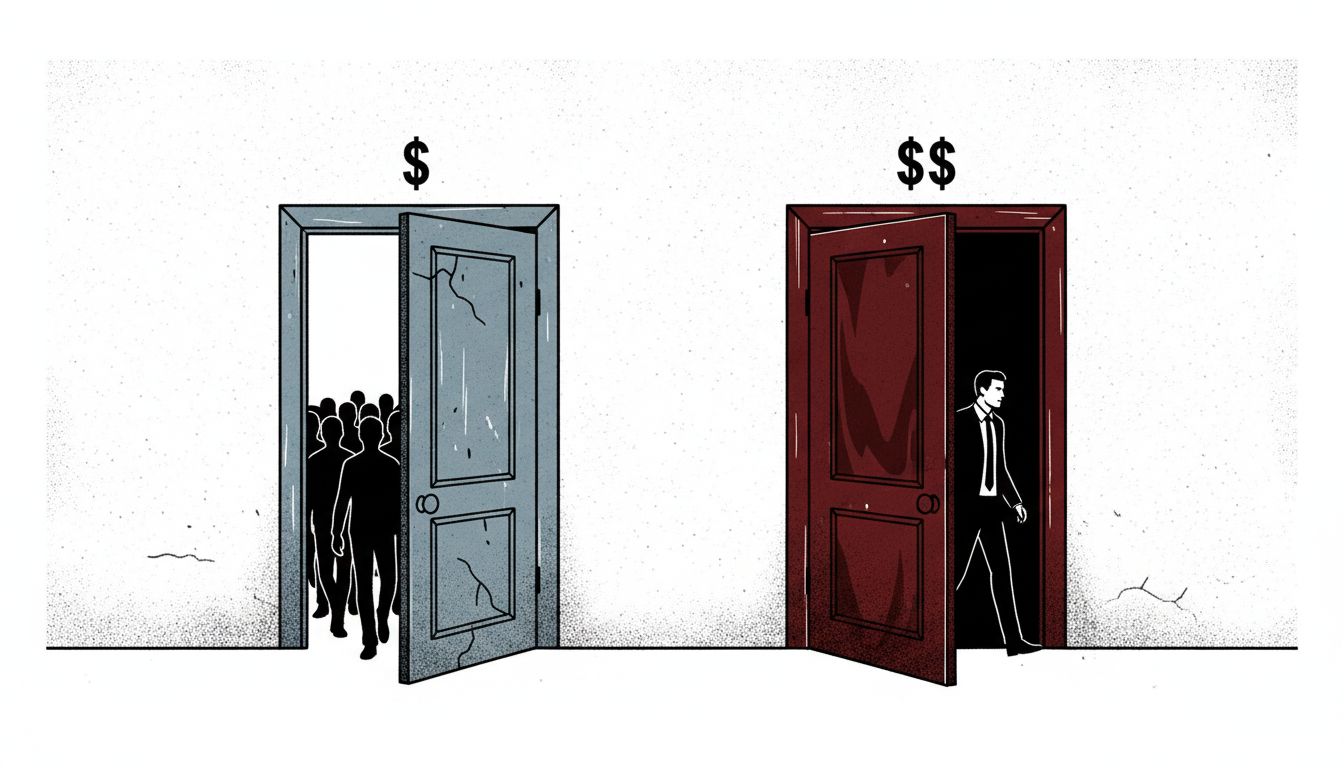

A founder I know spent the first fourteen months of his company doing custom software consulting for mid-size manufacturers. He charged by the hour, took on single-client projects, had no recurring revenue, no network effects, no platform story. Every investor he met told him the same thing: unscalable, unfundable, come back when you have something real. He now runs a vertical SaaS company with a nine-figure valuation. The consulting work was the product. He just hadn’t built the software yet.
This pattern shows up more often than the mythology of startup fundraising allows for. Founders who start with deliberately unfundable models aren’t failing to understand what investors want. Many of them understand it perfectly, and they’re choosing something else on purpose.
What Makes a Business Model Unfundable
Venture capital has a specific and fairly narrow definition of what deserves funding: high gross margins, scalable customer acquisition, defensible network effects or data moats, a path to market dominance. Services businesses, geographically constrained models, single-customer dependencies, and anything requiring significant human labor per unit of revenue fail this screen almost automatically.
The VC model is built on power law returns. A fund needs outlier outcomes to survive, so every investment has to carry the theoretical possibility of returning the entire fund. That constraint eliminates enormous categories of legitimate, profitable, even fast-growing businesses. When a founder pitches something unfundable, most investors assume the founder doesn’t understand the game. Sometimes that’s true. Often it isn’t.
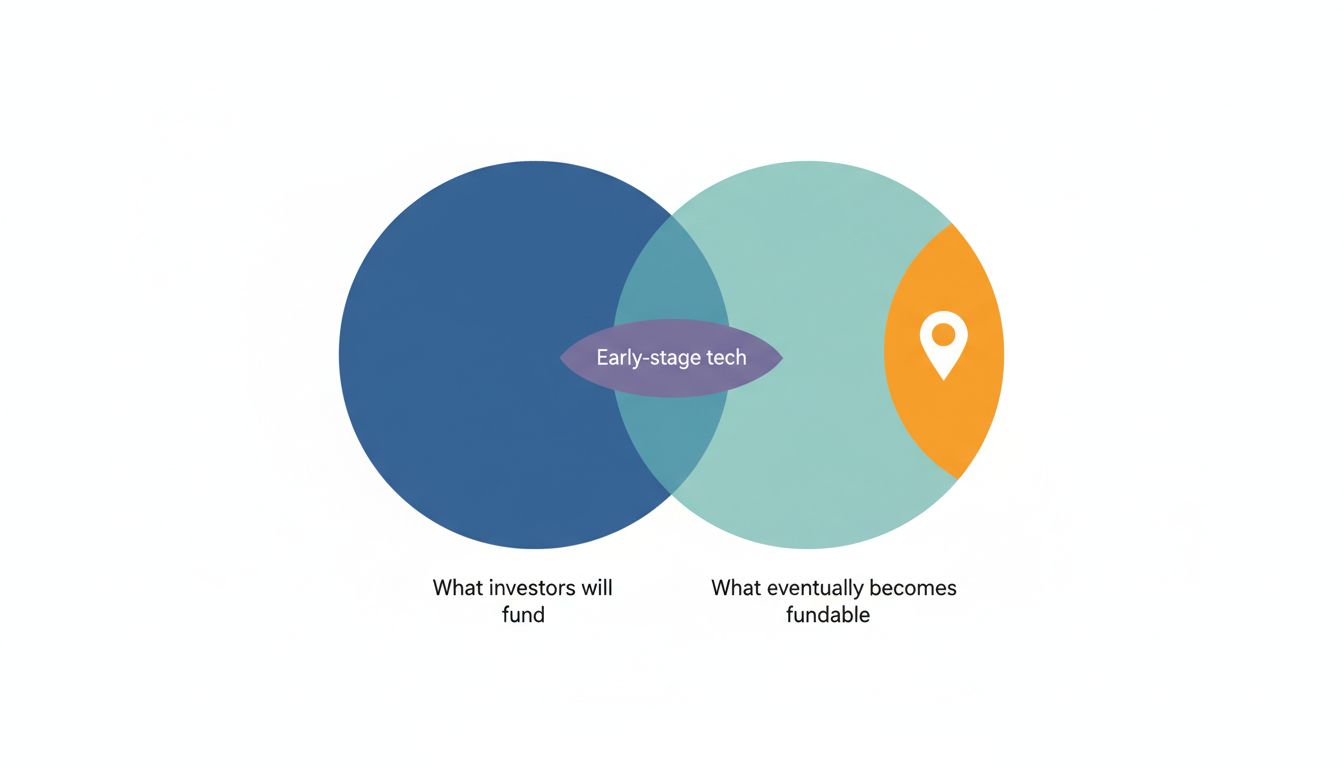
The unfundable-first approach is a deliberate technique for building something that, eventually, becomes very fundable indeed, while avoiding the risks that come with taking money before you know what you’re building.
The Information Problem That Early Funding Makes Worse
Here’s the thing nobody says out loud in pitch meetings: raising money before you understand your customer is one of the more reliable ways to build something nobody wants, fast. Capital accelerates whatever you’re doing. If you don’t yet know what you should be doing, acceleration makes you wrong faster and at greater expense.
The unfundable model solves an information problem. When you’re doing consulting, custom work, or services, you are paid to be inside your customer’s problem. You see the workflows, the frustrations, the workarounds, the politics. You understand why the obvious solution doesn’t actually work. This is expensive knowledge to acquire any other way. Hiring researchers doesn’t give it to you. Running surveys doesn’t give it to you. Building and iterating in the dark doesn’t give it to you.
Stripe’s founders spent significant time embedded in the developer experience problem before they built the abstraction that became their product. 37signals (now Basecamp) built web apps for clients before productizing their project management tools. The services phase looked unfundable. It was actually a research budget that paid for itself.
Why the Constraint Is the Point
An unfundable model does something else that’s easy to miss: it imposes a constraint that forces real commercial discipline from day one. You have to charge real money, immediately. You have to justify your value to a paying customer who has alternatives and doesn’t care about your vision. You can’t subsidize growth with investor capital to hide whether anyone actually wants what you’re selling.
This is more valuable than it sounds. A lot of startups that raise early rounds spend years optimizing metrics that can be gamed with cash, and discover far too late that their underlying unit economics don’t work. The unfundable model can’t hide this. Every month of existence requires either generating revenue or stopping.
There’s a parallel here to how some founders beat well-funded competitors by deliberately constraining their own customer base. The constraint isn’t a bug. It’s a forcing function that produces better decisions.
The Optionality That Looks Like a Trap
Founders who choose unfundable models in year one are preserving a specific kind of optionality that taking money destroys. Once you have investors, you have a specific mandate. You’ve told a story about what you’re building, and you are now obligated to build it. Pivoting away from that story requires painful conversations, sometimes board votes, often returning capital. The incentive to stay the course, even when the course is wrong, is enormous.
The founder doing consulting or services in year one can observe what her customers actually need and build toward that target, which may be quite different from what she originally expected. She isn’t locked into a narrative. The downside is she’s working harder for less money than she’d have with a funded team. The upside is she’s building toward a real problem rather than the problem she imagined before she knew anything.
This is a genuine tradeoff, not a free lunch. The unfundable phase is usually brutal. The hours are long, the revenue is lumpy, and the business doesn’t look impressive from the outside. Founders who thrive in it are people who can tolerate ambiguity and aren’t optimizing for status signals like announced funding rounds.
The Transition Moment
The tactic only works if you actually transition. Plenty of founders get comfortable in the unfundable phase and never leave it. They build good consulting businesses or services firms, which is fine, but it’s a different outcome than the one they were aiming for.
The transition happens when you’ve learned enough to know exactly what software or product would have made your services work better, faster, or at scale. You’re not guessing at this point. You’ve watched the problem up close for a year or more. You’ve seen which parts of the work were high-value and which were repetitive. The product you’re going to build is a distillation of that experience, not a hypothesis.
When founders arrive at a fundraise with this kind of knowledge, the conversations are different. They’re not pitching a theory. They’re explaining a mechanism they’ve already observed operating in the real world. Investors notice the difference. The specificity of the customer insight, the confidence about what actually matters, the lack of hedging on core assumptions. These founders often raise faster and at better terms than founders who went straight to pitching.
The Venture Capital Blind Spot This Exposes
The fact that this approach works reveals something true and a little uncomfortable about early-stage VC. The screening criteria designed to find fundable businesses also screen out many of the best future fundable businesses, because those businesses don’t look like themselves yet.
Venture capital is optimized to fund things that already look like venture-scale businesses, which means it systematically underweights the early stages of companies that will become venture-scale businesses through a non-obvious path. This is why so many great companies have origin stories that don’t match their current description. The origin story involved something small, manual, geographically limited, or service-heavy that would have failed every standard VC filter.
It’s worth noting that VCs are often buying market exposure rather than betting on specific winners, which means the incentive to fund the canonical-looking startup is structural, not accidental. Founders who understand this can work around it rather than trying to look fundable before they are.
What This Means
If you’re in the early stages of a company and you’re worried your current model doesn’t look fundable, consider whether that’s a problem or a strategy. The relevant questions are: Are you learning things about your customer that you couldn’t learn any other way? Are you generating real revenue that validates real demand? Are you preserving the flexibility to change direction based on what you observe?
If the answer to those questions is yes, the unfundable model might be doing exactly what it’s supposed to do. The goal isn’t to be fundable from day one. The goal is to build something worth funding, which often requires a phase that looks like something else entirely.
The founders who figure this out usually don’t talk about it publicly until after the fact. The unfundable phase doesn’t make good press releases. It makes good companies.