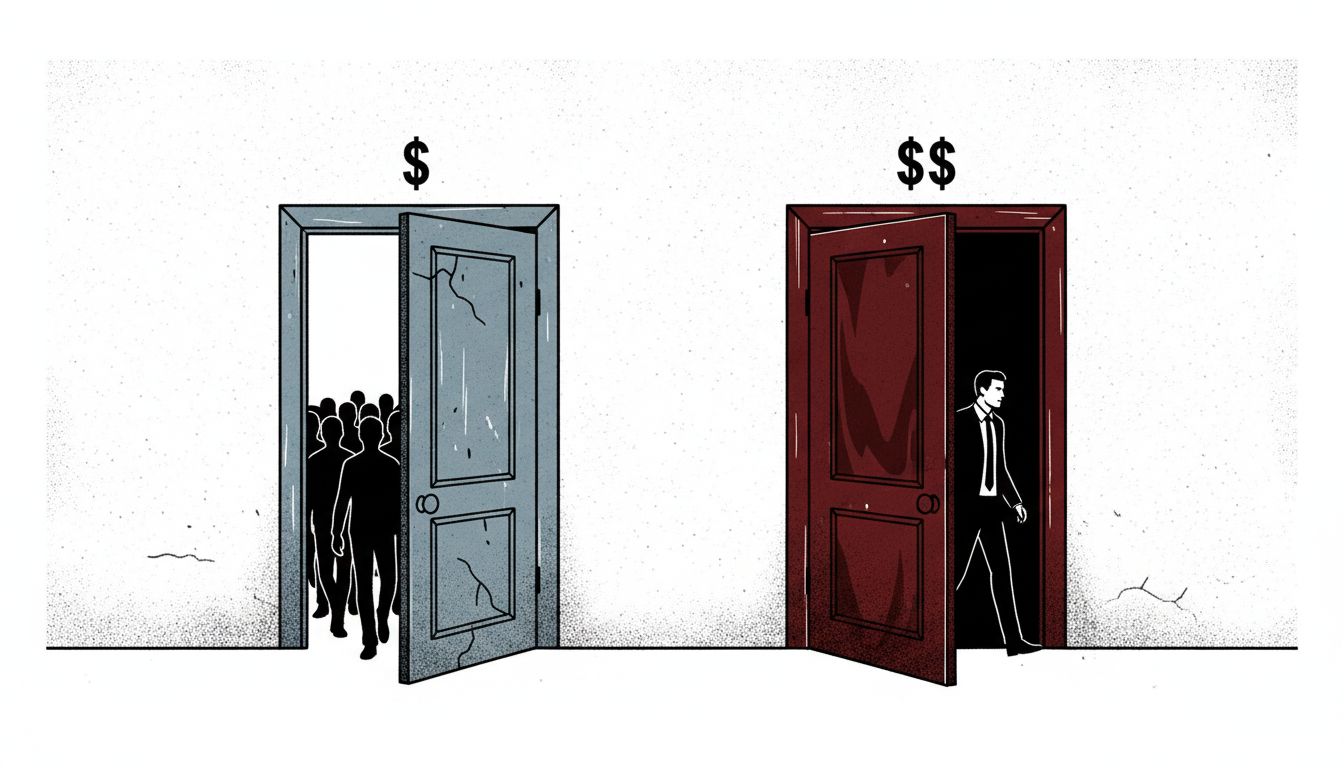

Picture a founder sitting across from a potential customer, demoing a product that can’t do half of what the customer just asked about. The founder smiles, nods, writes it down. Later, back at the office, the team debates whether to build it. They decide not to. Six months later, that startup raises a Series A. The competitor that spent eighteen months building every feature the customer asked for? Still in beta, burning cash, wondering what went wrong.
This is not an accident. The intentional incomplete launch is one of the most misunderstood and most powerful strategies in early-stage startups. And almost nobody talks about it honestly. Most startup mythology still worships the comprehensive product, the polished experience, the everything-works-on-day-one launch. That mythology is expensive. It has killed more promising companies than bad markets ever did.

The Real Cost of Building Everything First
Here is the thing about software: building it is not the hard part. Deciding what to build is. Every feature you add before you have real users is a bet. Some of those bets will pay off. Most won’t. And unlike chips on a roulette table, features don’t just cost money when they lose. They cost you forever, because now you have to maintain them, document them, explain them to new users, and untangle them when you need to change something else.
There’s a reason software engineers end up rewriting working code every few years. A huge part of what they’re untangling is the graveyard of features that made sense at the time but calcified into the architecture like sediment. The startup that launches lean avoids inheriting that debt before it even has revenue.
Dropbox launched as a video. Not a product, a video. The actual sync functionality was rudimentary. File sharing had roughly forty competitors. None of that mattered, because the video told them something irreplaceable: people actually wanted this. The waiting list went from 5,000 to 75,000 overnight. That is not a story about building fast. That is a story about learning fast.
What “Minimum Viable” Actually Means (And What It Doesn’t)
The term MVP has been tortured into meaninglessness. Founders use it as an excuse to ship broken garbage. Investors use it as a buzzword in pitch decks. Neither usage captures what the concept actually demands.
A minimum viable product is not the smallest thing you can build. It is the smallest thing that can teach you something true about your market. Those are very different targets. The first is about effort. The second is about information.
Instagram launched with photo sharing and filters. No DMs. No stories. No reels. No explore page. Just photos. For a product that would eventually become one of the most feature-rich social platforms on earth, that launch looks almost offensively simple in retrospect. But that simplicity was the point. It let them find out, quickly, which part of the experience people actually cared about. Turns out it was the filters. Nobody would have predicted that from a spreadsheet.
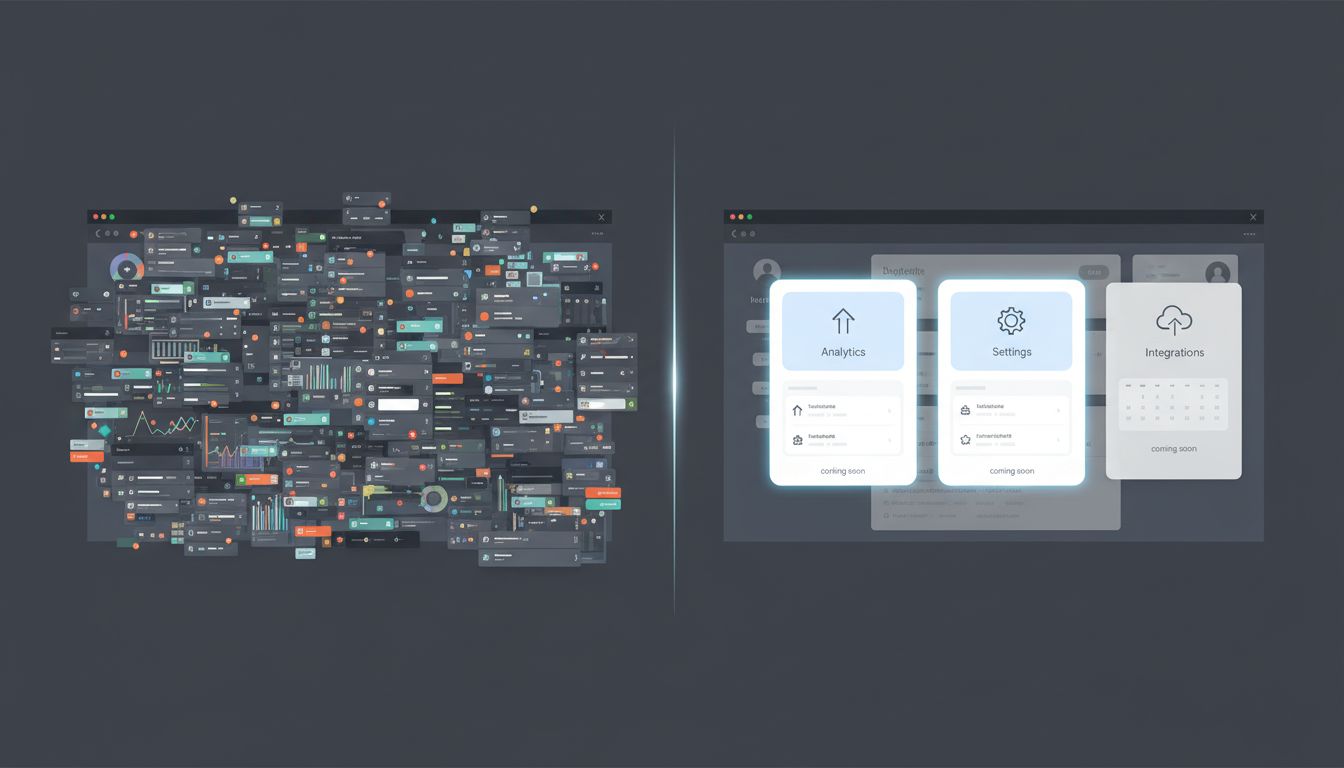
This connects to something counterintuitive about product development. Sometimes what looks like a simple app is doing extraordinary work underneath, and the simplicity on the surface is a deliberate design decision that took real effort to achieve. As we’ve written before, simple apps aren’t actually simple. The discipline required to keep a product minimal, to resist the gravitational pull of feature requests, is harder than just building more stuff. It requires founders to say no, repeatedly, to things that sound reasonable.
Why Missing Features Are a Competitive Advantage
Here is the part that surprises most people. Missing features don’t just save you time and money. They can actively help you win.
When your product does one thing exceptionally well, users understand it immediately. They can describe it to their friends in a single sentence. That is worth more than any marketing budget. Slack launched without threaded conversations, without video calls, without half the things enterprise buyers said they needed. What it had was a messaging experience that felt fast and pleasant in a category full of software that felt like punishment. People told each other about it. The missing features became almost irrelevant in the face of that core experience.
There’s also a psychological dynamic at play. A product that does less feels more focused. Users trust it more. They’re not overwhelmed trying to figure out what it’s for. This is partly why the most productive people often delete apps instead of downloading them. Fewer features, done well, signal craftsmanship. A hundred features done adequately signal a company that doesn’t know what it’s building.
And then there’s the roadmap advantage. When you launch lean, every feature you add later becomes a milestone. Users who’ve been asking for something get to feel like they were heard. Early adopters become evangelists because they watched the product grow. A company that launches with everything has nowhere to go except sideways.
When This Strategy Backfires
This is where the honest part of the conversation gets uncomfortable. Intentional incompleteness only works if you’re genuinely learning from what’s missing and building toward something. It is not a license to be lazy. It is not an excuse to ignore real user pain.
The failure mode looks like this: a team ships something minimal, collects vague feedback, interprets it optimistically, and spends six months building features that users said they wanted but don’t actually use. Your first customers are often wrong about what they need, which means listening to them is an art form, not a transcript exercise. You have to understand the problem behind the request, not just the request itself.
There’s also a real threshold below which a product is simply not viable, regardless of how you frame it. If users can’t accomplish the core job they came to do, you haven’t shipped an MVP. You’ve shipped a broken product and called it strategy. The difference between intentionally lean and just unfinished is whether the core loop works beautifully. Everything else can wait. That thing cannot.

The Discipline Behind the Decision
Winning with a minimal launch requires something most startup teams are genuinely bad at: deciding what not to build and being at peace with that decision under pressure. Investors will ask why you don’t have X. Enterprise prospects will say they can’t move forward without Y. Competitors will ship Z and send you a press release about it.
The startups that hold the line on simplicity aren’t doing it because they’re naive about what their product is missing. They’re doing it because they’ve made a deliberate calculation that learning beats building at this stage of the company. They’ve chosen information over features. That is a hard choice to make and even harder to defend in a board meeting.
But the companies that get it right tend to look inevitable in retrospect. Not because they were lucky, but because they learned faster than everyone else. They launched with holes in their product and used those holes as sensors, picking up signals that their fully-featured competitors were too cluttered to detect.
The missing features weren’t a bug. They were the instrument.