
The Memo That Started a War
In 2006, a small team at a company called Writely got acquired by Google. One of the early employees later described the moment Google Docs launched as feeling like “dropping a grenade into a Microsoft conference room.” The grenade was intentional. Google didn’t accidentally compete with Microsoft Office. They chose the fight, timed it deliberately, and used the conflict itself as a marketing lever. Every journalist covering the story was essentially writing Google’s ad copy for free.
That pattern repeats itself across startup history with enough regularity that it stops being coincidence. Salesforce spent its early years calling enterprise software vendors “the evil empire” and wheeling fake protesters outside Siebel Systems conferences. Slack ran a full-page open letter in the New York Times addressed directly to Microsoft when Teams launched, framing competition as validation. Netflix mailed DVDs directly to Blockbuster’s corporate headquarters when they were pitching partnership talks, then watched Blockbuster decline and built their story around it.
The fight isn’t accidental. It’s infrastructure.
Why Attention Is the First Moat
Startups have almost nothing when they start: no customers, no brand recognition, no established trust. What they can manufacture quickly, and cheaply, is a narrative. And nothing builds a narrative faster than a well-chosen enemy.
The psychology here is straightforward. Humans categorize the world in contrasts. We understand new things by comparing them to old things. A startup that says “we’re a better project management tool” is asking customers to do cognitive work. A startup that says “we’re the antidote to everything wrong with Jira” is giving customers a ready-made story. The incumbent becomes the villain, and villains are useful because they explain why the hero exists.
This isn’t manipulation. It’s communication. The incumbents really are often doing things badly. The startups that pick fights most effectively are the ones where the criticism is accurate and specific, not vague and sloganeering.
Salesforce’s attack on Siebel wasn’t just noise. Siebel’s software genuinely required expensive consultants, multi-year implementations, and hardware infrastructure most mid-sized companies couldn’t afford. Salesforce pointed at a real problem, named a real culprit, and offered a real alternative. The fight was loud, but it was load-bearing.
The Incumbent’s Structural Weakness Is Your Opening
Here’s what makes deliberately picking the right fight different from just being contrarian: the best targets are incumbents whose weaknesses are structural, not accidental.
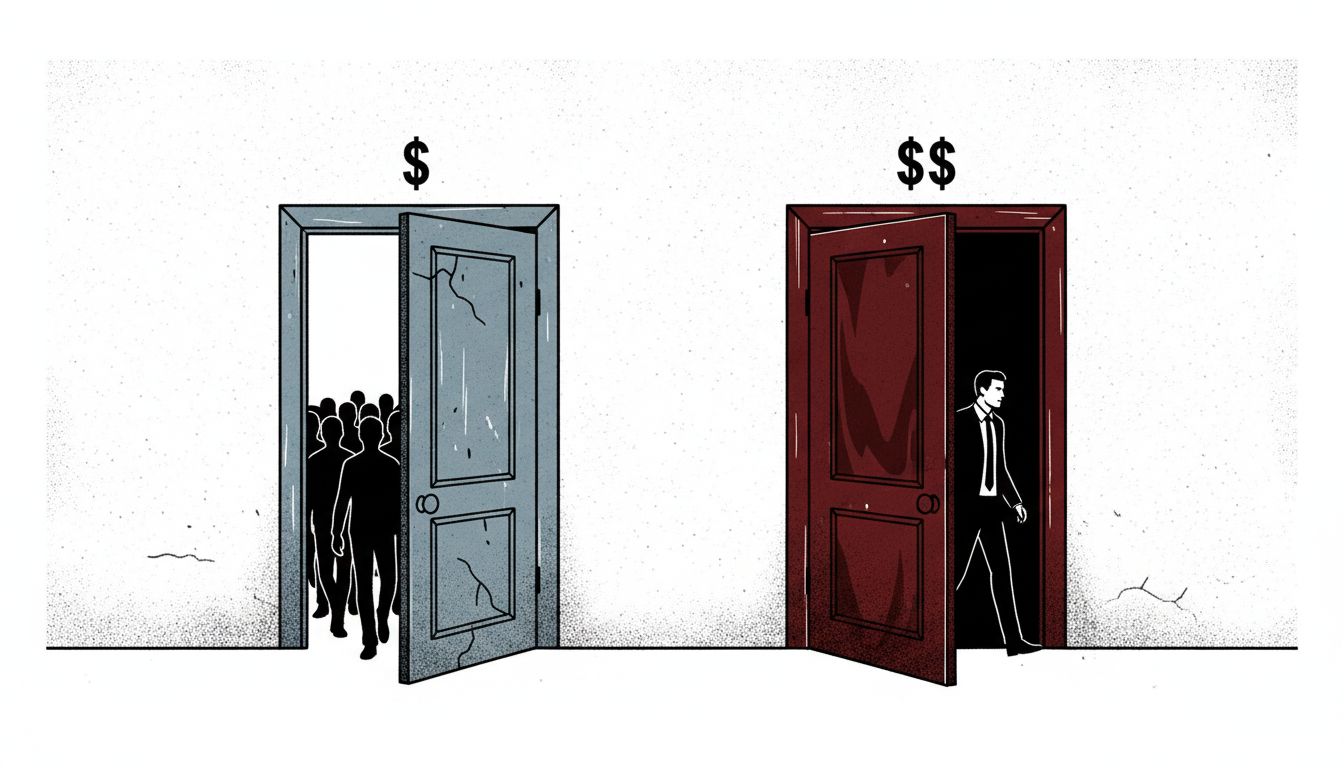
A structural weakness is one the incumbent cannot fix without hurting themselves. Microsoft couldn’t offer free, browser-based productivity software without cannibalizing Office licensing revenue. Blockbuster couldn’t eliminate late fees without destroying a revenue stream that represented a significant portion of their profits (they eventually tried, and it destabilized their finances almost immediately). Taxi medallion owners couldn’t offer surge pricing or driver ratings without dismantling the regulatory framework that protected their monopoly.
These aren’t failures of imagination or execution. They’re the predictable result of optimizing a business for one era and then watching the ground shift. Clay Christensen spent his career describing this mechanism. The innovator’s dilemma isn’t that big companies are stupid. It’s that they’re rational, and rational behavior in a legacy business often means ignoring the thing that will eventually kill you.
When a startup picks a fight with an incumbent, the most sophisticated version of that move involves identifying which specific structural weakness is being exploited, and then making sure every element of the attack applies pressure to exactly that point. You’re not trying to beat them at everything. You’re trying to be so clearly superior on the dimensions they can’t improve that customers have a reason to switch.

How the Fight Becomes Recruiting and Fundraising Fuel
There’s a version of this story that’s purely about customers. But the audience for a well-executed startup fight is at least three groups: customers, recruits, and investors.
Engineers who want to work on interesting problems are not neutral about incumbents. Many of the best ones have worked inside large companies and carry specific frustrations about how slowly things move, how much technical debt gets tolerated, how rarely good ideas get built. A startup that publicly declares war on the category of company these engineers just left is speaking their language. The fight is a recruiting signal.
For investors, it’s different but related. Investors need to believe a market is real and contestable. An incumbent’s existence proves the market. A startup’s credibility against that incumbent proves the contestability. The fight, especially when the startup’s criticism is precise and the incumbent’s response is slow or clumsy, is evidence that the power dynamic might actually shift. The 10-3-1 rule explains how investors bet on category-disrupting companies, and part of what makes those bets work is the presence of a clear, vulnerable incumbent to measure against.
The Rules of Picking a Fight You Can Win
Not all fights are created equal. Plenty of startups have made the mistake of attacking incumbents on dimensions where they’re actually strong, or picking fights that generate press but don’t translate into customer decisions.
A few things the companies who do this well seem to understand:
Attack the experience, not the product. Salesforce didn’t say Siebel’s software was buggy. They said the entire model of buying enterprise software was broken. Stripe didn’t say PayPal’s payments were unreliable. They said the developer experience was inexcusable. The attack lands harder when it’s about a philosophy, not a feature.
Be specific enough to be verifiable. Vague attacks sound like marketing. Specific attacks sound like truth-telling. When Slack said enterprise communication was broken, they followed it with specific, demonstrable claims about email overhead and context-switching costs. Customers could nod along because they recognized their own experience.
Let the incumbent’s response do work for you. When incumbents respond defensively or dismissively, it validates the startup’s position. When they respond by copying features, it validates the startup’s roadmap. The best case scenario for a startup picking a fight is an incumbent who takes the bait publicly. The worst case is being ignored completely, which is why startups often have to escalate until they can’t be ignored.
Don’t fight on the incumbent’s home turf. The point of picking a fight is not to beat them at what they’re already good at. It’s to redefine what the game is. Early-stage startups use Trojan horse products to enter billion-dollar markets for exactly this reason: you change the terms before the incumbent realizes you’re competing.
The Risk Nobody Talks About
There’s a failure mode here that doesn’t get enough attention. Startups that build their identity entirely around fighting an incumbent can find themselves strategically trapped when the incumbent changes or disappears.
BlackBerry was the enemy for a generation of smartphone startups. Then BlackBerry became irrelevant, and suddenly you were fighting a ghost. Companies that had organized their positioning around being the anti-BlackBerry had to scramble. More recently, startups that spent years positioning as the anti-Facebook suddenly found themselves competing not with a social media company but with an advertising infrastructure company, an AI research lab, a hardware manufacturer, and a metaverse bet all at once. The target kept moving.
The fight has to be about the customer problem first and the incumbent second. If your product only makes sense as a contrast to an existing player, you don’t have a product, you have a reaction. Reactions have a shelf life. Products don’t.
The companies that navigate this well are the ones where the fight is a communication strategy layered on top of a genuine product insight. They’d be building the thing even if the incumbent didn’t exist. The incumbent just makes the story easier to tell.
The Real Reason This Works
Strip away the tactics and the psychology, and there’s something almost boring at the center of this. Markets are inefficient for long periods of time because incumbents are protected by switching costs, distribution advantages, regulatory capture, and plain inertia. The customer who’s been using the same enterprise software for twelve years isn’t staying because it’s good. They’re staying because change is costly and the downside of a bad switch is worse than the upside of a slightly better product.
A startup picking a public fight is essentially doing demand generation for an entire category change. They’re convincing customers not just to buy a different product but to believe that switching is worth the cost. The fight is how you make the pain of staying feel greater than the pain of moving.
Done well, it’s one of the most efficient uses of a startup’s limited resources. You get press, recruiting signal, investor narrative, and customer education from a single well-executed move. Done badly, you look like you’re whining about companies with ten thousand times your resources.
The difference, almost always, comes down to whether the criticism is true.
What this means: The startups that pick fights successfully aren’t being reckless or contrarian. They’re diagnosing a real structural weakness in an incumbent, building a product that exploits exactly that weakness, and then making the conflict itself do the work of educating the market. The fight is a distribution strategy. The anger is a product roadmap. The Goliath is the most useful marketing asset a young David can have, as long as you actually have a sling.