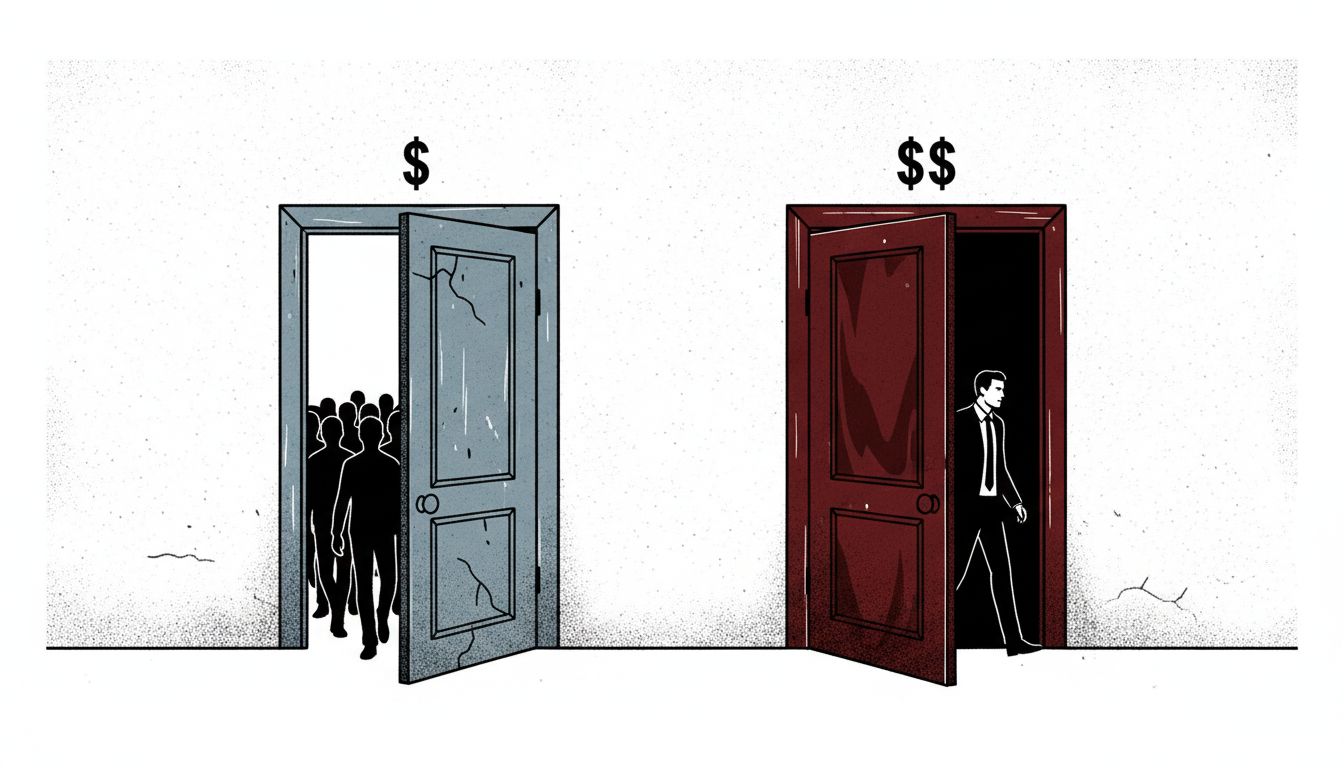

I once watched a founder hire his 40th employee before he had figured out why his first 100 customers stayed. He had the funding, the office space, the org chart. Six months later he was doing layoffs and calling it a “strategic restructuring.” The company limped along for another year before quietly shutting down.
What he never understood was that staying small isn’t a temporary inconvenience on the way to real success. For many of the best companies, it was the strategy.
1. Small Teams Force You to Find Product-Market Fit Before You Bury It
When you have 12 people, every single person can feel whether customers actually love the product. There’s nowhere to hide a weak retention number. The founder is still on support calls. The engineer who built the feature hears directly when it’s confusing. Signal is everywhere.
Scale that to 80 people and suddenly you have layers. You have a customer success team filtering feedback through a ticketing system, a product manager synthesizing it into a quarterly roadmap, and a VP of Engineering prioritizing it against technical debt. The signal hasn’t disappeared. It’s just been processed into something palatable and actionable, which means it’s been softened into something usable and misleading.
Basecamp (now 37signals) famously kept its headcount deliberately low for years, even as it served millions of users. Jason Fried has been explicit about this: they weren’t constrained by budget, they were constrained by choice. Small meant they could still feel the product.
2. Every New Hire Multiplies Coordination Costs, Not Just Payroll
The naive math of hiring is: more people equals more output. The actual math is closer to: more people equals more meetings, more misalignment, more time spent managing humans instead of building things.
Fred Brooks documented this in The Mythical Man-Month in 1975 and the industry has been selectively ignoring it ever since. Adding a person to a software project doesn’t add their productivity, it adds their productivity minus the communication overhead they create with every other person on the team. That overhead scales roughly with the square of headcount.
A startup that resists hiring until the pain is genuine rather than anticipated is protecting something rare: the ability to move fast on decisions that actually matter. This is related to why constraints often force better decisions than abundance does. Headcount is one of the most seductive forms of abundance there is.

3. Staying Small Keeps Optionality Alive
Hiring for a specific vision of what the company will be in two years is a bet. If the bet is wrong, you’re not just out the salary. You’re stuck with an organizational structure, a culture, and a set of expectations built around a strategy you’ve already abandoned.
The founders who survive pivots are almost always the ones who didn’t over-hire for the original thesis. When Slack pivoted from a failed gaming company called Glitch into a workplace messaging tool, the small team size wasn’t incidental to the pivot’s success. It was why the pivot was possible at all. You can’t steer a container ship like a kayak.
The pressure to grow headcount often comes from investors who conflate team size with commitment or momentum. It’s worth being clear-eyed about that incentive structure. VCs have their own math to optimize for, and it doesn’t always align with yours.
4. Premature Scaling Is What Actually Kills Most Startups
Startup Genome published research years ago analyzing thousands of startups and found that premature scaling was the single biggest predictor of startup failure, more than competition, more than product issues, more than running out of money (which is often the symptom rather than the cause).
Premature scaling doesn’t mean growing too fast in isolation. It means growing headcount, infrastructure, or spend faster than your understanding of the business warrants. You’re staffing up for a product you haven’t validated, building systems for a scale you haven’t earned, and creating commitments that burn cash before the revenue is there to justify them.
The founders who stay small longer are often the ones who are honest with themselves about what they actually know versus what they’re hoping is true. That honesty is uncomfortable, but it’s less uncomfortable than a down round or a shutdown.
5. A Small Team Can Serve Customers Remarkably Well, Which Is the Whole Point
There’s a myth that you need a large team to deliver a great customer experience. The opposite is usually true in the early stages. Small teams are faster to respond, more personally invested, and less likely to deliver the kind of bureaucratic non-answers that make customers feel like tickets in a queue.
Mailchimp ran for years as a small, profitable, bootstrapped company before eventually selling to Intuit for $12 billion. They weren’t small because they couldn’t grow. They were deliberate about what they were building and for whom. The product focus that came from staying lean is exactly what let them win in a market full of larger competitors with more features.
6. The Right Time to Scale Is When Staying Small Starts Costing You Money
This is the part most startup advice gets wrong. Staying small isn’t a permanent philosophy. It’s a discipline you maintain until the evidence clearly tells you it’s becoming a constraint rather than an asset. When you’re turning away customers because you can’t onboard them fast enough, that’s a sign. When your support queue is 10 days deep and customers are churning because of it, that’s a sign.
The difference between a founder who scales too early and one who scales at the right time is simple: one is reacting to anxiety and investor pressure, the other is reacting to actual customer evidence. They look identical from the outside for a while. They look very different two years later.