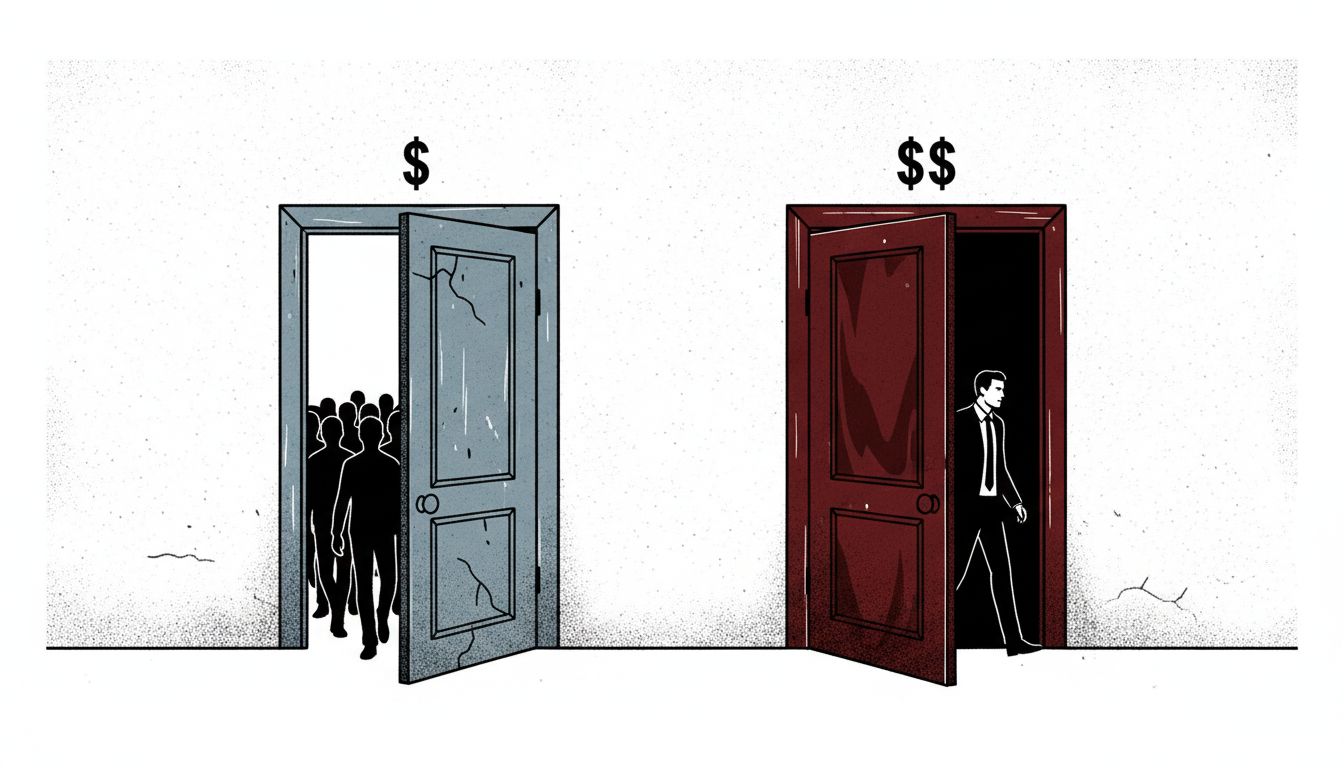
Picture this: a product manager at a mid-sized tech company stands in front of her team and presents a feature roadmap. She knows, and her team knows, that two of the five items on that list will almost certainly flop. The user research is lukewarm. The internal enthusiasm is manufactured. The competitive pressure driving the decision is coming from a rival that launched something similar six months ago and is already quietly sunsetting it. She greenlights the features anyway. This scenario plays out inside tech companies every single week, and the people involved are not stupid. They are, in many cases, making the smartest move available to them.
This is not the same as shipping sloppy work or cutting corners. That phenomenon, which has its own cold business logic, is about speed and market timing. What we’re talking about here is different: intentionally launching features that leadership already suspects will underperform, sometimes dramatically, because the launch itself is the point.
The Feature as a Competitive Signal
The tech industry runs on perception as much as product. When a company ships a feature, it sends a message to competitors, investors, enterprise buyers, and developers that it is moving in a particular direction. That signal can be worth more than the feature itself.
Consider how enterprise software companies behave during procurement cycles. A potential customer is evaluating three vendors. One of them just announced AI-powered analytics, even though the implementation is rough and the use cases are narrow. The announcement alone shifts the conversation. The sales team can say “yes, we have that,” and the competitor without it suddenly looks like it is falling behind. The feature might disappear in a future update, or quietly get folded into something else, but it served its purpose in the room where the deal was being made.
This is strategic misdirection through real product work. It is expensive, but it is cheaper than losing a category.

The Learning Payload Hidden Inside Every Failure
Here is something product teams rarely say out loud but almost universally believe: a failed feature teaches you things a successful one never will.
When a feature works, you learn that it works. You do not always learn why. You do not stress-test your assumptions. You do not find out where your architecture breaks, where your user mental models are wrong, or where your onboarding falls apart. A feature that quietly gets ignored by 95% of users hands you a detailed map of your blind spots.
This is especially visible in how apps evolve. Most successful apps launched with terrible first versions precisely because those versions were hypotheses dressed up as products. The failures were the data. Many billion-dollar products were built on a graveyard of features that nobody used but everybody learned from.
The companies that iterate fastest are usually not the ones that ship the most successful features. They are the ones that extract the most signal from their failures before competitors do.
Optionality, Sunk Cost, and the Internal Politics of Innovation
There is a third reason, one that is less flattering but absolutely real: internal politics.
Large tech companies are full of smart people with competing visions. Greenlit features are leverage. A team that ships something, even something that underperforms, has demonstrated execution. They get to stay in the game. A team that never ships anything because they are waiting for certainty gets defunded or disbanded.
This creates a rational incentive to launch features with modest expectations rather than waiting indefinitely for the perfect one. The launch buys time, credibility, and the organizational standing to try again.
It also creates optionality. Some features that seem like failures in their initial form become the foundation for something that works later. Companies regularly build features they never release because the act of building something locks in learnings and capabilities that pay off elsewhere. The features that do launch but underperform often serve the same function: they are infrastructure for future attempts, disguised as product.
The Market Positioning Play
Sometimes a feature launch is purely about where you stand in a market map, not about what users actually need.
When Apple added features that Google had offered for years, it was not always because they had figured out a better implementation. Sometimes it was to prevent that feature from being a reason someone chose Android. The feature did not need to be exceptional. It needed to exist.
The same logic runs in reverse. Startups deliberately choose markets that look too small to investors because small markets keep incumbents uninterested long enough to gain a foothold. Feature launches follow similar logic: a company might ship something it knows will not resonate broadly because it is defending a niche, not expanding one.
This positioning game is especially pronounced when a company is preparing for fundraising or acquisition. Features signal trajectories. A feature that shows you are moving toward AI, or toward enterprise, or toward a specific vertical, tells a story to investors even if the feature itself is mediocre. Tech giants routinely lose money on purpose to win markets and the same logic applies at the feature level: you absorb a short-term miss to establish a long-term position.
What This Means If You Are Building Something
If you are a founder or product leader, the honest takeaway is not that you should launch features you expect to fail as a matter of habit. That way lies bloated roadmaps and confused users.
The real takeaway is that the question “will this feature succeed?” is not always the most important one. Sometimes the better questions are: What do we learn if it fails? What does launching it signal to our market? What does it unlock internally? Does the existence of this feature serve a purpose separate from its adoption?
Most product frameworks skip these questions entirely because they are uncomfortable to ask out loud. They require admitting that you are making a bet you might lose, and that you are making it anyway for reasons that have nothing to do with user delight or product-market fit.
But that kind of honesty is exactly what separates teams that iterate well from teams that keep building the same failed feature under different names, waiting for users to come around to something they were never going to use in the first place.
The features that fail on purpose are not the problem. The ones that fail because nobody asked these questions, those are the ones that hurt.