A few years back, I watched a product team spend nine months building something nobody on the team actually believed in. Not the engineers, not the PMs, not even the VP who kept signing off on sprint reviews. Everyone in that room knew the product was going to land with a thud. And it did. Six months after launch, it was quietly sunsetted.
What struck me wasn’t the failure. Failure is table stakes in this industry. What struck me was that nobody seemed surprised. There were no post-mortems with genuine shock. No one lost their job. The whole thing had the feeling of a controlled demolition, not a disaster.
That’s when I started paying attention to the real reasons companies ship things they know won’t work. The mythology says it’s optimism bias, or bad leadership, or the innovator’s dilemma. Sometimes it is. But there are other explanations, more deliberate ones, that almost never get talked about publicly.
1. The Decoy Product Is Protecting the Real One
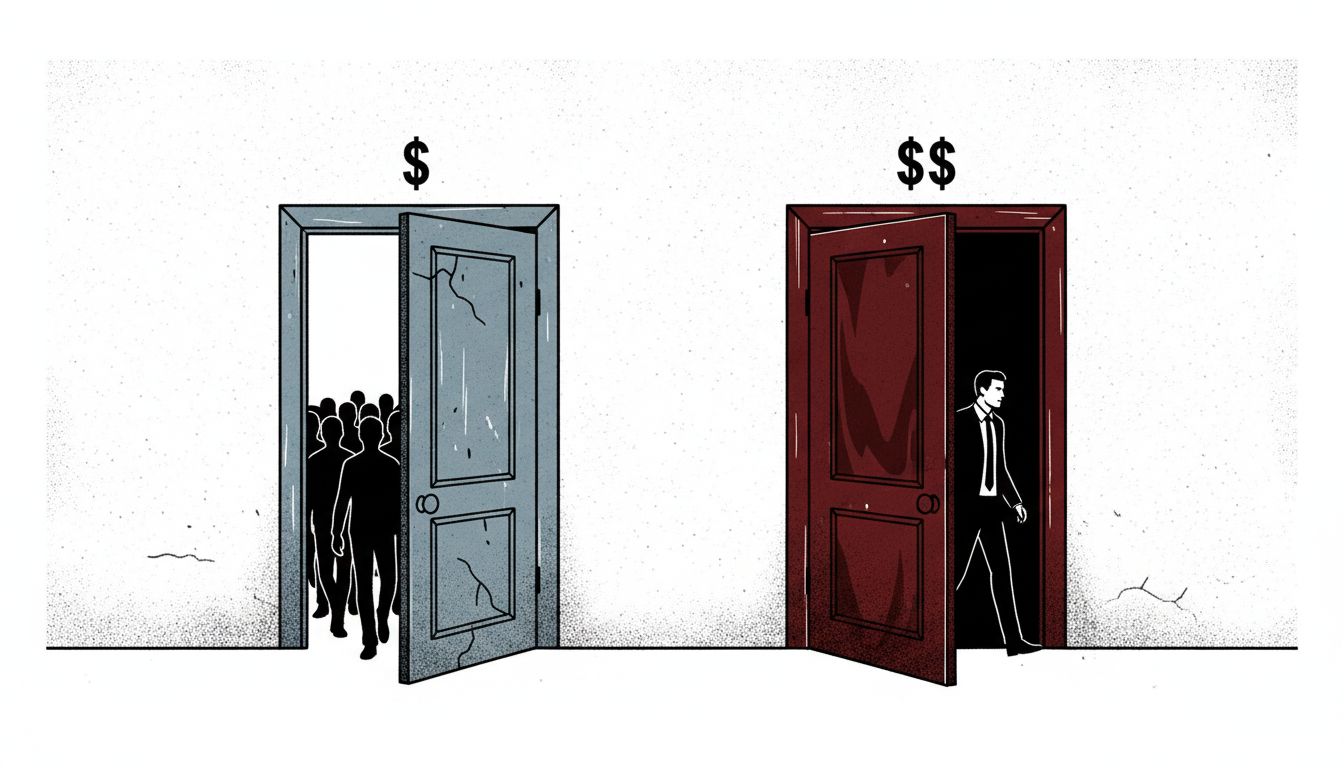
Pricing researchers have known for decades that people make choices based on comparison, not absolute value. Put a $400 item next to a $600 item and sales of the $400 item spike. The $600 version exists partly to make the $400 one feel reasonable. This logic bleeds into product strategy more than most companies will admit.
When Microsoft launched the Surface RT in 2012, it was underpowered, limited in app support, and priced in a range that made little sense for what it actually did. The Surface Pro, which launched shortly after, looked dramatically more capable by comparison. Whether the RT was a deliberate decoy or just a miscalculation is debatable, but the effect was real: it set a frame that made everything that came after look like a serious machine.
Decoy products don’t have to be conscious strategy to function like one. But when you see a company launch something that seems oddly underpowered and then pivot fast to something better, ask yourself whether the first product was really supposed to win.
2. The Launch Is a Talent Signal, Not a Customer Acquisition Effort
Recruitment in competitive technical fields is partly a war of perception. Engineers and product managers want to work on things that matter, and a company’s public product moves send signals about where it’s headed and what kind of work it’s doing.
Google has launched and killed more products than almost any company in history. Many of them, like Google Wave, were almost certainly not expected to become mass-market hits. But each of those launches told a story to the engineering community about what Google was exploring. The people who got excited about Wave were often exactly the kind of people Google wanted to hire: distributed systems thinkers, protocol nerds, people who saw communication differently.
A failed product that generates buzz in the right technical communities can be worth more in recruiting pipeline than a modest success that nobody outside your user base noticed. The product team knows this. So does HR.

3. It’s a Regulatory Feint
This one is underappreciated. Companies operating in heavily regulated industries, or in markets where regulation is coming, sometimes launch products specifically to shape how regulators think about a category.
If you’re a payments company and you launch a crypto wallet product you suspect will get limited traction, you’re still forcing regulators to engage with you, to ask questions, to write guidance. You become part of the conversation that determines the rules. The product doesn’t need to succeed commercially to succeed politically.
The same logic applies to competitive positioning. If you’re worried a competitor is about to own a category, launching even a mediocre competitor in that space can force them to respond, to spend, to shift attention. You’re not trying to win that fight. You’re trying to make sure they can’t win it cleanly either.
4. The Real Product Is the Data the Failed One Collects
There’s a version of this that’s almost too obvious to say out loud, but companies rarely say it out loud precisely because it’s uncomfortable: sometimes a product that looks like a failure was actually a data-collection exercise that performed exactly as intended.
Launch a product in a new category, watch how people use it (or don’t), observe which features they ignore and which ones generate support tickets, and you’ve paid for market research that no focus group could replicate. The product team knows the product is soft. The real deliverable is the behavioral dataset.
This connects to something worth reading about, because the experimentation logic running inside apps goes deeper than most users realize. A product launch is just a larger-scale version of the same mechanics: ship something, observe, iterate based on what you learned rather than what you hoped.
5. It Satisfies Internal Politics While Buying Time for the Real Bet
Every company above a certain size has people inside it who have staked their reputation on a particular direction. Sometimes the fastest way to move past that direction is to let it run until it exhausts itself.
A product launch that leadership suspects will fail can function as a pressure valve. It proves to the internal champion that their idea got a real shot. It lets the team that built it feel they were heard. And it sets up the next conversation: “We tried that. Here’s what we learned. Now let’s do this instead.”
This sounds cynical, and it is. It also wastes real engineering time and can damage morale when the team eventually figures out they were managed rather than led. But it’s common enough that anyone who’s worked inside a large tech company will recognize it immediately.
6. The Failure Creates Optionality That Success Would Have Closed Off
This is the most counterintuitive one. A product that succeeds commits you to it. You have customers who depend on it, SLAs that constrain your architecture, roadmaps driven by that user base rather than your strategic instincts.
A product that fails quietly leaves you free. You explored the space. You learned something. You’re not locked in. For companies that are genuinely trying to find a new direction, a controlled failure is sometimes preferable to a modest success that pulls them away from where they actually want to go.
This is related to why Trojan horse product strategies work the way they do. The product you launch to enter a market and the product you’re ultimately building are often not the same thing. Managing the distance between those two sometimes means letting the first one die on purpose.
None of this means that most failed products are secretly masterplans. Most of them are just failures, products built on bad assumptions by teams who convinced themselves otherwise. But the next time a well-funded company with competent people launches something that obviously isn’t going to work, it’s worth asking whether you’re watching a mistake or a move.