
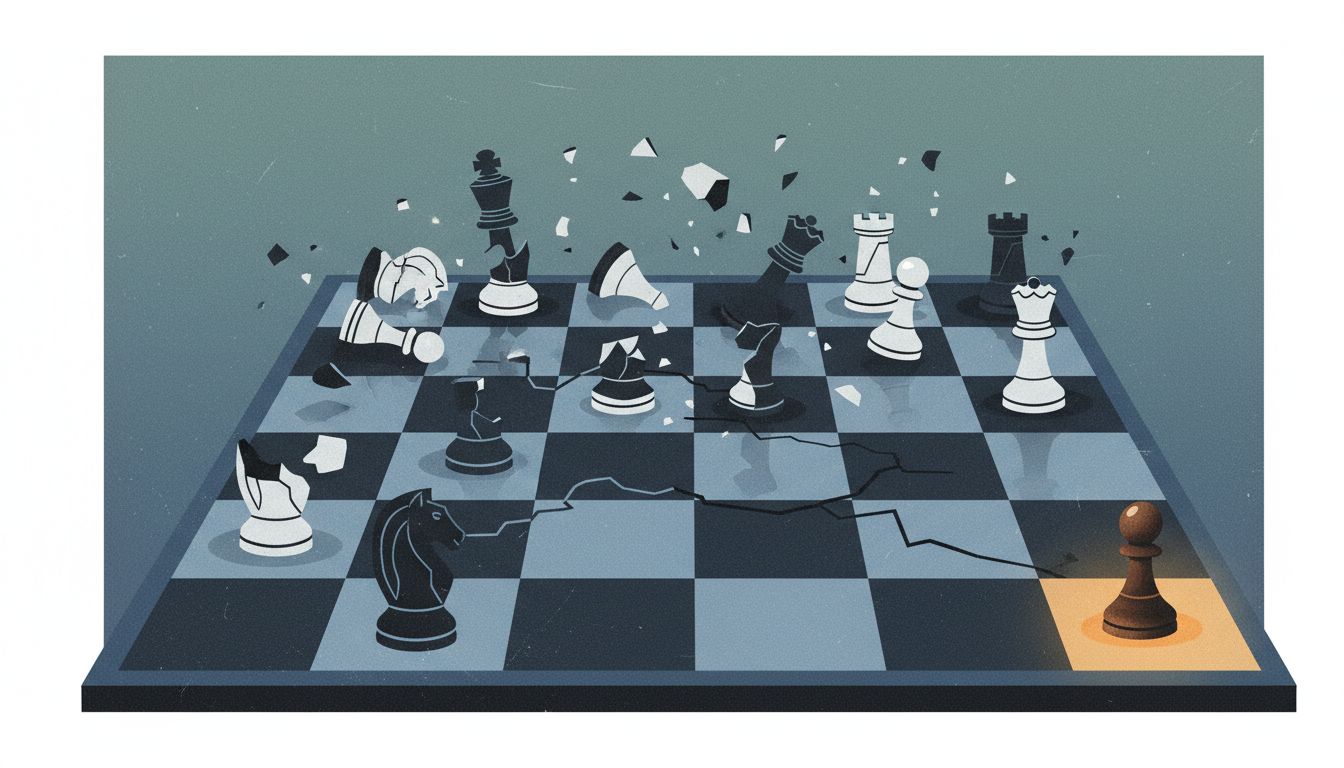
In 2011, Amazon launched the Fire Phone. By every consumer metric, it was a disaster: overpriced, underpowered, locked to AT&T, and shipped with gimmicks nobody asked for. Amazon took a write-down north of $170 million. The postmortem narrative was predictable — hubris, poor market research, Bezos overruling his product teams.
That narrative is wrong, or at least incomplete. The Fire Phone taught Amazon exactly what it needed to know to build Alexa, the Echo, and eventually a hardware division that now competes seriously in the smart home space. The failure was expensive. It was also, in a specific and calculable sense, worth it.
This is not an isolated case. It is a strategy. And once you see it, you cannot unsee it.
Failed products are the cheapest form of market research that actually works
Focus groups lie. Surveys lie. People are shockingly bad at predicting their own behavior, and they are even worse at articulating what they want from technology they have never used. The only reliable way to find out how people actually behave with a product is to put the product in front of them and watch.
A failed launch generates data that no amount of internal modeling can replicate. You learn which features people ignore. You learn which complaints are dealbreakers versus which ones people forgive. You learn who actually buys the thing versus who you thought would buy it. For a company operating at scale, that information is worth the cost of the launch many times over.
This is why broken beta releases are not accidents. The product is an instrument for collecting data, and the users are (knowingly or not) the subjects.
A product that fails publicly can protect a product that cannot afford to fail
Consider how Google handled Glass. The product was always going to face massive social resistance, privacy concerns, and the pure optics problem of looking like a cyborg at a dinner party. Google knew this. What Glass accomplished was absorbing the cultural backlash early, before wearable computing became central to Google’s hardware ambitions. By the time Google was building products it actually cared about, the public had already processed the existential weirdness of a camera on your face.
As the Glass story illustrates, this kind of sacrifice is not incompetence. It is sequencing. You send something expendable into contested territory first, learn from the casualties, and advance your real position.

Microsoft has done this consistently. Bing’s early years served partly to develop infrastructure and talent that now powers Microsoft’s AI integrations. Zune taught them distribution lessons that fed into Xbox’s content strategy. The individual failures look like stumbles. The portfolio looks like a plan.
Internal competition requires a product to fail so another product can win
This one is harder to talk about because it involves admitting something uncomfortable about how large organizations actually work. Big tech companies frequently launch competing internal products not because they cannot decide which one is better, but because they need the market to decide for them. The losers do not just die — they get cannibalized. Their teams, their users (what’s left of them), and their architecture get folded into the winner.
Google’s messaging strategy is the pathological example. By any external measure, launching and abandoning Allo, Hangouts, Duo, Meet, and Chat in rapid succession looks like organizational chaos. Internally, each product was generating real information about user behavior, enterprise needs, and technical architecture. The survivors absorbed the lessons of the casualties. This is brutal. It is also rational, if you are the one making resource allocation decisions at the portfolio level rather than the product level.
The cost gets externalized to users and to the teams who believed in the products that died. That is a real problem. But it is a separate problem from whether the strategy works.
The counterargument
The obvious objection is that this framework is too generous, that it retroactively assigns strategic intent to what was actually just bad decision-making with a good PR spin applied afterward.
This is fair. Not every failed product was a calculated sacrifice. A lot of them were genuine mistakes, driven by executive overconfidence, internal politics, or the sunk-cost momentum that builds around a bad idea once enough people have staked their careers on it. The difference matters.
The honest test is whether the company actually changed its behavior based on what it learned. Amazon built Alexa. Google Glass begat a quieter, enterprise-focused successor. Microsoft folded Zune’s lessons into Surface. When the learning shows up downstream, the failure was strategic. When the company just moves on without visible incorporation of what went wrong, it probably was just a mistake.
Calling everything a calculated sacrifice is the trap. Some things failed because the people running them were wrong about the world. The point is not that all failures are secretly brilliant. The point is that the ones you can learn from are worth funding, and large companies have figured out that the cheapest way to generate that learning is to ship.
What this means if you are not Amazon
If you are running a startup, you do not have $170 million to absorb a market research exercise. You cannot afford to treat a product launch as a data collection instrument unless you have the runway to survive the data collection.
But the underlying logic still applies in smaller doses. Launching a stripped-down version of something you are not sure about, in a market you are not sure about, is almost always more informative than the alternative. The companies that win are often the ones who are willing to enter markets that look unappealing because the established players have already absorbed the risk premium and moved on.
The mistake is treating a failed launch as evidence you were wrong about everything, rather than as a set of specific corrections to a thesis that might still be right. Amazon was not wrong that people wanted a unified mobile-to-home device experience. They were wrong about the phone. The phone taught them where the real opportunity was.
Failure is not the opposite of strategy. Sometimes it is the strategy.