
Picture this: a major tech company unveils a product at a splashy press event. Reviews trickle out, and they’re brutal. Sales numbers never materialize. Eighteen months later, the product is quietly discontinued with a brief blog post about “shifting strategic priorities.” Everyone calls it a flop. But inside that company, some very smart people are quietly satisfied with how things went.
This happens more often than the industry wants to admit, and the failure is usually the point. Successful startups launch with missing features on purpose, and the same logic scales all the way up to enterprise product strategy. Intentional failure is one of the most misunderstood tools in the tech playbook.
The Market Research You Can’t Buy
Here’s the uncomfortable truth about consumer surveys and focus groups: people lie. Not maliciously, but they consistently report what they think they should want rather than what they actually will pay for. You can spend millions on research and still walk into a product launch blind.
A real product launch, even a failing one, gives you something no survey can: actual behavior. Who showed up to look? What questions did they ask? What price point made them hesitate? What feature did every single reviewer mention as missing? That data is extraordinarily valuable, and you can only get it by putting something real into the market and watching what happens.
Google has made something of an art form out of this. Google Glass, Google+, Google Wave, the list is long and storied. Each one taught the company something specific about what the market would and would not absorb. The burial of Google+ alone gave the company cleaner data about social network switching costs than any internal study could have produced. Was it expensive? Yes. Was it a pure loss? Almost certainly not.

Killing the Competition Without Winning the Market
This one is genuinely ruthless, and it works. If a large tech company suspects a competitor is gaining traction in an adjacent space, one effective response is to launch a competing product, even a mediocre one, specifically to create uncertainty in the market.
Enterprise buyers are famously risk-averse. When a Fortune 500 IT department is evaluating a promising startup’s product, the conversation changes dramatically if a major platform has “something in that space.” The startup suddenly has to spend resources fighting the perception problem rather than selling their actual advantage. Meanwhile, the big company’s product doesn’t need to win. It just needs to exist long enough to disrupt the smaller player’s sales cycle.
This connects directly to how platform companies make competition structurally impossible rather than simply outcompeting on merit. A vaporware-adjacent product launch is just one tool in that arsenal.
The Internal Learning Machine
There’s another reason for deliberate failure that almost never gets discussed outside of engineering leadership: the organizational learning that happens when a product team runs a full launch cycle.
Building something, shipping it, watching it underperform, doing the postmortem, and regrouping is a different kind of education than anything you can get in planning meetings. Teams that have been through it once move faster, communicate better, and make fewer catastrophic assumptions the second time around. The failed product is essentially a paid internship for your organization.
This is part of why tech companies hire overqualified engineers on purpose. You want people who can extract signal from a messy, failed experiment and carry those lessons forward. A team of mediocre engineers that ships a failing product learns relatively little. A sharp team learns an enormous amount.

Anchoring and the Price Perception Game
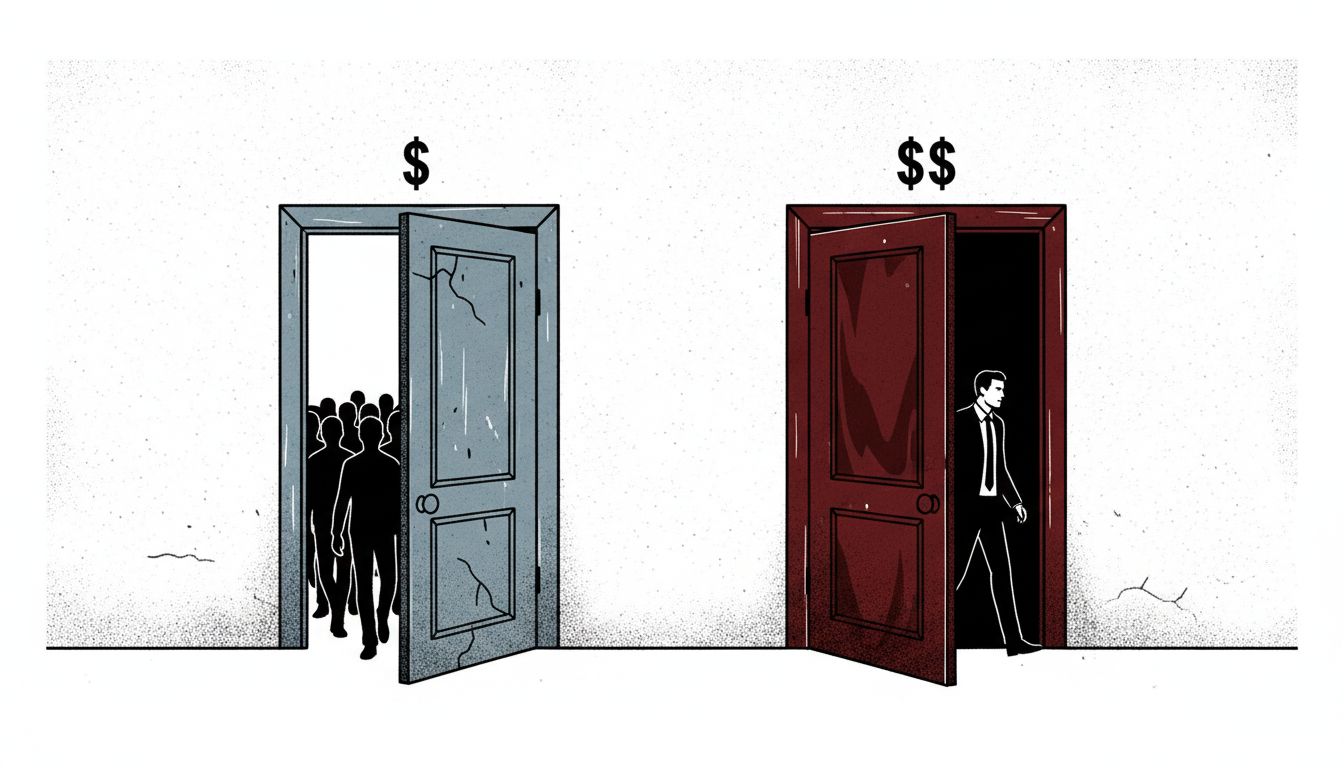
One of the more elegant uses of a doomed product is pricing strategy. If you want consumers to feel good about paying $299 for something, it helps to have previously introduced a $499 version of that thing, even if the $499 version was never meant to succeed commercially.
This is anchoring, and it is one of the most reliable tools in consumer psychology. The “premium” product that nobody buys sets a reference point that makes every other product in the line feel like a deal. Tech companies understand this deeply, which is why some products are deliberately priced so that 99% of people won’t buy them. The product that appears to be the failure is often doing exactly the job it was designed to do.
Apple has run this playbook with consistency across multiple product categories. The introduction of a high-end tier doesn’t always succeed on its own terms. But it reliably repositions the mid-range option as the sensible, aspirational choice rather than the compromise.
The Patent Land Grab
Finally, there is a purely defensive reason to launch products that will fail in the market: intellectual property positioning. A product that ships, even briefly, establishes prior art and can anchor patent claims in ways that internal R&D documentation alone cannot.
This is especially relevant in hardware. Tech companies build features they never plan to release partly for the same reason. Having something documented, filed, and commercially introduced, even if it flops immediately, creates a defensive moat around the underlying technology. If a competitor later tries to patent a similar approach, the failed product becomes evidence in a legal dispute worth far more than its commercial value ever was.

What This Means If You’re Building Something
If you’re running a startup, the takeaway here isn’t that you should start manufacturing failures on purpose. You don’t have the balance sheet for that kind of education yet. But understanding why bigger companies do it changes how you should interpret the competitive landscape.
That enterprise product that launched with mediocre reviews and seems to be going nowhere? Don’t assume it’s going away. Watch what the company does in the twelve months after launch. Watch what questions they start asking publicly. Watch what they patent. The product that looks like a stumble might be the setup for something much more deliberate.
Tech mythology loves the origin story, the scrappy startup, the breakthrough moment. What it underreports is the calculated, sometimes cynical strategy happening in plain sight. The failures aren’t always accidents. Sometimes they’re the most expensive, most sophisticated research projects a company runs all year.