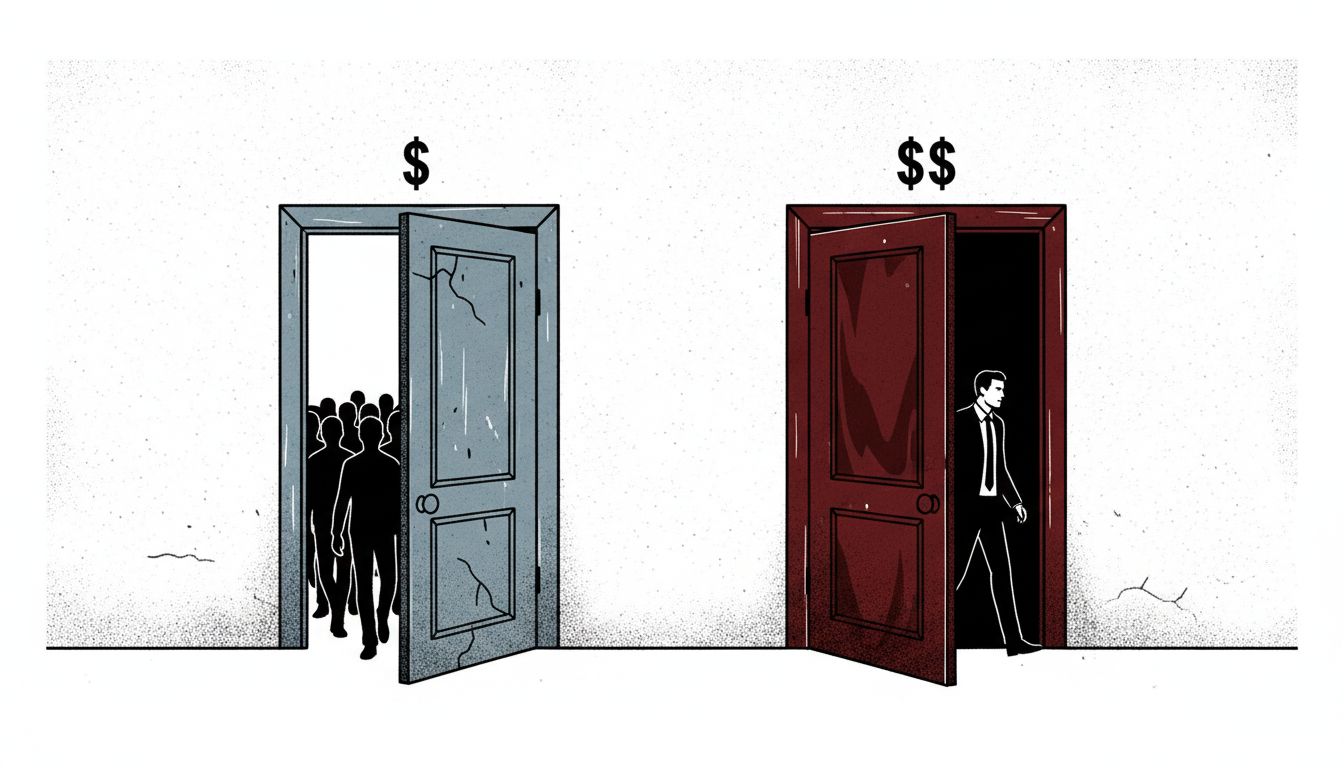

Picture this: a founder just closed a $4 million seed round. The term sheet is signed, the wire is confirmed, and the first thing their lead investor asks is, ‘What salary are you taking?’ The founder smiles and says, ‘A dollar.’ The investor nods slowly, visibly relieved, and the room gets warmer. That moment isn’t about optics. It’s not about frugality theater. That dollar salary just did more strategic work than any pitch deck slide ever could.
This is a move that confuses outsiders and impresses insiders, and the gap between those two reactions tells you everything about how startup strategy actually works. The $1 salary sits in the same category as other counterintuitive founder decisions: early-stage startups skipping years of development by treating partnerships as cheat codes, or founders deliberately hiring their harshest critics as first employees. These moves look irrational on the surface and reveal a sharp internal logic the moment you understand the game being played.

The Signal That Money Can’t Buy
Here’s the dirty truth about early-stage fundraising: investors are not primarily evaluating your product during that first meeting. They’re evaluating you. Specifically, they’re trying to figure out whether you will burn their money on yourself the moment things get hard.
When venture capitalists decide if your startup is worth millions before you finish your first sentence, they’re running a rapid pattern-match on founder character. A founder who immediately draws a market-rate salary from investor capital is telling a story. The story goes: ‘I will optimize for my personal comfort when given the chance.’ A founder who takes a $1 salary is telling a different story entirely: ‘I am so aligned with this company’s survival that I won’t extract value until you all extract value.’
This matters disproportionately at the seed and Series A stages because the company isn’t generating enough data yet for investors to evaluate performance objectively. They’re filling in the gaps with trust. And the $1 salary is a trust signal that costs very little to give and returns enormous goodwill.
Steve Jobs famously took $1 per year at Apple during his return. Elon Musk has done it at multiple companies. These aren’t coincidences. They understood that when you’re building something ambitious, the cheapest currency you can spend is cash and the most expensive currency you can spend is credibility.
What It Actually Does to Your Team
The internal effect is just as powerful as the investor signal, and founders who dismiss this are leaving motivation on the table.
When engineers and early employees know the founder is drawing $1, something shifts in the team psychology. The implicit contract changes. It stops feeling like ‘I work for this company’ and starts feeling like ‘we are all betting on the same outcome.’ Equity becomes real rather than theoretical. The collective sacrifice feels shared rather than one-sided.
This is not manipulation. It’s alignment architecture. Early teams work brutal hours, take below-market salaries themselves, and defer financial security for the promise of a future payout. When the founder is visibly in the same boat, that sacrifice feels purposeful. When the founder is drawing $250,000 while the team is drawing $85,000, it feels like exploitation, even if the equity packages technically make the math work out.
The best founders understand that culture is built in the gap between what you say and what you do. A founder who says ‘we’re all in this together’ and then draws a comfortable six-figure salary while asking engineers to take below-market pay has created a credibility deficit that no team offsite or ping-pong table can repair.
The Equity Math That Nobody Talks About
Here’s the piece most articles skip: the $1 salary often makes the founder significantly more money in the long run, not less.
When a founder delays personal cash extraction in favor of preserving runway, the company burns slower. Slower burn means less dilution per funding round. Less dilution per round means the founder retains a larger equity stake through to exit. At a $100 million exit, the difference between owning 18% and 22% of the company is $4 million. Four years of foregone salary, even at $200,000 per year, costs $800,000 in foregone income. The math tilts heavily toward the $1 strategy, assuming you have conviction in the outcome.
This connects to a broader pattern of successful tech companies borrowing against their own future on purpose. The $1 salary is a version of the same bet: defer near-term extraction, concentrate future upside. It’s not sacrifice. It’s an investment in your own cap table.
The founders who understand this are usually the ones who have thought carefully about the most profitable startups being built in industries that make investors yawn. They’re not chasing applause. They’re building quietly toward outcomes that compound.
When the $1 Salary Becomes a Trap
Now for the part that no one talks about at startup conferences: done wrong, the $1 salary destroys founders.
If you are burning through personal savings, running up debt, or creating financial stress at home, the $1 salary will quietly eat your decision-making capacity. You will start making choices from a place of scarcity and anxiety rather than strategic clarity. You will take bad partnership deals because you need the revenue. You will fire someone too early to cut costs. You will be mentally occupying two problems at once: the startup’s survival and your personal financial survival.
The $1 salary only works as a strategy when you have a financial runway of your own. That means either personal savings that cover your actual living costs, a partner or spouse with stable income, or a founder agreement that includes a small meaningful salary that you publicly describe as minimal. The optics of ‘$1’ can still be maintained while drawing $60,000 or $80,000 annually, particularly in early days when investors understand that founders need to function.
The real point was never literally one dollar. The real point is that your salary should be the minimum required to keep you functional and nothing more. Every dollar above that threshold is a dollar that has left the company forever.
What This Tells You About Founder Psychology
The founders who voluntarily take minimal salaries share a specific mindset: they have made peace with delayed gratification at a structural level. Not just for a quarter or a year. For years at a time.
This is not a personality trait you can fake, and investors can usually tell when someone is performing frugality rather than practicing it. The way a founder talks about money, about team comp, about spending decisions, reveals whether the $1 salary is a philosophy or a costume.
The most credible version of this strategy isn’t announced in press releases. It just shows up in how the founder behaves when no one is watching: whether they fly coach to investor meetings, whether they push back on office upgrades, whether they’re the last one to give themselves a raise when growth accelerates.
That consistency, compounded over time, is what turns a symbolic gesture into actual trust. And in the early years of a startup, trust between founders, investors, and teams is the only real currency that matters.