
A founder I know spent eighteen months pitching her logistics software to venture capitalists. The pitch meetings were polite, occasionally enthusiastic, and almost always ended the same way: a passed-on deal and a vague suggestion that she should think about adding AI. The software she had built was genuinely useful, already profitable, and growing without outside capital. Investors couldn’t get excited about it because it solved a problem in freight brokerage, a sector most partners at top firms had never thought about since their undergrad supply chain class, if ever. She eventually stopped pitching VCs and used her profits to scale. Last I heard, her margins made most SaaS darlings look embarrassing.
This is not a unique story. It is, in fact, a pattern. And understanding why it keeps happening will change how you think about where to build. There is a deep structural reason why successful startups deliberately choose crowded, glamorous markets and pay dearly for it, while quieter founders in quieter industries end up with quieter bank accounts that happen to have more zeros.
The Glamour Tax Is Real and Founders Pay It
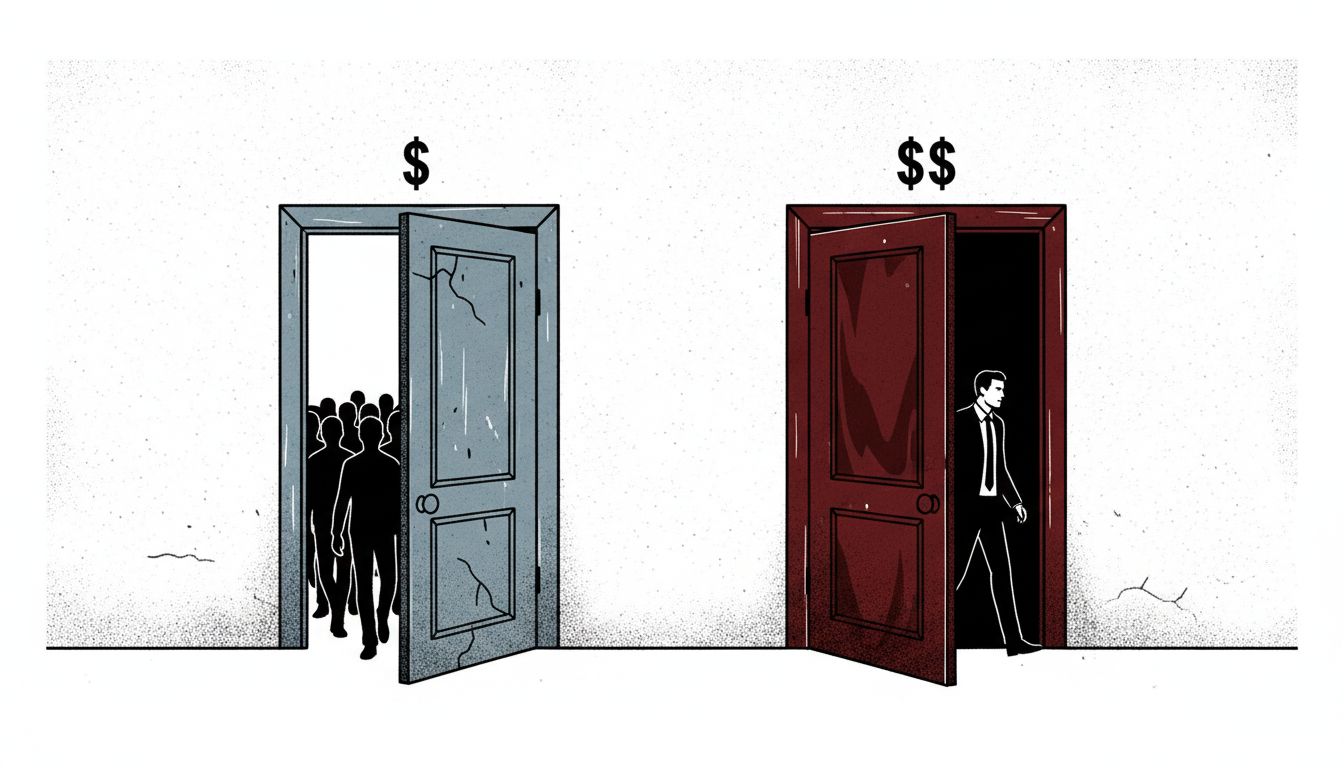
When everyone is excited about a market, a few predictable things happen. Talent gets expensive. Customer acquisition costs spike because five competitors are bidding on the same keywords. The press covers the space obsessively, which sounds good until you realize that coverage creates FOMO-driven competitors who raise fifty million dollars and start a price war. The very visibility that makes a market exciting to investors is what makes it brutal to operate in.
Boring industries avoid most of this. When you are building software for commercial pest control companies, or compliance tools for regional banks, or scheduling systems for veterinary clinics, you are not fighting over the same talent pool as the AI consumer app everyone is buzzing about. Your customers have often been using the same legacy software for a decade or more, which means the switching cost conversation runs in your favor. And crucially, no one is writing breathless profiles about your competitors, which means those competitors are not multiplying overnight.
The boring market tax cuts the other direction. You pay less for customers. You pay less for engineers (because you can hire good people who are not chasing prestige). You often face legacy incumbents who have not shipped a meaningful update since the Obama administration. The moat builds quietly and quickly.
Why Investors Miss This Repeatedly
Venture capital has a structural bias toward narratives. A fund’s economics require a small number of massive outcomes to justify the entire portfolio, which creates an incentive to chase large addressable markets that sound large. The problem is that TAM slides are almost always constructed to sound large, and the industries that genuinely have massive revenue potential (construction, agriculture, logistics, healthcare administration) rarely have the cultural cachet that makes for a compelling partner meeting story.
There is also a knowledge problem. Most venture investors are pattern-matching against industries they understand, which skews heavily toward consumer tech, enterprise software with familiar buyer profiles, and anything adjacent to the platforms they use daily. When a founder walks in talking about predictive maintenance software for industrial HVAC systems, the partner’s eyes glaze not because the opportunity is small but because the partner has no framework for evaluating it. Discomfort gets misread as risk.
This is related to a counterintuitive dynamic worth understanding: early-stage startups win not by knowing more than incumbents but by strategically knowing less. Founders who come into a boring industry without the received wisdom of that industry often see obvious improvements that insiders have normalized. The pest control software founder did not come from logistics. She came from frustration with a broken process she encountered when her family ran a small freight operation. Outsider perspective in an insider’s market is a genuine edge.
The Stickiness Factor Nobody Talks About
Here is the other half of the boring industry advantage that rarely gets discussed: the customers tend to stay.
Consumer apps face brutal churn. The next shiny thing is always one App Store scroll away. But the owner of a regional plumbing company who has integrated your scheduling and dispatch software into their daily operations, trained their three office managers on it, and built their invoicing workflow around it is not switching because a competitor has a cleaner UI. The switching cost is real and painful and they know it. This is the same psychology behind free trials being designed not to let you try a product but to make sure you never leave, amplified by the fact that in vertical markets, the integration goes deeper and the alternatives are fewer.
High retention in a boring vertical means your revenue is genuinely predictable in a way that most investor-favorite businesses are not. You can model growth. You can hire ahead of it. You can sleep.
The Founders Who Win Here Are a Specific Type
Not everyone is suited to build in a boring industry and that is fine. It requires a genuine tolerance for unglamorous details. You will spend time understanding freight broker compliance rules or veterinary practice billing codes or agricultural equipment maintenance schedules. You will not be on stage at major conferences. Your company will not be a verb.
What you will have is a customer who actually needs you, a sales cycle that is hard but finite, and unit economics that make sense from the beginning rather than relying on a future monetization epiphany. The founders who do this well tend to be the ones who are more interested in solving a specific problem than in being seen solving a flashy one. Some of the best have even built companies around problems they never personally experienced, relying instead on deep customer research and genuine curiosity about how an industry actually works at the operational level. That approach, building for problems you never personally had, is harder to romanticize but often easier to monetize.
The Quiet Exit Nobody Writes About
The founder I opened with eventually sold her company to a larger logistics software player for a number that would have made her seed-stage investors very happy, had any of them written a check. The acquirer was not a VC-backed unicorn. It was a profitable, strategically acquisitive company that had been quietly consolidating its niche for years. This is how boring industries often end: not with an IPO, but with a strategic sale to an incumbent who needs the capability and cannot be bothered to build it.
Those exits do not get covered. They do not generate Twitter threads. They do not make the founder famous. They do make the founder financially free, often faster than the founders who spent three years fighting over the same market at a conference everyone was invited to.
The most profitable startups are not hiding in boring industries by accident. They are there because the founders understood something that the pitch circuit does not reward: the less exciting the problem looks from the outside, the less competition you have while you solve it.