
In 2004, Stewart Butterfield tried to build a massively multiplayer online game. The game failed. What survived was the internal communication tool his team had built to coordinate development. That tool became Slack. Nobody asked for Slack. No enterprise survey in 2012 said ‘what we really need is a chat platform that replaces email.’ The problem Slack solved wasn’t articulated by customers. It was observed by founders who were themselves living inside it.
This is not a feel-good anomaly. It is closer to a pattern than startup mythology wants to admit.
The dominant advice in founder circles is relentless customer focus. Talk to users. Validate before you build. Find the pain, then sell the painkiller. That advice is not wrong exactly, but it creates a survivorship blind spot. We see the startups that asked customers what they wanted and built it. We don’t see the ones that did the same thing and built forgettable products that satisfied a clearly stated need and nothing more. The companies that built lasting value, the ones that created entirely new categories, almost never got there by listening to what customers said they needed.
People Cannot Articulate Problems They Have Normalized
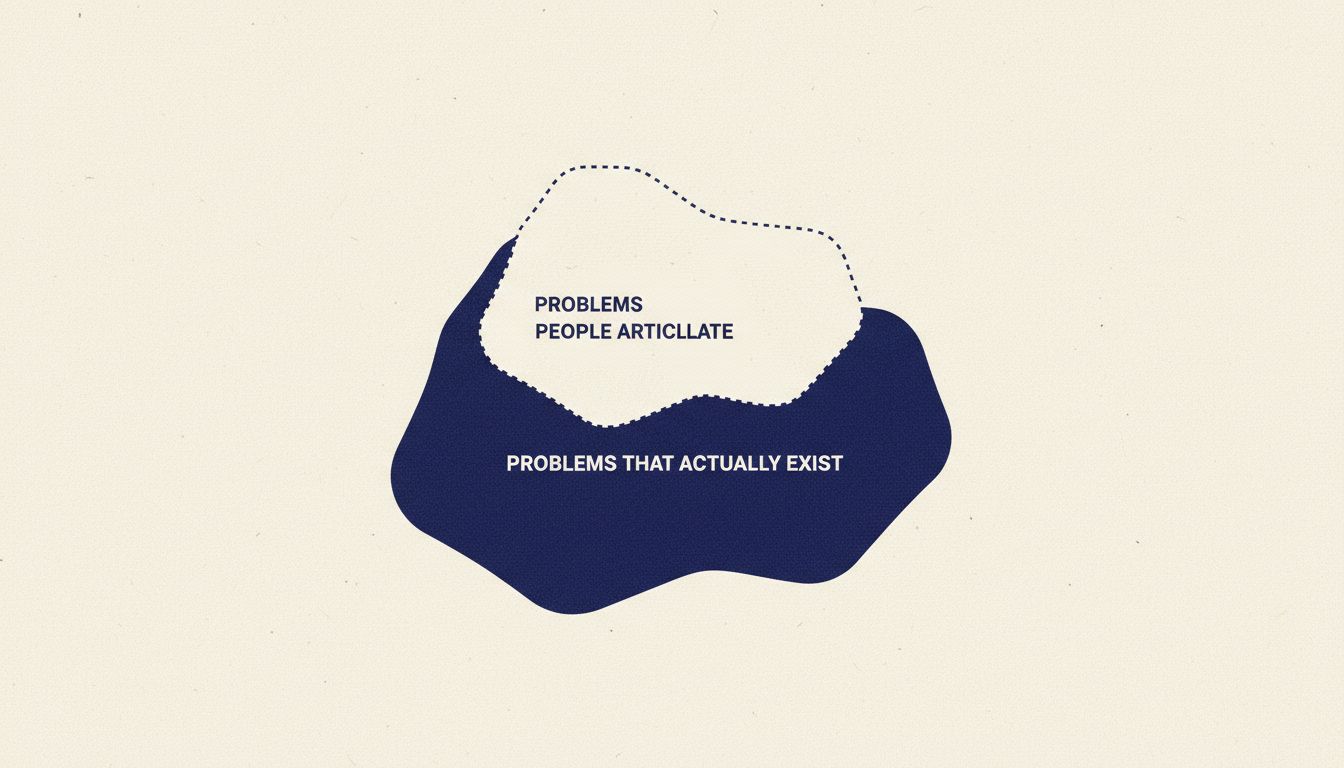
Henry Ford’s alleged quote about faster horses is probably apocryphal, but the underlying observation is accurate. People are remarkably bad at identifying solutions to problems they have accepted as permanent. Before Google, nobody complained that web search was broken. It was slow and unreliable, but users had adapted. They used directories. They tried multiple searches. They triangulated. The problem was invisible because people had built workarounds so deeply into their behavior that the friction disappeared from conscious view.
This is why customer interviews, done naively, are a trap. You will hear about surface symptoms. You will hear feature requests that amount to ‘make the current thing slightly less annoying.’ What you will almost never hear is a crisp description of a category-defining need, because people cannot see past the workarounds they have normalized. The founders who built durable companies watched behavior instead of listening to descriptions of behavior. Those are different data sources.
Early Markets for Category-Defining Products Are Always Zero
When Airbnb launched, the addressable market for ‘renting an air mattress in a stranger’s apartment’ was functionally zero. The market they eventually captured, people seeking alternatives to hotels, existed and was enormous. But you could not have surveyed that market and found demand for Airbnb’s specific solution, because the solution required imagining a level of trust and platform infrastructure that didn’t exist yet.
The same dynamic played out with Uber, with Dropbox, with Stripe. Early Stripe users were developers who had given up on integrating payments easily. They weren’t actively searching for a solution. They had accepted that payments were hard and worked around it. When Stripe launched, the initial user base was small and eccentric. The market they unlocked was only visible in retrospect.
This is the uncomfortable math of category creation. If you survey for it, it won’t show up. If you wait for customers to ask for it, you’ll be too late. The window belongs to whoever identified the latent problem first and had the conviction to build toward it without validation.
Long Time Horizons Are a Competitive Moat
Spending years on a problem nobody asked you to fix is not just philosophically interesting. It is strategically advantageous. Competitors optimizing for validated demand will follow customer signals into the same crowded spaces. The company that identified a non-obvious problem four years ago and built deep expertise in it has a head start that validated-demand followers cannot easily close.
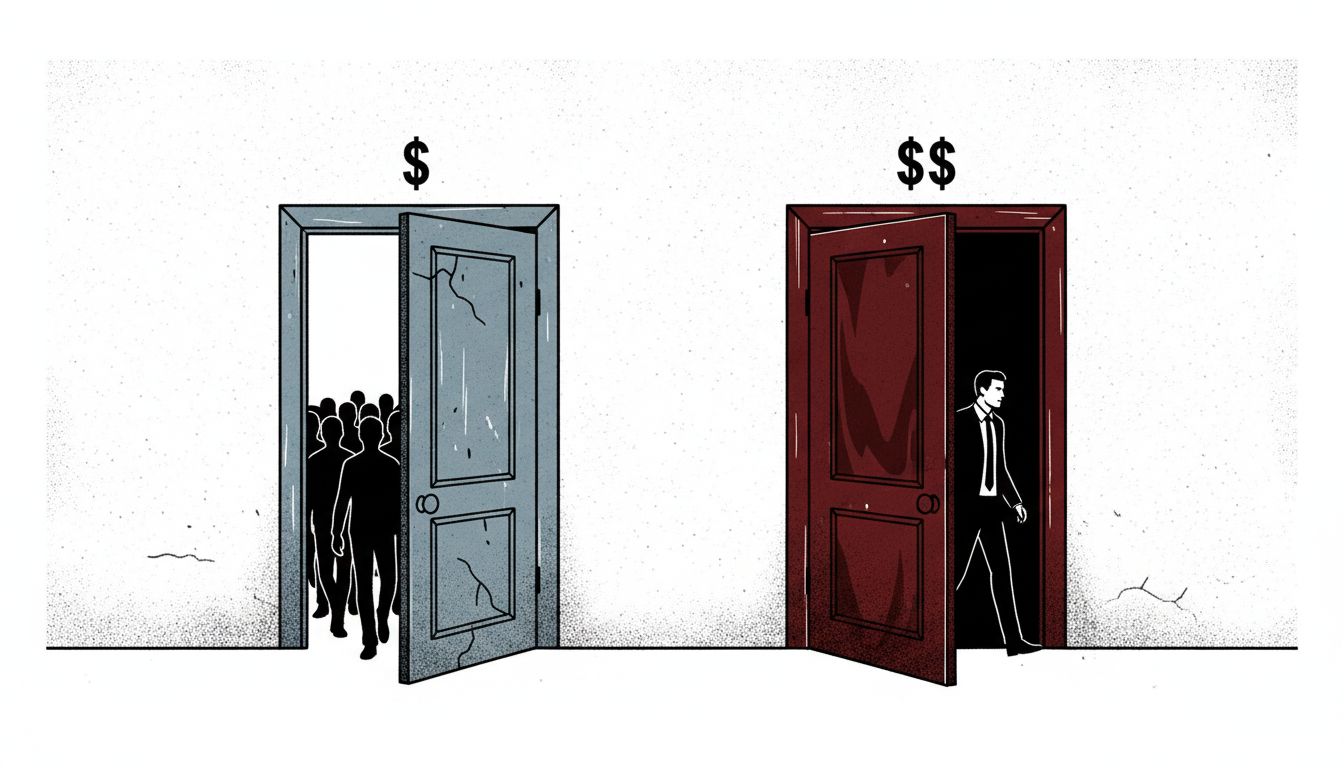
This is one reason why well-funded competitors often lose to smaller, stranger teams. Startups with less funding consistently beat well-capitalized competition precisely because resource constraints force focus on the underlying problem rather than on satisfying the market as currently defined. You cannot afford to build the obvious thing badly. You build the non-obvious thing well, or you die.
The Counterargument
The obvious pushback here is selection bias, and it’s fair. For every Slack born from a failed game, there are a hundred failed games that produced nothing. For every founder who ignored customer feedback and built something transformative, there are thousands who ignored customer feedback and built something nobody wanted for different reasons.
Customer discovery as a discipline exists because founders are prone to falling in love with their own solutions. Talking to users is a corrective against that. It catches real errors. It has saved real companies from building the wrong thing.
But there is a difference between using customer feedback as a corrective mechanism and treating stated demand as the ceiling of ambition. The best founders I’ve seen hold both. They talk to users constantly. They watch behavior obsessively. And then they draw conclusions that the users themselves couldn’t articulate, because pattern recognition across dozens of conversations reveals things that no single user can see.
The trap is not customer discovery. The trap is mistaking customer articulation for customer need.
The Position, Restated
The most valuable companies were not built by asking customers what they wanted and delivering it. They were built by founders who identified problems customers had stopped noticing, or hadn’t yet encountered, and spent years developing conviction about solutions that couldn’t be validated through conventional means.
That’s not an argument against talking to users. It’s an argument against treating the absence of articulated demand as evidence that demand doesn’t exist. The best opportunities are almost always the ones that look, from the outside, like solutions to problems nobody asked anyone to fix.