
A product manager at a mid-sized SaaS company once told me she spent three hours every Friday reading support tickets. Not triaging them, not assigning them, just reading. Her engineering team thought she was wasting her time. Within a year, the two features she pushed based on those tickets accounted for the majority of their expansion revenue. Her CEO eventually made the Friday ritual mandatory for the entire product org.
That story is not unusual among companies that actually grow. What is unusual is how few founders do anything like it.
The standard startup posture toward complaints is damage control. Get the angry customer off the phone, close the ticket, track resolution time as a KPI, and move on. This is a mistake that costs companies real money, and it’s grounded in a fundamental misread of what a complaint actually is.
A Complaint Is a Data Point With Emotional Metadata
When a customer complains, two things are happening simultaneously. They’re telling you something broke, and they’re telling you they cared enough to say something instead of just leaving. That second part matters enormously. Research on customer behavior consistently shows that the vast majority of dissatisfied customers never complain at all. They simply churn. The ones who do complain are, paradoxically, often your most engaged users.
This means your complaint queue is a biased sample, but biased in a useful direction. These are people who want your product to be better. They have not yet given up on you. Treating that as a support burden rather than a research asset is one of the more expensive strategic errors a startup can make.
The practical implication is that complaints need to be categorized differently than most support teams categorize them. Not by severity or resolution time, but by type of underlying friction. Is the user confused by the interface? Is a core workflow missing a step? Did they expect the product to do something it doesn’t do? That last category is especially valuable, because it maps directly to feature gaps that real paying customers have already identified for you.
How Slack Actually Got Built
Stewart Butterfield built Slack by treating every complaint as a product roadmap, and the mechanics of how he did it are worth examining. The early Slack team was obsessive about direct communication with users during beta, not through surveys or NPS scores but through actual conversations and close reading of friction points. Features that became central to Slack’s identity, including the threading model and the notification system, were shaped directly by patterns in user complaints.
The notification system is a particularly instructive case. Users were not complaining about notifications in abstract terms. They were complaining about specific scenarios: too many pings in active channels, difficulty knowing what actually needed their attention, the feeling of being overwhelmed. Those complaints were granular enough to point toward specific solutions. The team built a notification priority system that distinguished between direct mentions and general channel activity, which is now a standard expectation in workplace software.
This is the pattern worth replicating. Not “we listen to customers” as a values statement, but a specific mechanism by which complaint patterns get translated into shipping decisions.
The Taxonomy Problem
Most companies that say they use customer feedback to drive product decisions are doing something far less useful than they think. They’re collecting it. Aggregating it into a spreadsheet or a tool like Intercom or Zendesk, noting the frequency of certain keywords, and surfacing the most common ones to the product team. This produces a list of what customers say they want, which is not the same thing as understanding what they actually need.
The distinction matters. A customer who complains that your export function is slow might actually be telling you that their downstream workflow is broken and they’re compensating by running exports manually. Fix the export speed and you’ve addressed the symptom. Understand the workflow and you might discover there’s an integration to build that eliminates the need for manual exports entirely, which is a stickier, more defensible feature.
Getting to that level of insight requires someone, ideally a product manager or a founder, actually talking to the people who filed the complaints. Not a template follow-up email. A conversation. The complaint is an invitation; the conversation is where the roadmap is.
This doesn’t scale indefinitely, which is why the discipline matters most in the early stages when your complaint volume is still manageable and the signal-to-noise ratio is highest. Companies that build the habit early, when they have fifty complaints a month, tend to maintain better customer intuition when they have five thousand.
What This Looks Like in Practice
A few patterns show up repeatedly in companies that execute this well.
First, they assign ownership. Not to the support team, but to someone in product. The support team’s job is resolution. The product team’s job is to ask why this complaint exists and whether it should ever exist again. Those are different jobs.
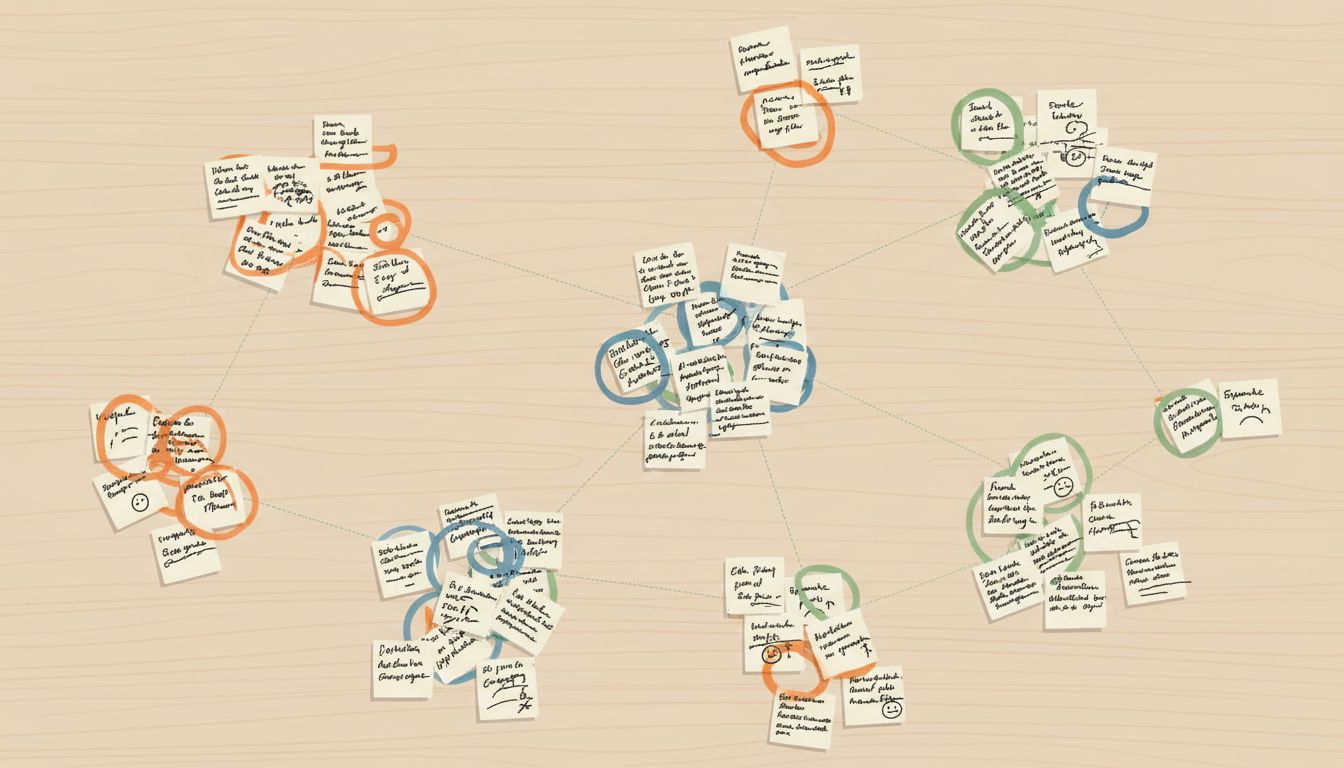
Second, they look for complaint clusters before complaint frequency. A complaint that five customers filed with unusual specificity and emotional intensity often matters more than a vague complaint that fifty customers filed. Intensity is a signal. If someone is frustrated enough to write three paragraphs about a problem, read all three paragraphs.
Third, they close the loop with the customers who complained. Not just to say the issue is fixed, but to share what got built and why. This turns a former complainer into an advocate, and it creates a feedback channel that will keep producing useful signal. Customers who feel heard tend to tell you more.
The companies that treat customer service as purely a cost center are making a bet that they already understand their users well enough to build without outside input. That bet rarely pays off. The ones that treat every angry email as an unpaid product consultant have a structural advantage that’s hard to replicate once it becomes cultural.
The Real Cost of Not Listening
The failure mode here isn’t dramatic. Companies don’t collapse because they ignored their support queue. They stagnate. They build features that miss the mark, spend engineering cycles on things users didn’t need, and watch their churn stay stubbornly high while they puzzle over why their product-market fit feels slippery.
The complaint queue isn’t glamorous. It’s not a framework or a methodology you can put in a deck. It’s just a discipline: read the thing your customers wrote when they were frustrated enough to bother telling you about it, and take it seriously enough to act. The founders who do this consistently tend to build products that are actually good, which turns out to be one of the more reliable paths to winning.