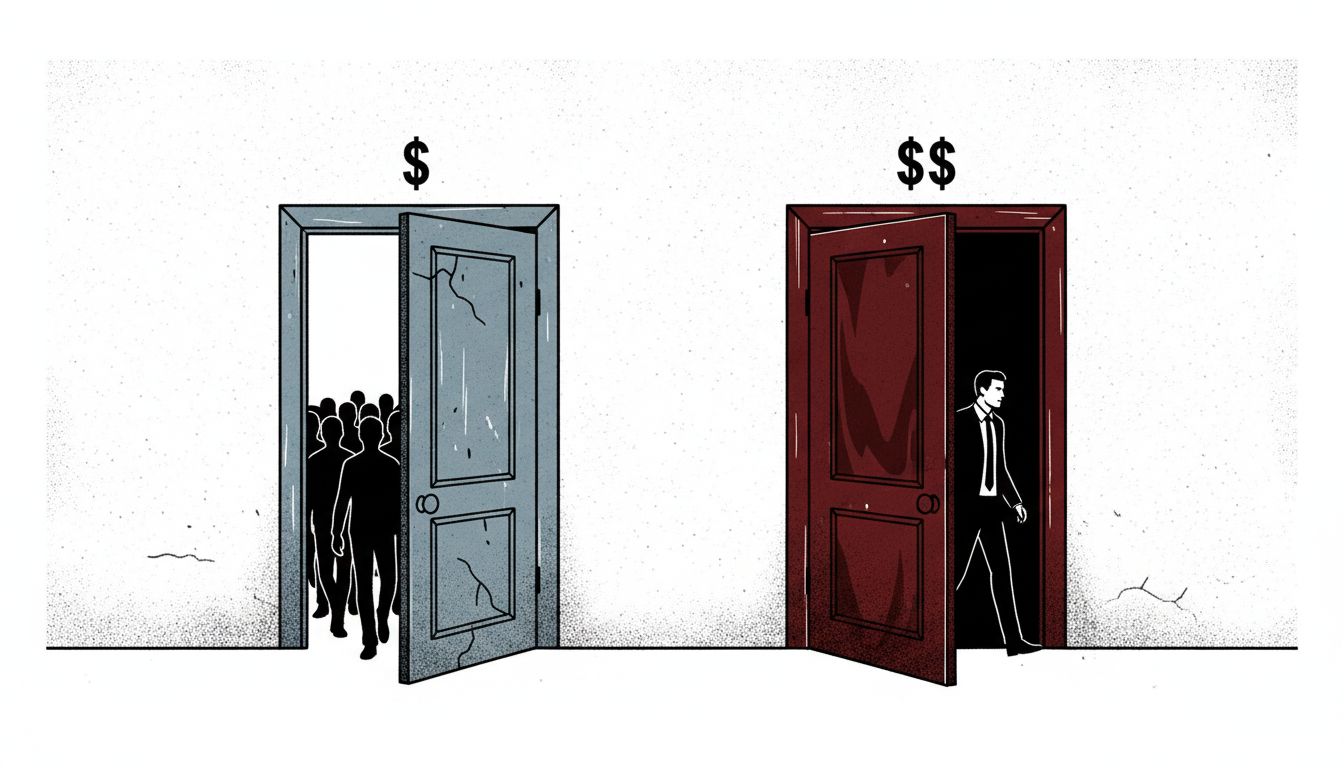

In 2010, Brian Chesky and Joe Gebbia were flying across the country to meet with hosts. Not because the data told them to. Because Airbnb was dying and they had run out of other ideas. The site had listings in New York, but the photos were terrible, the bookings weren’t converting, and the hosts they’d attracted were a specific kind of early adopter who treated the platform like a hobby project rather than a real business. Chesky and Gebbia went door to door in New York with a rented camera, photographing apartments themselves. What they discovered wasn’t just that better photos converted better. It was that the hosts they’d been building for weren’t the hosts who could actually scale the business.
This is the pattern that nobody wants to talk about: the customer who shows up first is almost never the customer who makes you successful. And if you build too deeply for the first customer, they don’t just fail to scale. They actively block you from finding the real market.
The First Customer Is Not a Signal. It’s Noise.
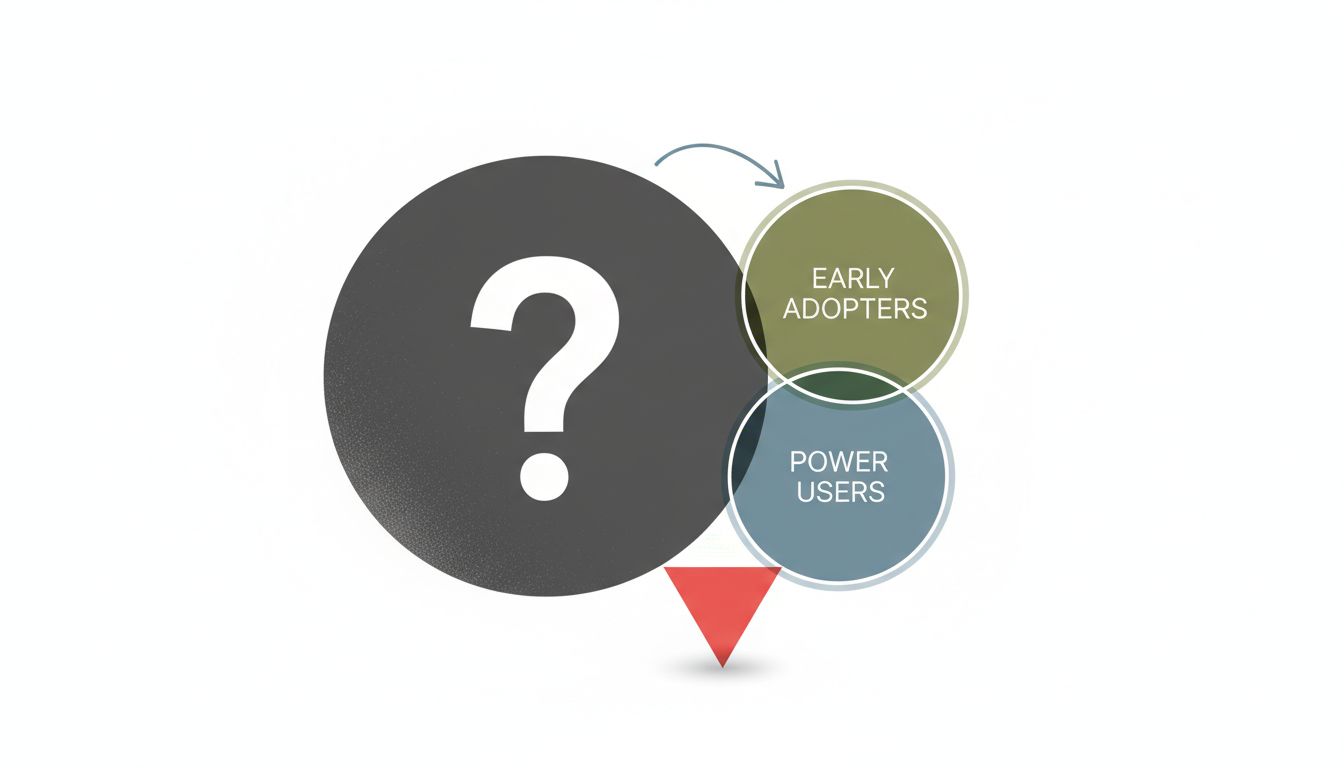
Early adopters are a specific type of person. They tolerate friction, they forgive bad UX, they evangelize products that don’t fully work yet. These qualities make them invaluable for getting initial traction. They also make them nearly useless as a proxy for the broader market you actually need to reach.
Slack’s earliest users were game developers. Stewart Butterfield and his team at Tiny Speck had built the tool for internal use while making the game Glitch. When Glitch failed and they pivoted to selling the communication tool, the first people who wanted it were other developers, particularly in the gaming industry. Developers are famously tolerant of rough tooling. They integrate APIs without documentation, they debug their own setups, they actively enjoy configuring things. They are the worst possible audience for understanding whether a product will work for the average knowledge worker.
If Butterfield had optimized Slack for that developer audience, he would have built a different product. Probably a more technically powerful one. Almost certainly a less successful one. The insight that made Slack what it became was that the interesting market wasn’t developers who didn’t mind complexity. It was teams who desperately needed simplicity, and who had no other good option. Stewart Butterfield ignored the feedback that would have killed Slack not because the feedback was wrong, but because it was coming from people whose problems weren’t the problems worth solving.
Stripe’s Early Adopters Were Solving the Wrong Problem
Patrick and John Collison launched Stripe in 2010 targeting developers who were frustrated with existing payment infrastructure. The pitch was elegant: seven lines of code and you could accept payments. The first wave of customers were exactly who you’d expect, small developer projects, side hustles, indie hackers building things on weekends.
This customer segment had a specific relationship with pricing and support. They were extremely price-sensitive, they had low transaction volumes, and they had high support costs relative to the revenue they generated. They were also vocal. If Stripe had listened primarily to this cohort, the product would have evolved in a direction optimized for hobbyist use cases.
What Stripe actually needed to find, and what eventually made them a company worth hundreds of billions of dollars, were businesses with real transaction volume. Marketplaces, SaaS companies, e-commerce operations running at scale. These customers had different requirements: fraud tooling, complex payout logic, international payment rails, enterprise support contracts. None of that was visible in the early developer cohort, because that cohort didn’t have those problems.
The trap here is subtle. The early customers weren’t wrong to use Stripe. Stripe was genuinely useful to them. But their feedback, their feature requests, their support tickets represented a local maximum. Building for them would have made Stripe better for people who would never generate serious revenue, while potentially missing the requirements of customers who would.
The Airbnb Host Who Nearly Defined the Product Wrong
Back to Chesky and Gebbia. The hosts they’d originally attracted to the platform were, in many cases, people renting out air mattresses or spare rooms as a lark. Some were privacy-concerned about who was coming into their homes. Some were uncertain about pricing. Some were casual enough that they’d cancel bookings when something better came up.
Building for this host meant building a product with a lot of flexibility, a lot of host control, a lot of friction on the guest side. It meant accepting that reliability would be inconsistent. That made Airbnb feel more like Craigslist than a real hospitality product.
The hosts who made Airbnb into a real business were different people entirely. They were serious about hospitality. They managed multiple listings. They wanted pricing tools, calendar management, professional photography. They understood that their reputation on the platform was an economic asset. They treated it like a business.
Chesky’s decision to go to New York in person, to photograph apartments himself, to understand what was actually happening on the ground rather than looking at aggregate data, was what revealed this distinction. The professional host was always there, latent in the market. The amateur host was just louder and arrived sooner.
Why Founders Keep Making This Mistake
The reason this pattern repeats is that early traction feels like validation. You have customers. They’re paying you money, or using your product, or giving you feedback. The feedback loops feel real. And compared to having nothing, having something feels like progress.
There’s also a social dynamic. The first customers often become friends, or at least familiar faces. You’ve been on calls with them. You know their names. Disappointing them, or pivoting away from their needs, feels like betrayal.
And there’s a methodological trap. Most early-stage advice correctly tells founders to talk to customers. But it doesn’t tell you which customers. If you’re only talking to the people who already found you, you’re sampling from a biased pool. The customers you need to find are often the ones who don’t know you exist yet, and whose needs you haven’t fully understood.
The Diagnostic Question Founders Avoid Asking
There’s a question that identifies whether you’re serving the right customer: if every single one of your current customers churned tomorrow, would the product still be worth building?
For most early-stage companies, the honest answer is yes, because the current customers are placeholders. They’re proof that someone wants something in this space. They are not proof that you’ve found the specific someone who will make the business work.
The version of this question that’s even more uncomfortable: are your best current customers representative of the market that can sustain you, or are they the market’s most tolerant outliers? These are not the same thing. Tolerant early adopters often make companies feel more validated than they are, because they forgive sins that the real market will not.
This connects to why startups that narrow their target market end up dominating larger ones. The discipline isn’t just about focus. It’s about being specific enough that you can identify whether the customers you’re serving are the right ones, rather than just the available ones.
How the Good Companies Actually Found Their Real Market
None of Slack, Stripe, or Airbnb pivoted by ignoring their early customers. They pivoted by watching what the most successful fraction of their early customers actually did, and then deliberately finding more people like them.
For Airbnb, this meant identifying hosts with high booking rates, good reviews, and consistent availability, and building features that made it easier to be that kind of host. For Stripe, it meant looking at the small number of early users who were growing their transaction volume rapidly, understanding what those businesses had in common, and building toward their needs. For Slack, it meant watching which teams adopted it as a company-wide tool rather than just a developer toy, and optimizing the product for how those teams actually communicated.
The signal isn’t in your average customer. The signal is in your best customer, defined not by how much they like you but by whether their success with your product suggests there are thousands more like them.
What This Means
Every early-stage company is serving some customers who are placeholders and some who are previews. The job of early-stage customer development isn’t just to listen to feedback. It’s to figure out which kind you have.
The customers who are easiest to acquire in the beginning are often the ones most willing to tolerate your early limitations. That tolerance is a feature for getting off the ground. It’s a bug for understanding your real market, because the real market won’t be nearly as forgiving.
Chesky didn’t figure this out from a spreadsheet. He figured it out by showing up, in person, in apartments, with a camera. The data will tell you what’s happening. It won’t always tell you who’s happening. And the who, it turns out, is everything.