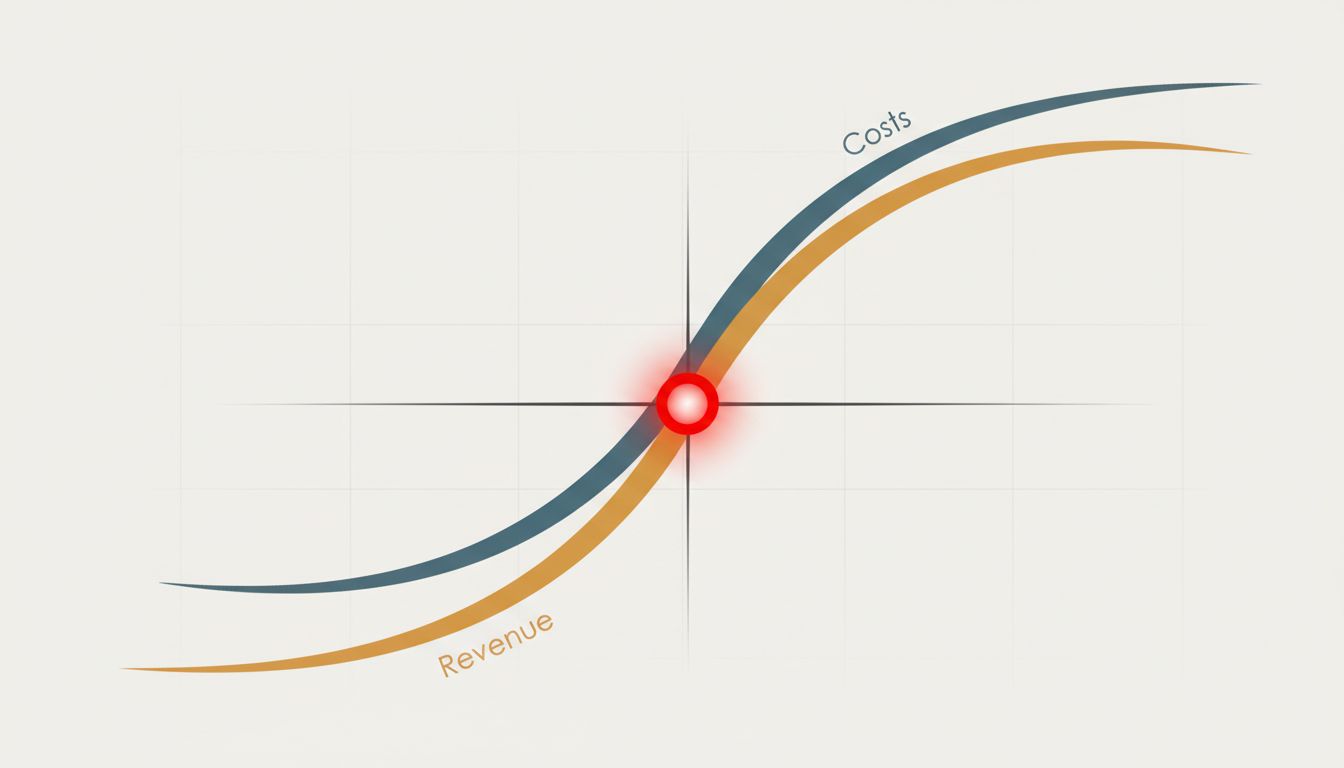
A founder I know built a genuinely excellent project management tool for small creative agencies. His pricing was $19 per month, flat, unlimited seats. He thought cheap would accelerate word of mouth. And it did. Within eighteen months he had four thousand paying customers, a 4.9-star rating, and a company on the verge of collapse. His servers were drowning, his support queue was weeks long, and he was making $76,000 a month gross while burning through $140,000. The product worked. The pricing killed him.
This is not a rare story. It is, in fact, one of the most predictable failure modes in early-stage software, and it gets romanticized because the founder looks like a victim of their own success rather than the architect of their own problems. Let’s be clear about what actually happens when you price too low.
1. You Attract the Customers Who Will Cost You the Most
Low prices are a magnet for a specific kind of customer: high-volume, high-need, low-margin. These are the users who will push your infrastructure to its limits, file the most support tickets, and negotiate the hardest when you eventually try to raise prices. They found you because you were cheap. That is the entirety of your relationship.
Contrast this with customers who pay a real price from day one. They’ve done a mental calculation. They’ve decided your product is worth the money. That selection process filters out casual users and filters in people with a genuine problem you’re solving. As a result, your first hundred customers tell you very different things depending on what you charged them. Low-price cohorts generate feedback optimized for “make it cheaper and faster.” Higher-price cohorts generate feedback about depth, reliability, and integration.
2. Your Unit Economics Become Unfixable at Scale
There is a widespread belief among founders that you can price low to grow fast, then raise prices later once you have leverage. This almost never works the way people imagine it. By the time you’ve scaled, you have contractual obligations, vocal customer communities, and a brand identity built around affordability. Raising prices 3x on ten customers is awkward. Raising prices 3x on forty thousand customers is a PR crisis and a churn event.
The math is also brutally unforgiving. If your cost to serve a customer (infrastructure, support, onboarding, account management) is $30 per month and you’re charging $19, you don’t have a pricing problem you can fix with volume. You have a business model that gets worse the more it succeeds. Every new customer you add accelerates the loss. This is the mechanism behind what people call “dying from success,” and it is entirely self-inflicted.
3. Low Prices Signal Low Confidence, Not Accessibility
Founders underprice for two reasons: they’re genuinely afraid no one will pay more, or they believe low prices remove friction from the sales process. Both reflect a misunderstanding of how buyers evaluate software.
In B2B especially, price is a proxy for quality and commitment. A $19/month tool feels like something you try and abandon. A $299/month tool feels like something you integrate into your workflow. Basecamp famously raised their prices and saw conversion rates go up, not down, because the higher price communicated seriousness to serious buyers. This happens constantly and yet founders still treat it as counterintuitive. It isn’t. It’s just uncomfortable to internalize because it means your fear of rejection is costing you revenue.
4. You Can’t Hire the Team You Need to Deliver on Your Promise
Low revenue per customer means you’re perpetually understaffed for the load you’re carrying. You need a third engineer but can’t justify the salary. You need a dedicated support person but you’re routing tickets to your co-founder at midnight. This is where product quality starts degrading, not because the team stopped caring, but because the economics never gave the team room to breathe.
The compounding problem is that the customers you attracted at low prices have the highest expectations for responsiveness. They’re price-sensitive, which often correlates with time-sensitive. They want answers fast and fixes faster. The support burden per dollar of revenue is enormous. You’re now in a position where raising prices feels impossible (because you’ve trained customers on a certain level of access) and not raising prices means you can’t staff up to deliver what you’ve implicitly promised.
5. Repricing Is a Company-Level Event, Not a Product Update
When companies do eventually try to fix their pricing, they discover it’s not a feature you can ship. It touches your positioning, your customer contracts, your sales motion, your support expectations, and your brand reputation simultaneously. There are companies that have executed this well (Slack moved steadily upmarket over several years with deliberate grandfathering and packaging changes) but the ones who do it well treat it as a strategic transition, not an adjustment. Most companies facing this situation don’t have the runway or the organizational bandwidth to execute a multi-year repricing strategy.
The founders who get this right price higher earlier, test it honestly, and accept that slower initial growth is the cost of building something sustainable. Fewer customers in year one often builds a bigger company because the customers you get at a real price actually support the infrastructure needed to serve them.
6. Cheap Customers Don’t Refer Premium Ones
Your customer base is your distribution network whether you’ve thought about it that way or not. Who your current customers are determines who they’ll tell about you. Price-sensitive customers in small organizations refer other price-sensitive customers in small organizations. If you eventually want to move upmarket (and most infrastructure and SaaS companies do, because the economics require it), you will discover that your existing customer base is pulling you in exactly the wrong direction.
This is separate from the churn problem, though related. When you raise prices, you will lose a meaningful percentage of price-sensitive customers. But the referral network you lose is often worth more than the revenue you lose, because those customers were never going to refer the buyers you actually need.
The founder I opened with eventually shut down and sold his customer list. He told me the thing that stuck with him was that the product itself was genuinely good, maybe the best tool in its category at the time. He’d done the hard part. He just hadn’t charged enough to survive doing it. The competition never touched him. His own growth rate did.