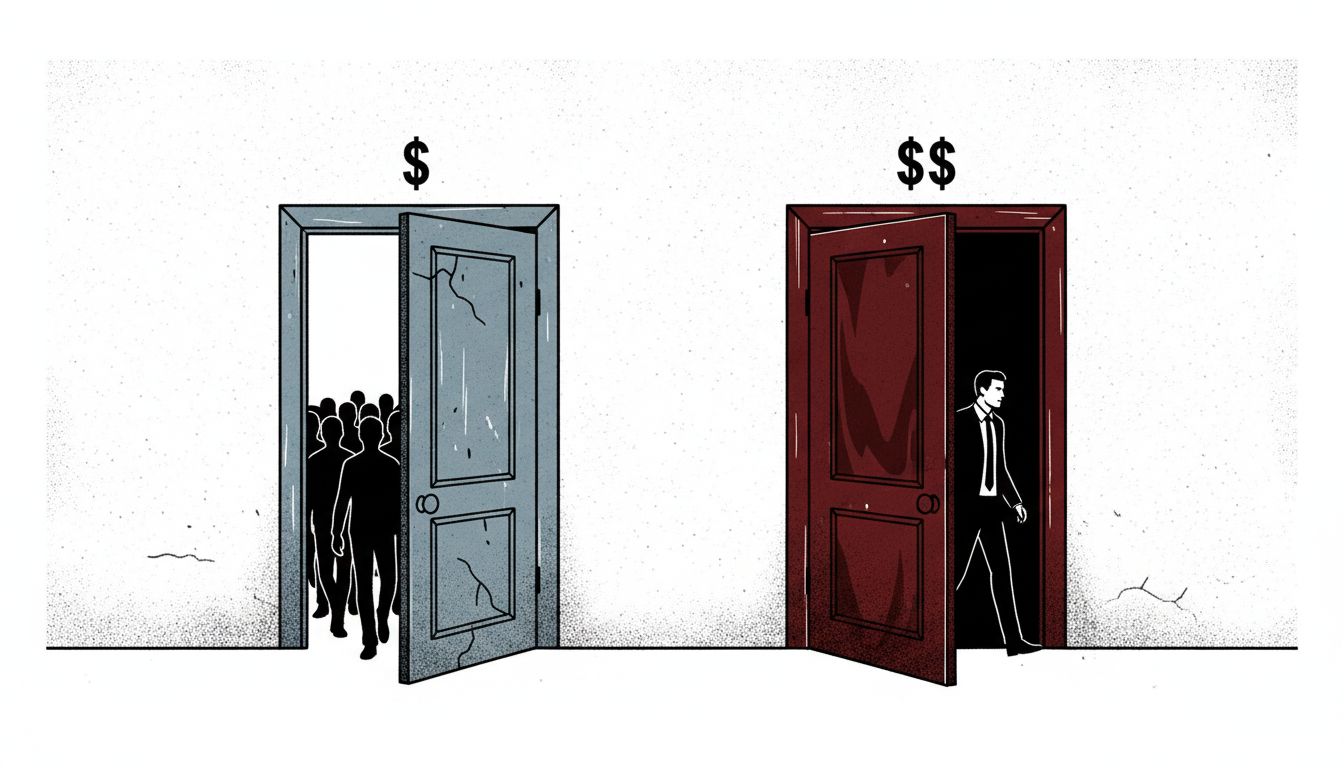

A founder I know spent eight months building a relationship with a top-tier Sand Hill Road firm. Got the term sheet. Celebrated. Then, six weeks after closing, discovered that the same firm had quietly led a round in a direct competitor. Not a tangentially related company. A direct competitor. Same customer, same problem, same go-to-market motion. The associate who’d championed her deal shrugged and said something about “portfolio construction.” She was furious. She shouldn’t have been surprised.
The practice of funding competing companies is not an oversight, a conflict of interest slipping through the cracks, or a sign that VCs are spreading bets randomly. It is a deliberate strategy, and once you understand the actual logic, you will never look at a term sheet the same way again.
VCs Are Not in the Business of Picking Winners. They Are in the Business of Owning Categories.
The fund math drives everything. A typical venture fund needs one or two investments to return the entire fund to generate acceptable returns. That means the goal is never to find the single best company in a space. It is to ensure that when the space produces a winner, the fund is holding equity in it.
Funding two or three competitors in the same category doubles or triples the probability of owning a piece of the outcome, even if it halves the position in each. From a portfolio construction standpoint, this is not reckless. It is rational. The expected value calculation doesn’t care about your exclusive relationship with a partner who took you to dinner four times.
This is also why the pitch process works the way it does. VCs are largely confirming suspicions they already formed before you walked in the room. The suspicion is often not “is this the best team in the space” but “is this space going to produce a large outcome, and do I have enough exposure to it.”
Competing Portfolio Companies Create Useful Competitive Intelligence
This part nobody talks about publicly, but it’s real. When you hold equity in multiple companies attacking the same market, you get signal from all of them. You see which product bets are landing with customers, which sales motions are converting, which pricing experiments are working. You don’t need to formally share information between portfolio companies to benefit from this. You just need to be in the room for board meetings.
Founders occasionally figure this out and get angry. They should channel that anger into better information hygiene, not into the illusion that their investor is in their corner unconditionally. The investor is in the corner of the fund. You are a holding.
The Structure of VC Funds Makes Loyalty Economically Incoherent
Venture funds operate on a ten-year horizon with a fixed pool of capital. The partners have a fiduciary obligation to their LPs (the pension funds, university endowments, and family offices that actually supply the money), not to any individual portfolio company. When two portfolio companies are competing and one is clearly winning, the rational move for the fund is to double down on the winner, not to stay loyal to the underdog out of some sense of commitment.
Founders who treat their lead investor as an unconditional ally are importing assumptions from a different kind of relationship. It is not that VCs are bad people. It is that the incentive structure makes undivided loyalty structurally impossible. This is the same basic logic that explains a lot of counterintuitive behavior in tech, where the incentives are the story and the stated values are the decoration.
The Funding Pattern Itself Shapes the Market
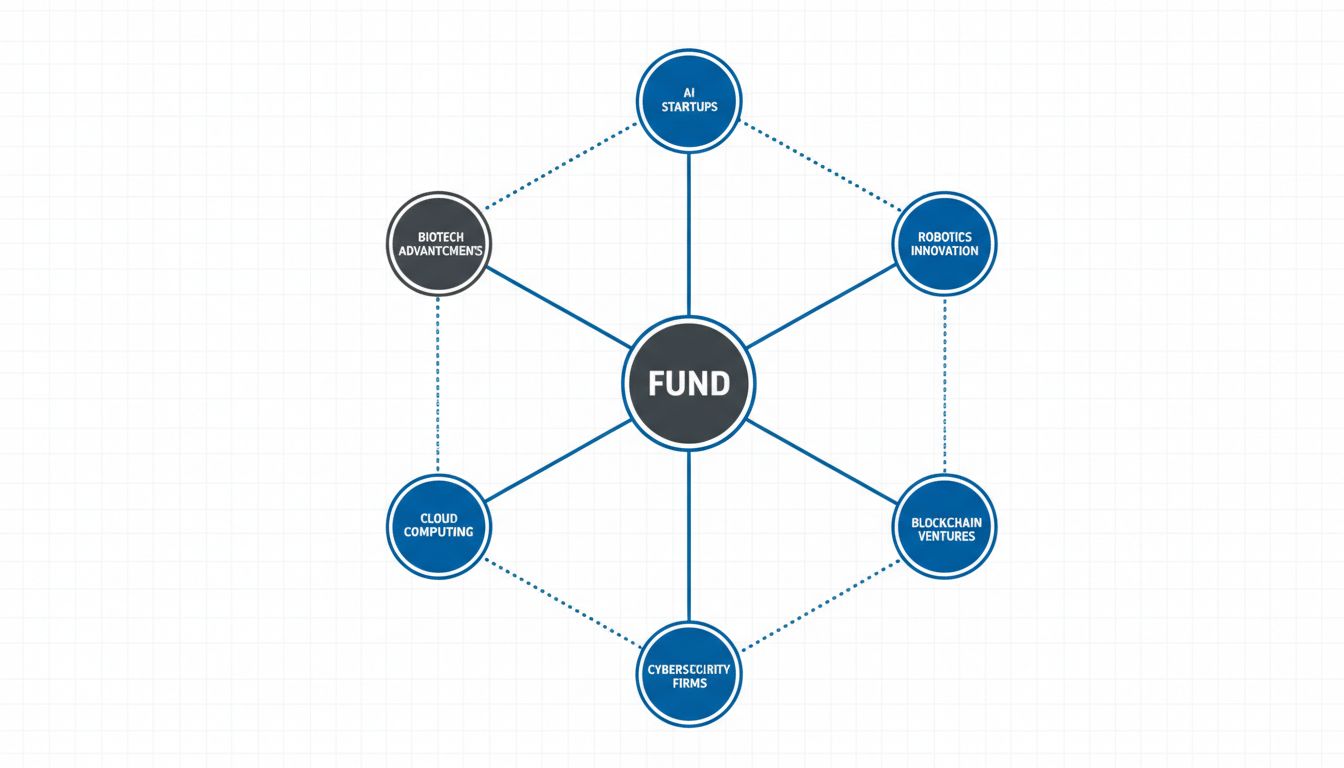
Here is the part that should actually concern founders: when multiple well-funded competitors are operating in the same space simultaneously, it often benefits incumbents, not startups. Well-capitalized competition fragments the market, drives up customer acquisition costs for everyone, and creates noise that makes enterprise buyers cautious. The VC benefits from optionality. The startups compete in a market that the VC’s own portfolio construction has made harder.
There is a version of this where the competition is healthy and the rising tide genuinely lifts all boats. But in winner-take-most markets, which describe most software categories, the simultaneous funding of competitors is a tax on everyone in the category that the investors themselves do not pay.
The Counterargument
The honest counterargument is that markets are genuinely uncertain at the seed and Series A stage, and backing multiple companies in a space is not cynical, it is epistemic humility. Nobody knew in 2007 whether Android or some other mobile OS would win. Nobody knew in 2012 whether Lyft or Uber or some third entrant would dominate ridesharing. Diversifying within a category is a reasonable response to genuine uncertainty.
This argument holds at the early stage. It gets weaker fast. By Series B, you have enough signal to know which company in your portfolio has the better team, product, and traction. Continuing to fund the laggard at that point is no longer epistemic humility. It is either inertia or information gathering, and founders deserve to know which one they’re dealing with.
What Founders Should Actually Do With This
Stop treating your lead investor as a strategic partner who happens to have capital. Treat them as a financial stakeholder with a specific set of incentives that are mostly, but not entirely, aligned with yours. Read your term sheets carefully for clauses that restrict your ability to raise from competing firms. Ask directly, in writing, whether the fund holds positions in companies you compete with. You will not always get a straight answer, but the discomfort the question creates is itself informative.
Venture capital is a financial instrument with a narrative layer on top. The narrative is real: good investors do add value, relationships do matter, the right board member does change outcomes. But the financial instrument is underneath all of it, and the financial instrument does not care about your launch party.