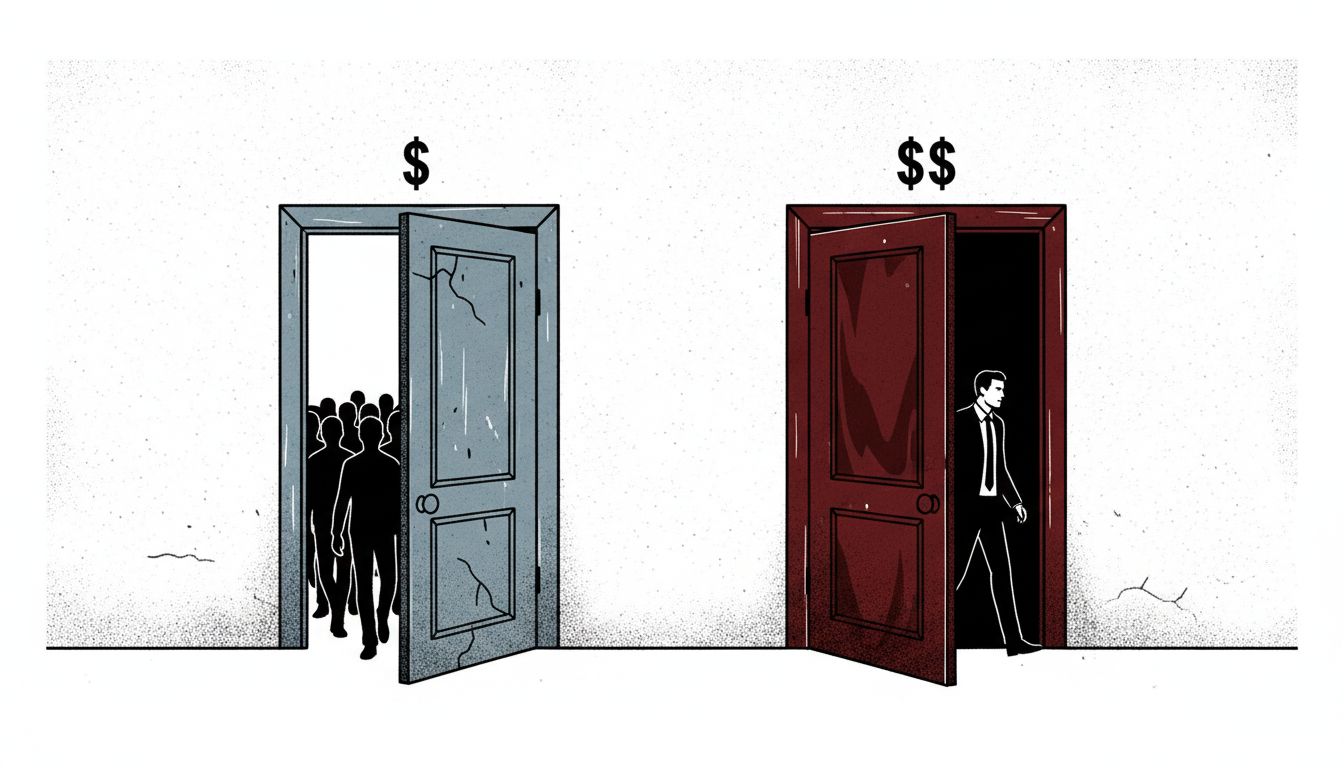

Picture two startups entering the same market in the same year. One raises a $20 million Series A and builds out a full executive team, rents real office space, and starts running brand campaigns before the product ships. The other takes $800k from angels, keeps the team at six people, and spends every dollar on getting customers to actually pay for something. Three years later, the second company is profitable. The first is doing a down round, or dead.
This isn’t a rare story. It repeats constantly, and the mythology around it is wrong. People attribute the lean startup’s success to “hunger” or “scrappiness,” as if it’s a personality trait. It isn’t. It’s structural. The constraints created by limited capital force a specific set of decisions that well-funded companies actively avoid making. Here’s what those decisions actually are.
1. They Have to Pick a Customer and Actually Talk to Them
When you have $800k and 18 months of runway, you cannot afford to build for a vague addressable market. You have to find 10 people who will pay you money right now for something that exists. That process, brutal and humbling as it is, produces something no amount of market research can replicate: genuine understanding of what a specific person will actually pay for.
Well-funded startups skip this phase because they can afford to. They hire a VP of Product who builds roadmaps from analyst reports. They run surveys instead of conversations. They optimize for feature completeness over customer specificity. By the time they realize they’ve been building for a customer who doesn’t exist, they’ve spent $8 million finding out.
The lean startup’s customer development isn’t a virtue. It’s a survival requirement that happens to produce better products.
2. Constraints Force Prioritization That Money Keeps Optional
Every startup has an infinite list of things it could build. Funding lets you avoid choosing between them. You hire more engineers and work on more things simultaneously, which feels like progress and is actually diffusion.
When your team is six people and your runway is 14 months, you don’t have the option of working on six things. You work on one thing until it’s right. That forced focus produces products built around a single core interaction that users actually remember and return to, rather than feature-dense platforms that do everything adequately and nothing well.
Basecamp has operated this way since its founding. 37signals famously turned down acquisition offers and raised almost no outside capital because they understood that constraints were protecting the quality of their decisions, not limiting them. They wrote books about it. Most startups read those books and then went and raised $15 million anyway.
3. They Can’t Afford the Expensive Wrong Answer
Funding buys you the ability to be wrong for longer. This sounds like an advantage. It isn’t.
When a well-capitalized company bets on the wrong technical architecture, the wrong go-to-market motion, or the wrong pricing model, they can sustain that mistake for years. They add headcount to work around it. They build organizational debt on top of technical debt. By the time the problem becomes undeniable, unwinding it requires a restructuring.
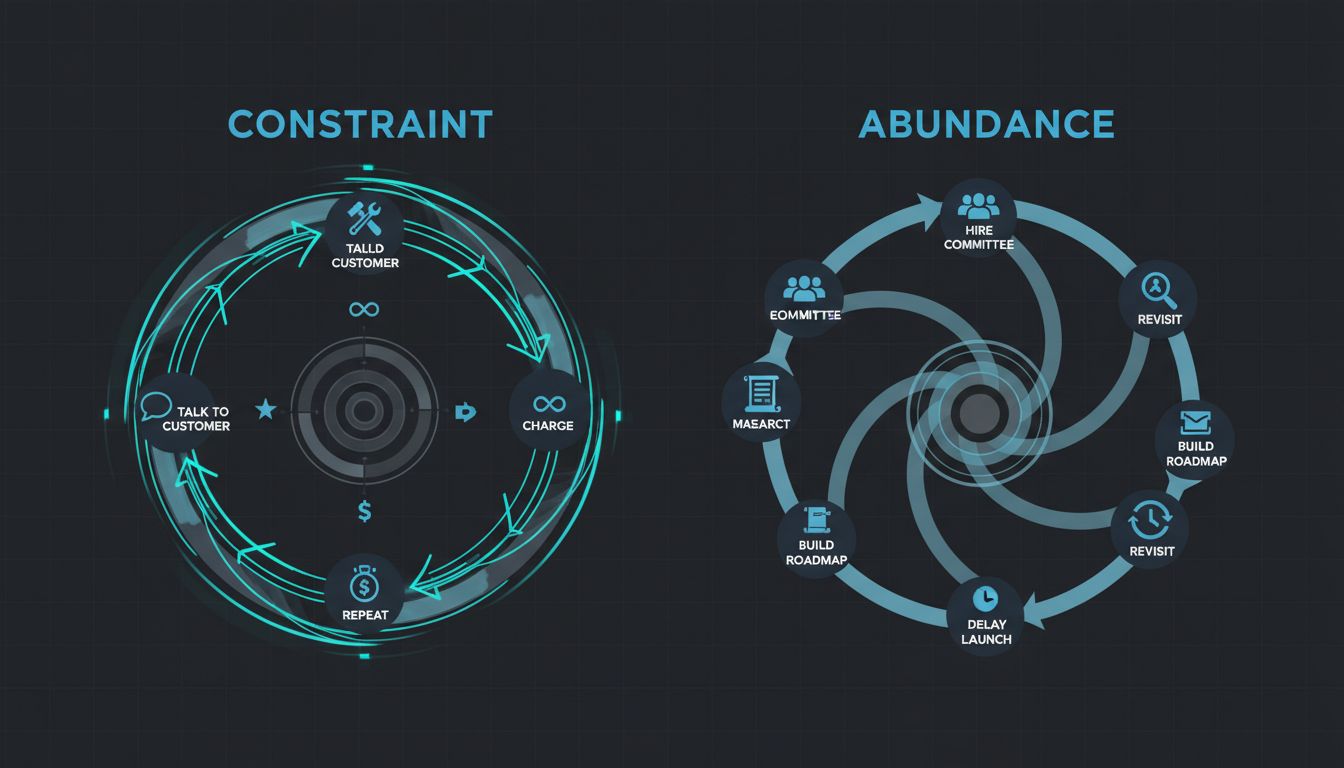
A startup with eight months of runway that bets wrong finds out fast and pivots. The constraint compresses the feedback loop. What would have been a three-year error becomes a three-month one, and the company survives because it hadn’t yet built an organization designed to perpetuate the mistake.
4. Small Teams Make Decisions Without Committees
Speed is underrated as a competitive advantage, and most people misunderstand where speed comes from. It doesn’t come from working harder. It comes from having fewer people who have to agree before something ships.
A six-person startup can change its pricing page, its onboarding flow, or its core feature set in a day. A 60-person startup with a funded growth team, a product org, and a legal review process cannot. The founder of the lean startup is often the designer, the product manager, and the first customer support person simultaneously. That’s uncomfortable. It’s also why they can respond to what they’re learning faster than any larger competitor.
This compounds over time. By the time the well-funded competitor gets its product committee to approve the feature that the market actually wants, the lean startup has shipped it, iterated on it twice, and started charging for it.
5. Revenue Becomes Real, Not Theoretical
Well-funded startups can defer the question of whether anyone will pay for the product. They have money. They can grow users first and figure out monetization later. This is the logic that produced a generation of companies with massive user bases and no viable business model, and it remains surprisingly popular.
A startup that can’t defer this question discovers the answer early. Sometimes the answer is no, and the company fails fast. That’s not a tragedy. That’s the system working correctly. More often, the pressure to generate revenue forces the team to talk to customers about price, which reveals what customers actually value, which improves the product in ways that no amount of engagement-optimization can.
Revenue also changes what you optimize for. A startup measuring month-over-month revenue growth thinks very differently about product decisions than a startup measuring monthly active users. The latter can slide into building for metrics that look good to investors rather than outcomes that matter to customers.
6. They Hire Slowly and Fire the Wrong Hires Faster
Hiring is where well-funded startups do the most damage to themselves. Capital enables fast hiring, and fast hiring means lower signal, worse cultural fit, and more coordination overhead per person added. A team that goes from 8 to 40 people in 18 months doesn’t have 40 people working on the problem. It has 40 people figuring out how to work with each other.
The lean startup hires its fifth person with the same scrutiny it gave the first two, because it can’t afford not to. Every new hire either extends the runway or shortens it. That’s a clarifying constraint. The person being hired knows it too, which tends to select for people who are comfortable with accountability rather than people who are comfortable with ambiguity and large expense accounts.
None of this means being underfunded is inherently good. Plenty of lean startups fail because they were too lean at the wrong moment, waited too long to hire, or ran out of runway 90 days before product-market fit. Capital matters. But the advantages of constraint are real, structural, and reproducible, and the startup world would do better to treat them as such rather than as a consolation prize for founders who couldn’t raise more.