
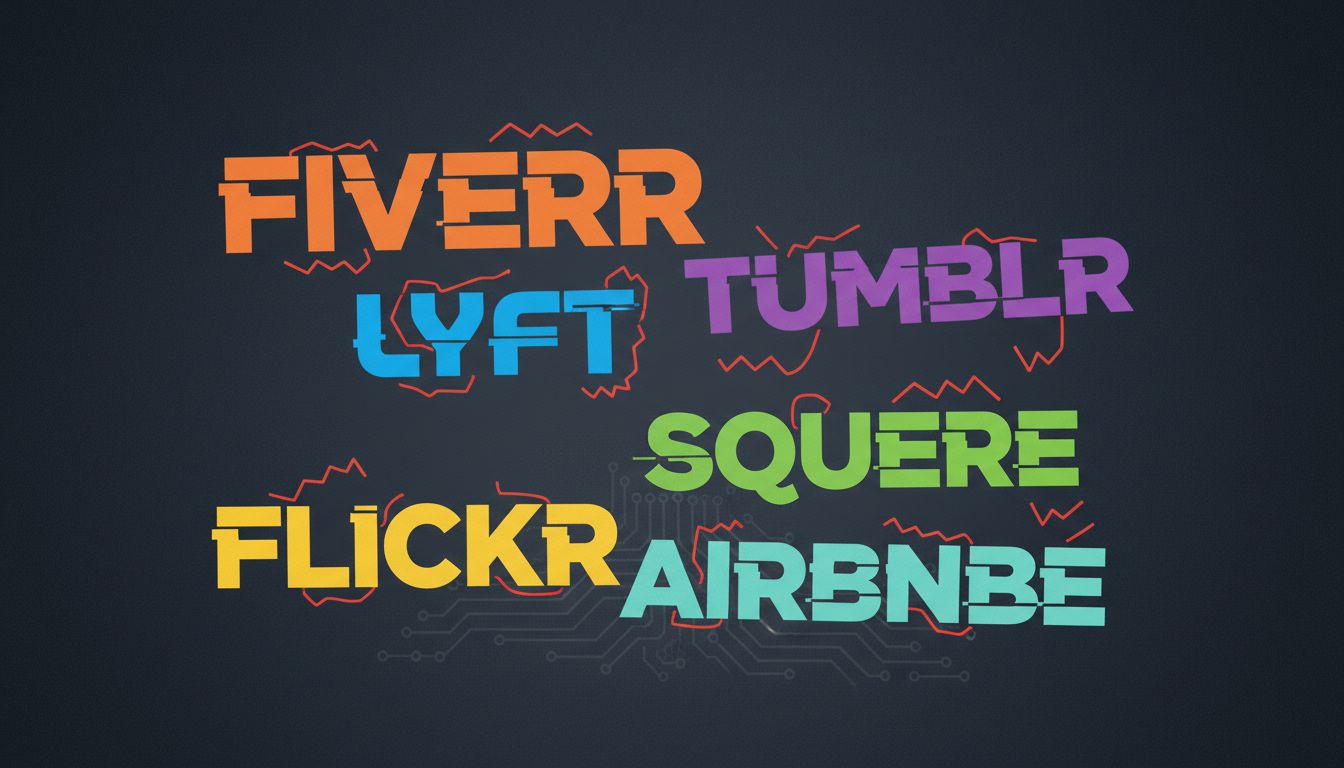
Picture a room full of investors in 2005 being pitched a photo-sharing app. The founders want to call it Flickr. No vowel at the end. On purpose. Half the room thinks it’s a typo. The other half can’t stop thinking about it. That tension is not a bug in the naming strategy. It is the strategy.
The conventional wisdom on startup naming goes something like this: make it easy to spell, easy to say, and impossible to misunderstand. Clean. Safe. Forgettable. The problem is that conventional wisdom in startups has a long history of being spectacularly wrong. Unicorn startups succeed by deliberately ignoring information that would have stopped them, and that contrarian instinct often shows up first in something as foundational as what they decide to call themselves.
The Friction Is the Point
Here is something nobody talks about in founder circles: a name that requires a second look creates a memory hook that smooth, pronounceable names simply cannot.
Cognitive scientists call this the generation effect. When your brain has to work slightly harder to process something, it encodes it more deeply. You remember the thing that made you pause. Flickr, Tumblr, Lyft, Fiverr, Scribd. These names made people stop. They looked wrong. And that wrongness made them stick.
Xero, the accounting software company, is a perfect case study. Founders could have gone with Zero, clean and obvious. Instead they chose a spelling that looks like a mistake. Every single person who first encountered that name had to think for a moment. And that moment of friction is precisely why it spread. People mentioned it in conversation with a slight hesitation, which made the listener curious, which made them look it up. The awkward spelling became a word-of-mouth engine.
Hard-to-Spell Names Are Actually a Filter
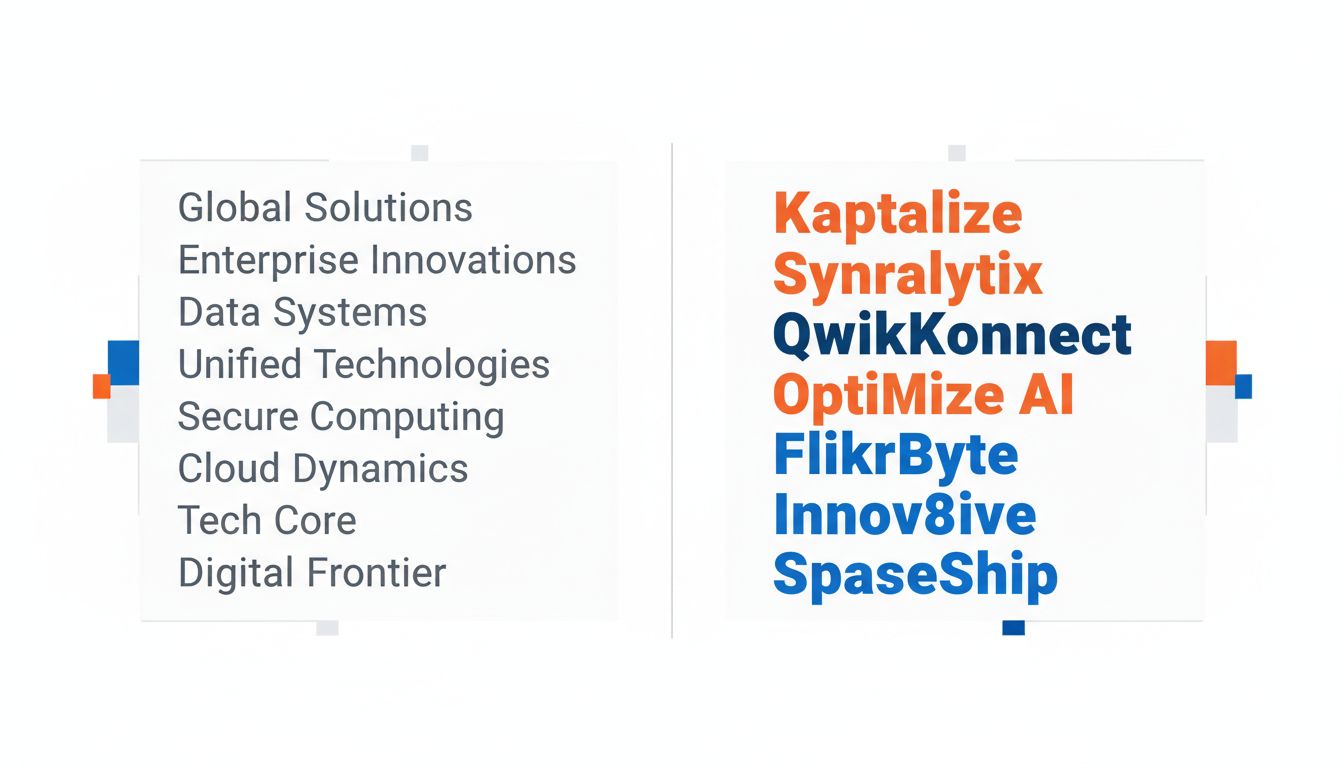
This is the part that sounds harsh but is genuinely useful: a name that’s difficult to spell filters your audience from day one.
If someone cares enough to Google the correct spelling, look it up twice, or ask a friend how to find you, that person is already more engaged than someone who stumbled across a clean, searchable name. You are not losing casual users. You are identifying committed ones.
This maps directly to how the smartest startups think about their early customer base. Successful startups deliberately choose markets that look too small to investors because a smaller, more committed audience is infinitely more valuable than a massive indifferent one. The naming logic follows the same principle. You want your first thousand users to feel like they are part of something, not just a product download.
Google is the classic counterexample that proves the rule from another angle. Before it had cultural saturation, the word was meaningless and seemingly unspellable. People had to learn it. Now it is a verb. The learning curve became part of the brand mythology.
The Domain and SEO Argument Is Mostly a Red Herring
Every time someone makes the case for counterintuitive names, a product manager somewhere raises their hand about SEO. Fair enough. But this argument has not aged well.
Brand search is now the dominant signal for established companies. If enough people are searching specifically for your name, the algorithm learns that fast. Lyft did not fail because it was not spelled like “lift.” Fiverr did not collapse because it has two Rs. These companies invested in building genuine demand, and the search engines followed.
The more honest version of the SEO concern is about early discoverability, and that is legitimate. But the answer is not to dilute your brand into something generic. The answer is to build enough word-of-mouth that people are searching for you specifically, not searching a category and hoping to find you.

The .com Myth and the New Naming Landscape
For years, the startup naming conversation was dominated by one question: is the .com available? This led to a gold rush of vowel-dropping, letter-swapping, and syllable-smashing that produced names like Tumblr, Scribd, and Grindr. The missing vowel was not aesthetic laziness. It was a direct response to domain scarcity.
What happened next is interesting. Those misspelled names did not hurt the companies. In several cases, they helped. The name itself became a conversation starter, a small signal of tech-insider credibility. Knowing how to spell Tumblr correctly was a tiny cultural marker that said: I am in on this.
That same dynamic plays out in how teams build products. Most billion-dollar apps launched with only three core functions, and that constraint was the strategy. A counterintuitive name is a similar kind of constraint. It forces the company to earn attention rather than assume it.
What This Means When You Are Naming Your Company
None of this means you should deliberately misspell your company name out of some misguided belief that friction is always good. Friction without meaning is just confusion. The companies that pulled this off had names that were strange but phonetically intuitive. You might not know how to spell Lyft, but you can say it immediately. You might pause on Fiverr, but the double-R lands in your memory.
The framework worth borrowing is this: your name should be easy to say, slightly unexpected to see, and impossible to confuse with something else. That combination puts the cognitive stickiness to work without creating a customer support nightmare every time someone tries to find your website.
And before you spend three months agonizing over naming while avoiding harder questions, be honest with yourself. The name matters less than what you build and how you treat the people who use it. A great product with a weird name becomes a brand. A mediocre product with a perfect name becomes a case study in what went wrong.
The companies that obsess over naming at the expense of everything else are often the same companies solving the wrong problem from the very beginning. The name is a signal. It is not the substance.
Get the substance right. Then pick a name that makes people stop for exactly one second, wonder how to spell it, and remember it forever.