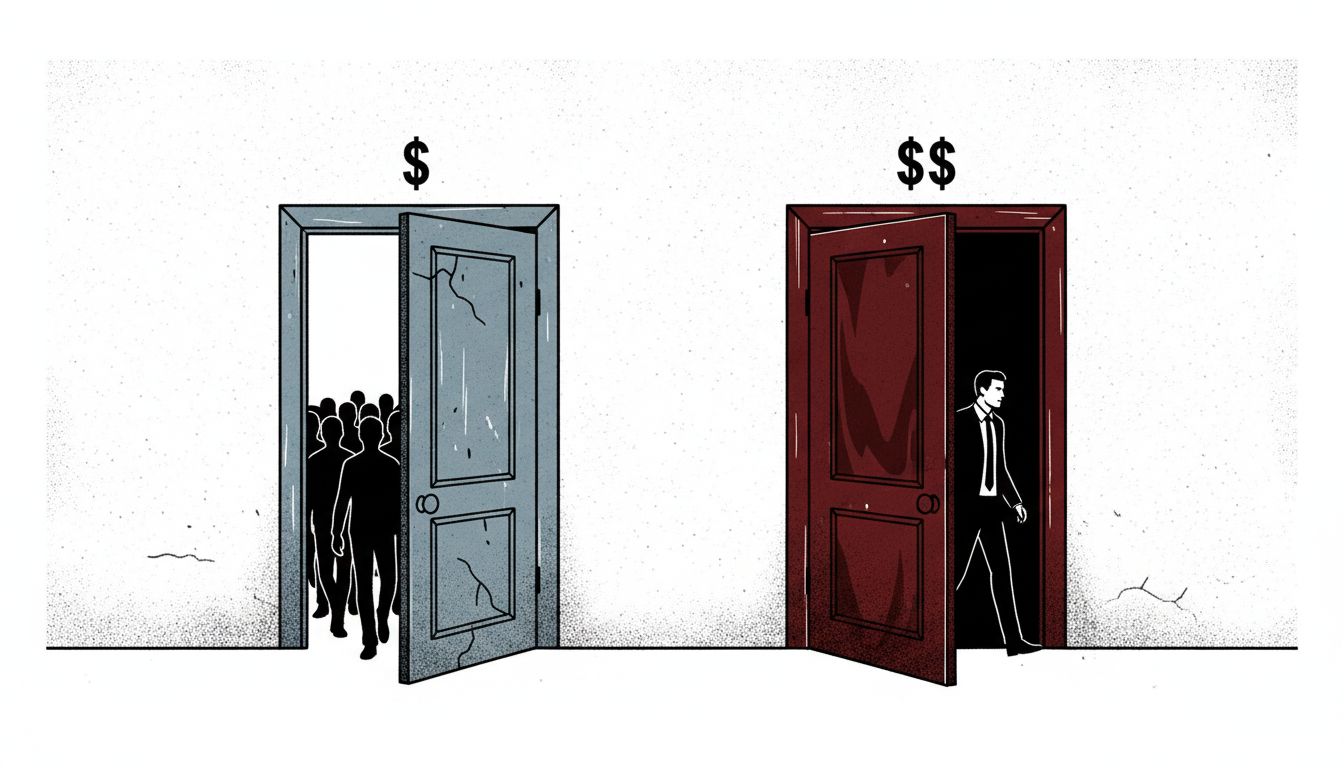

A founder I know spent three months building what she was convinced was a perfect onboarding flow. Clean UI, sensible defaults, tooltips in all the right places. Then the first hundred users came through and forty percent abandoned the product before completing setup. She did what most founders do: she assumed the users were wrong. She tweaked button colors. She rewrote tooltip copy. She added a progress bar. Churn stayed flat. It wasn’t until she sat down and actually read through the support tickets, the ones her small team had been quietly archiving as “resolved,” that she found the real problem. Users weren’t confused about how to use the product. They were confused about why they should.
That distinction, between a usability problem and a value communication problem, only existed inside the complaints. And she almost missed it entirely.
Early-stage startups that weaponize customer rejection consistently outlast the ones that avoid it, and the gap in outcomes is not small. But the mechanism behind it is almost never discussed honestly.
The Complaint Is Not the Problem. The Complaint Points to the Problem.
This sounds obvious until you watch how most teams actually handle negative feedback. They triage it. They categorize it. They close tickets. They treat the complaint as a unit of customer dissatisfaction to be neutralized rather than a signal to be decoded.
The companies that grow fastest do something structurally different. They treat every complaint as a data point in a larger pattern, and they build systems to surface that pattern fast.
Slack’s internal tooling team (before Slack was Slack, when it was still a gaming company’s internal chat system) kept meticulous logs of what their own people complained about when using the tool. The complaints weren’t random. They clustered around a few specific friction points, and those friction points eventually became the core product decisions that made Slack feel different from everything else on the market. The tool was never meant to be sold externally in the first place, which is exactly why the complaint data was so honest.

Three Categories of Complaints (and Which One Actually Matters)
Not all complaints are created equal. After watching a lot of early-stage teams try to build feedback systems, I’ve come to believe complaints break down into three buckets:
Noise complaints come from users who fundamentally misunderstood what your product does. These are real signals about your marketing and positioning, but they’re not product signals. If someone complains that your project management tool doesn’t send physical mail reminders, that’s a positioning problem, not a feature gap.
Friction complaints are about how hard it is to do something your product is supposed to do. These matter and they’re worth fixing, but fixing them rarely drives growth. You’re removing obstacles, not creating pull.
Value complaints are the gold. These are the complaints where a user clearly understands what your product does, is trying to use it for exactly the right thing, and is still hitting a wall. “I’m trying to do X, your product almost does it, but it falls apart at Y.” That’s a product roadmap item disguised as an angry email.
Most teams spend 80 percent of their complaint-response energy on noise and friction. The fastest-growing ones invert that ratio.
Building the System (Because Intuition Doesn’t Scale)
Reading complaints intuitively works when you have fifty customers. It breaks down at five hundred. The founders who stay close to customer pain at scale are doing something systematic, not something heroic.
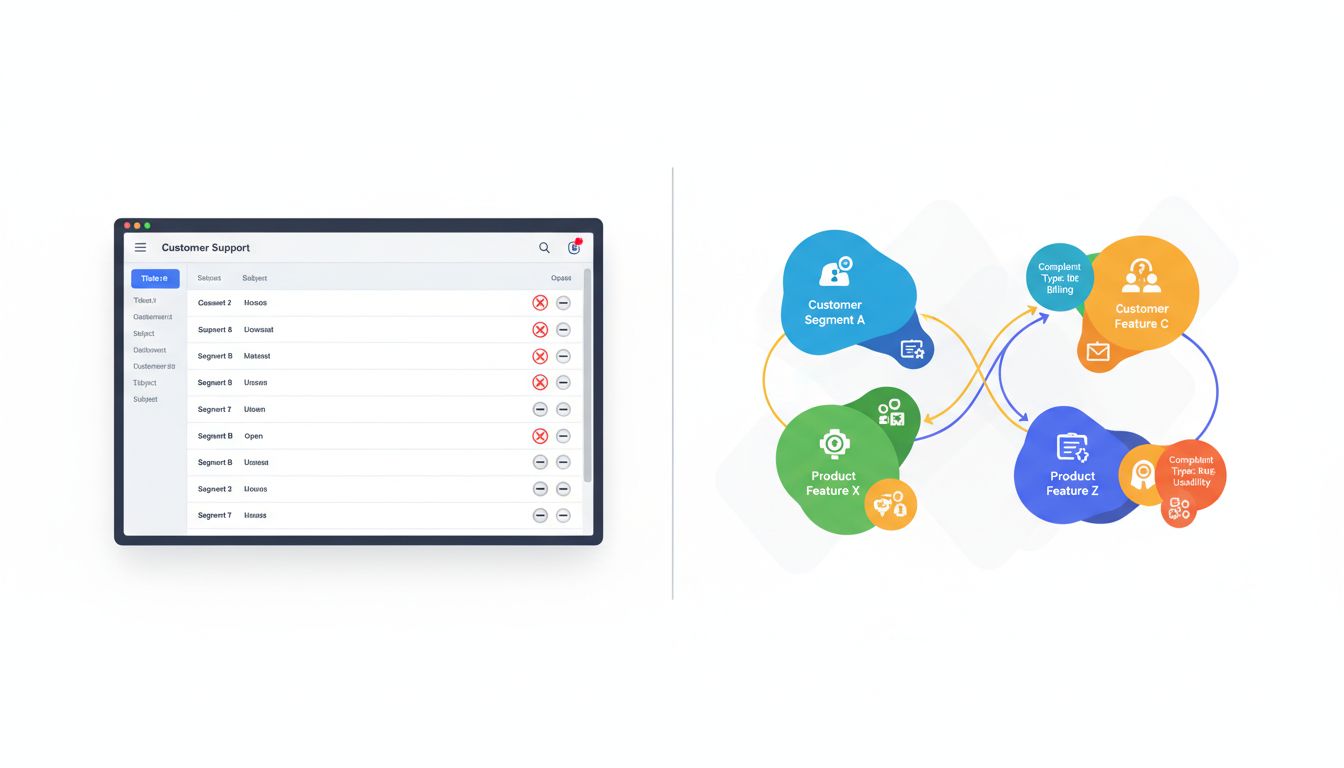
The most effective system I’ve seen is deceptively simple: a shared document or channel where every customer-facing team member logs one insight per week from complaints. Not a summary of the complaint. An insight. “Users who complain about export functionality are almost always on the enterprise plan and mention deadline pressure in the same message.” That’s an insight. That tells you something about urgency, segment, and feature priority all at once.
The teams that do this consistently start to notice patterns that no single person would have caught. And those patterns often point somewhere counterintuitive. Sometimes the loudest complaints are from your least valuable customers. Sometimes the quietest segment is the one that’s been silently churning for months because they don’t even bother complaining anymore.
This is also where the connection between complaint systems and venture capital pattern recognition becomes interesting. When investors evaluate early-stage startups, one of the things they’re actually looking for is whether the founder has a genuine feedback loop with their market. Founders who can talk specifically about what their users complain about, what those complaints actually mean, and what they’ve changed as a result, are demonstrating something that matters a lot: they know how to learn.
The Counterintuitive Move: Respond Before You Fix
Here’s the thing that most startup advice gets wrong about complaint management. The goal is not to close the complaint by resolving the issue. The goal is to extend the conversation long enough to extract everything useful from it.
A customer who just complained is a customer who still cares. They haven’t quit yet. They’re giving you a window, and the right response is not a polite “we’ll look into it” but a genuine question: “Can you tell me more about what you were trying to accomplish when this happened?”
That follow-up question, asked consistently, is where the real product intelligence lives. The complaint is the headline. The answer to that question is the story.
Billion-dollar startups regularly win by ignoring what experts tell them to pay attention to, and one of the things they routinely ignore is the conventional wisdom that complaint volume is a metric to minimize. The best founders treat rising complaint volume in a new segment as a sign they’ve found product-market fit in a place they weren’t expecting it.

What Separates the Teams That Actually Do This
I’ll be direct about what the real barrier is. It’s not process. It’s ego.
Reading complaint data requires a specific kind of psychological tolerance for being wrong. Most founders who have built something are emotionally invested in it in a way that makes negative feedback feel like an attack rather than a gift. The teams that build durable feedback systems are the ones where the founders have genuinely internalized the idea that a customer telling you your product is broken is doing you a favor.
The startups that treat complaints as a growth engine aren’t doing something technically complicated. They’re doing something emotionally difficult: they’re paying more attention to what isn’t working than to what is. That discipline, applied consistently and systematically, is what separates the companies that iterate their way to scale from the ones that build confidently in the wrong direction until they run out of runway.
The complaints are there. The question is whether you’re actually reading them.