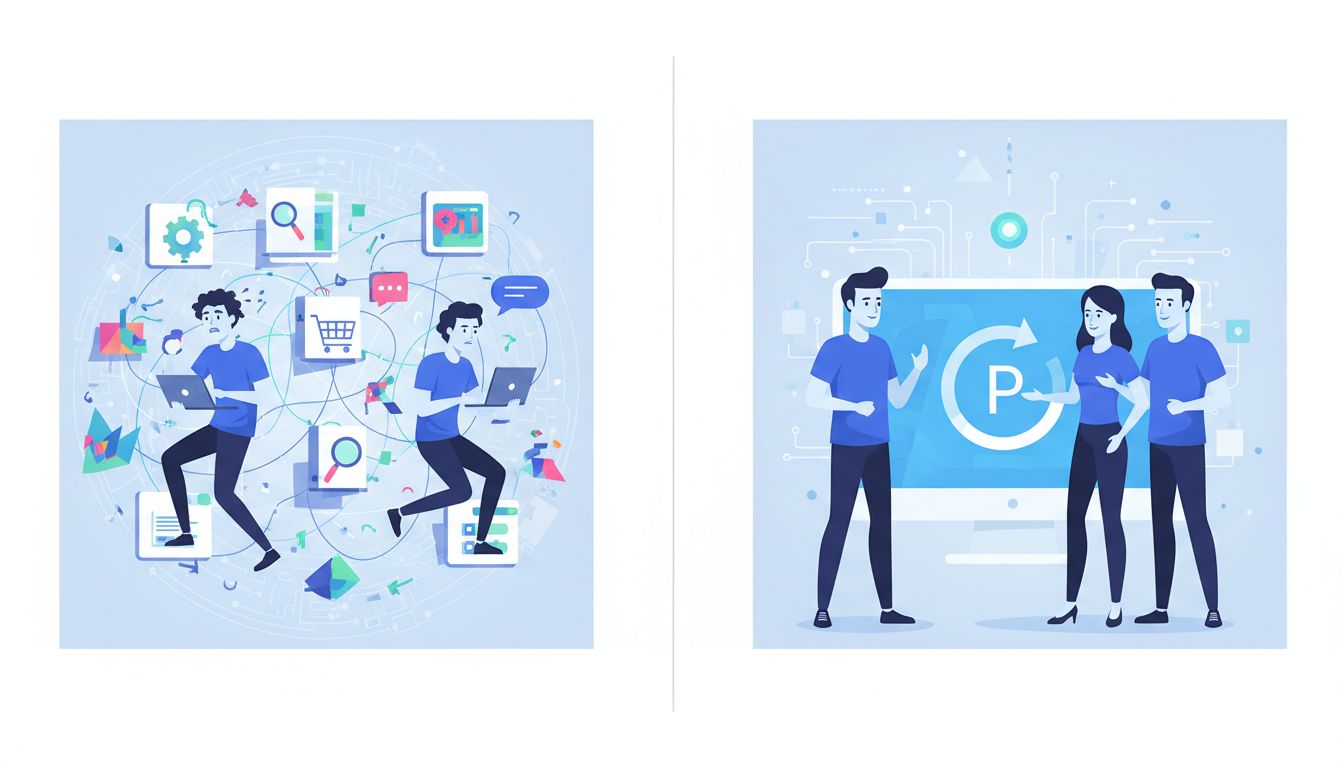
Three months into building our analytics platform, we got our first paying customer. Sarah from a mid-sized e-commerce company was thrilled with our MVP and had exactly one request: “Can you add a feature to track our offline store visits too?”
My co-founder and I spent the next six weeks building exactly that. Sarah loved it. Our second customer hated it. Our third customer was confused by it. By month six, we realized we’d built a Frankenstein product that tried to solve everyone’s problems and solved no one’s particularly well. This pattern plays out in startups everywhere, yet founders keep making the same mistake. The Real Reason 85% of AI Startups Die Before Their Second Birthday often comes down to this exact issue: building for the loudest voice instead of the right market.
The Customer Feedback Trap
Here’s the uncomfortable truth: your first customer chose you because you were cheap, desperate, or they knew someone who knew someone. They didn’t choose you because you had perfect product-market fit. Yet most founders treat early customer requests like commandments from the startup gods.
I’ve watched dozens of founders fall into this trap. They get their first few customers, start getting feature requests, and immediately assume this feedback represents their entire market. It doesn’t. Your first ten customers are statistical noise, not market research.
The most successful companies I know deliberately ignore early customer requests, and they do it for three specific reasons.
Reason 1: Early Customers Are Edge Cases, Not Your Market
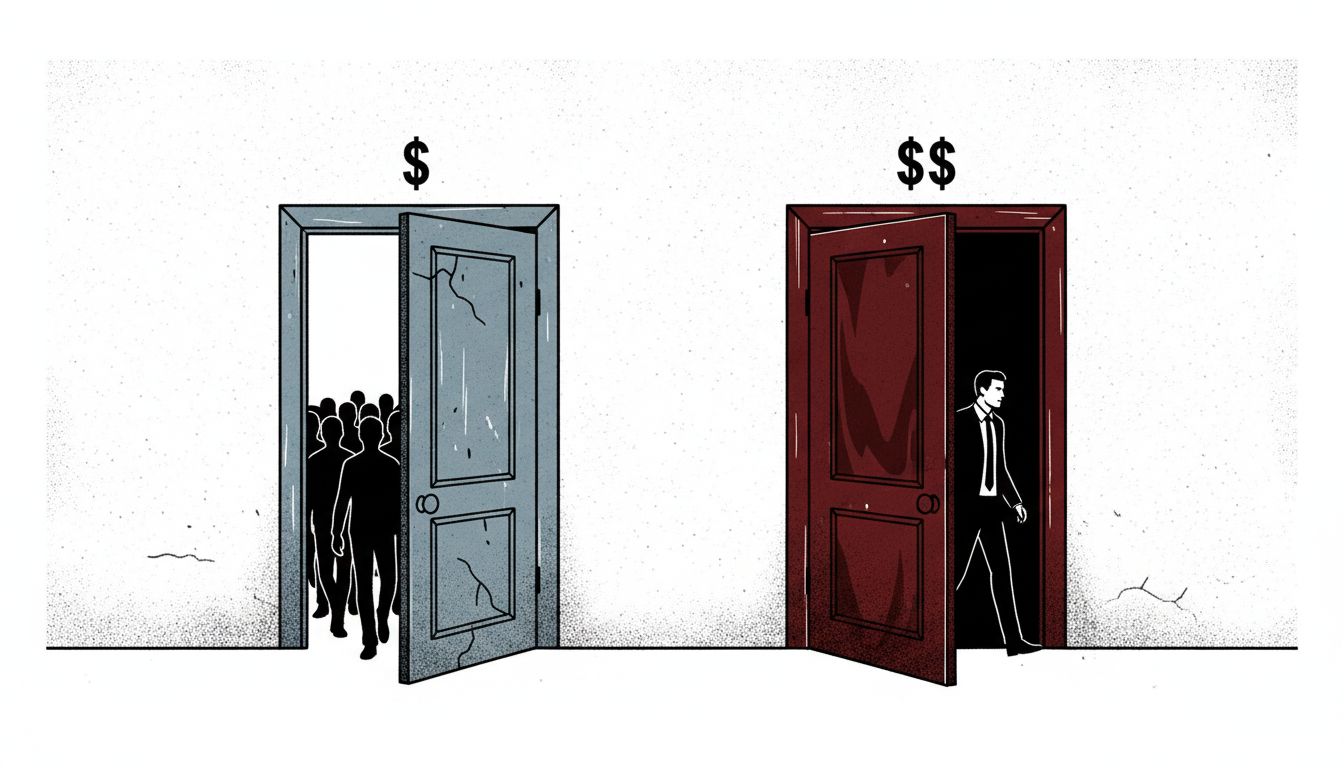
Your first customers are almost always edge cases. They’re willing to use half-baked software because they have unusual problems, tight budgets, or high tolerance for pain. Building for edge cases is a recipe for building edge case products.
Take Slack’s early days. Stewart Butterfield and his team were building a gaming company when they realized their internal communication tool was more valuable than their game. Their “first customers” were other gaming companies with similar workflows. If they’d listened exclusively to those early users, Slack would have become a niche tool for game developers instead of the communication platform used by millions of knowledge workers.
The key insight: just because someone will pay for your product doesn’t mean they represent your best market opportunity.
Reason 2: Feature Requests Mask the Real Problem
Customers are terrible at articulating what they actually need. They’ll ask for faster horses instead of cars, to borrow Henry Ford’s (probably apocryphal) wisdom. More often than not, feature requests are symptoms of deeper problems that your core product should solve differently.
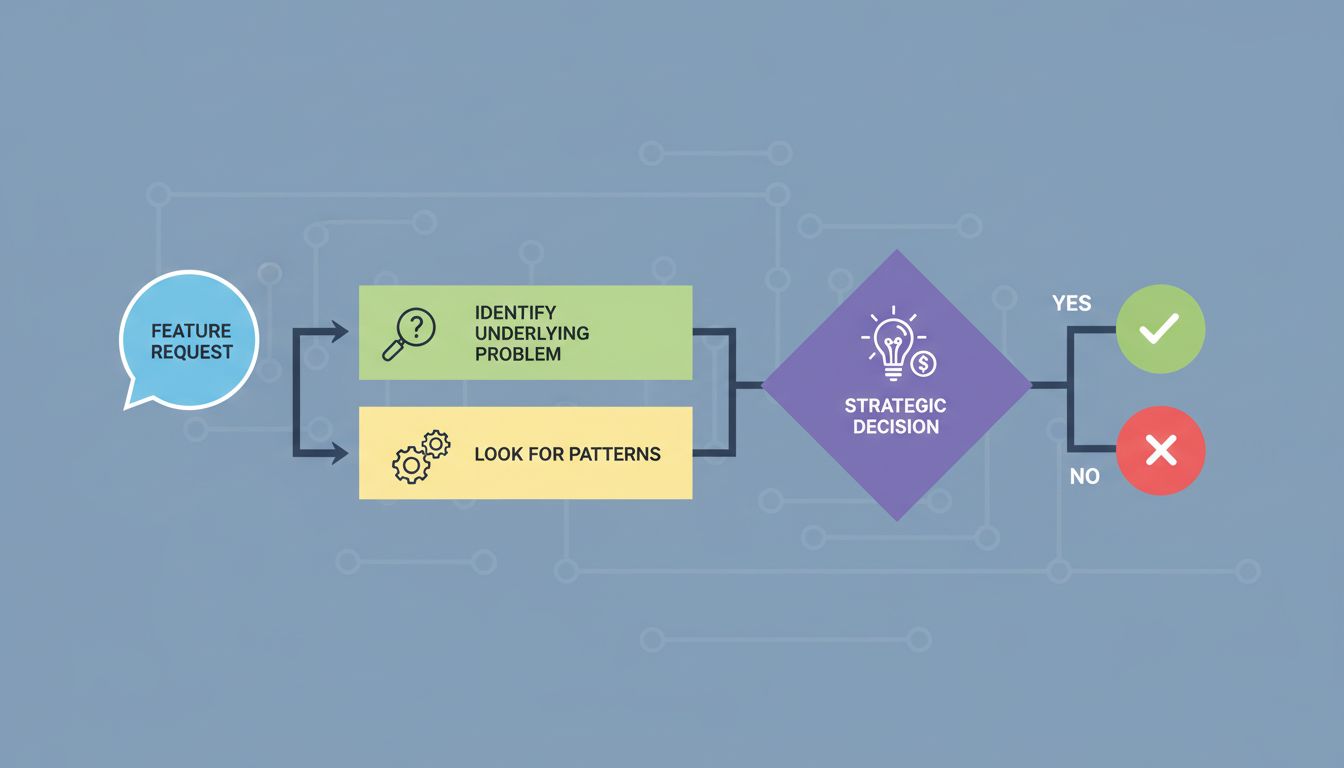
I learned this lesson the hard way with that analytics platform. Sarah didn’t really need offline tracking. She needed a unified view of customer behavior across all touchpoints. If we’d dug deeper into the underlying problem instead of building exactly what she asked for, we could have solved it more elegantly and served a broader market.
Successful founders become expert problem archaeologists. They dig past feature requests to uncover the fundamental job the customer is trying to get done. Sometimes the best way to solve a customer’s problem is to ignore their solution entirely.
Reason 3: Customer-Driven Development Kills Innovation
Customers can only request features based on their current mental models and existing solutions. They can’t envision paradigm shifts because paradigm shifts require seeing beyond current limitations.
If Facebook had listened to early users asking for better ways to organize friend lists, they might have built a glorified contact manager. Instead, they focused on the underlying human need for social connection and built something nobody had directly requested: the news feed. The Invisible Puppet Masters: How Machine Learning Algorithms Decide What You See on Social Media shows how that innovation became the foundation of social media as we know it.
Breakthrough products almost never come from customer feature requests. They come from founders who understand customer problems better than customers understand them themselves.
How to Actually Use Early Customer Feedback
This doesn’t mean you should ignore customers entirely. The smartest founders I know follow a different playbook:
Listen to problems, not solutions. When customers request features, dig into the underlying workflow or pain point. Ask “why” until you understand the root cause.
Look for patterns across segments, not individual requests. One customer wanting offline tracking might be an edge case. Ten customers from different industries struggling with data silos might indicate a real market need.
Validate your broader vision, don’t let customers define it. Use customer conversations to stress-test your market thesis, but don’t let any single customer (or even several customers) pull you away from your core vision.
The Art of Strategic Stubbornness
The best founders are strategically stubborn. They’re obsessed with customer problems but ruthlessly protective of their product vision. They understand that saying yes to every customer request is actually a disservice to their broader market.
Look at how The Trojan Horse Economy: How Free Software Became Tech’s Most Profitable Weapon succeeded. Companies like GitHub didn’t build every feature their first developer users requested. They stayed focused on their core value proposition and built adjacent features only when they served the broader vision.
This principle extends beyond just feature development. Even design decisions benefit from this approach. The Color Psychology Arms Race: How Tech Giants Weaponize Blue, Green, and White shows how successful companies make deliberate design choices based on their market strategy, not individual customer preferences.
Your first customer will be wrong about what you should build next. That’s not their fault. It’s their job to run their business, not to understand your market opportunity. The sooner you accept this, the sooner you can start building something that serves your actual market instead of your first customer’s specific edge case.
The most successful startups don’t ignore customers. They ignore customer solutions and focus obsessively on customer problems. There’s a big difference, and it’s the difference between building a niche consulting business and building a scalable product company.