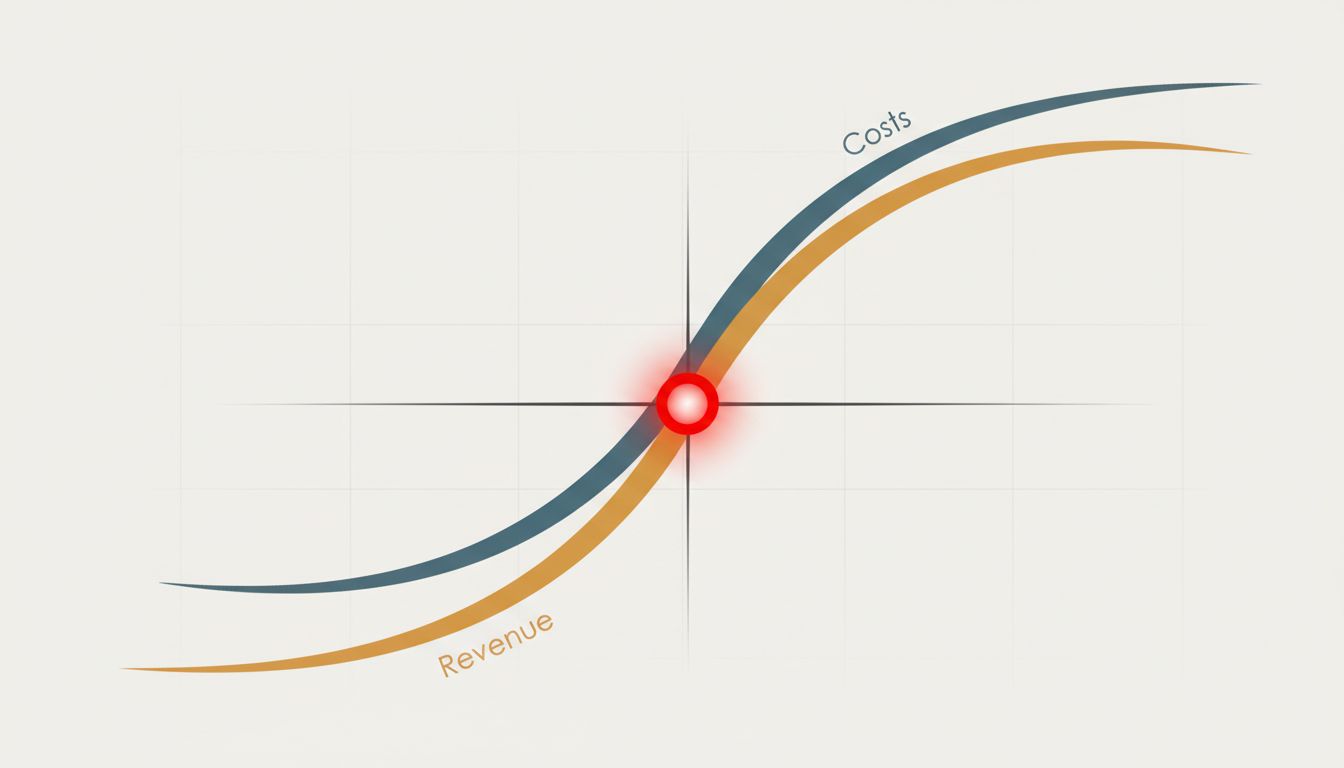

A few years ago, I watched a B2B SaaS company celebrate hitting a hundred paying customers. Champagne, a Slack announcement, the works. Eighteen months later they were stuck at four hundred, burning cash trying to figure out why growth had stalled. The product hadn’t gotten worse. Their sales team hadn’t gotten lazy. The problem was simpler and more painful: they had built the entire product around customers who were nothing like the market they were trying to enter.
This is not a rare story. It is the default story, and most founders don’t recognize it until the damage is done.
Your first customers are self-selected outliers
The people who find you before you have a marketing budget, before you have case studies, before you have a credible brand are not normal buyers. They are risk-tolerant, curious, and usually dealing with a pain point so acute that they will put up with rough edges to solve it. That is exactly who you want when you are trying to survive the first year. It is exactly the wrong profile to design a scalable product around.
Early adopters will give you feedback, file tickets, and advocate for features that solve their specific workflows. You will naturally build those features because these customers are paying you and talking to you constantly. Meanwhile, the much larger population of mainstream buyers, the ones who actually represent your addressable market, would have told you something completely different. They want simplicity over power. They want to not have to think. They will not read documentation. They will churn at the first point of confusion.
By the time you go looking for those mainstream buyers, your product has been optimized for people who are nothing like them.
High engagement from early customers can mask the real problem
One of the cruelest tricks in early-stage startups is the engagement data that looks incredible but is actually a warning sign. When your first hundred customers are logging in every day, using advanced features, sending feature requests, it feels like product-market fit. It might just be that you have found a group of enthusiasts who are unusually willing to invest in making your product work.
True product-market fit shows up when people who are not trying hard still find value. When someone installs your tool, does the core thing without reading anything, and comes back next week without prompting, that is signal. When your best customers are power users who have essentially become unpaid product consultants, that is a community, not a market.
Early customers shape your team’s intuitions in ways that are hard to undo
This is the part nobody talks about. After twelve months of close contact with your first hundred customers, your entire team has absorbed a mental model of who they’re building for. Your engineers know their workflows. Your support team speaks their language. Your roadmap reflects their priorities. That institutional knowledge is genuinely valuable, and it is also a trap.
When you try to move upmarket or expand into adjacent segments, the team’s gut reactions are calibrated to the wrong user. Features that feel obviously necessary are obvious because your early customers said so. Simplifications that mainstream buyers desperately need feel like dumbing things down. Deleting a feature is the hardest call in engineering, and it is even harder when that feature exists because your most vocal early customer asked for it by name.
The acquisition channel problem compounds everything
Early customers usually come in through channels that do not scale: founder networks, niche forums, a ProductHunt launch, word of mouth within a specific community. Those channels work because they reach people who are already primed to care. They do not tell you anything about how to reach the next ten thousand customers through paid acquisition, partnerships, or enterprise sales.
Founders often treat early channel success as validation of their go-to-market strategy. It is more often validation that the founders are well-networked in a particular subculture. That is worth something, but it is not a distribution strategy.

The counterargument
The pushback I hear most often is that you have to start somewhere, and early customers are the only data you have. That is true and I am not arguing against getting early customers. You need them. The revenue keeps you alive. The feedback shapes the product. The case studies make later sales possible.
The mistake is not getting early customers. The mistake is letting them govern your strategy beyond the survival stage. Paul Graham’s advice to do things that don’t scale is excellent for getting to your first hundred customers. It is a disaster if you mistake it for permanent operating philosophy.
The founders who navigate this well do something specific: they segment their early customers aggressively, identify which of them actually resemble their target market, and weight that subset’s feedback more heavily. They also spend time talking to people who chose not to buy, which is almost always more informative than talking to enthusiasts who did.
You need your first hundred customers. You do not need to become them.
The goal is to understand your early customers deeply enough to know how unrepresentative they are. Treat their feedback as a starting point, not a mandate. Build enough to keep them happy and learn from them, then deliberately go find people who are nothing like them and see if the product still works.
If it does not, you have learned something important before you scaled the wrong thing. If it does, you have found your market. The difference between those two outcomes is whether you were honest with yourself about who your first hundred customers actually were.
Most founders are not. They are too grateful to be critical, and that gratitude costs them.