The Hidden Cost Everyone Is Paying
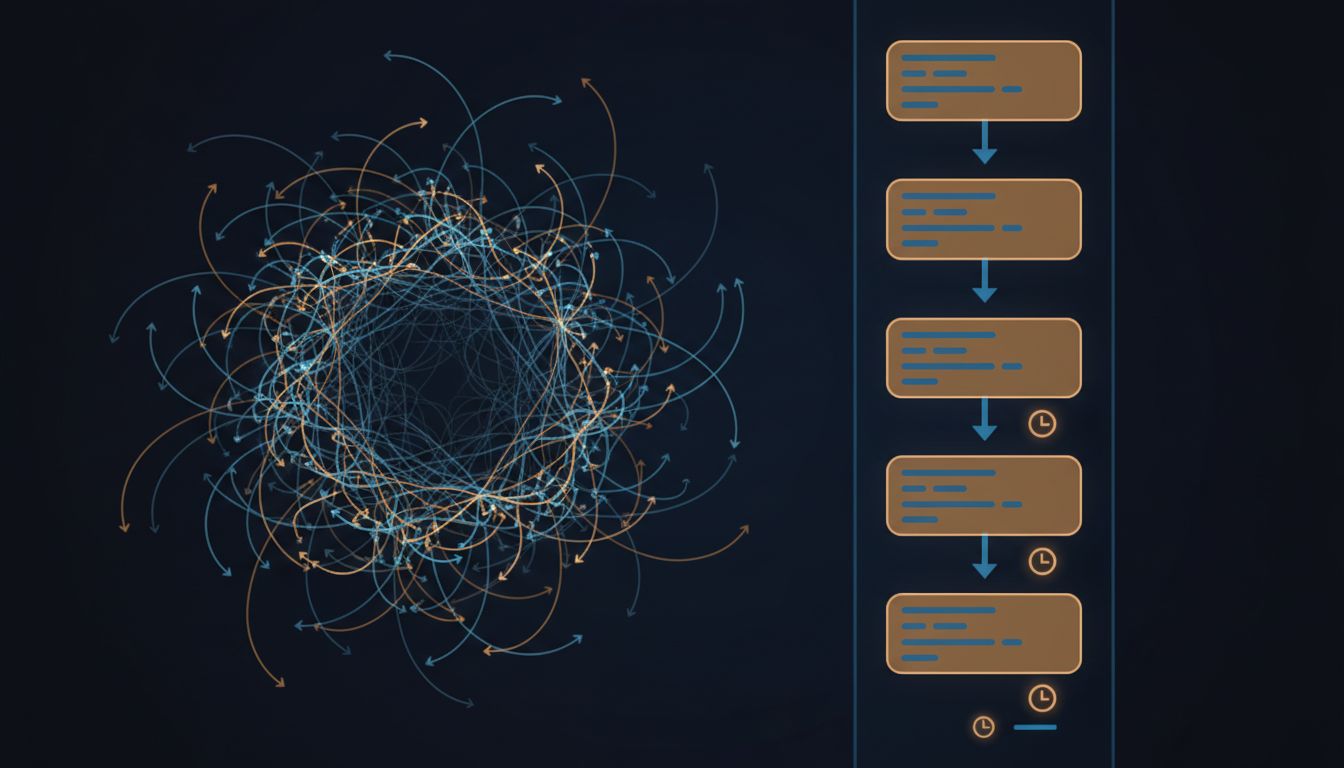
Imagine you’re thirty minutes into a genuinely hard problem. You’ve loaded the relevant context into your working memory, you’re holding several constraints in tension, and you’re close to something. Then a Slack notification fires, or someone walks over to ask a quick question, and the whole mental model collapses. You spend the next fifteen minutes reconstructing what you were thinking about.
This isn’t a minor inconvenience. Research on cognitive context-switching suggests that recovery from a single interruption can take fifteen to twenty minutes, and in practice, most knowledge workers are interrupted far more than once an hour. The math is brutal: if you’re averaging four significant interruptions per day, you may have lost two hours of deep work before you’ve done anything else wrong.
Synchronous communication, meaning communication that requires both parties to be present and responsive at the same time, is not inherently bad. But it carries a hidden tax. Every meeting, every ping that demands immediate attention, every “got a sec?” forces context switches on both people. One person has a question answered. Two people lose their train of thought.
The teams that figure this out stop treating interruption as a normal operating condition and start treating it as a defect.
What Async Actually Means (It’s Not Just Email)
Asynchronous communication is any exchange where the sender and receiver don’t need to be present simultaneously. Email is the obvious example, but that framing undersells the concept. The meaningful distinction isn’t the medium, it’s the expectation.
A Slack message sent with the unspoken expectation of a response within five minutes is synchronous communication wearing async clothing. An email that someone is expected to answer in the next hour is the same thing. What actually defines async-first culture is the explicit decoupling of sending from receiving. You write it now, they read it when they’re ready.
This matters because it changes who controls attention. In a sync-default culture, the sender decides when the receiver’s focus gets interrupted. In an async-first culture, the receiver decides when to context-switch. That’s a significant redistribution of cognitive control.
Basecamp (the company, not just the software) has written extensively about this, and their model is worth taking seriously. They’ve operated with a largely async, distributed team for over two decades, and their position is that the “always available” norm in most offices is a pathology dressed up as collaboration. They argue that most things people treat as urgent aren’t urgent, and that building systems which assume urgency by default makes organizations systematically worse at the work that requires sustained thought. You can read more about how they built that culture deliberately in this piece on Basecamp’s competitive approach.
The Architecture of Deep Work
To understand why async works, you have to understand what deep work actually is. The term comes from Cal Newport’s writing, but the underlying idea is well-supported by cognitive science: complex knowledge work requires extended periods of unbroken concentration to produce anything non-trivial.
Think about the difference between writing a competent function and designing an actually good API. The function might take twenty minutes. The API design requires holding a dozen design constraints, likely use cases, error modes, and future extension points in your head simultaneously. That kind of thinking doesn’t happen in five-minute windows between meetings. It requires the mental equivalent of compile time, where the problem runs in the background while your focused attention shapes it.
Software developers often understand this intuitively because their work makes the cost of context-switching viscerally obvious. When you’re mid-debug on a gnarly race condition and someone asks you to review a PR, you don’t just lose five minutes. You lose whatever mental state you’d built up to hold the concurrent execution paths in your head. Rebuilding that state is expensive.
But this same dynamic applies to anyone doing genuinely complex knowledge work. A designer in flow thinking through information hierarchy. A writer making structural decisions about an argument. A financial analyst building a mental model of a company. All of these require uninterrupted cognitive residence time, and sync-default culture actively destroys it.
Why Sync Culture Persists Despite the Evidence
If async is demonstrably better for complex work, why do most teams default to synchronous? Several reasons, and they’re worth naming honestly.
First, availability signals effort. Someone who responds to messages immediately, who’s always in meetings, who’s visibly online, looks busy in a way that’s easy for managers to interpret as productive. Someone doing three hours of deep async work and then batching their communication looks, on the surface, less engaged. This is a measurement problem masquerading as a productivity preference.
Second, sync communication is cognitively easier in the short term. Writing a clear, complete async message that contains all necessary context is genuinely harder than pinging someone and having a conversation. When you write async, you have to do the thinking upfront: What do I actually need? What context does the reader lack? What’s my recommendation versus what I’m asking? That work is valuable (it often clarifies your own thinking) but it has an upfront cost that many people avoid by defaulting to a call.
Third, there’s a coordination problem. Async-first only works well when the whole team buys in. If one person sends a message async and another person responds synchronously with a follow-up ping twenty minutes later, you haven’t achieved async communication. You’ve just added a lag to a synchronous exchange. Getting to genuine async requires explicit agreement, and explicit agreements about communication norms feel bureaucratic to teams that haven’t experienced the alternative.
How the Best Async Teams Operate
Teams that do this well tend to share a few structural characteristics.
They treat writing as infrastructure. Decisions, context, and reasoning get written down not as an afterthought but as the actual work product. A decision made in a meeting that isn’t written down is fragile; it lives only in the memories of whoever was present, degrades with time, and can’t be referenced by someone who joined the team later. Teams that have internalized async tend to have unusually good internal documentation, not because they love writing, but because documentation is what async communication leaves behind.
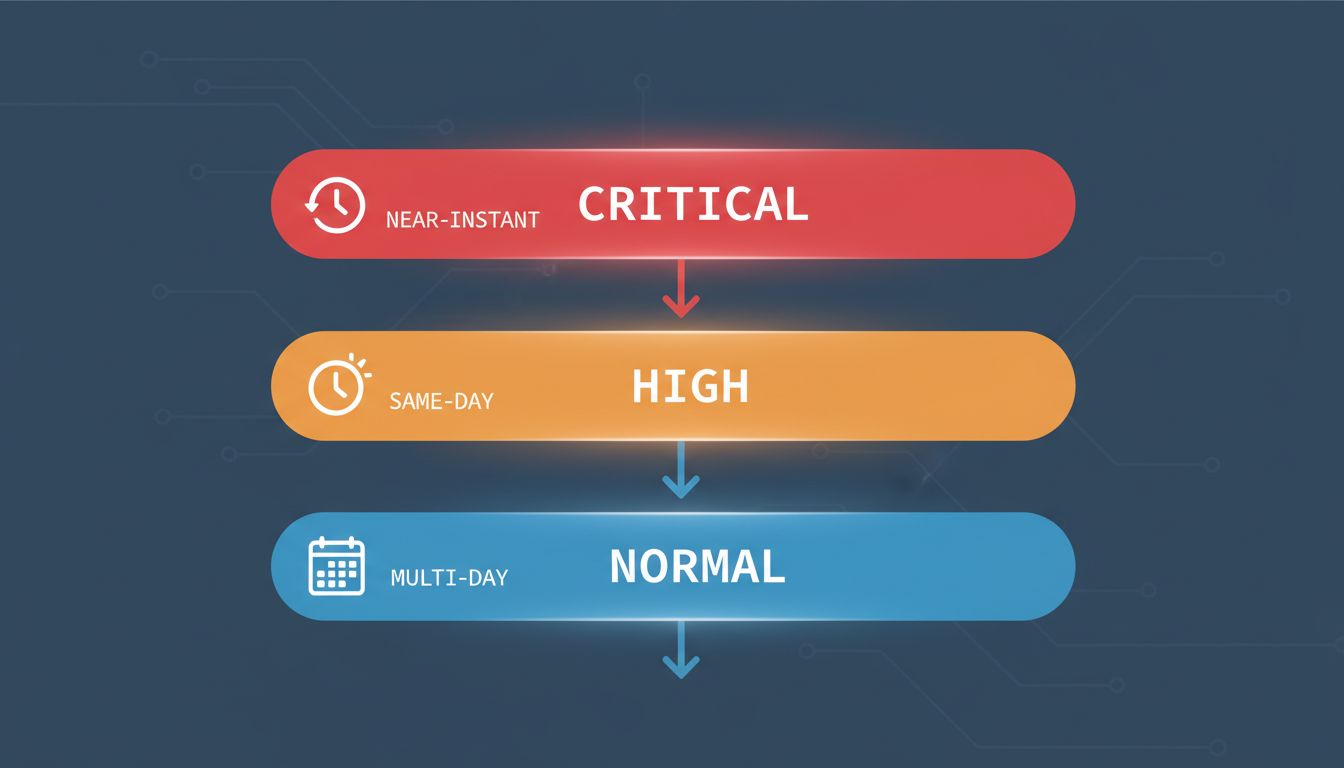
They distinguish between response-time tiers. Not everything has the same urgency, and good async teams make that explicit. A production incident has a different response expectation than a design question. Rather than defaulting everything to “respond now,” they create explicit channels and norms: this channel is monitored for fire-drill issues, that one gets a response within twenty-four hours. This sounds like overhead, but it actually reduces anxiety. People can focus because they know what actually requires immediate attention.
They protect synchronous time for things that are genuinely better synchronous. Real-time communication is valuable for emotionally sensitive conversations, complex negotiations, creative brainstorming where rapid iteration adds value, and genuine emergencies. The goal isn’t zero synchronous communication. The goal is making synchronous time expensive enough that people use it intentionally. Thinking about your calendar as something to be structured deliberately is part of the same mindset.
They front-load communication quality. An async message that’s vague or incomplete defeats the purpose, because it generates follow-up pings that recreate synchronous overhead. Good async teams get good at writing messages that anticipate questions, include necessary context, and specify what kind of response they need (a decision, information, a review). This is a learnable skill, but it has to be treated as one.
The Burnout Connection
The burnout angle in this topic is real, and it follows directly from the mechanics above.
Burnout in knowledge workers isn’t just about hours worked. Research distinguishes between meaningful work that’s tiring and fragmented work that’s draining. You can leave a long day of focused, productive work feeling tired but satisfied. You can leave a day of eight hours of meetings and constant messaging feeling depleted and like you accomplished nothing, because you may have accomplished nothing that required sustained thought.
The exhaustion that comes from constant context-switching is different from ordinary tiredness. It’s the feeling of having been mentally pulled in twelve directions without ever going anywhere. Sync-heavy cultures reliably produce this experience because they’re designed around availability rather than output. When your value is measured by your responsiveness, you optimize for responsiveness at the expense of everything else.
Async-first culture, when it works, eliminates a specific kind of chronic stress: the anxiety of feeling perpetually behind on messages, the background dread of the unread notification count, the sense that you can never fully focus because you might be missing something. That stress is not productive. It’s just noise that teams have normalized.
What This Means
Async communication isn’t about being antisocial or hard to reach. It’s about acknowledging that synchronous availability and deep productivity are in direct tension, and choosing to optimize for the latter as the default.
The practical implication is a set of deliberate decisions: write more, meet less, set explicit response-time expectations, protect blocks of uninterrupted work time, and build documentation habits that make async sustainable. None of this is complicated in concept. Most of it is hard in practice because it requires pushing against strong organizational defaults.
But the teams that have made this shift report something consistent: the work gets better, not just faster. When people have time to think, they produce thinking worth having. The alternative, a culture of perpetual availability that fragments everyone’s attention into five-minute windows, is great for signaling activity and terrible for producing anything that requires depth.
The bug isn’t that people can’t focus. The bug is that the environment is designed to prevent it.