
You probably have more than ten tabs open right now. Maybe thirty. Some have been there for weeks, half-read articles and tools you meant to try and threads you intended to finish. They feel productive. They are not.
The tab problem is not about clutter. It is about what your brain does with open loops, and why the very thing that feels like organized research is quietly making sustained thinking harder.
1. Every Open Tab Is an Unfinished Thought Your Brain Keeps Tracking
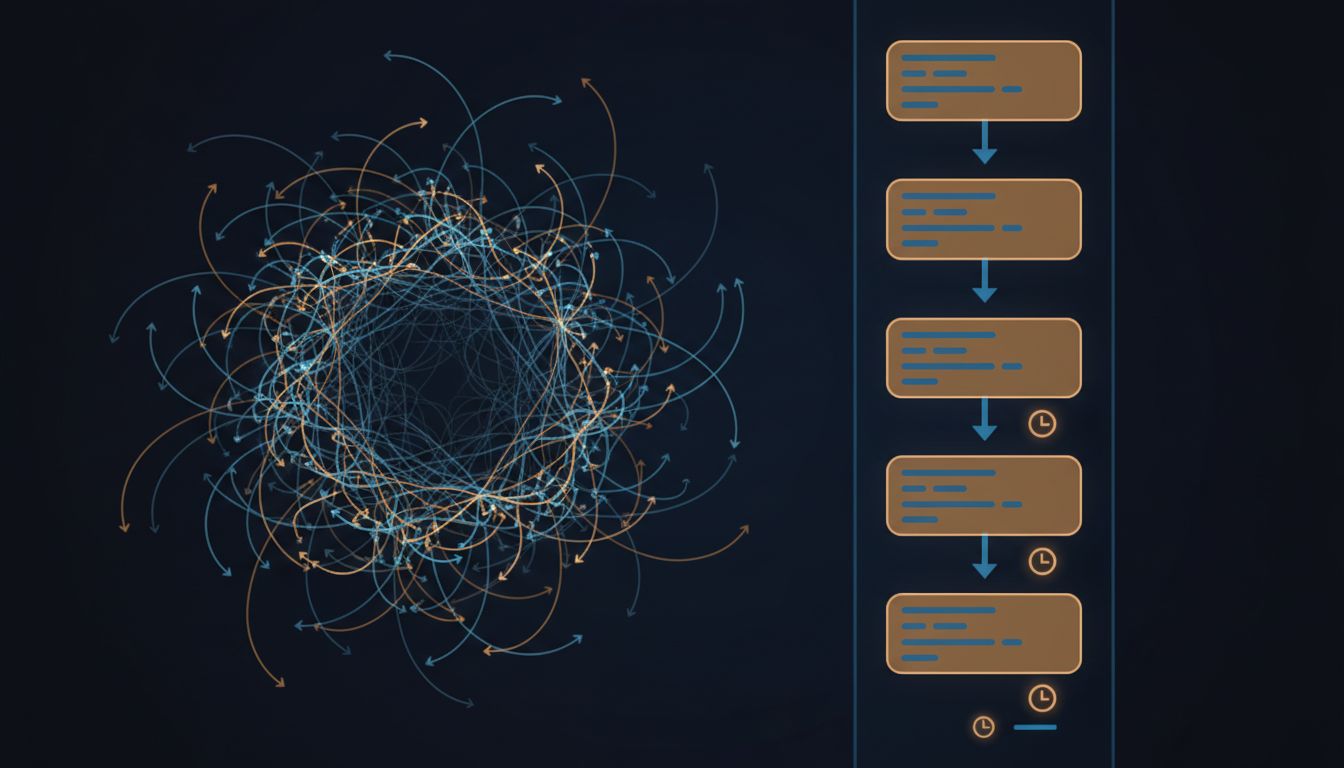
Psychologists call it the Zeigarnik effect: your brain allocates background processing to incomplete tasks. Bluma Zeigarnik documented in the 1920s that people remember interrupted or uncompleted tasks far better than completed ones, which sounds useful until you consider that your browser window currently contains forty-seven of them.
Each open tab represents a small but real cognitive commitment. You are telling your brain to hold that thread open. Do that enough times and you are not browsing, you are accumulating mental debt. The focus you need for deep work is being spent servicing that debt before you have written a single line.
2. Tabs Create Switching Pressure Even When You Do Not Switch
The damage is not only about what happens when you click between tabs. Research on attention residue shows that the mere presence of unfinished work degrades your current task performance. You do not have to be multitasking to experience the cost of multitasking.
Having Gmail open in a background tab is functionally similar to having someone sit next to you and occasionally clear their throat. You are not being interrupted, but you are not fully present either. The anticipation of switching, the low hum of possibility, bleeds into everything else you are trying to do.
3. Tab Hoarding Is a Procrastination Strategy You Have Convinced Yourself Is Productivity
Be honest about why most tabs stay open. The article you will read later. The tool you will evaluate when you have time. The conversation thread you will respond to once you have thought it through. Open tabs are deferred decisions, and deferred decisions accumulate interest.
Closing a tab feels like losing something. That feeling is the trap. You are not losing access to the content (bookmarks exist, search exists, the internet will still be there). You are losing the illusion of progress. The tab was never work. It was the idea of work, preserved in amber, draining your attention every time it appeared in your peripheral vision.
4. The Mental Model of Tabs Is Wrong From the Start
Browsers designed tabs as a navigation convenience. We turned them into a productivity system they were never meant to support. A tab is not a to-do item. It is not a reading list. It is not a parking lot for ideas. It is a rendered web page waiting for your attention, and every one you keep open is a small claim on that attention whether you honor it or not.
This matters because software companies set invisible defaults that shape your behavior long before you make a conscious choice. Your browser defaulted to making tabs cheap and persistent, and you built a workflow around that default without questioning whether it served you. The friction of opening a new tab is near zero, which means the friction of accumulating cognitive overhead is also near zero.
5. Deep Work Requires a Closed Environment, Not an Open One
Cal Newport’s framing of deep work is useful here: cognitively demanding tasks require long stretches of uninterrupted focus. The tab browser is structurally opposed to this. It is an environment designed for rapid context-switching, built around the assumption that you want access to everything at once.
If you are trying to write, design, debug, or think through a hard problem, the browser is often your enemy regardless of what is in it. The solution is not better tab management. It is recognizing that certain kinds of work should happen in a different environment entirely. Close the browser. Use a full-screen document editor. Open only what the immediate task requires and treat every additional tab as a cost, not a resource.
6. A Simple Rule That Actually Works: One Window, One Job
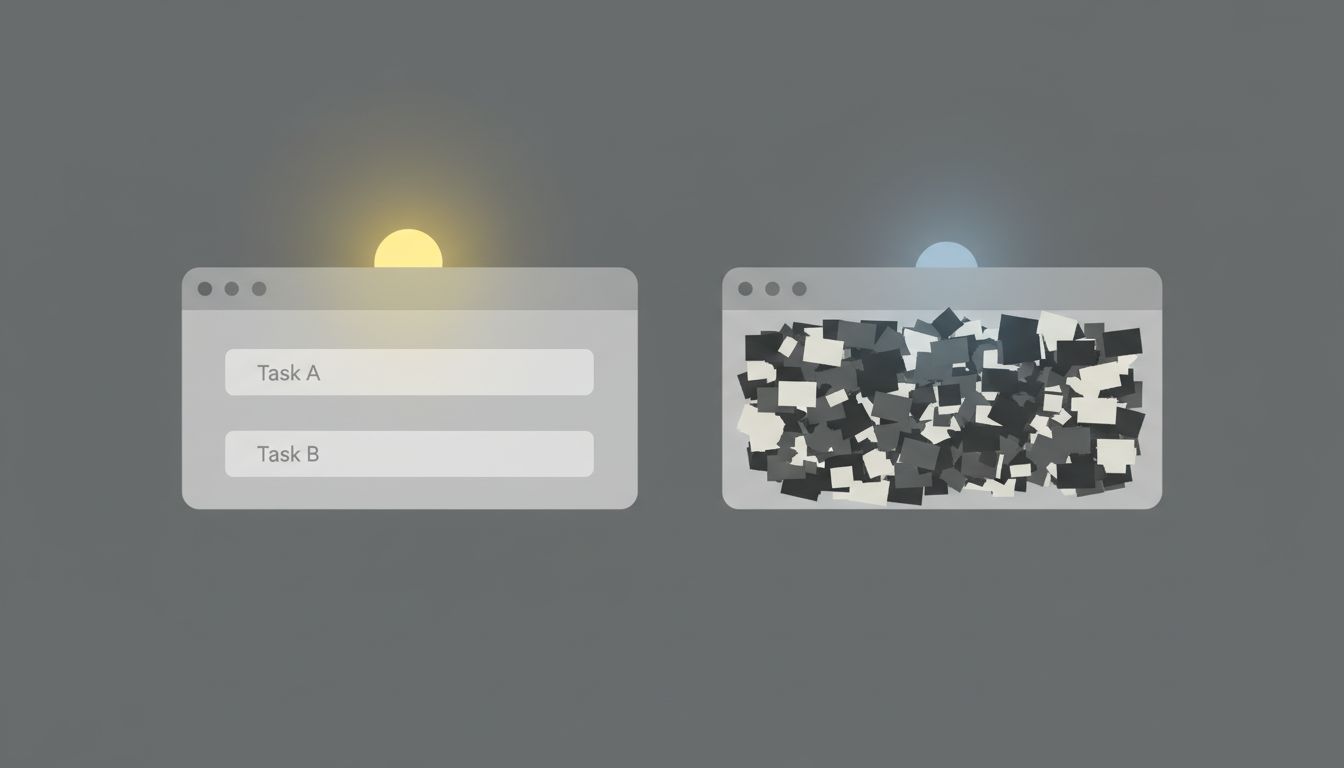
Here is a framework you can apply today. Each browser window gets one job. Research for a specific project. The communication tools you need for a meeting. The documentation for whatever you are currently building. When that job is done, the window closes. Tabs inside that window stay task-scoped, and nothing lives past the end of the session without being explicitly saved somewhere designed to hold it.
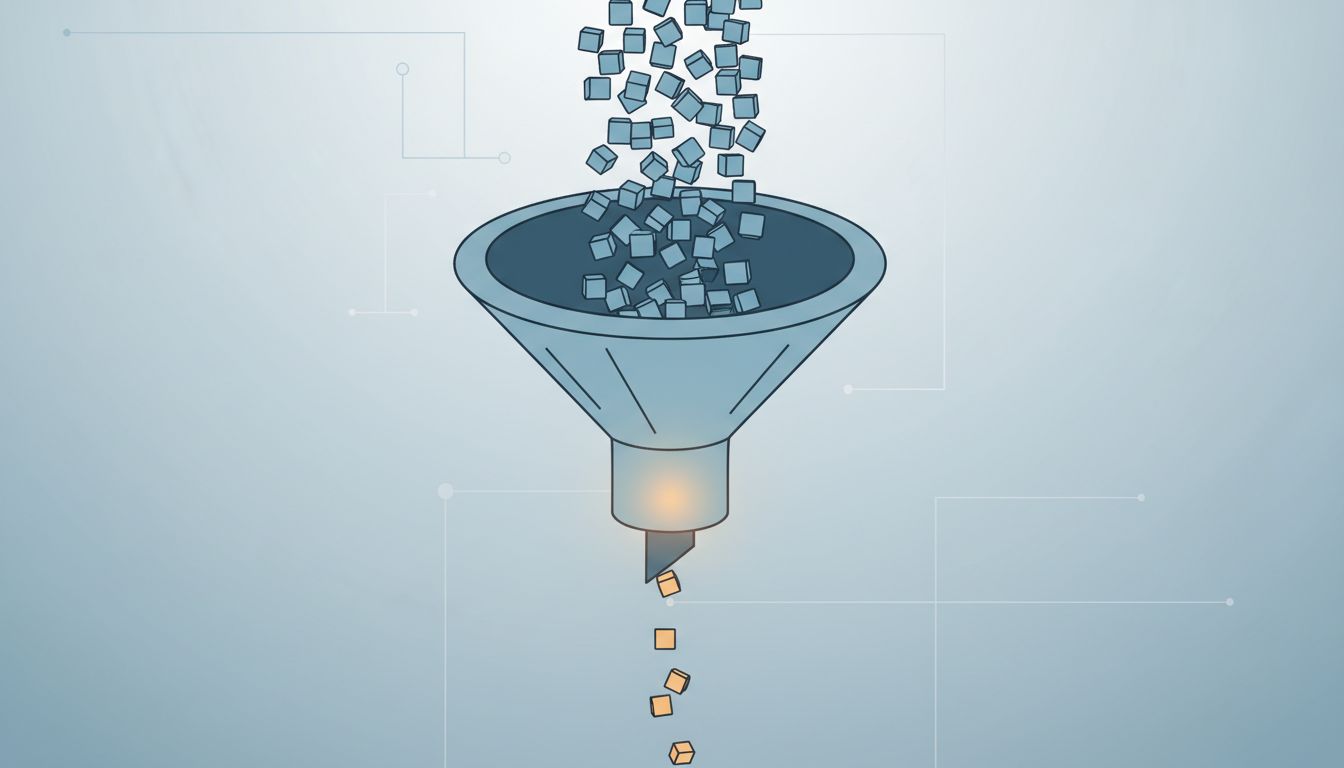
This is not about minimalism for its own sake. It is about making the invisible visible. When every tab must justify its presence in a specific window tied to a specific task, the forty-seven open loops collapse to maybe four. Your working memory thanks you. Your afternoon output improves noticeably.
7. Treat Closing Tabs as a Completion Ritual, Not a Loss
The psychological trick to making this stick is reframing what closing means. A closed tab is not lost information. It is a completed decision. You either captured what you needed (in a note, a bookmark, a task manager) or you admitted the tab was never going to get your attention and released it. Both outcomes are wins.
Building a short end-of-session ritual around this helps. Before you close your computer, spend two minutes closing every tab intentionally. For each one, ask: does this need action, capture, or deletion? That question forces the decision you were avoiding by leaving the tab open. Over time, you will start opening fewer tabs because the cost of closing them becomes something you feel in advance.
The real issue with browser tabs is not that they are distracting. It is that they feel like thinking while replacing it. Keeping thirty tabs open feels like staying on top of things. It is actually a way of postponing the harder work of deciding what matters. Make that decision upfront, keep your environment clean, and your ability to think in long, uninterrupted stretches will come back faster than you expect.