You probably switched to a digital calendar because it seemed strictly better than a paper planner. Syncing across devices, color-coded categories, automatic reminders, shared calendars with teammates. On paper (so to speak), it’s an obvious upgrade. But there’s a strange phenomenon that productivity researchers and time management coaches keep running into: people who use digital calendars are often less punctual, more overcommitted, and more stressed about time than people who keep paper planners. This isn’t a coincidence, and it isn’t a character flaw. It’s a design problem hiding in plain sight.
If you’ve ever noticed that your most productive days feel almost deliberately low-tech, you’re onto something real. There’s a growing body of evidence suggesting that friction in workflows isn’t always the enemy. Sometimes, the tools designed to remove friction remove something important along with it.
The Frictionless Trap
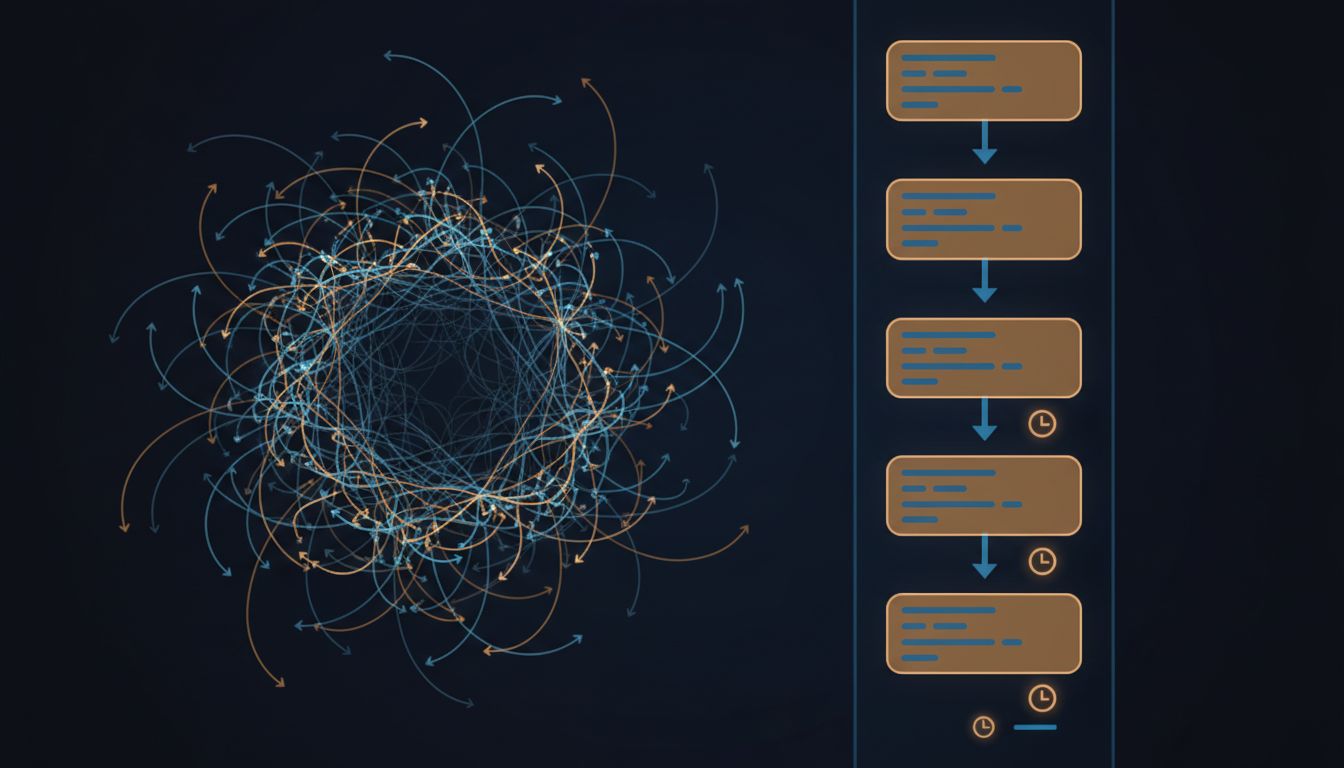
The core problem with digital calendars is that they make adding commitments nearly effortless. Tap a time slot, type a title, tap save. Done in four seconds. That ease feels like a feature, and in some narrow sense it is. But it also means you never pause long enough to ask whether you actually want to attend that meeting, whether that task will realistically fit in a 30-minute slot, or whether Tuesday at 2pm is already mentally exhausted time for you.
Paper planners impose what designers call “desirable difficulty.” Writing by hand is slower. Space is physically limited. Crossing things out and rewriting them is annoying enough that you think twice before committing. That small dose of inconvenience creates a natural decision gate. You unconsciously evaluate whether something is worth the effort of writing down, which means you end up with a calendar that reflects your real priorities rather than every request that crossed your inbox.
Researchers at Princeton and UCLA have found that handwriting engages deeper cognitive processing than typing. When you write something down, you’re more likely to encode it meaningfully, which is also why paper-planner users tend to remember their schedules more accurately and feel less reliant on notification systems to stay on track.
Why Reminders Are Making You Worse at Time
Here’s the counterintuitive part: notifications aren’t helping you be punctual. They’re helping you avoid developing the internal sense of time that punctuality actually requires.
When you outsource your time-awareness to a device, you stop building the mental habit of tracking time yourself. Over months and years, you become dependent on the ping. Without it, you’re lost. Paper planner users, by contrast, are forced to internalize their schedule. They check the clock more often. They develop what psychologists call “temporal self-regulation,” the ability to monitor and adjust your own behavior relative to time without external prompts.
This is closely related to why people who write grocery lists by hand tend to forget fewer items at the store than people who use list apps, even when they leave the written list at home. The act of writing transfers information into memory more durably.
There’s also the notification overload problem. Most digital calendar users have their app competing for attention alongside email alerts, Slack messages, news updates, and social media pings. By the time your calendar notification fires, your brain is already in a state of fragmented attention. The reminder lands in cognitive noise and gets processed less effectively than a quiet glance at a physical planner on your desk would.
The Commitment Gap
Digital calendars also suffer from what you might call the commitment gap. Because events are so easy to reschedule (drag, drop, done), they never feel fully fixed. This creates a subtle psychological effect where your future time feels more fluid and negotiable than it actually is.
Paper planners create a sense of finality. When you write an appointment in ink, it feels real. Changing it requires visible effort, crossing out, rewriting, leaving a messy trace of indecision. That mild discomfort makes you take initial scheduling more seriously, which means you book commitments more carefully and honor them more consistently.
This same principle shows up in other productivity contexts. Your note-taking app may be creating a similar problem with your ideas, making capture so frictionless that you never develop a meaningful relationship with the information you’re saving.
How to Get the Best of Both Systems
The answer isn’t to throw your Google Calendar into the trash. Digital calendars genuinely excel at certain things: coordinating with teams, handling recurring events, storing Zoom links, and managing complex logistics across time zones. The mistake is using them as your primary interface with your own time.
Here’s a practical framework that blends both systems effectively:
Use digital for logistics, paper for intentions. Let your digital calendar handle the coordination layer, the shared meetings, the travel details, the recurring reminders. Then each morning, transfer your two or three most important commitments for the day into a paper planner or a simple notebook. The act of handwriting them creates a daily ritual of prioritization.
Add friction to new commitments deliberately. Before adding anything to your digital calendar, give yourself a mandatory 60-second pause. Ask: does this deserve space in my week? You can even build a physical check into the process, writing it in a paper inbox before it goes digital.
Reduce your notification dependency gradually. Start by turning off all calendar notifications except those for events starting within 10 minutes. Over a few weeks, extend that to 5 minutes. You’re rebuilding your internal clock, which means being a little uncomfortable at first.
Review your week on paper. Sunday evening, write out the coming week by hand on a single sheet or notebook spread. Don’t copy everything from your digital calendar, only what actually matters. The whitespace you create is the point.
The Bigger Lesson
Tools designed for maximum convenience often optimize for engagement over effectiveness. This isn’t unique to calendars. You see it in how note-taking apps handle your ideas, and in how CEOs and high-performers think differently about their own workflows compared to the tools their companies sell.
The most punctual, least overcommitted people you know probably aren’t using the most sophisticated calendar system. They’ve likely found a way to keep scheduling slow, deliberate, and slightly inconvenient. That inconvenience isn’t a bug in their system. It’s the feature doing the most work.
Start small. Tomorrow morning, write down your three most important time commitments on a piece of paper before you open your phone. Notice how differently you relate to the day when you do.