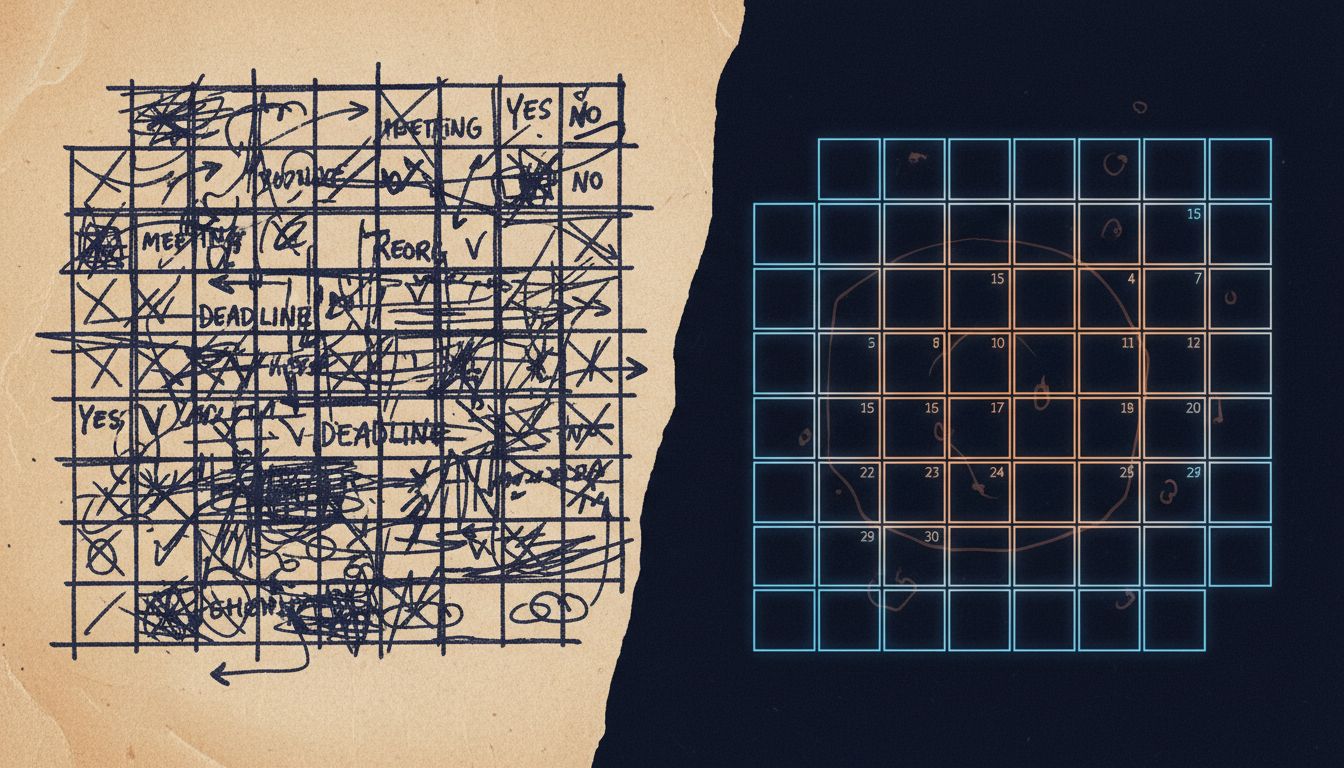
Paper planners are having a moment, and most of the people explaining why are getting the reason wrong. They attribute it to aesthetics, or screen fatigue, or some vague nostalgia for the tactile. Those are all real things, but they’re not the mechanism. The actual reason paper planners work better for most people is cognitive, and it has a precise explanation.
Digital calendars externalize the wrong cognitive load. They handle the storage beautifully and completely fail at the thinking.
The decision gets deferred, not made
When you write something in a paper planner, the act of writing is a commitment ritual. You have limited space. You’ve chosen this page, this block, this line. The constraint forces a micro-decision: does this actually belong here? Is this real? The friction is the feature.
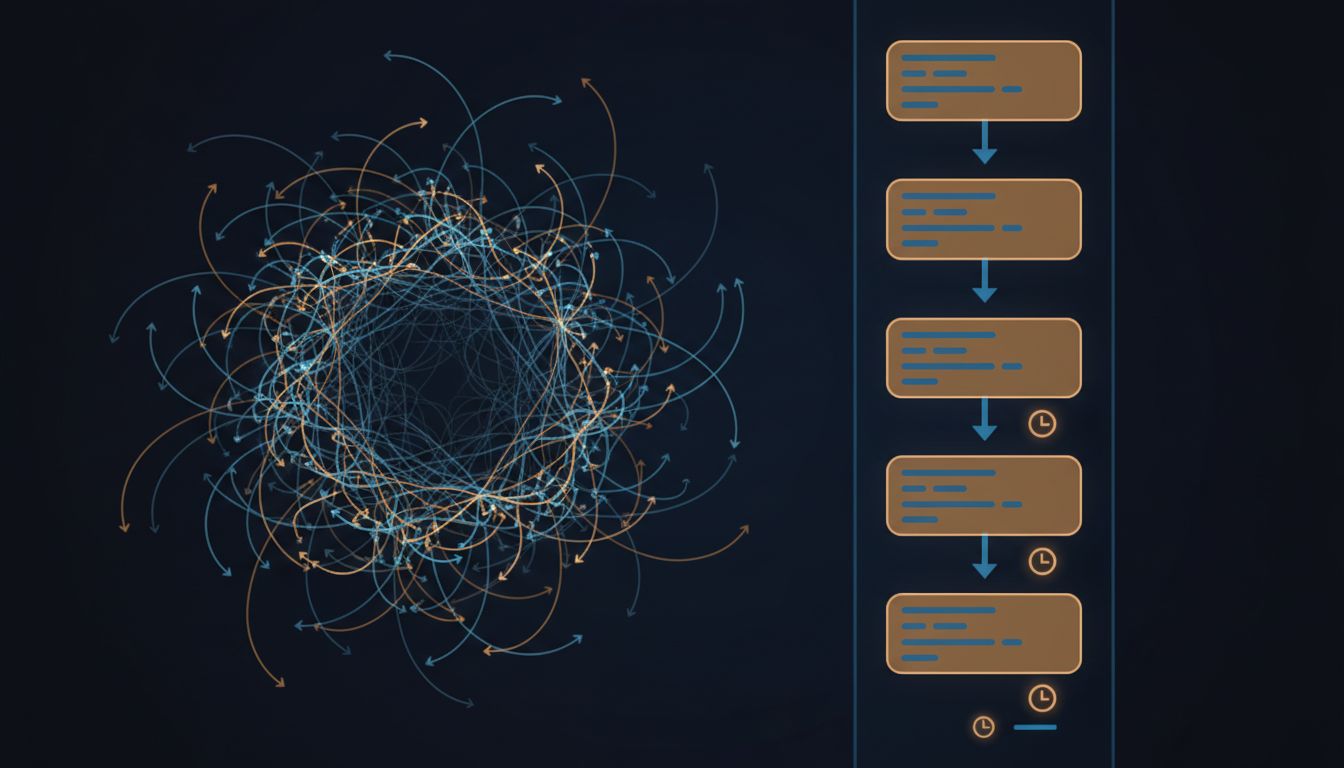
Digital calendars have no meaningful friction. Adding an event takes three taps. Inviting someone takes one more. Moving it takes a drag. The ease feels like productivity, but what you’ve actually done is created a queue of deferred decisions dressed up as a schedule. You haven’t decided to do the thing. You’ve decided to consider the thing at a future date, which is meaningfully different.
This mirrors a problem developers know well. In software, there’s a pattern called “optimistic locking” where a system assumes a conflict won’t occur and only checks when it needs to commit. Digital calendars are built on something like optimistic scheduling: assume everything will fit, assume you’ll follow through, and let future-you deal with the collision. The result is a calendar that looks full but represents almost nothing definite.
Infinite undo destroys accountability
Paper is permanent. When you cancel a plan written in pen, the evidence stays. You see the scratch-through. Over weeks and months, you develop a visible record of what you’ve actually done versus what you intended. That record is uncomfortable, and discomfort is information.
Digital calendars have no such reckoning. Deleting a recurring event you never attend takes two seconds and leaves no trace. The calendar remains pristine. You can run an impeccably maintained Google Calendar that is, in practice, a fiction, and nothing in the interface will tell you otherwise.
This is related to a phenomenon documented across productivity research: the tools that look the most organized often belong to the people who are least aligned between intention and action. The organization becomes the product instead of the outcome.
Notifications rewire your relationship with time
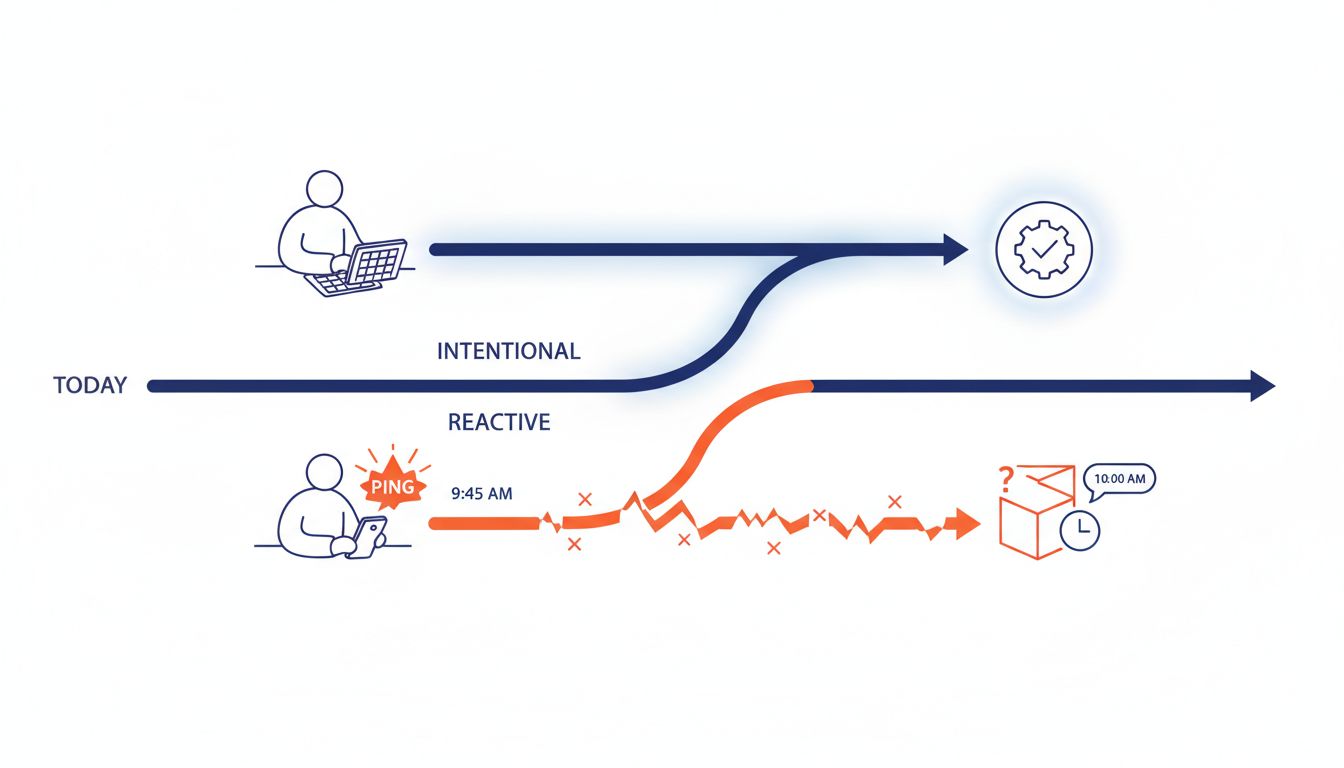
Paper planners require you to check them. That sounds like a downside. It’s not. The act of checking a planner is an intentional behavior, something you do. Notification-driven calendars flip this: the calendar checks you. You’re not reading your schedule, you’re being interrupted by it.
The psychological difference is significant. When you pull up a planner in the morning, you’re doing temporal planning, constructing a mental model of the day ahead. When your phone buzzes fifteen minutes before a meeting, you’re reacting. You’ve delegated the anticipation to the software, which means you’ve also delegated the preparation. You show up to things with fifteen minutes of notice instead of fifteen minutes of forethought.
This is particularly brutal for deep work. The cognitive overhead of context-switching is well-documented. A notification-based calendar system is architecturally optimized to maximize context switches. It’s doing exactly what it was designed to do, and that design is in direct conflict with focused, high-quality work.
Shared calendars create coordination theater
Teams use shared digital calendars and then spend enormous amounts of time in meetings discussing what the calendar should contain. The ease of creating meetings creates a proliferation of meetings. The proliferation of meetings requires more meetings to prioritize the meetings. This is not a satire. It is Tuesday.
Paper-based systems, by their nature, stay closer to individual ownership. When coordination requires friction, people coordinate less and execute more. There’s a reason many effective small teams run on sparse systems rather than elaborate ones.
The counterargument
The obvious counterargument is that digital calendars handle complexity that paper cannot. Recurring events across time zones, invitations that auto-populate, reminders that travel with you: these are genuinely valuable for certain classes of work. A person managing external stakeholders across multiple geographies has legitimate needs that a Moleskine cannot meet.
Fair. But this argument conflates scheduling infrastructure with time management. Digital calendars are excellent scheduling infrastructure. They are poor time management systems. Most people use them for both without noticing the distinction, and they pay the cognitive price.
You can use Google Calendar as your coordination layer and still do your actual planning on paper. The two are not mutually exclusive. The error is assuming that because the calendar is necessary for logistics, it’s also sufficient for thinking. It isn’t.
The core problem is architectural
Digital calendars were built to solve a distribution problem: how do you share schedule information across people and devices efficiently? They solve that problem beautifully. But time management is not a distribution problem. It’s a prioritization and commitment problem, and no amount of sync capability helps with that.
Paper planners win because writing is deciding. Every entry required that you stop, hold a pen, and make a physical mark. That moment of friction is where the real work of time management actually happens. Removing it didn’t streamline the process. It removed the process and left only the appearance of one.