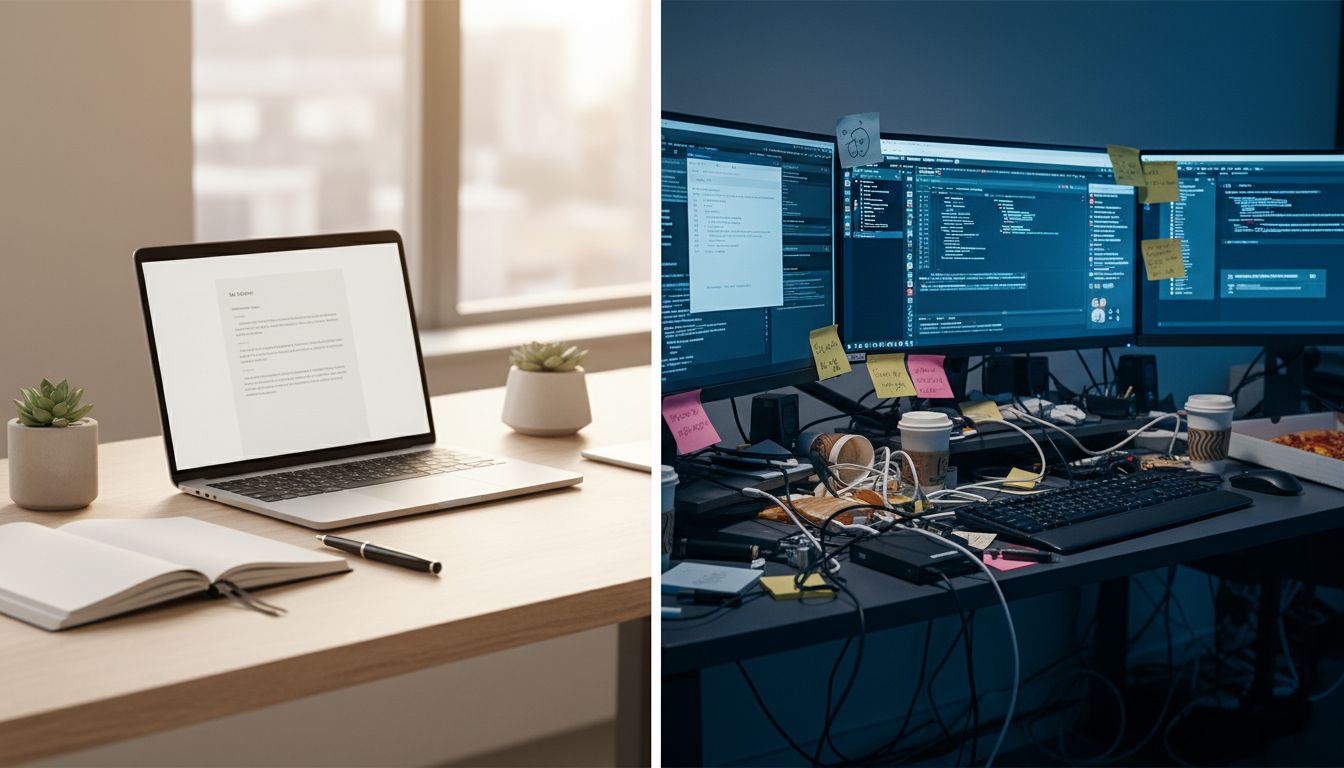
Here is something that will bother you once you notice it: the most productive people you know probably don’t have seventeen tabs open, a color-coded task manager, and four different note-taking apps running simultaneously. They have a short list, a clear head, and a calendar with actual white space in it. Meanwhile, the person who has downloaded every new productivity tool since 2019 is still behind on their most important project.
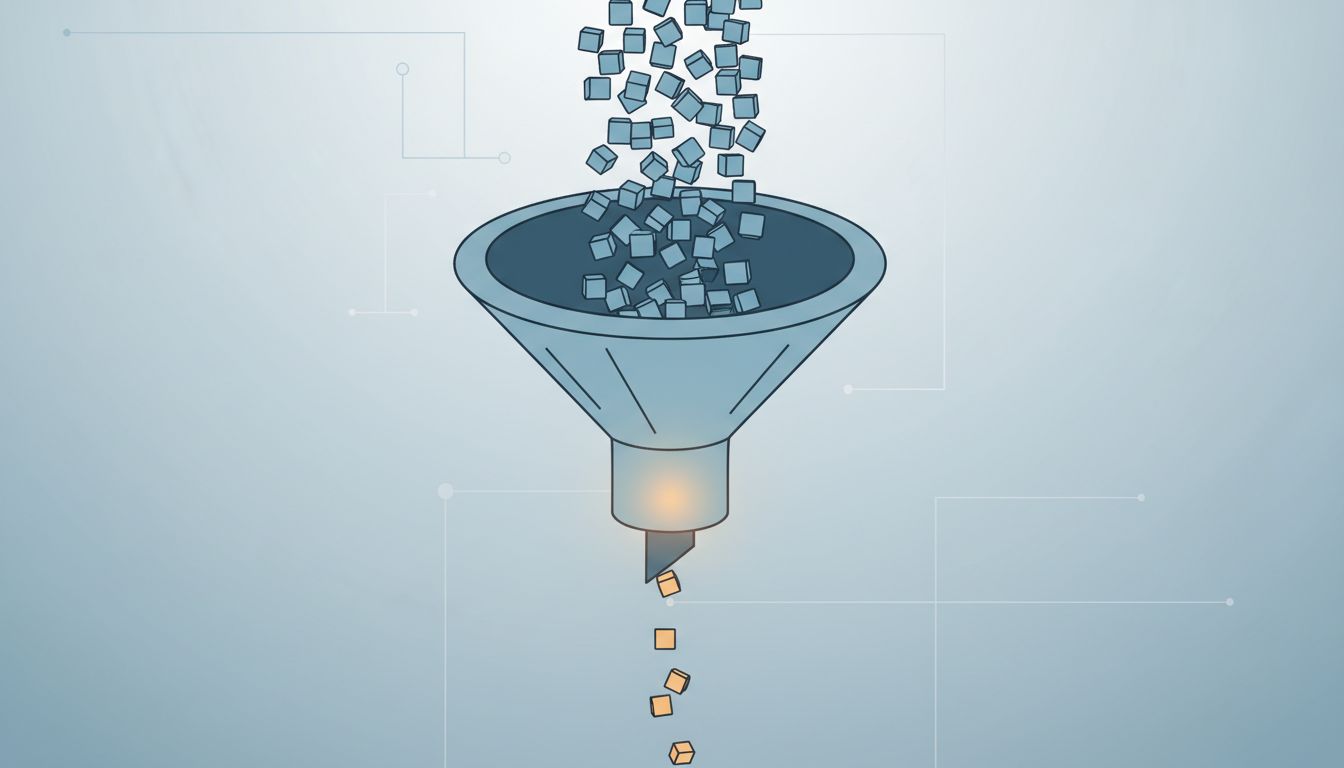
Top performers who make their most distracting apps invisible report immediate and measurable productivity gains, and that pattern shows up consistently across industries. The research points in the same direction: less friction, fewer decisions, and a simpler environment almost always beats a more elaborate one.
The Hidden Cost of Tool Accumulation
Every app you add to your workflow has a maintenance cost that isn’t printed anywhere on the pricing page. You have to check it, update it, learn its quirks, migrate data into it, and eventually decide what to do when it stops syncing correctly. That overhead adds up fast.
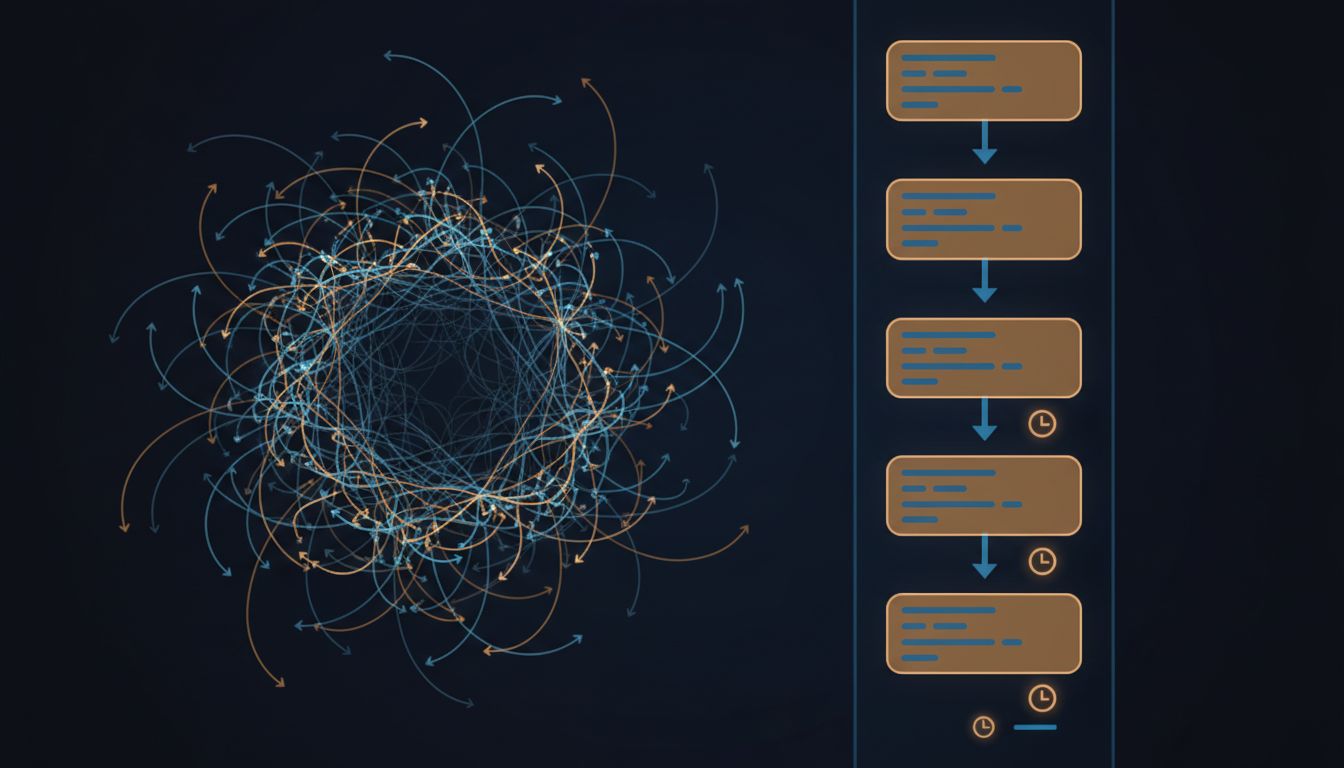
Cognitive scientists call this “decision overhead,” and it’s more expensive than it sounds. Each time you switch between tools, your brain spends time reorienting. Each time you wonder whether a task should go in your project manager or your notes app, you’re burning mental energy that could go toward actually doing the task. Multiply that by fifty small decisions a day, and you’ve lost a significant chunk of your best thinking before lunch.
There’s also a deeper trap here. Many of the apps you’re using were deliberately designed to become slower and more complex over time, which means the tool that felt snappy and focused when you adopted it now requires three clicks to do what used to take one. You adapt to the friction so gradually that you stop noticing it, and before long you’re spending more time managing your productivity system than doing productive work.
What Digital Minimalists Actually Do Differently
Digital minimalism isn’t about being a Luddite or refusing useful tools. It’s about applying a simple filter before adopting anything new: does this tool reduce friction on work that matters, or does it just make me feel organized?
There’s a meaningful difference between those two things. Feeling organized is pleasant. Actually completing important work is what moves your career, your projects, and your life forward.
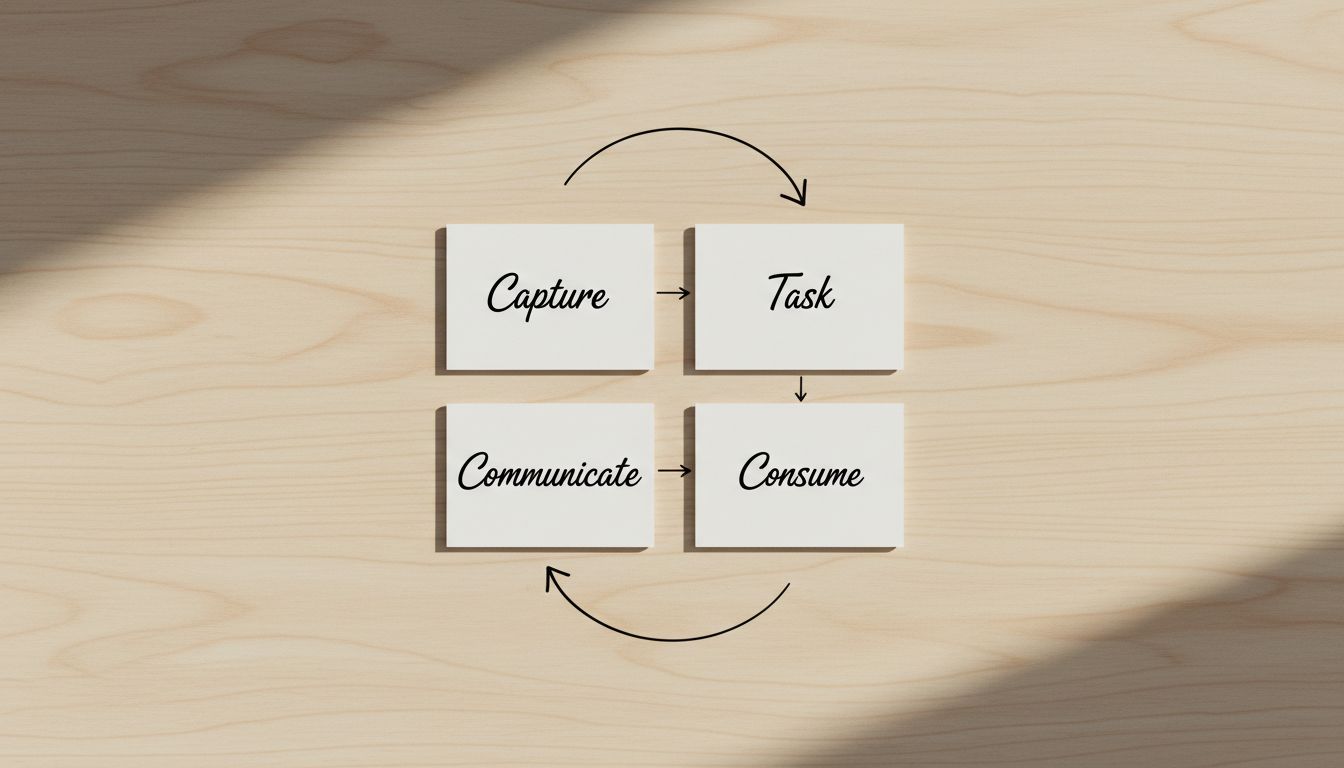
Here is the framework that most digital minimalists use, consciously or not:
One capture system. Everything goes into one place: a single notes app, a physical notebook, or a voice memo folder. The specific medium matters less than the singularity. You should never have to ask yourself “where did I put that idea?”
One task manager. Not one per project, not one personal and one professional. One list, with a clear signal for what’s most important today. Three items maximum in the “must do today” column.
One communication channel per relationship type. Your team uses Slack. Your clients get email. Your close collaborators might use something else. But you’re not monitoring six platforms simultaneously hoping nothing falls through the gaps.
Scheduled, not ambient, information consumption. You check email at 9am and 3pm. You look at Slack between focused work blocks. Notifications are off. The information comes to you on your schedule, not the app’s.
This last one is harder than it sounds. Your digital calendar is already quietly working against your schedule in ways baked into how it functions, and most notification systems are designed with engagement metrics in mind, not your deep work. You have to opt out deliberately.

Why More Features Make You Less Effective
There’s an interesting paradox at the heart of the productivity app market. The apps that attract the most power users are usually the ones with the most features. And the more features an app has, the more time you spend configuring it instead of using it.
This isn’t accidental. As we’ve covered elsewhere on Silicon Opera, tech companies routinely hide their best features behind layers of menus and upgrade prompts, which means your relationship with a complex tool often turns into an ongoing scavenger hunt for functionality you’re paying for but can’t find.
The result is that many “power users” of productivity apps are really just expert navigators of a complicated interface. They know all the keyboard shortcuts, all the integration options, all the view configurations. What they sometimes lack is a completed project to show for it.
Digital minimalists sidestep this entirely. They pick tools that do one thing well, use them for exactly that, and feel no guilt about ignoring the rest of the feature set.
The Practical Audit You Can Do Today
You don’t need to throw everything out and start fresh (though that sometimes works). You need to run a simple audit.
Open your phone and your laptop. Count the apps that are supposed to help you get things done. Now ask, for each one: in the last two weeks, did this app help me complete something important, or did it mostly generate more things to manage?
Anything in the second category is a candidate for deletion. Be honest. “I might use it someday” is not a reason to keep a tool in your daily environment.
Next, look at your notification settings. If more than three apps have permission to interrupt you with a notification, you’ve already fragmented your attention beyond what your brain can comfortably recover from. Turn off everything that isn’t a direct message from a real human being.
Finally, pick the single most important thing you need to complete this week. Write it on a sticky note and put it on your monitor. For one week, start every work session by doing some portion of that task before you open any app. Notice what happens.
The Output Gap Is Real and It Compounds
The productivity gap between digital minimalists and tool maximalists isn’t a one-time thing. It compounds. When you consistently do deep work without tool-switching friction, you build momentum on your most important projects. When you spend your mornings configuring workflows, you delay that momentum over and over.
A year of small, consistent progress on the work that matters will always outperform a year of highly organized incompletion. That’s the uncomfortable truth the productivity app industry doesn’t have a reason to tell you.
You already have everything you need to start. A simpler setup isn’t a step backward. For most people, it’s the most effective upgrade they haven’t tried yet.