
Here is a pattern that confuses a lot of senior engineers the first time they notice it. The developer with six monitors, forty browser tabs, a custom keyboard with 300 macros, and subscriptions to every productivity SaaS on the market consistently ships less interesting work than the person running a single window, a plain text editor, and a terminal. It feels wrong. It looks wrong. But once you understand what is actually happening at the level of working memory and attentional allocation, it becomes one of the most predictable patterns in knowledge work.
Digital minimalists are more productive than power users for reasons that go deeper than habit or discipline. The mechanism lives in cognitive architecture, and understanding it will change how you configure your own environment.
The CPU Analogy That Actually Holds Up
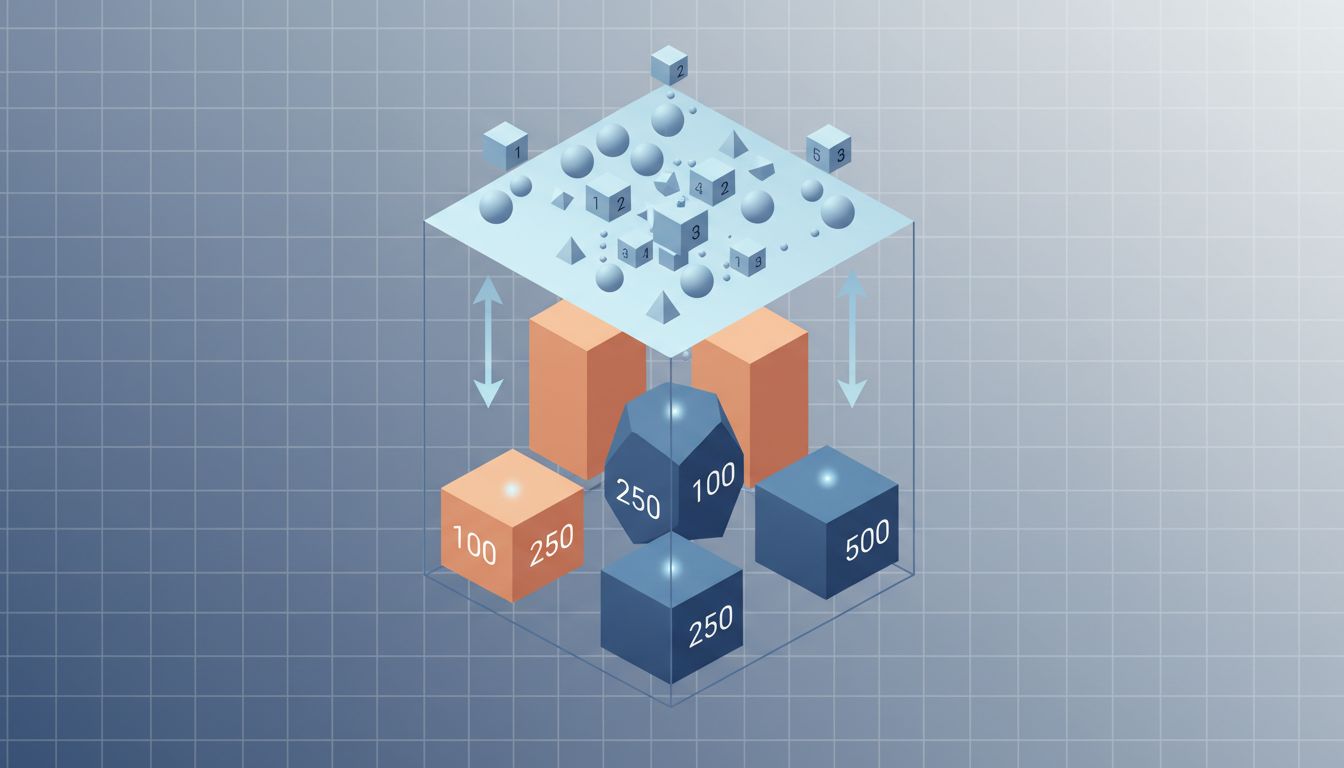
Your prefrontal cortex, the part of your brain responsible for creative synthesis, abstract reasoning, and novel problem-solving, has a hard resource ceiling. Cognitive scientists call the temporary storage system it relies on “working memory,” and the useful mental model here is to think of it like CPU cache rather than RAM. It is extremely fast, extremely powerful, and extremely limited. Most adults can hold roughly four discrete chunks of information in working memory at one time.
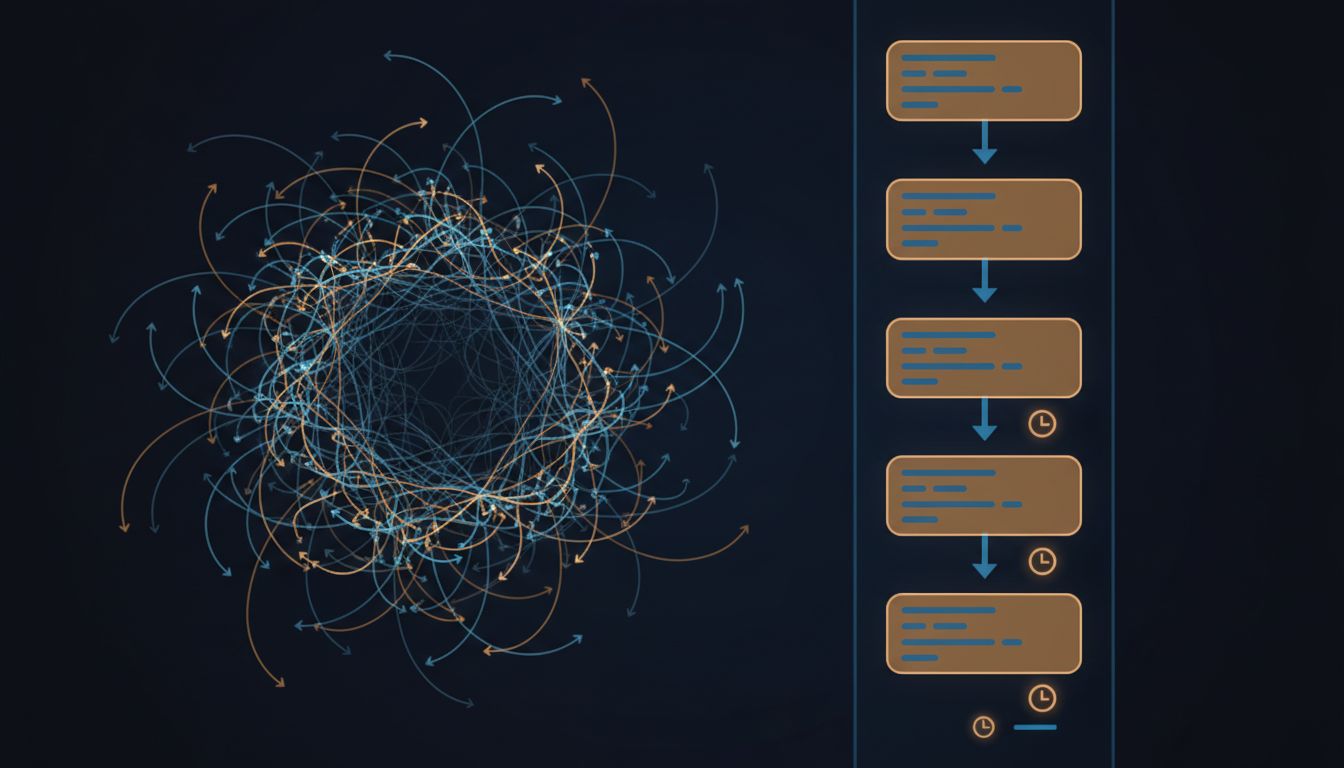
Now consider what happens when you are context-switching between a Slack notification, a half-written document, a dashboard showing real-time analytics, a second dashboard showing something slightly different, and a browser tab you opened three hours ago for a reason you no longer remember. Each of those open loops is not just sitting passively in the background. Each one is polling your attentional system at regular intervals, the way a background process constantly pings an API endpoint whether or not you are actively using the data it returns. The result is not multitasking. It is cache thrashing.
Cache thrashing is what happens when a processor spends more time swapping data in and out of fast memory than it spends actually doing computation. The system looks busy. The fan is spinning. Nothing is getting done. That is the cognitive state most power users are operating in for the majority of their workday.
Why More Tools Do Not Mean More Leverage
There is a seductive logic to tool accumulation. Every plugin, every integration, every new SaaS subscription feels like leverage. You are automating something. You are removing friction somewhere. The problem is that each new tool also introduces what systems engineers would call cognitive overhead, the mental cost of knowing the tool exists, deciding when to use it, keeping track of its output, and maintaining the learned behavior that invokes it.
This overhead is not free. It is paid from the same working memory budget you need for the actual creative work. A writer who has spent twenty minutes configuring their distraction-blocking app has spent cognitive resources that are no longer available for writing. A developer who has built an elaborate system of Notion databases, Obsidian graphs, and automated Zapier pipelines to capture their ideas has often built a very beautiful system for not having ideas.
This is related to something worth thinking about carefully: the tools that tech companies build are optimized for engagement and perceived utility, not for your creative output. Understanding how tech companies use psychology to make apps feel effortless makes it clearer why using fewer of them requires active resistance against some very well-funded design decisions.
The Constraint Is the Feature
Here is where it gets genuinely interesting. Cognitive constraints, when deliberately chosen rather than accidentally imposed, do not just preserve mental resources. They actively improve the quality of creative output. This is not a productivity blog platitude. It is a documented phenomenon in creativity research, and it has a clean mechanistic explanation.
When you remove optionality from your environment, you force your brain to solve problems within a tighter solution space. That constraint pushes cognitive processing toward a mode researchers call “associative thinking,” where the brain makes lateral connections between existing knowledge structures rather than searching for external solutions. The plain text editor is not a limitation. It is a forcing function that keeps the work inside your head long enough to become something original.
This is the same dynamic that explains why most billion-dollar apps launched with only three core functions. Constraint at the product level and constraint at the cognitive level both produce the same counterintuitive result: the limited version often outperforms the comprehensive one.
What the Offline Day Research Actually Shows
Some of the most compelling evidence for this model comes from studies of high performers who deliberately take structured time away from their digital environments. The findings are consistent enough to be worth taking seriously. Top performers who take one day offline per week report output going up, not down. The mechanism is not rest in the passive sense. It is the cessation of cache thrashing, which allows the prefrontal cortex to consolidate information, form novel connections, and return to active work with a full attentional budget.
This is analogous to what happens during garbage collection in a managed memory environment. While the GC is running, the application appears to pause. But without that pause, the heap fills with unreachable objects and performance degrades to the point of failure. The offline day is not a pause in productivity. It is garbage collection. The system needs it to function at spec.
How to Actually Implement This Without Breaking Your Workflow
The practical question is not whether to be a minimalist but where to draw the boundary. Here is a framework that maps reasonably well to how developers already think about system design.
Start by auditing your tools the way you would audit dependencies in a package.json file. For each tool, ask: is this in my critical path, or is it a transitive dependency that I never directly invoked? Anything that is not in your critical path is a candidate for removal. The goal is not zero tools. It is explicit, intentional tooling where every item earns its place by directly reducing cognitive load rather than adding to it.
Next, apply the principle of single responsibility. Each tool in your environment should do one thing and do it well. If you are using the same app for task management, note-taking, project planning, and knowledge management, you have created a monolith. Monoliths are easy to build and hard to think inside of.
Finally, build walls between modes of work. The browser where you do research should not be the browser where you answer email. The context in which you write should not have notifications enabled. Mode separation is the equivalent of process isolation in operating systems. It prevents one context from corrupting the memory space of another.
The power user’s instinct is to add more tools until the system is powerful enough to handle any problem. The minimalist’s insight is that the system is the problem, and removing it is the solution. That distinction is worth sitting with for a while, preferably in a window with no other tabs open.