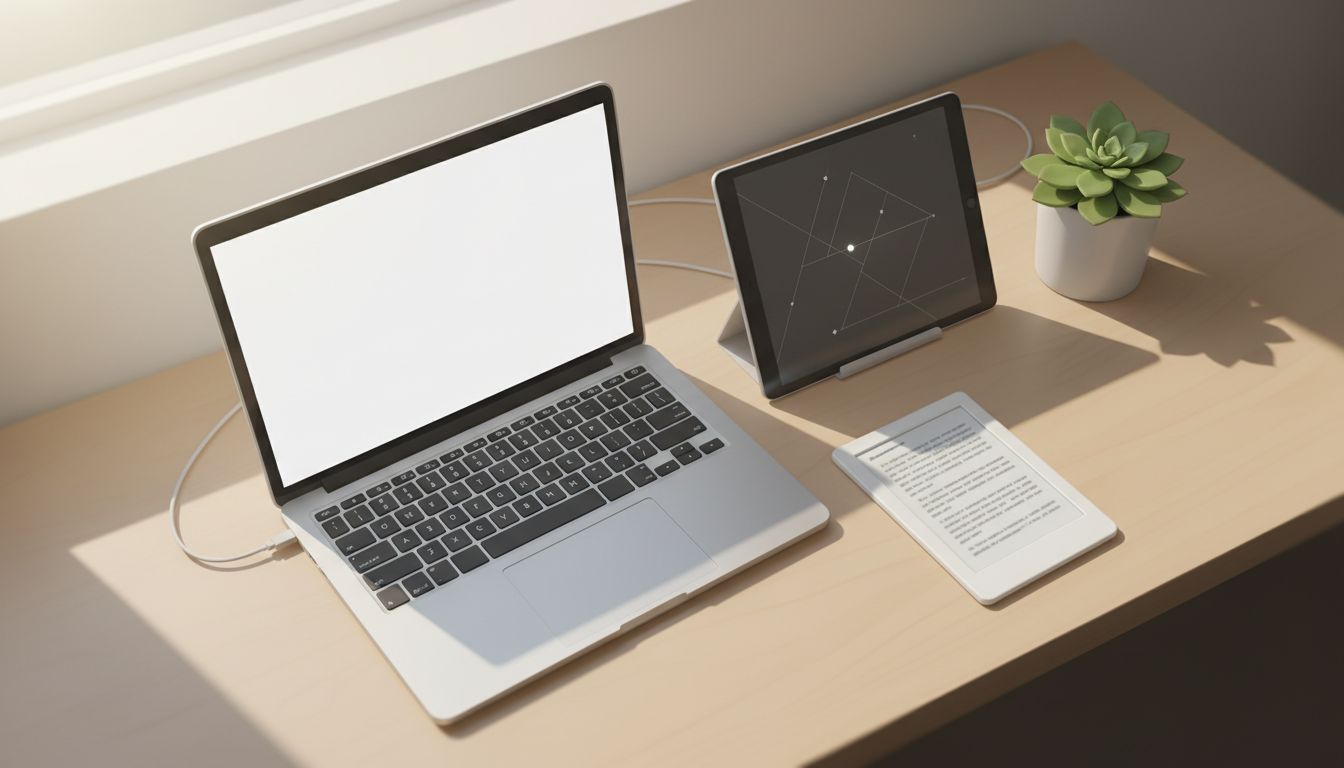
If you’ve ever peeked at the desk of a self-described digital minimalist, you may have noticed something confusing. There’s a laptop. A separate tablet. Maybe a dedicated e-reader. Possibly a dumb phone sitting next to a smartphone. It looks like the opposite of minimalism, and yet these people consistently get more done, feel less overwhelmed, and report higher satisfaction with their work. The secret isn’t about owning fewer devices. It’s about owning devices with fewer jobs to do.
This idea runs counter to everything the productivity app industry wants you to believe, but digital minimalists consistently outperform productivity app power users for a reason that’s deeply uncomfortable if you’ve spent years chasing the perfect all-in-one setup.
The Real Problem With One Device to Rule Them All
The promise of a single device for everything sounds efficient. One screen, one system, one place to manage your entire digital life. In practice, it creates a cognitive traffic jam.
When your laptop is simultaneously your work machine, your entertainment hub, your social feed, your shopping portal, and your communication center, your brain never gets a clean signal about what mode it should be in. You open it to write a report and within four minutes you’re checking a notification, watching a video, or scrolling somewhere you didn’t mean to go. This isn’t a willpower problem. It’s an environmental design problem.
Context switching costs are real and they compound. Research from the University of California, Irvine found that it takes an average of 23 minutes to fully return to a task after an interruption. If your device invites three interruptions per hour, you’re essentially never in deep work at all. You’re just skimming the surface of everything.
How Device Separation Creates Mental Boundaries
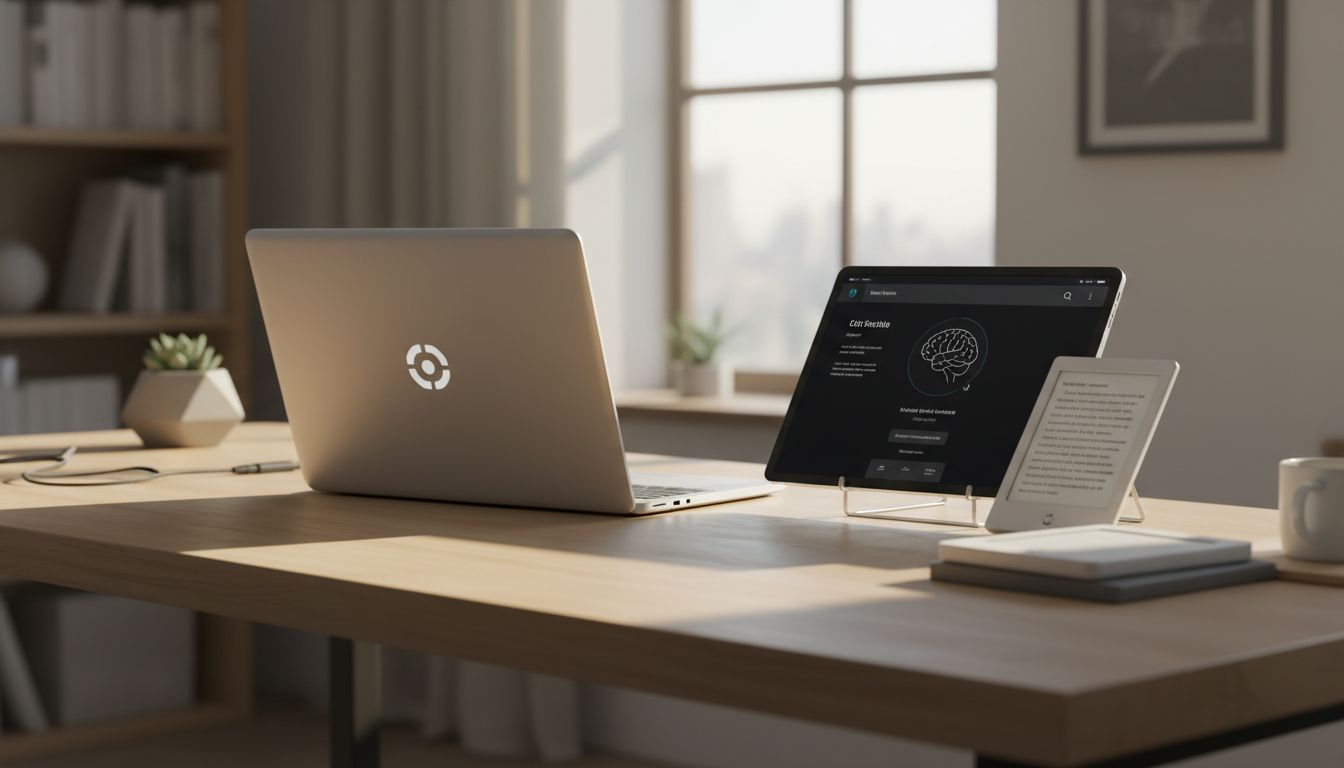
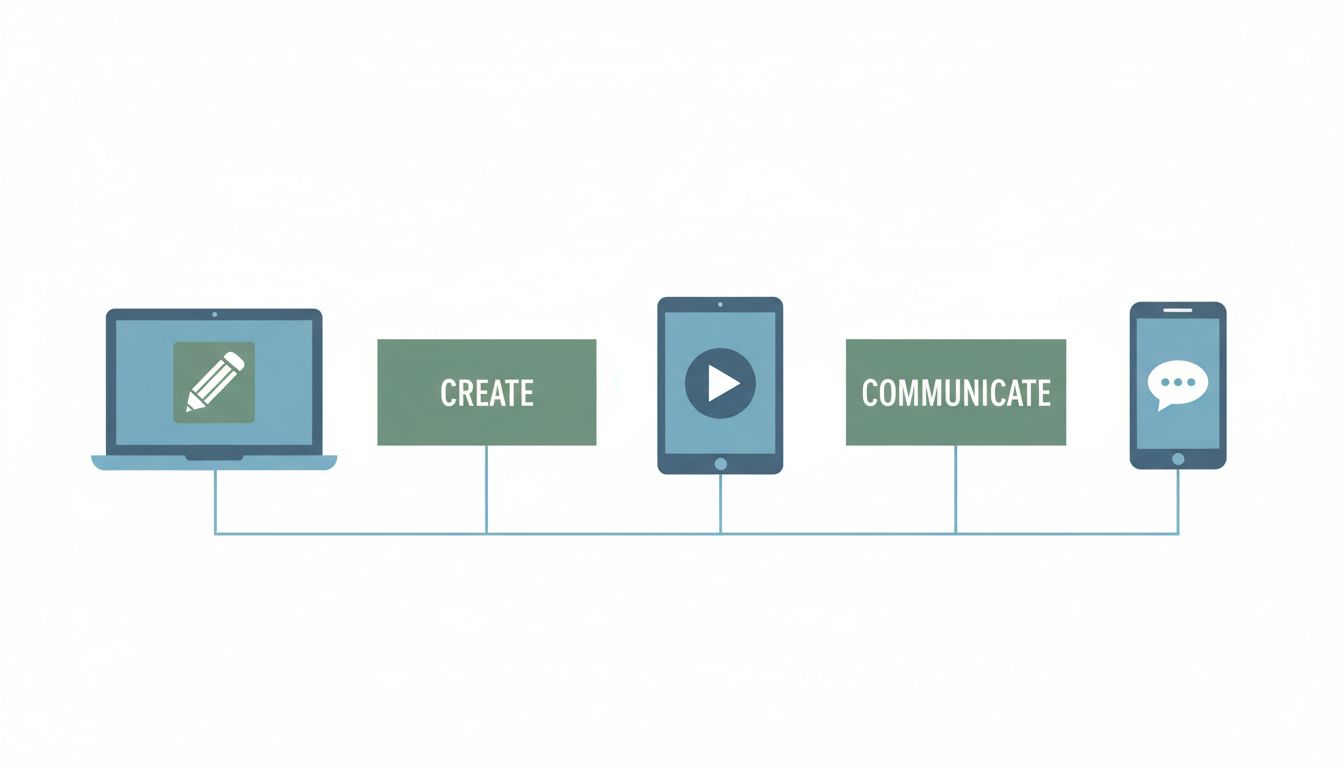
Here’s the framework that digital minimalists actually use, even if they don’t always articulate it this way. Each device gets a role, and that role is protected.
The laptop is for creation. Writing, coding, designing, building. Nothing passive happens on it. No streaming, minimal social browsing, notifications stripped down to near zero.
The tablet is for consumption and learning. Reading long-form articles, watching educational content, reviewing documents. It’s the “input” device.
The e-reader or phone is for everything that doesn’t require a keyboard. Light communication, navigation, quick lookups.
This sounds like more complexity, but it works because your brain starts associating each device with a specific mental state. You pick up the laptop and your brain shifts into creation mode almost automatically. This is the same principle behind top performers scheduling their interruptions instead of fighting them, which works because it uses your brain’s tendency to anticipate context rather than resist it.
The device becomes the trigger. The context does the heavy lifting so your willpower doesn’t have to.
The Cognitive Load Argument Nobody Talks About
There’s a deeper reason this works that goes beyond simple habit formation. Every app, notification, and open tab on a device adds to your cognitive load, even when you’re not actively using it. Psychologists call this the “zeigarnik effect,” the tendency for incomplete or available tasks to occupy mental bandwidth in the background.
When your work device is also your entertainment device, your brain is quietly holding open loops for both at all times. It’s like running too many background processes on a computer. Everything slows down.
Separating devices physically separates those mental loops. When the work laptop is closed and put away, those loops close more completely. When you pick up the tablet for reading, you’re not dragging your unfinished work tasks into that mental space.
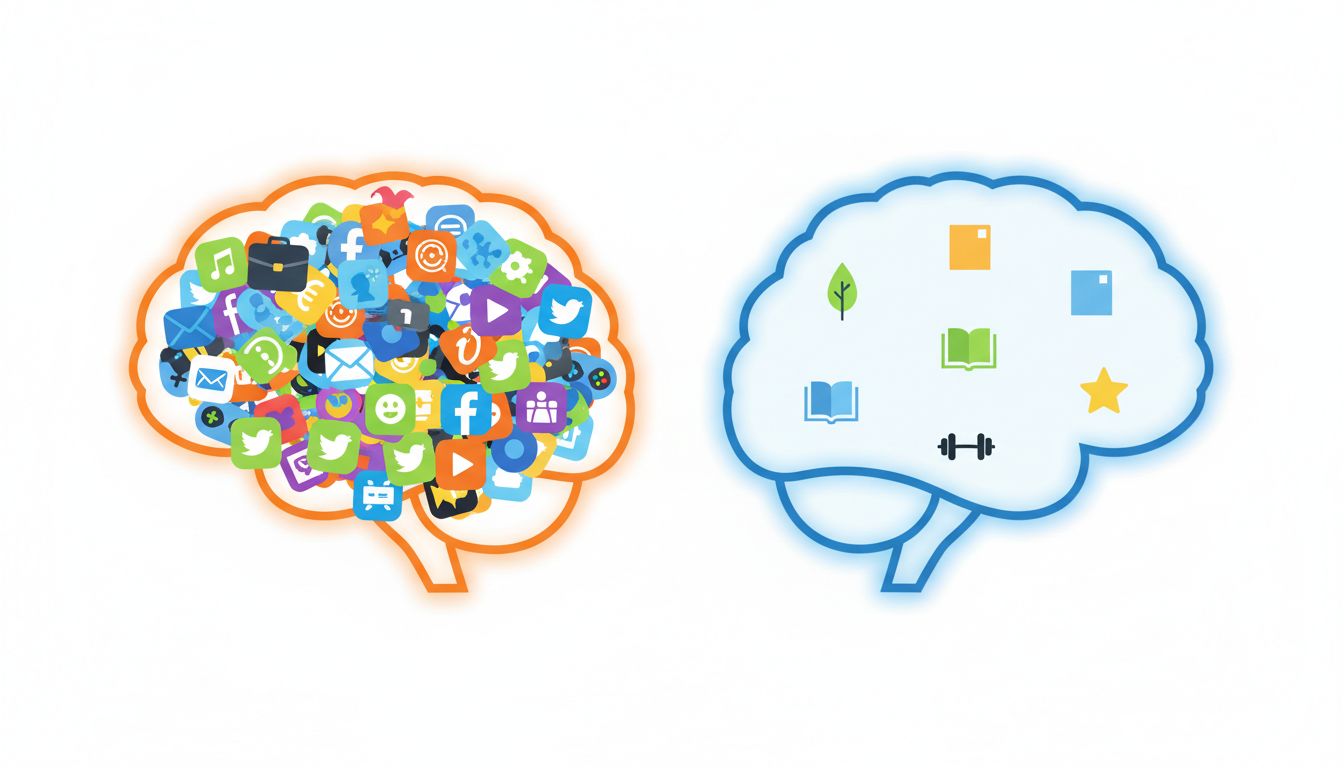
This is also why top performers make their most distracting apps invisible rather than just turning off notifications. Out of sight genuinely means out of mind in a measurable, neurological sense. Device separation takes that principle to its logical conclusion.
How to Build Your Own Device Boundary System
You don’t need to go buy three new devices. You can start applying this principle with what you already own, and upgrade intentionally over time.
Step 1: Audit what your primary device is actually used for. Spend one day logging every context switch. How many times do you open your laptop for work and end up doing something non-work-related within five minutes? That number tells you how blurry your current boundaries are.
Step 2: Assign your current devices clear roles. If you have a phone and a laptop, decide what each one is for and remove the apps that violate those rules. Your phone should probably not have your work email client. Your laptop probably doesn’t need Instagram.
Step 3: Make switching devices physically deliberate. The friction of picking up a different device is a feature, not a bug. It gives your brain a moment to shift gears. Don’t work around it. Lean into it.
Step 4: Add devices only when a role has no good home. If you find yourself reading long-form content on your laptop and constantly fighting the urge to check notifications, that’s a signal that a tablet or e-reader would actually serve you. Add a device to solve a specific problem, not to have more gear.
Step 5: Protect the roles ruthlessly. This is where most people fail. They assign roles, then gradually let devices drift back into multi-purpose territory. Audit monthly. Remove apps that crept back in.
The Bigger Principle Behind Device Separation
What digital minimalists have figured out is that the goal was never to own less. The goal was to think less about their tools and more about their work. Owning three highly specialized devices that each do one thing well is genuinely simpler than owning one device that tries to do everything and constantly tempts you with all of it.
The same insight shows up in how the best programmers work. The programmer who stops every 25 minutes solves bugs faster than the one who never does because the stops create structure. Device separation creates structure in the same way. It’s not about the device. It’s about the mental container the device creates.
You don’t need a perfect setup to start. Pick one device you use for work today and remove three apps from it that don’t belong in a work context. See what happens to your focus in the next 48 hours. That small experiment will tell you more than any productivity article can, including this one.