
Digital Nomads Are Throttling Their Own Internet and Doing Better Work Because of It
If you’ve spent any time in the corners of the internet where digital nomads congregate, you’ve probably noticed something strange: the people who’ve been doing this the longest aren’t obsessing over finding the fastest connection. They’re deliberately choosing slower ones. Not because they have to, but because they’ve learned something about how fast internet actually affects their workday.
This isn’t a niche eccentricity. It’s a considered strategy, and once you understand the mechanism behind it, you’ll see why it makes complete sense.
The Problem With Fast Internet Nobody Talks About
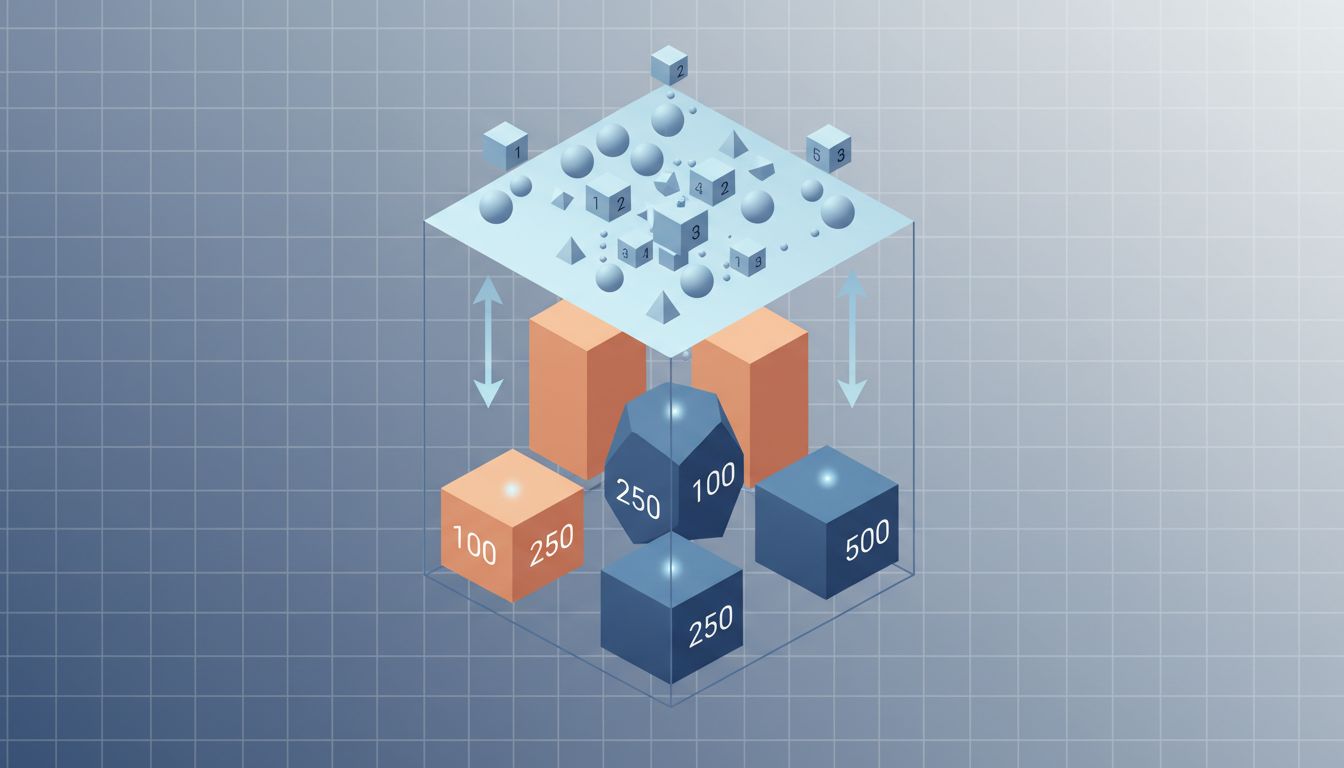
Fast internet is frictionless. That sounds like a feature, and in many contexts it is. But frictionless access to everything online means there’s no cost to switching contexts. Opening Twitter, checking your email for the fourth time, loading a YouTube video while you’re supposed to be finishing a proposal, all of it happens instantly. There’s no moment where slow loading gives your prefrontal cortex a chance to catch up and ask whether this is actually what you should be doing.
Psychologists studying habit formation have documented this extensively. The friction in a behavior (the number of steps, the time required, the effort involved) is one of the strongest predictors of whether that behavior gets repeated. Remove the friction and you remove the natural pause where choice lives.
Fast internet eliminates that pause. Every distraction loads before your better judgment can intervene.
How Nomads Actually Implement This
There are a few practical approaches, and the one you choose depends on your work style.
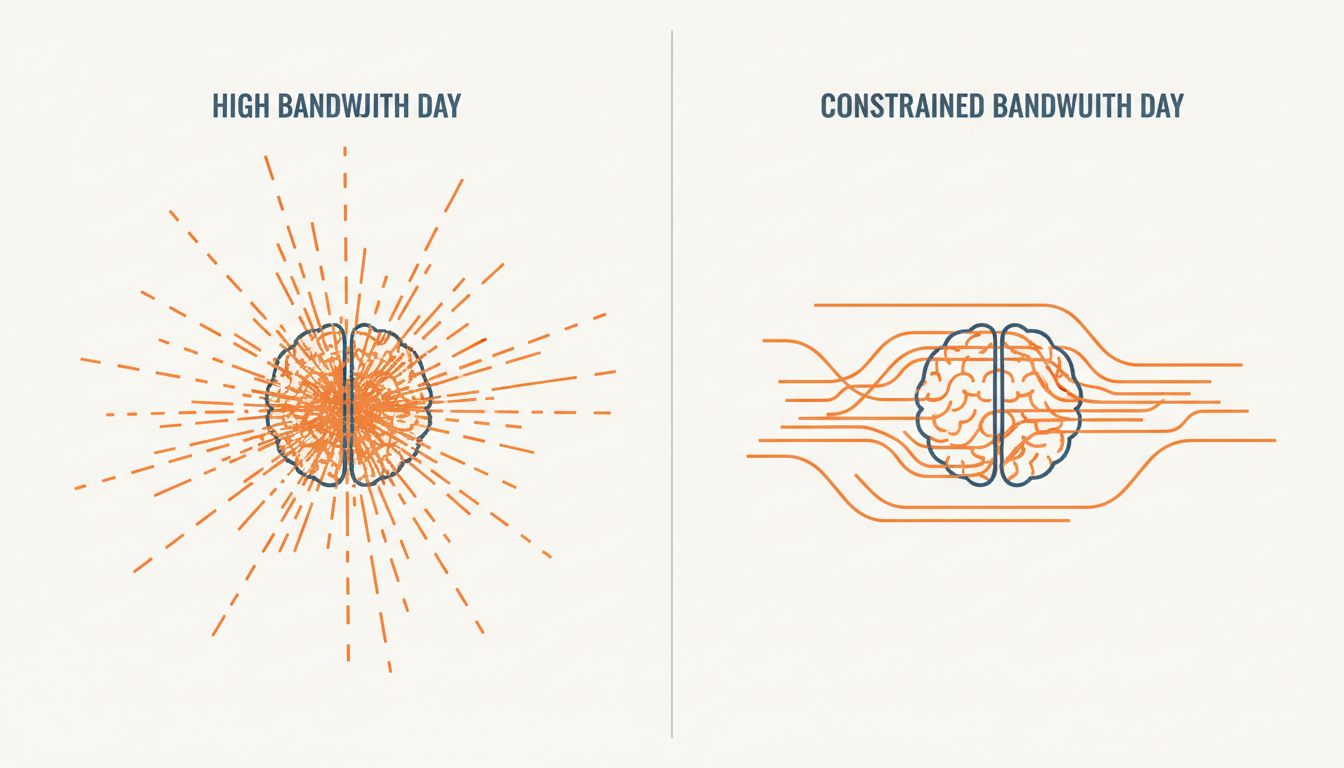
The most common method is using a mobile hotspot as your primary connection instead of the cafe’s fiber Wi-Fi. A 4G hotspot in most countries gives you enough bandwidth for video calls and document collaboration, but not enough to casually stream video in the background or keep fifteen tabs open without noticing the slowdown. You have fast access to the things you actually need and just enough resistance to stop you from wandering.
Some nomads go further and use apps like Freedom or Cold Turkey to cap bandwidth to specific domains during work hours. Others configure their router (if they’re in a longer-term rental) to rate-limit certain categories of traffic. A few use browser extensions that add an artificial delay before social media sites load, which sounds trivial but is surprisingly effective.
The least technical approach is simply positioning yourself in a cafe known for mediocre Wi-Fi and leaving your mobile data turned off. You know which spots these are in any city after a week. Some nomads keep a mental list.
What ties all of these together is intentionality. You’re not hoping to avoid distraction. You’re building the environment that makes distraction harder than the work.
The Attention Economics Behind the Choice
Your attention operates on a budget. This isn’t a metaphor; it’s a reasonably well-supported model from cognitive psychology, sometimes called attentional resource theory. When you exhaust those resources, your decision-making quality drops before your subjective sense of tiredness catches up. You feel fine, but you’re producing worse work and making worse choices about what to do next.
Fast internet speeds up the depletion rate because it enables more context-switching. Every time you hop from your document to a website and back, there’s a cognitive cost, even if the switch feels seamless. That cost is paid whether or not you notice it.
Slow internet adds a micro-delay that serves as a circuit breaker. When the page takes three seconds to load instead of a quarter of a second, there’s a moment where your brain can register that a switch is happening. That registration is often enough to make you reconsider. “Actually, let me just finish this paragraph first.” You’ve all had that experience. Fast internet makes it harder to have it.
This connects to something digital minimalists have documented for a while: the tools that promise to make you more productive often do so by adding speed and features, when what you needed was the opposite.
What You Actually Need Fast Internet For
The reason this strategy works is that most knowledge work requires much less bandwidth than we assume. Let’s be specific.
Writing requires almost none. Code compilation is local. Spreadsheet work is local. Design in Figma runs on relatively modest connections. Video calls (the thing most remote workers are most anxious about) work well at around 3-4 Mbps with good latency. Even Zoom’s own documentation suggests 3 Mbps for high-definition group calls.
The things that actually benefit from fast internet are large file transfers and video streaming. If your work involves routinely uploading video files or pulling down large datasets, then yes, you need a fast connection for those specific tasks. But you probably don’t need to be on that fast connection the entire workday.
Savvy nomads often do a version of this: they use a slower connection as their working environment and switch to a faster one for specific transfer tasks. It’s the equivalent of working in a quiet room and stepping outside for a phone call.
The Deeper Habit These Nomads Are Building
There’s a second-order effect that takes a few months to notice. When you work in deliberately constrained environments consistently, you start training yourself to work with what’s in front of you rather than reflexively reaching for the internet to resolve any uncertainty or fill any pause.
This matters more than it might sound. One of the biggest productivity drains for knowledge workers is the habit of immediately googling anything you don’t know instead of thinking first. Fast internet makes this very easy. Every small question becomes an external lookup. Over time, this erodes your ability to reason through problems independently and makes you dependent on constant connectivity in a way that slow-internet workers simply aren’t.
Nomads who’ve worked from slower connections for years tend to batch their research into dedicated sessions rather than interspersing it with focused work. They write notes of what they need to look up, finish the section they’re on, and then look things up in a block. This keeps them in a productive state longer and produces better work because the thinking and the research aren’t competing for the same mental space simultaneously.
This parallels what scheduling interruptions deliberately does for focus, except here the constraint is environmental rather than calendar-based.
The Counterargument Worth Taking Seriously
The honest objection to all of this is that it’s treating the symptom rather than the cause. If you have strong self-discipline, you don’t need slow internet to focus. And that’s true. Some people can sit next to an all-you-can-eat buffet and eat a sensible portion. Most people can’t.
The nomads who’ve adopted this approach aren’t doing it because they lack willpower. They’re doing it because they’ve understood that willpower is a finite resource and that relying on it entirely is an inefficient system. Building your environment to support the behavior you want is simply better engineering. You’re not fighting yourself; you’re removing the fight.
There’s also the question of whether this scales. If you’re doing deep work on a solo project, throttled internet is a natural fit. If you’re the person your entire team depends on for rapid responses, the calculus is different. The solution there isn’t to abandon the principle but to carve out chunks of your day where you go into slow-connection mode and make that schedule visible to your team.
What This Means For Your Setup
You don’t need to be a nomad to apply any of this. The principle works just as well in a home office or a corporate environment.
Start by auditing what you actually use bandwidth for during a focused work block. If you’re honest, it’s probably a lot less than you think. Then experiment with one of these approaches:
Use your phone’s hotspot instead of your home Wi-Fi for two-hour focused sessions. You’ll have enough for real work and enough resistance to stop casual browsing.
Add a five-second delay to social media domains with a browser extension. The specific extension matters less than the pause. Five seconds is long enough for your prefrontal cortex to notice what you’re about to do.
Batch your research. Keep a running list of things to look up and do them all at once, outside your deep work blocks. Your insights will actually be better because you’ve had time to think first.
When you find a slower connection that still supports your work, notice how your day feels differently. Most people who try this are surprised. The slower connection that seemed like a limitation turns out to be the most productive environment they’ve worked in.
Faster isn’t always better. The nomads figured this out because they had to experiment, work in imperfect conditions, and pay attention to what the results actually were. You can skip the hard way and apply what they learned.