
Picture this: a developer with a top-of-the-line laptop, noise-canceling headphones, a fast café connection in Lisbon, and a to-do list that has barely moved in three days. The setup is flawless. The productivity is not. If you’ve spent time in the digital nomad world, or even worked remotely for an extended stretch, you’ve probably lived this exact scenario. The gear isn’t the bottleneck. Something deeper is going on.
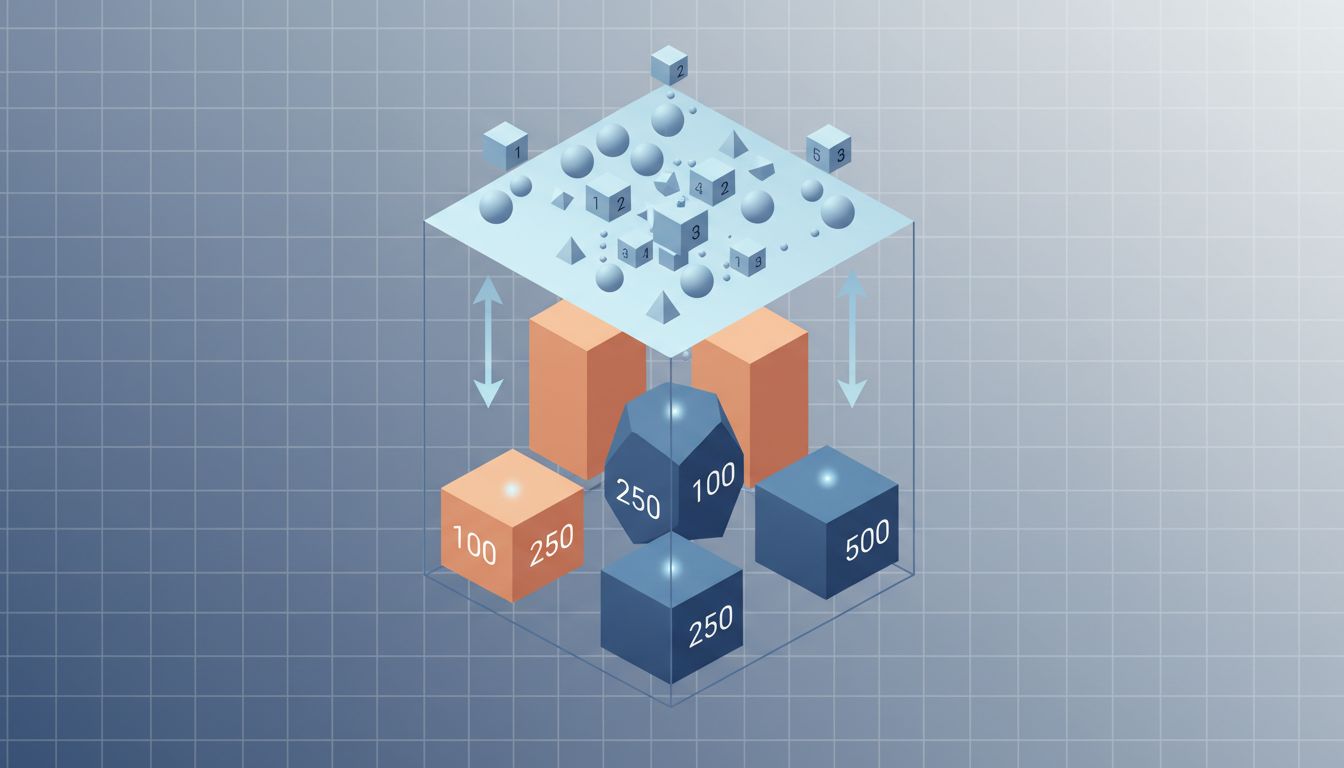
Before we dig in, it’s worth knowing that this isn’t purely a focus problem or a discipline problem. Research into how high performers actually structure their days suggests that the real issue is architectural. Top performers use something called the ‘Context Switch Tax’ to structure their entire workday and the principles behind it explain a lot about why nomadic work consistently underperforms sedentary work, even when every external variable looks better.
The Freedom Paradox
Freedom sounds like a productivity superpower. In practice, it creates a hidden cognitive load that drains your capacity before you’ve written a single line of code or finished a single deliverable.
When you work from a fixed location, dozens of micro-decisions get automated. Where will I sit? Is the wifi reliable here? Should I move somewhere quieter? Will I stay for lunch? These questions don’t exist when you’re in a stable environment. When you’re a nomad, they reappear every single day, sometimes multiple times a day. Each decision costs mental energy, and by the time you’ve settled into your chosen spot, you’ve already made thirty small choices that a regular office worker made once and forgot about.
Psychologists call this decision fatigue, and it hits nomads especially hard because location-finding, logistics, and social navigation are baked directly into the workday. You’re not just deciding what to work on. You’re deciding where to exist while doing it.
The Setup Obsession Is a Productivity Trap
Here’s something worth sitting with: the more time you spend optimizing your workspace, the less work you actually complete. This is counterintuitive because the optimization feels productive. Buying the right monitor stand, testing three different coffee shops, finding the perfect playlist — all of it registers in your brain as forward progress. None of it is.
This mirrors a pattern in software development that’s worth noting. Successful apps look simple because years of work were spent removing things, not adding them. The most effective nomadic work setups follow the same logic. The goal is to eliminate variables, not perfect them. A slightly worse café you visit every day will consistently outperform a theoretically perfect café you’re still searching for.
The fix is almost embarrassingly simple: commit to your setup before your workday begins, not during it. Decide the night before where you’re working. Pack everything you need. When you arrive, you work. The setup phase is over.
Why Your Environment Is Working Against Deep Work
Nomad-friendly spaces are optimized for a specific kind of productivity: reactive, communicative, and short-burst. Answering emails, taking calls, doing research, attending video meetings. These are all tasks that work fine in stimulating, social environments. Deep work — the kind that produces real creative or technical output — requires something different.
Neuroscience research consistently shows that novel environments trigger alertness responses that are incompatible with deep focus. Your brain treats a new café the way it treats any new environment: as a space that needs to be monitored. Background noise gets processed. Movement catches your attention. The beautiful view you chose the café for is, neurologically speaking, a distraction engine.
This is why remote teams that consistently hit deadlines often do something counterintuitive. Successful remote teams deliberately create digital chaos before important deadlines partly to force a kind of focused, tunnel-vision work mode that ambient café culture never produces naturally. They engineer constraint because freedom doesn’t deliver it automatically.
If you want deep work as a nomad, you need to manufacture the conditions for it deliberately. That means booking a private room in a co-working space for your high-stakes tasks, scheduling deep work blocks at the same time every day regardless of location, and treating your peak cognitive hours as non-negotiable, even when a stunning hiking trail is calling.
The Missing Accountability Layer
Office environments contain invisible accountability structures that most people don’t notice until they’re gone. When colleagues can see you, when your manager walks past, when a meeting is about to start, there’s a gentle but constant pressure to be visibly engaged with work. Nomads lose all of that, and many discover that their own internal motivation isn’t as powerful as they assumed.
This isn’t a character flaw. It’s just how humans work. We’re social creatures who respond to social cues, and removing those cues changes behavior in ways we rarely anticipate.
The solution isn’t to recreate an office (though co-working spaces do help). It’s to build deliberate external accountability into your workflow. Some nomads use body-doubling apps where you work on camera alongside strangers. Others find that narrating their work problems out loud, even to themselves, sharpens focus in surprising ways. There’s a reason software developers solve their hardest bugs by talking to a rubber duck: articulating the problem activates a different cognitive mode than just staring at it.
Shared accountability rituals, even small ones like posting a daily intention in a Slack channel, can restore some of what the nomad lifestyle removes.
A Framework You Can Use This Week
Here’s a simple structure that addresses the core issues without asking you to stop traveling:
Before each workday: - Choose your location the evening before. Non-negotiable. - Identify your one most important task and write it down physically. - Set a hard start time and stick to it.
During your workday: - Reserve your first two hours for deep work. No email, no messages, no logistics. - Use a second location (if needed) for reactive tasks like calls and admin in the afternoon. - Keep your setup identical wherever possible — same apps, same shortcuts, same structure.
End of each workday: - Write three sentences about what you completed. - Note what distracted you. - Plan tomorrow’s location now.
The nomadic lifestyle is genuinely worth protecting. The freedom, the experiences, the perspective it builds — none of that is overrated. But productivity doesn’t come free with the ticket. You have to design for it with the same intentionality you’d bring to any other system. Take away the variables that cost you focus, and the beautiful backdrop will finally become what it always promised to be: a reward for work well done, not an obstacle in the middle of it.