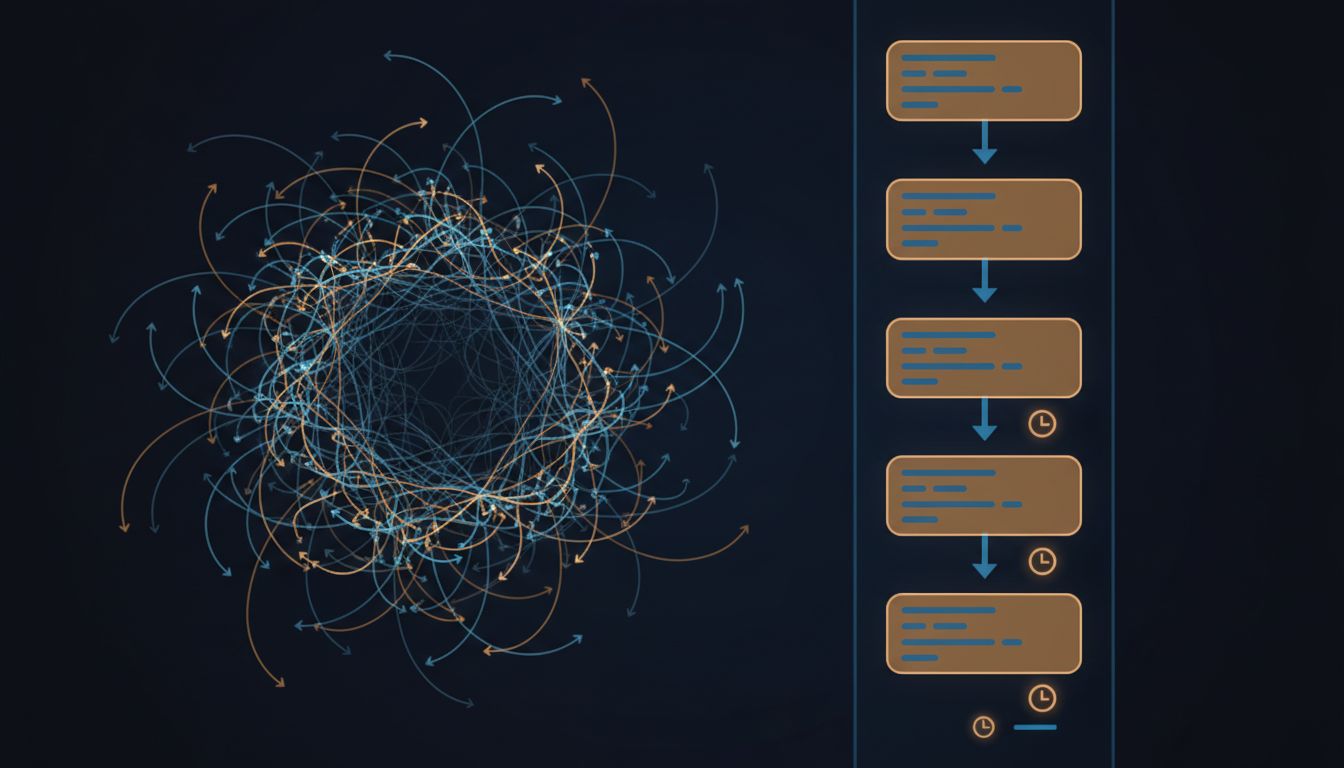
Here is a paradox that should bother anyone who thinks seriously about productivity: digital nomads, the people who have optimized their entire lives around the ability to work from anywhere, consistently report lower deep-work output than their office-bound counterparts. They have better laptops, more flexible schedules, quieter (sometimes) environments, and access to every productivity tool ever invented. And yet. The work does not get done at the rate you would expect. Understanding why requires thinking less like a lifestyle blogger and more like a systems engineer debugging a race condition, where two processes are competing for the same resource and the whole system quietly degrades as a result.
This is not really a story about willpower or discipline. Those explanations are too easy and too flattering to the office crowd. It is a story about how multitasking apps are scientifically designed to make you fail, about cognitive load, about the hidden infrastructure that offices provide without anyone asking for it, and about what happens when you remove that infrastructure and replace it with a Notion workspace and a Bali sunset.
The Environment Is Doing More Work Than You Think
Offices are terrible in a hundred obvious ways. The lighting is wrong, the open-plan layout is acoustically hostile, and someone is always microwaving fish. But offices also do something quietly useful: they offload decision-making from your prefrontal cortex. When you are in an office, you do not decide when to start working. You just arrived, so you work. You do not negotiate with yourself about whether the cafe across the street might be a better spot. The context switch (moving from one mental state to another, like toggling between browser tabs in your brain) has already happened, and it happened before you sat down.
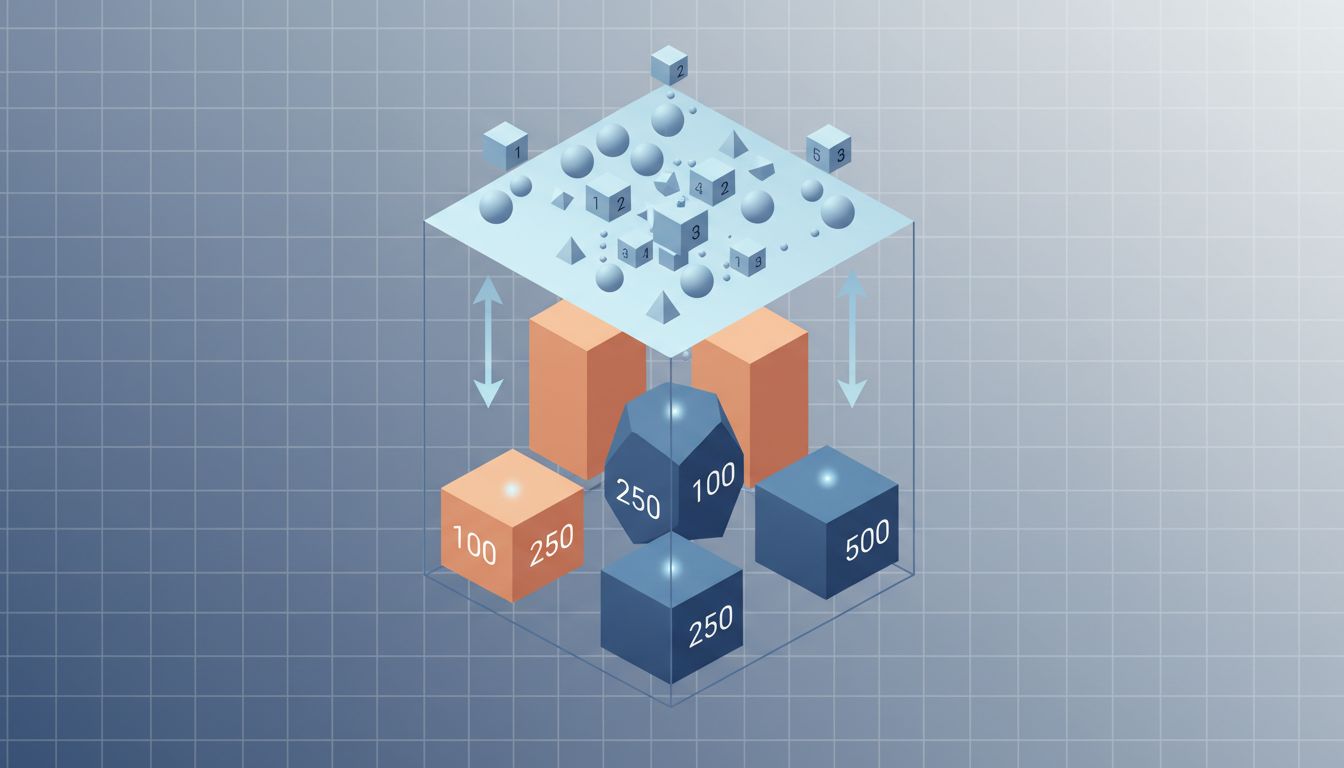
For a digital nomad, every single day begins with a sequence of micro-decisions that each cost a small amount of cognitive bandwidth. Where will I work today? Is the wifi here reliable enough for a video call? Should I move to the co-working space? Is it worth the commute? These decisions feel trivial, but they are running on the same hardware as your actual work. Cognitive load is not unlimited. Think of it like RAM. Every background process, every open decision loop, every unresolved question about your environment is consuming memory that cannot be used for the task you sat down to do.
Context Switching Has a Compile-Time Cost
Software engineers are familiar with the cost of context switching. When you are deep in a problem, you build a mental model of the system in your working memory: the function call stack, the variable states, the assumptions you are holding. Interrupting that state is not free. Studies suggest it takes somewhere between 15 and 23 minutes to fully re-enter a state of deep focus after an interruption. That is not a soft guideline. That is closer to a hard constraint baked into how the prefrontal cortex manages attention.
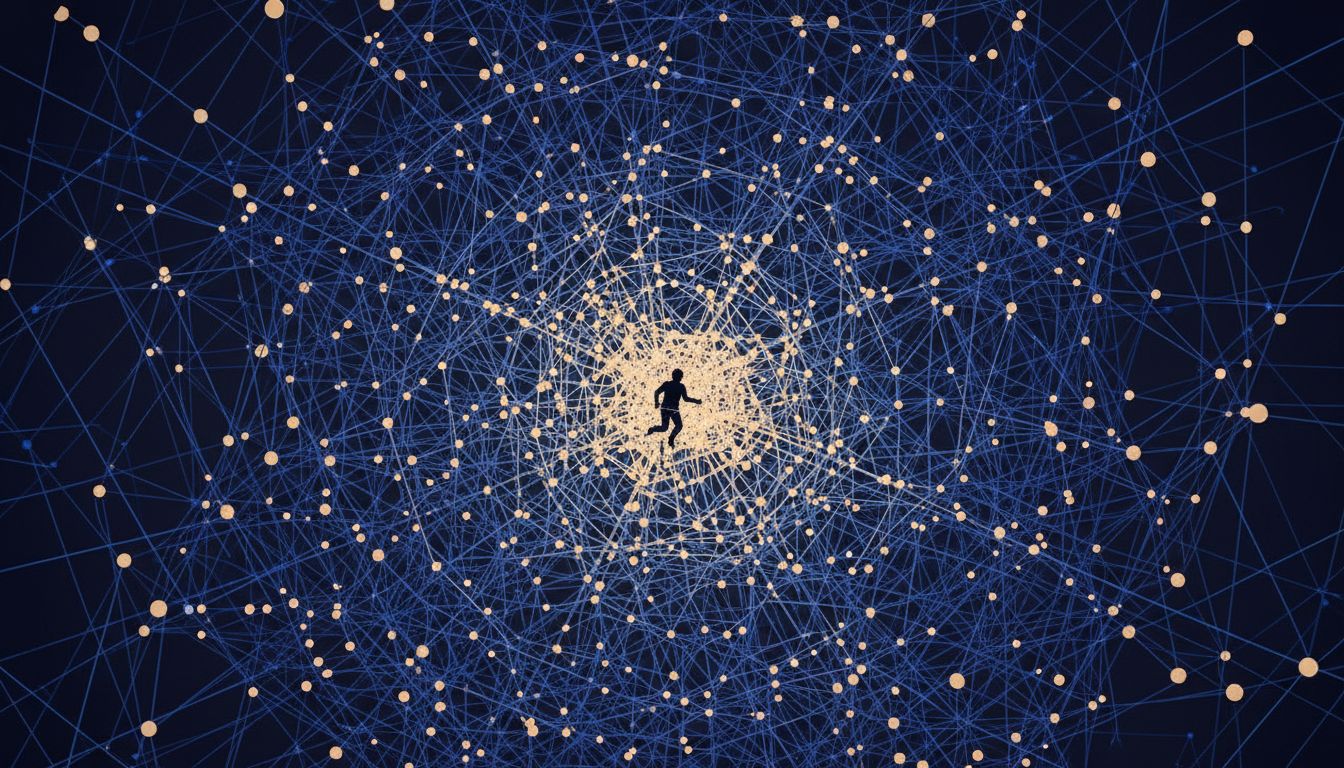
Nomads face a structural context-switching problem that office workers simply do not encounter at the same frequency. A new city means new sensory inputs competing for attention. A beautiful view out the window is not neutral. Your visual cortex is not asking permission to process it. A busy street, an unfamiliar language being spoken nearby, the social dynamics of a crowded cafe, all of these are interrupts at the hardware level, and your operating system (your brain) has to handle each one.
The irony is that many nomads respond to this by adding more tools. Another productivity app, a new task manager, a time-tracking plugin. But as digital minimalists consistently outperform power users because they stopped trying to master everything, the answer to too much environmental noise is rarely more software. It is constraints, not capabilities.
The Hidden Productivity Infrastructure of Boring Places
Offices provide what you might call implicit synchronization. Everyone around you is working, which creates a kind of social proof loop that reinforces the behavior. In distributed systems, you sometimes need a synchronization primitive, a mechanism that keeps multiple processes aligned in time. The office is a biological version of this. Even if your colleagues are not watching you, the shared context of being in a work environment acts as a clock signal that keeps your own work rhythm stable.
This is also why successful remote teams use async communication to outperform in-person offices by designing their own synchronization mechanisms deliberately, things like structured check-ins, shared work logs, and agreed-upon focus windows. The key word is deliberately. Remote teams that outperform offices did not stumble into it. They engineered it. Most solo nomads skip this step entirely because the freedom to skip it is, in a sense, the whole point of the lifestyle.
Nomads who do perform well tend to have one thing in common: they have recreated the boring, constraining parts of office life in portable form. A consistent start time. A fixed location for focused work, even if that location changes every few weeks. A ritual that signals the start of a work session, the equivalent of the commute as a mental state transition. They are not leveraging their freedom. They are deliberately limiting it.
The Tools Are Not the Problem, But They Are Not Helping
Here is the part where it gets a little uncomfortable. The productivity tool industry has a structural incentive to make you feel like the right app is one download away from solving your focus problem. It is not unlike the way tech companies deliberately design software to be hard on purpose because complexity keeps you engaged and coming back. A nomad who has solved their productivity problem does not need another app.
The tools digital nomads use are genuinely good. Notion, Linear, Obsidian, Raycast, these are well-engineered pieces of software. But a faster compiler does not help you if you are writing the wrong program. The bottleneck for most nomads is not throughput (how fast they can execute tasks once focused) but latency (how long it takes to enter and sustain the focused state in the first place). No app addresses that problem. The app is, in most cases, part of the problem.
What Actually Works
The nomads who consistently produce high-quality, high-volume work share a counterintuitive trait: they have made peace with being slightly bored. They work from the same co-working space for weeks at a time. They resist the temptation to explore a new neighborhood during work hours. They treat the freedom of their location as a reward for completing work, not as a background condition of doing it. The freedom is real, but it is sequenced correctly.
There is also something to be said for the structural honesty of admitting that your brain is not a serverless function that scales infinitely with the right configuration. It is a piece of biological hardware with fixed constraints, and the nomad lifestyle, for all its appeal, does not change those constraints. It just removes some of the scaffolding that offices build around them by default.
The paradox resolves itself once you stop thinking about productivity as a tooling problem and start thinking about it as an environment design problem. The office workers getting more done are not smarter or more disciplined. They are just operating inside a system that was accidentally well-designed for the specific kind of sustained focus that produces real work. Matching that, from a beach in Thailand or a flat in Lisbon, requires intentional engineering. And most people, understandably, would rather just open a new tab.