
There’s a moment most knowledge workers recognize. You took notes on something important, maybe a book, a meeting, a research paper. You know the insight is in there somewhere. You search, you scroll, you find the note, and it feels completely foreign. Not wrong, exactly. Just inert. The information didn’t stick, and the note didn’t help.
This isn’t a personal failing or a matter of finding the right app. It’s a structural mismatch between how digital note-taking tools store information and how your brain actually consolidates it into something useful.
The Filing Cabinet Mental Model Is Wrong from the Start
Most note-taking apps, from Notion to Obsidian to Apple Notes to Evernote, operate on what you might call the filing cabinet model. Information goes in, gets tagged or organized into folders or linked, and sits there waiting to be retrieved. The implicit promise is that if you capture enough and organize it well, you’ll be able to access it when you need it.
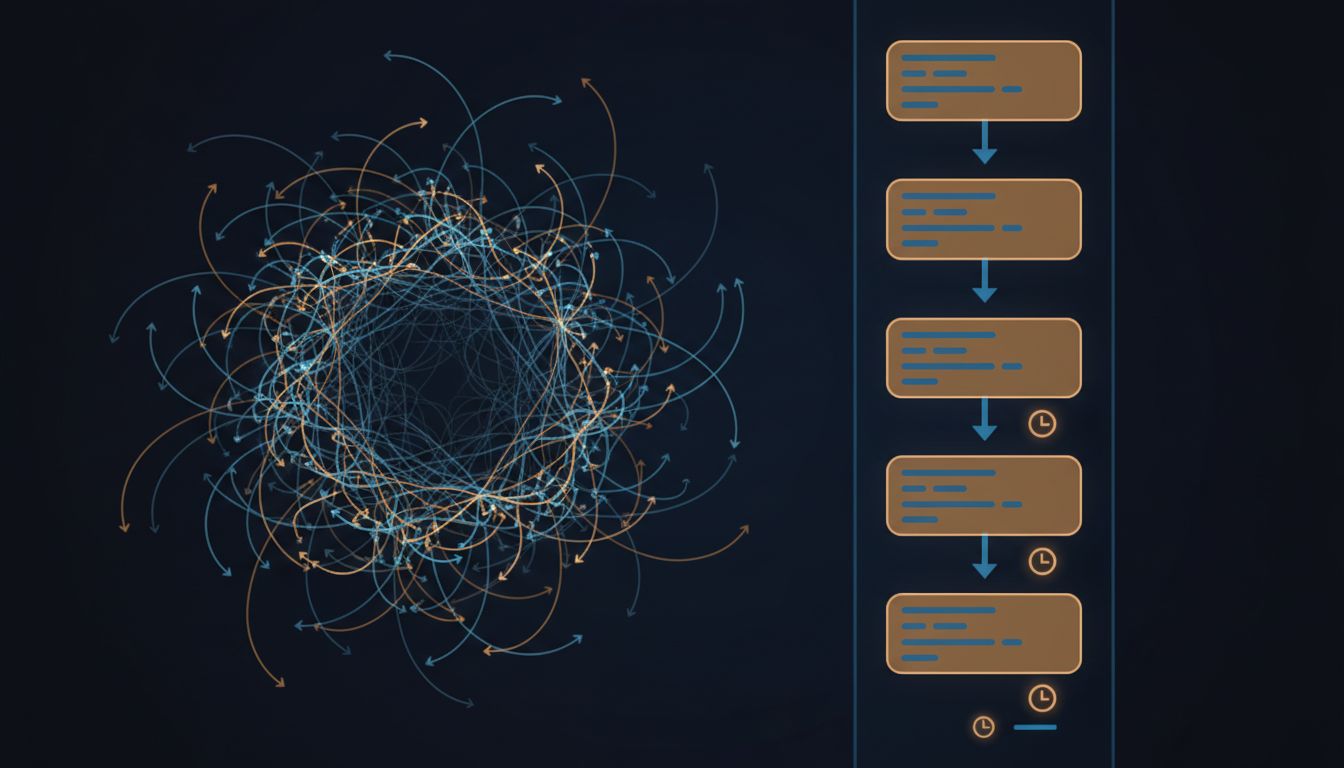
The problem is that human memory doesn’t work through retrieval from storage. It works through reconstruction. When you remember something, your brain isn’t pulling up a saved file. It’s rebuilding a mental representation from distributed fragments, re-activating patterns across multiple neural networks, and weaving that reconstruction together with context, emotion, and whatever you’ve learned since.
This distinction matters enormously for how you take notes. Filing cabinet systems optimize for findability. Your brain optimizes for pattern integration. Those are different goals, and designing your note-taking system around the first one won’t reliably produce the second.
What Cognitive Science Actually Says About Memory Formation
The neuroscience here has been reasonably well-established for decades. Memory consolidation happens in stages. Initial encoding puts information into short-term working memory. Consolidation, which happens partly during sleep, integrates that information into longer-term storage by connecting it to existing knowledge structures. Retrieval practice, the act of actively trying to recall something, strengthens memory traces far more than passively reviewing notes does.
Hermann Ebbinghaus documented the forgetting curve in the 1880s, showing that without active reinforcement, people forget most new information within days. The research since then has consistently supported what’s called the testing effect (or retrieval practice effect): you retain information far better if you test yourself on it than if you simply re-read it. A well-replicated series of studies by Roediger and Karpicke, published in 2006, showed students who tested themselves on material retained dramatically more a week later than students who restudied the same material.
Note-taking apps, by design, make re-reading easy and testing rare. You open your notes, you scan them, and you close them. That feels like learning. It mostly isn’t.
The Specific Ways Apps Undermine Your Memory
Beyond the retrieval-versus-reconstruction gap, several specific features of digital note-taking tools actively work against memory formation.
Frictionless capture reduces processing depth. The easier it is to save something, the less cognitive work you do engaging with it. When you clip an article to Notion with one click, your brain barely touches the content. When you have to paraphrase an idea in your own words, even briefly, you’re forced to process it. The processing is the encoding. Apps that make capture frictionless are, inadvertently, making retention less likely.
Tags and folders create an illusion of organization. Spending time organizing your notes feels productive. Cognitively, it mostly isn’t, because categorizing information doesn’t force you to engage with its meaning. You can move a note from one folder to another without thinking about the idea inside it at all. The organization feels like understanding, but it’s closer to labeling boxes without opening them.
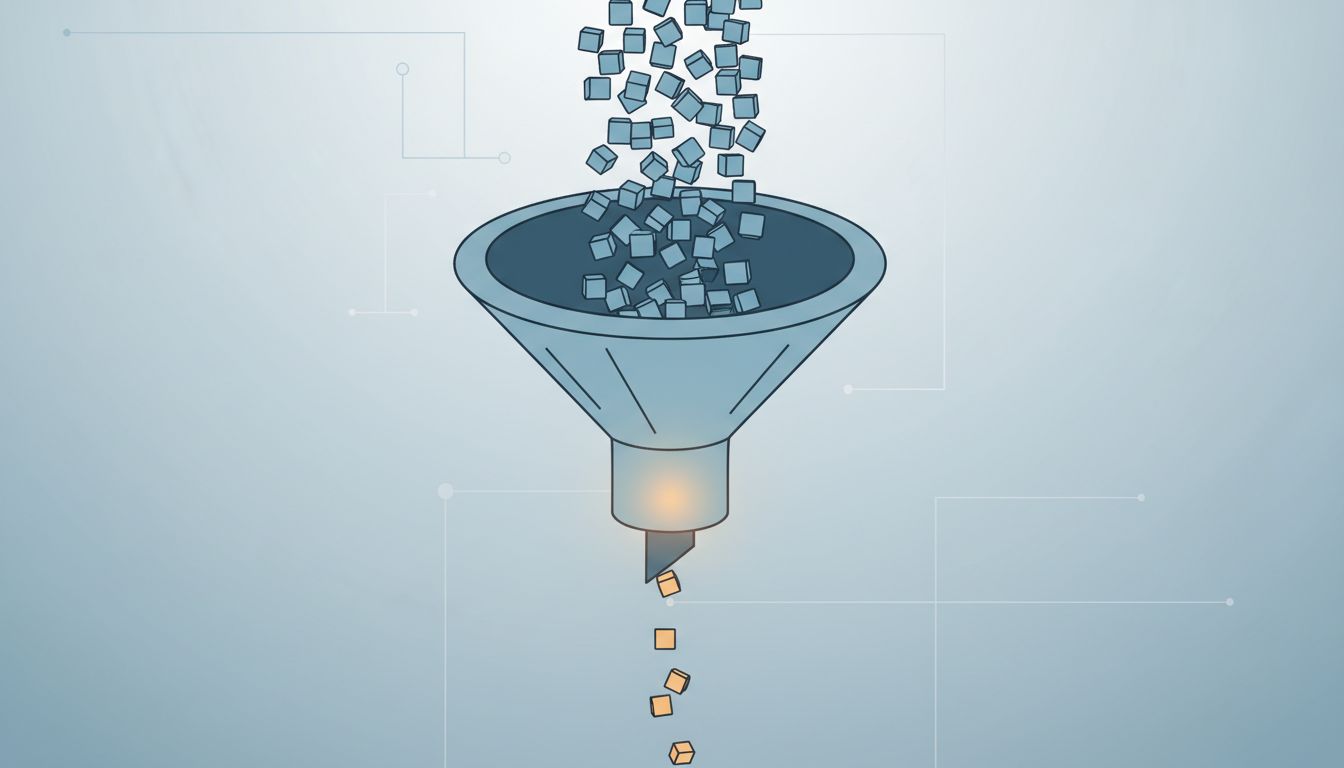
Infinite storage discourages curation. Physical constraints, a notebook with a finite number of pages, force decisions about what’s worth keeping. Digital tools have no such constraint, so most people keep everything. A note archive with thousands of items becomes a place you go to look for things you already remember, not a place that helps you develop new understanding.
Linking isn’t the same as thinking. Bidirectional linking, the key innovation in tools like Roam Research and Obsidian, is genuinely useful for surfacing connections between ideas. But making a link between two notes is not the same as actually working through why those ideas relate, what the tension between them is, or what a third idea they both point toward might be. Linking can substitute for the deeper synthesis it’s supposed to facilitate.
What Works Instead (and Why It Works)
The good news is that you don’t have to abandon digital tools. You have to use them differently.
Write to explain, not to record. When you take notes on something, write as if you’re explaining it to someone who hasn’t read it. Don’t copy phrases from the source. Force yourself to reconstruct the idea in your own language. This is slower, produces fewer notes, and encodes information far more effectively. The goal is not a complete record. It’s a trace of your thinking.
Build in retrieval practice deliberately. After you write a note, close it and write down (separately) what you remember from it without looking. Then check. This feels uncomfortable and inefficient. It works. Spaced repetition tools like Anki formalize this process, and the research behind them is solid. Many people find that combining a capture tool with a spaced repetition system, rather than trying to do both in one app, works better than any single all-in-one solution.
Use notes as prompts, not transcripts. Your notes don’t need to contain the complete idea. They need to contain enough to trigger reconstruction of the complete idea. A short, specific phrase that captures the surprising or counter-intuitive part of something is more useful than a full summary. If your note requires no mental effort to read, it probably requires no mental effort to create, and almost certainly isn’t building any memory.
Review by generating, not re-reading. When you revisit old notes, don’t read them top to bottom. Instead, read the title or heading, then close the note and write what you remember about it. Open it to check. This is the testing effect in practice, and it takes about the same amount of time as passive re-reading with significantly better results.
The Deeper Problem With How We Think About Knowledge Management
There’s a broader assumption worth examining here. Much of the productivity world treats knowledge management as an information problem: capture more, organize better, retrieve faster. The tools are built around this frame. But most of what makes someone genuinely knowledgeable isn’t stored explicitly anywhere. It’s the web of connections, intuitions, and pattern recognition that comes from deeply processing a lot of information over time.
You can’t import that from a note archive. You build it by thinking hard about things, forgetting most of it, thinking about it again, and gradually developing structures that let you make sense of new information quickly. The notes are scaffolding for that process. They’re not a substitute for it.
This is why people who read voraciously and take almost no notes are often more capable thinkers than people who have elaborate capture systems with thousands of entries. It’s not that notes are bad. It’s that the act of reading and thinking carefully is doing the memory work, and the notes are a relatively minor part of it. As productivity hackers are discovering when they compete against people who own fewer apps, more infrastructure doesn’t automatically mean better outcomes.
Practical Changes You Can Make Today
If you want your note-taking to actually support learning and retention, here’s where to start:
-
Slow down capture. For anything you actually want to remember, take the time to write it in your own words before saving it. The friction is the point.
-
Create a weekly review ritual that involves recall, not re-reading. Spend fifteen minutes writing what you remember from the week’s notes before opening any of them.
-
Halve your note volume. If you’re saving everything, you’re processing nothing. Be selective. A smaller number of deeply processed notes outperforms a large collection of lightly captured ones.
-
Separate your reference system from your thinking system. Bookmarks, article clips, and documentation belong in a searchable reference archive. Ideas you’re actually trying to internalize belong somewhere you’ll be forced to engage with them actively.
-
Add a question to every note. At the bottom of any note you take on an idea, write one question the idea raises that you don’t know the answer to. This keeps the note open, generative, and connected to ongoing thinking rather than closed and filed.
What This Means
Digital note-taking apps are excellent at what they’re built for: capturing information and making it retrievable. They are not built to help you form memories, and they don’t. The mismatch between the filing cabinet model that powers these tools and the reconstructive, connection-based model that powers your memory is real, and it explains why so many people have rich note archives and feel like they can’t remember anything.
The solution isn’t a better app. It’s understanding what notes are actually for, which is not storage but processing, and designing your habits around that. Capture less, engage more, test yourself often, and trust that a smaller collection of ideas you’ve genuinely wrestled with is worth more than a comprehensive archive you passively maintain.