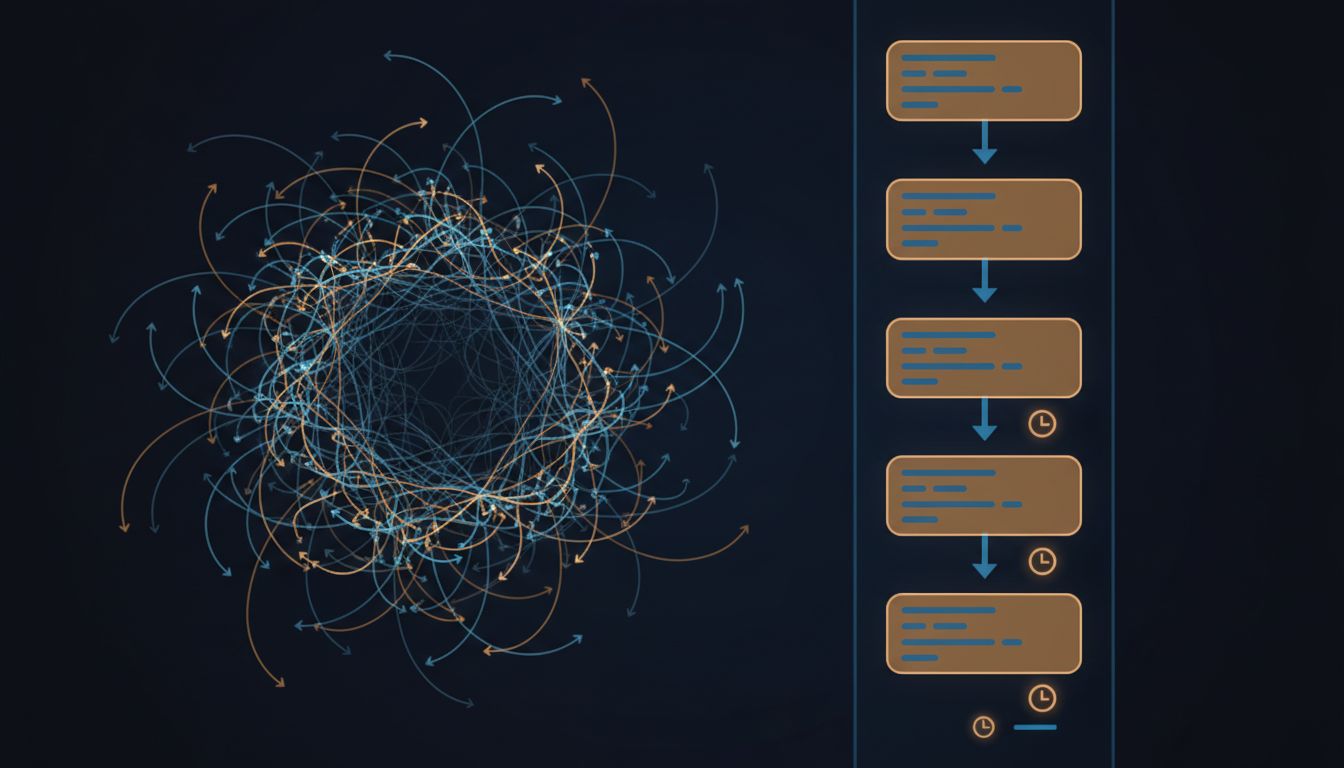
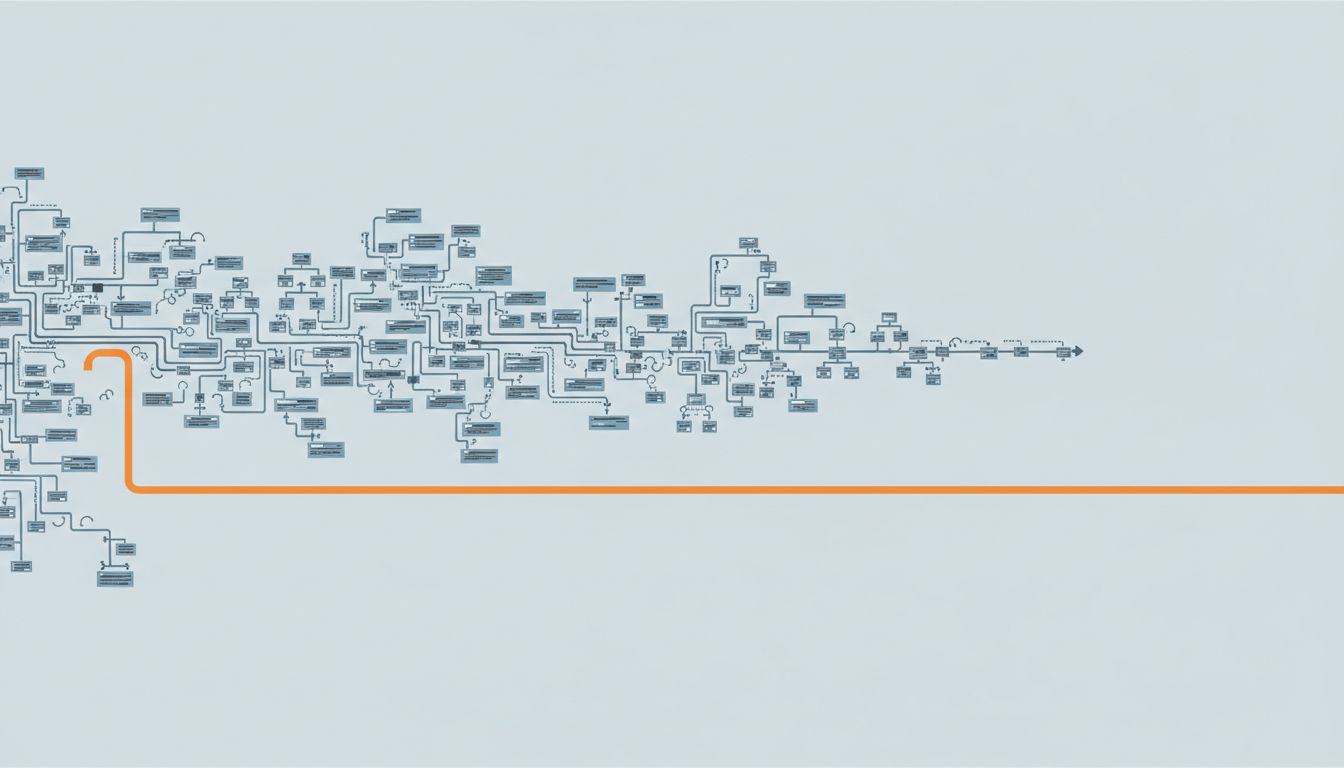
The productivity genre has a dirty secret: most of its advice is written for people who aren’t doing the hard work yet. Time-blocking, the Pomodoro technique, inbox zero, second-brain note systems, daily shutdown rituals. These frameworks assume the central problem is distraction, procrastination, or disorganization. For genuinely high-output knowledge workers, that’s usually not the bottleneck at all.
Watch what happens when a seasoned engineer or a strong technical writer actually adopts a trendy productivity system. They’ll follow it for a few weeks, notice some initial satisfaction from the structure, and then quietly stop. Not because they lack discipline. Because the system is creating overhead around work that was already happening.
This isn’t contrarianism for its own sake. There’s something structurally interesting going on here.
Productivity Systems Are Optimized for the Median Problem
Most productivity frameworks were developed for, and popularized by, people who had trouble starting work or maintaining focus. David Allen’s Getting Things Done emerged from Allen’s consulting work with executives who were overwhelmed by volume, not by complexity. The Pomodoro technique was invented by a university student trying to fight procrastination during study sessions. These are real problems, and these tools address them effectively.
But they’re solving a specific failure mode. If your problem is starting, a 25-minute timer helps. If your problem is that you regularly enter three-hour focus states and lose track of everything else, a 25-minute timer is just an interruption. If your problem is forgetting tasks, a capture system is valuable. If your problem is that you have too many ideas and not enough time to execute them, adding more places to store ideas makes things worse, not better.
The mismatch is architectural. Productivity advice is population-level advice, calibrated to address the most common productivity failures. But the distribution of knowledge workers isn’t uniform. High performers tend to have already solved the surface-level problems (distraction, capture, planning) through years of iteration on their own habits. What they’re left with are the harder, more context-specific problems that general advice can’t touch.
The Real Constraint Is Usually Cognitive Load, Not Time
Here’s the thing that most productivity writing refuses to engage with seriously: for complex cognitive work, the scarce resource isn’t hours. It’s mental state. Specifically, the capacity to hold a large, interconnected problem in working memory while making progress on it.
Working memory is the cognitive buffer where active reasoning happens. A developer holding a complex system architecture in their head, or a researcher tracking the threads of an argument across dozens of sources, is doing something that has a hard metabolic cost. That state takes time to enter and is fragile once you’re in it. Software is already designed to break that state for you, and most productivity systems don’t account for how destructive interruptions are at this level.
This is why high performers often have habits that look bizarre from the outside. They’ll refuse to check email before noon, not because of some morning routine ideology, but because the first two hours of the day are when they can maintain the deepest focus, and email is a working-memory nuke. They’ll keep their task lists short to the point of looking careless, because a long task list is cognitive noise. They’ll sometimes work on one thing for days without touching anything else, because switching costs are real and underestimated.
These aren’t productivity hacks. They’re environmental adaptations to preserve the specific cognitive resource that their work actually consumes.
Optimization Without a Clear Cost Function Is Just Noise
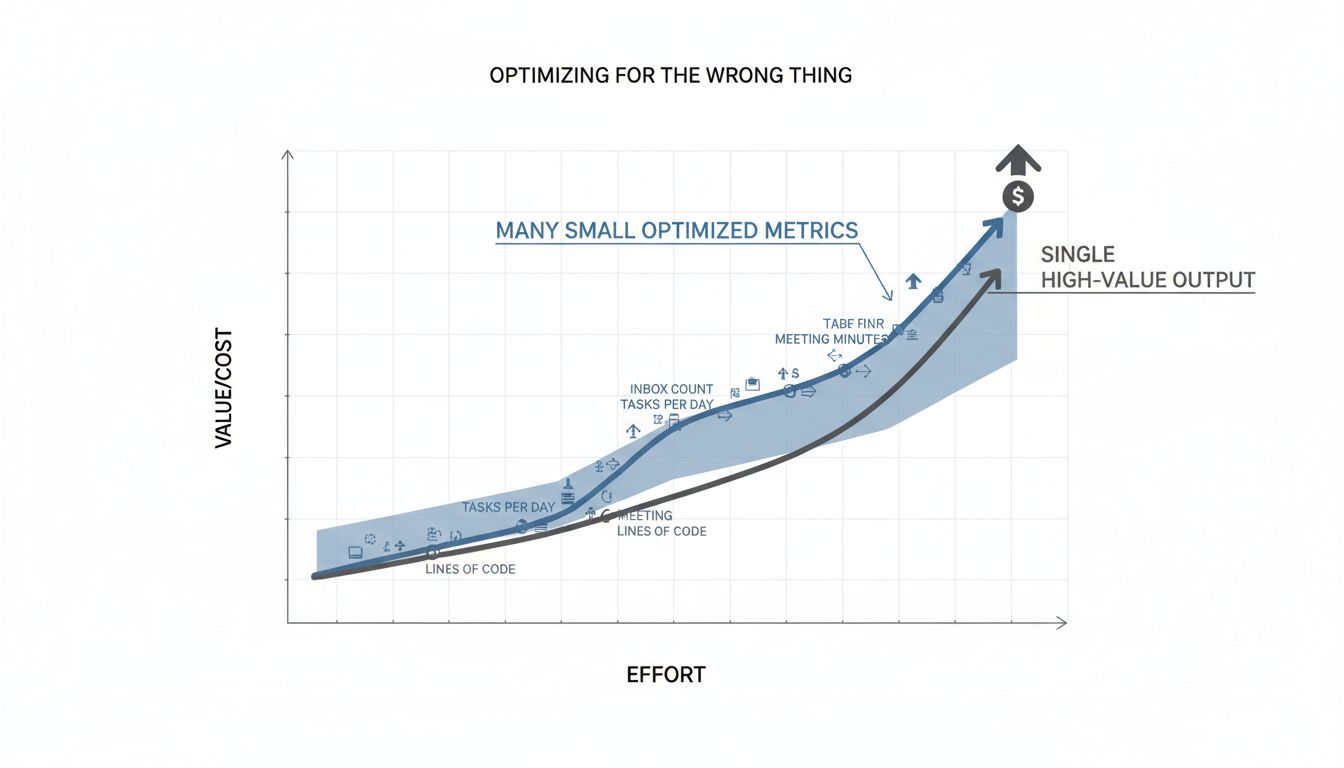
There’s a concept in software optimization that’s useful here: you can’t optimize a system without defining a cost function, meaning a precise measure of what you’re trying to minimize or maximize. Optimization without a cost function isn’t optimization; it’s just change.
Most productivity advice has an implicit cost function that is something like “tasks completed per unit time” or “inbox size” or “number of commitments tracked.” These are measurable, which is probably why they get used. But for complex knowledge work, none of these are the right metric. A researcher who spends three months on a problem that reshapes her entire understanding of a field has done something more valuable than one who processes 40 tasks a week, even if the second person’s productivity dashboard looks better.
Power users understand this intuitively. They build workflows around their actual output metric, not around the metric that’s easiest to track. That means they often look unproductive by conventional measures. They may have messy inboxes, loose task systems, and irregular schedules. What they have instead is clarity about what they’re trying to produce and ruthless protection of the cognitive conditions that make producing it possible.
What Selective Ignoring Actually Looks Like in Practice
Ignoring bad-fit advice isn’t passive. It requires knowing why the advice doesn’t apply to you, which requires understanding your actual work pattern in some detail.
The strongest performers tend to have a few things in common regardless of domain. They know their peak cognitive hours and protect them with actual structural barriers, not just intentions. They’ve found the minimum viable system for capturing commitments, one that’s light enough to maintain without attention and reliable enough that they trust it. They’ve stopped optimizing inputs (tools, note systems, task managers) and started optimizing outputs (fewer, harder problems worked on for longer).
They also tend to be skeptical of new productivity tools in a specific way. Not dismissive, but precise. They’ll try something and ask whether it reduces friction on their actual bottleneck, or whether it just gives them something new to organize. Most tools fall into the second category. The tell is when you find yourself spending more time maintaining the system than doing the work the system was supposed to help with.
This is the real lesson that the productivity genre won’t sell you, because it doesn’t move units: the best system for complex knowledge work is often the simplest one that addresses your specific constraints, deployed with the discipline to ignore everything else.
The Advice That Scales Is Self-Knowledge, Not Systems
General productivity advice isn’t useless. It’s load-bearing for people who are still figuring out what their work actually requires. If you’re early in a career, or transitioning into a new domain, frameworks give you scaffolding while you develop judgment. The problem comes when the scaffolding becomes the building.
At some point, the relevant question stops being “what system should I use?” and becomes “what does my best work actually require, and am I protecting it?” That question doesn’t have a universal answer, which is exactly why it doesn’t get written about much. Books about personal optimization don’t sell if the answer is “it depends on you and your work.”
High performers have usually made their peace with this. They know that their habits look weird to people optimizing for different things. They’ve stopped explaining why they don’t use a particular tool everyone recommends. They’ve learned to distinguish between advice that addresses a real constraint they have and advice that addresses a constraint they’ve already solved or never had.
That discrimination, knowing which advice to take and which to leave, is itself a skill. And it’s one the productivity canon almost never talks about.