Most people treat multitasking as a productivity tax you pay in the moment. You juggle two tasks, you slow down a bit, you get through both. That framing is wrong, and the wrongness matters.
The real cost of multitasking is not the time you lose switching between tasks. It is what the switching does to the underlying hardware. Every time you fragment your attention, you are not just performing worse right now. You are gradually teaching your brain to prefer fragmentation.
What Actually Happens When You Switch Tasks
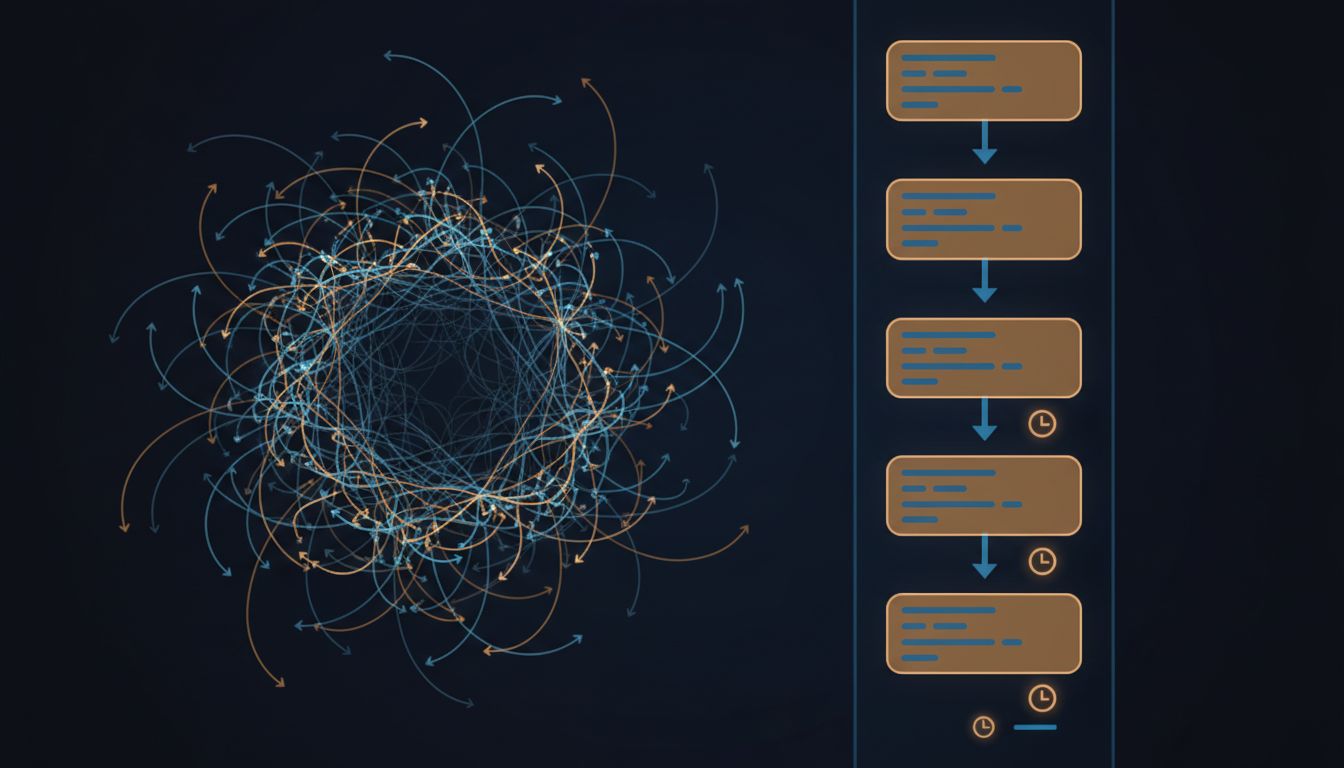
Your brain does not have a multitasking mode. What you experience as multitasking is rapid task-switching, and it carries a cost researchers call the “switch cost.” When you move from writing a document to checking Slack and back again, your prefrontal cortex has to load a new set of rules for each context. The previous task’s rules do not vanish cleanly. They linger, creating what cognitive psychologists call “attention residue,” a term developed by Sophie Leroy at the University of Washington. You are physically working on the new task with part of your mind still processing the old one.
This costs you roughly 20 to 40 percent of your productive time, according to research by the American Psychological Association. But that number understates the longer-term problem because it only measures the immediate performance hit. It says nothing about what repeated switching does to your brain’s default preferences.
The Rewiring Problem
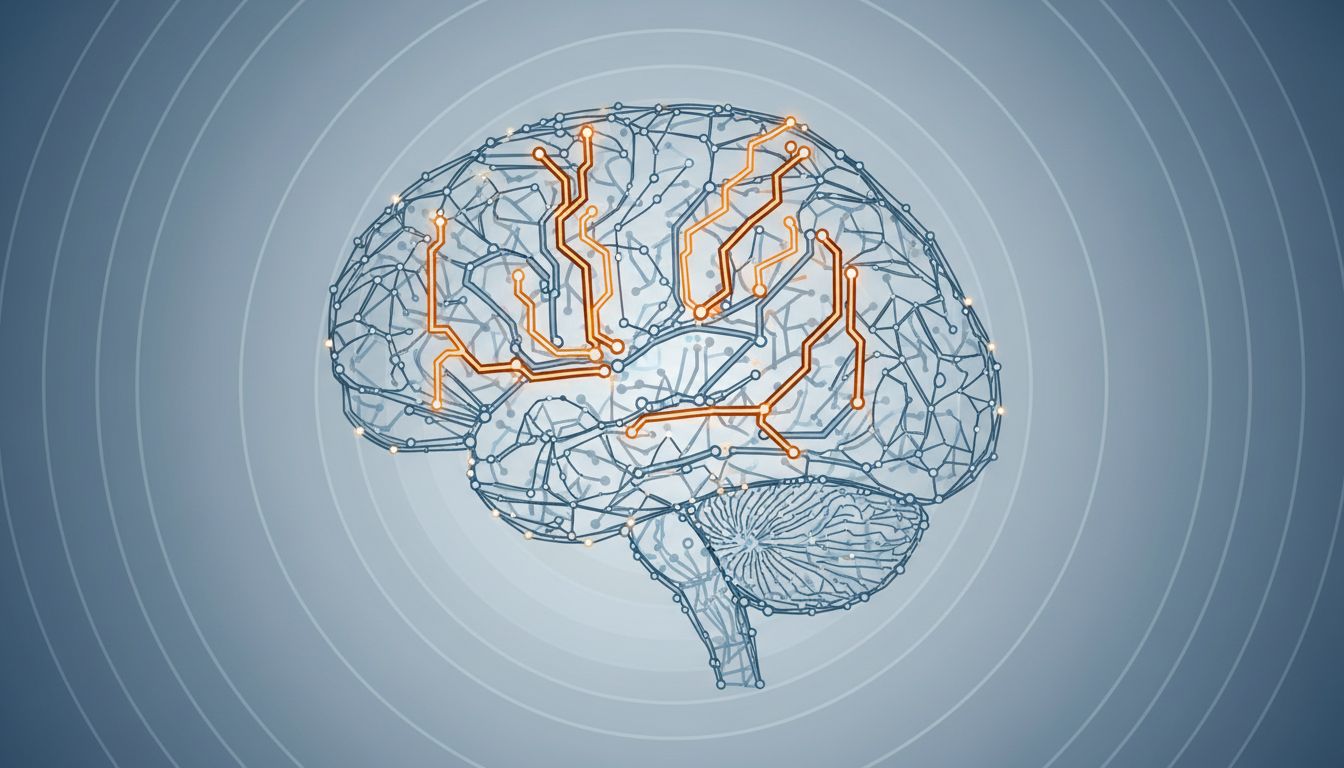
Here is where it gets structural. Neuroscientists describe the brain as experience-dependent. The circuits you use most become stronger and faster. The circuits you neglect weaken. This is broadly known as Hebbian learning, often summarized as “neurons that fire together, wire together.”
When you spend years in an environment that constantly interrupts you, checking your phone every few minutes, flipping between tabs, treating every notification as urgent, you are repeatedly activating the neural circuits associated with orienting to novel stimuli. Those circuits get reinforced. Meanwhile, the circuits associated with sustained, focused attention get used less. They do not atrophy in any dramatic, clinical sense, but they become your brain’s second choice rather than its default.
Gloria Mark at the University of California, Irvine has tracked workplace attention patterns for years. Her research found that it takes an average of over 23 minutes to fully return to a task after an interruption. But more tellingly, her work also showed that over time, workers began interrupting themselves, reaching for their phones or switching tabs before any external trigger arrived. The distraction drive had been internalized.
You trained yourself to do that. Not intentionally, but through repetition.

Why This Is Especially Bad for Knowledge Workers
If your job involves writing, coding, designing, or any other work that requires holding a complex mental model in your head, the rewiring problem hits harder. These tasks demand what psychologist Mihaly Csikszentmihalyi described as flow, a state of deep engagement that requires an extended ramp-up period and collapses immediately under interruption.
The cruel irony is that the tools most knowledge workers rely on are engineered, deliberately in many cases, to generate the exact interruption patterns that degrade this capacity. Notification badges, unread counts, the soft compulsion of an open inbox: these are not neutral design choices. As we’ve covered in how tech companies design settings menus to nudge your behavior, the default friction almost always favors more engagement, not less.
The result is a feedback loop. Fragmented attention leads to reinforced distraction circuits. Reinforced distraction circuits make sustained focus feel uncomfortable. Discomfort with sustained focus drives you back toward fragmentation. Repeat for five years and you have workers who find it genuinely difficult to read a long document without reaching for their phone, not because they are lazy, but because they have been behaviorally conditioned.
What You Can Actually Do About It
The good news is that the same mechanism working against you can work for you. If distraction circuits strengthen through use, focused attention circuits do too. The practical question is how to shift which ones you are exercising.
Start by treating focused work as a skill with a training load, not just a productivity technique. The first step is making interruption-free blocks of time non-negotiable. Two hours is a reasonable target. One is enough to start. During those blocks, you need to close notification sources entirely, not silence them or move them to another screen, close them. Visible temptation still fires the orienting response even when you resist it.
Second, stop treating task-switching as neutral. Every time you leave a task before it is complete, you are practicing task-switching. Build in explicit closure moments: write a one-line note about where you are before stopping, so your brain can release the task cleanly rather than holding it in working memory. This reduces attention residue and gives you a cleaner starting point when you return.
Third, expect discomfort and do not treat it as failure. If you have spent years training distraction circuits, the first few weeks of deliberate focused work will feel genuinely uncomfortable. Your brain will generate the urge to check something, open a new tab, or find a reason to stop. That urge is the old circuit firing. Sitting through it, repeatedly, is what weakens it. It is not an inspiring process, but it is the actual one.
Finally, audit your tools with structural suspicion. Productive teams often choose communication tools that are deliberately low-interruption, not because they lack options, but because they understand the cognitive cost of the alternative.
The Honest Assessment
You are not going to eliminate context-switching from your work life. You probably should not try. Responsiveness has legitimate value and some jobs require it. But there is a meaningful difference between choosing to switch contexts and having trained yourself to need to.
The goal is not to become a focused monk. It is to rebuild the capacity for sustained attention so that you are the one deciding when to use it, rather than your notification badge. That is worth treating seriously, because the longer you wait, the more entrenched the alternative becomes.